CALIFICACIÓN DE IMDb
6.9/10
1.9 k
TU CALIFICACIÓN
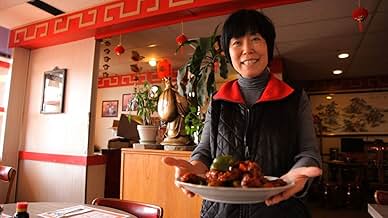
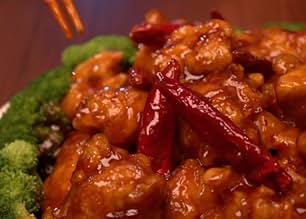
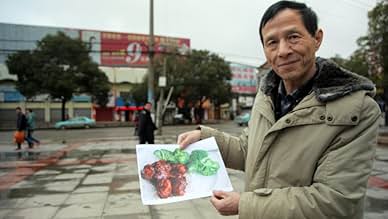
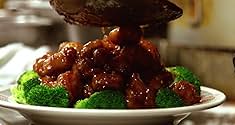
Agrega una trama en tu idiomaWho was General Tso, and why are we eating his chicken? This feature documentary explores the origins and ubiquity of Chinese-American food through the story of an iconic sweet and spicy chi... Leer todoWho was General Tso, and why are we eating his chicken? This feature documentary explores the origins and ubiquity of Chinese-American food through the story of an iconic sweet and spicy chicken dish.Who was General Tso, and why are we eating his chicken? This feature documentary explores the origins and ubiquity of Chinese-American food through the story of an iconic sweet and spicy chicken dish.
- Dirección
- Escritura
- Estrellas
- Dirección
- Escritura
- Todo el elenco y el equipo
- Producción, taquilla y más en IMDbPro
6.91.8K
1
2
3
4
5
6
7
8
9
10
Opiniones destacadas
A film searching of the origin of General tso chicken
The film "The search of General Tso" is a documentary about the origins of General Tso Chicken. The reason for finding the origin General Tso Chicken is because most people in China do not know about the dish. The main target audience of the film would just be people who know someone that owns a Chinese restaurant or people who ate Chinese food before. It is also rarely on the menus of restaurants in China. To find how it started we have to go all the way back to the Californian gold rush when the Chinese first came to America in 1849. The film did a good job by gathering Chinese Historians from different universities around the U.S. They were able to add background information of when the Chinese came over and the discrimination they faced. It was helpful to give background so it can lead up to why the Chinese needed to adapt to the eventual creation of General Tso Chicken. They also visited General Tso's home to confirm that he has no relation to the dish. One of the most important things to note in a film is if you enjoyed it. If your engaged it must mean you enjoyed it to a certain extent. One of the good qualities of the documentary was their use of quick- cuts. The use of quick cuts increases the pace at which the film is going. If the pace is going faster, it is easier to stay engaged. If the pace is too slow it is very easy for the viewer to get bored and lost attention to the film. Fast-cuts can ease the boredom by having the scenes of silences. I make note of the fast-cuts and why I enjoyed it because there are some documentaries where the speaker speaks in a slow pace and the scenes have very slow transitions. The pace of the fast-cuts was not that fast but at a decent pace so it does not feel like they are just shoving information in your face. They were able to manipulate this skill very well to where it made me forget the time. It also keeps your attention by how they set up the question of the film and the viewer does not find out the answer until the very end. The film could have ended in 20 minutes but they made it longer but including more history of the other dishes before the creation of General Tso Chicken. It was important that they added other food because it influenced other chef to experiment. As it shows in the beginning of Chinese Cuisine adapting to American taste it slowly became more clear on why they made the dish and where it came from. The more information they revealed the more you would be drawn into it. The film was able to have a good end by tying everything together like a bow. You figured out why the Chinese came and why they had to adapt Chinese food to American taste. It kept you drawn in by not telling the viewer where it came from but instead it went through the history of other Chinese dishes that lead up to it. It had a great ethos by having Chinese restaurant owners, Chinese historians, and a relative of General Tso. Overall The film was a great watch and very informative of Chinese cuisine in America.
Some Questions Answered
Who was General Tso, and why are we eating his chicken? This feature documentary explores the origins and ubiquity of Chinese-American food through the story of an iconic sweet and spicy chicken dish.
One of the first things viewers will notice are the pronunciation issues. Just as there are many spellings, there are also many pronunciations of Tso. The most common seems to be "so" or "sew", but "tau" and others come up, with no clear winner.
Although the core of this doc is tracking down who Tso was and what he has to do with chicken, there is a secondary message: one of Chinese assimilation to America, and how there have been hiccups over the years, particularly during the Korean War.
One of the first things viewers will notice are the pronunciation issues. Just as there are many spellings, there are also many pronunciations of Tso. The most common seems to be "so" or "sew", but "tau" and others come up, with no clear winner.
Although the core of this doc is tracking down who Tso was and what he has to do with chicken, there is a secondary message: one of Chinese assimilation to America, and how there have been hiccups over the years, particularly during the Korean War.
A history lesson about Chinese in America
General Tso's Chicken is my favorite Chinese dish, and sadly, they don't have it here in the UK.
I watched this documentary out of curiosity to see where the dish came from. It turned out to be about a lot more than just the dish --- it's a history lesson about the origins of the Chinese community in America, wrapped in crispy fried goodness.
I knew there had been discrimination and racism against the Chinese in America in the early 1900s, but I didn't realize the extent of it.
It was interesting to learn how the Exclusion Act played a role in pushing Chinese immigrants into the restaurant business (and other traditionally Chinese-owned businesses). It was also interesting to see all the different variations of General Tso's Chicken, and I was surprised to find out that the original version didn't actually include broccoli.
The documentary really highlights the hard-working, entrepreneurial spirit of Chinese-Americans. It shows how food became a bridge between Chinese and American cultures, ultimately leading to Chinese food becoming part of the very fabric of American culture.
I watched this documentary out of curiosity to see where the dish came from. It turned out to be about a lot more than just the dish --- it's a history lesson about the origins of the Chinese community in America, wrapped in crispy fried goodness.
I knew there had been discrimination and racism against the Chinese in America in the early 1900s, but I didn't realize the extent of it.
It was interesting to learn how the Exclusion Act played a role in pushing Chinese immigrants into the restaurant business (and other traditionally Chinese-owned businesses). It was also interesting to see all the different variations of General Tso's Chicken, and I was surprised to find out that the original version didn't actually include broccoli.
The documentary really highlights the hard-working, entrepreneurial spirit of Chinese-Americans. It shows how food became a bridge between Chinese and American cultures, ultimately leading to Chinese food becoming part of the very fabric of American culture.
Where did General Tso's chicken come from?
This amusing film centers around the question "Where did General Tso's chicken come from?" but the movie is more than that. It uses this relatively silly question to frame Chinese mass emigration to the United States starting with the 1849 Gold Rush in California. This is ground that other sorts of live performances, plays, and movies have covered but "The Search for General Tso" has a particular focus on Chinese restaurants as a major force in spreading the Chinese population in the US out from San Francisco during the 20th century using a series of vignettes shot at Chinese restaurants across the country in the most unlikely (Flagstaff and Phoenix, Arizona; Tucumcarrie, New Mexico; Springfield, Missouri) and likely (San Francisco, New York City) places. Apparently, there were 50,000 Chinese restaurants in the US to choose from.
The movie discusses the origins of what's perhaps the most popular Chinese dish in America, General Tso. This dish is the seed crystal for the movie's existence. General Tso did exist. He was a 19th century general in China's Hunan province. He never ate General Tso's chicken, which is a 20th century dish that didn't make it to China until it became popular elsewhere. Part of this movie's charm is the step-by-step investigation into the origin and evolution of this dish to suit national palettes.
I really enjoyed the light tone of this movie. It and the people interviewed in the movie don't take themselves too seriously. Everyone on screen is having fun and it shows. If the movie has one flaw, and the reason I marked it down from 10 stars, is that it seems to drag at points even with its short run time. But that should not stop you from seeing it. I heard about it on NBC News and quickly found it could be viewed on Amazon Prime for a few bucks. It's not likely to get a national run, so Amazon is a good distribution choice.
The movie discusses the origins of what's perhaps the most popular Chinese dish in America, General Tso. This dish is the seed crystal for the movie's existence. General Tso did exist. He was a 19th century general in China's Hunan province. He never ate General Tso's chicken, which is a 20th century dish that didn't make it to China until it became popular elsewhere. Part of this movie's charm is the step-by-step investigation into the origin and evolution of this dish to suit national palettes.
I really enjoyed the light tone of this movie. It and the people interviewed in the movie don't take themselves too seriously. Everyone on screen is having fun and it shows. If the movie has one flaw, and the reason I marked it down from 10 stars, is that it seems to drag at points even with its short run time. But that should not stop you from seeing it. I heard about it on NBC News and quickly found it could be viewed on Amazon Prime for a few bucks. It's not likely to get a national run, so Amazon is a good distribution choice.
Better read the Wikipedia page
Better read the Wikipedia page. It has all the information in a shorter form. As the whole documentary is about 5 minutes long. The rest is fluff. With relevant testimonies that are probably supposed to enhance the archaeological abilities of a lazy, yet greedy production team. The testimonies are as relevant as "I remember I've just got off the Grayhound and was attracted by the neon sign and surely I was eating chop su..." What? Yea, even the food reference is about something else! And what has the prejudice has anything to do with the food? Was it originally made with urine?
Contact me with Questions, Comments or Suggestions ryitfork @ bitmail.ch
Selecciones populares
Inicia sesión para calificar y agrega a la lista de videos para obtener recomendaciones personalizadas
Detalles
Taquilla
- Total en EE. UU. y Canadá
- USD 54,275
- Fin de semana de estreno en EE. UU. y Canadá
- USD 9,336
- 4 ene 2015
- Total a nivel mundial
- USD 54,275
- Tiempo de ejecución
- 1h 11min(71 min)
- Color
Contribuir a esta página
Sugiere una edición o agrega el contenido que falta