ÉVALUATION IMDb
6,7/10
6,2 k
MA NOTE
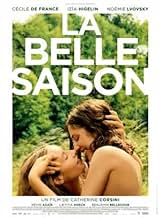
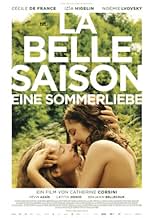
Delphine, fille de paysans, monte à Paris pour s'émanciper du carcan familial et gagner son indépendance financière. Carole est parisienne. Lorsque Delphine et Carole se rencontrent, leur hi... Tout lireDelphine, fille de paysans, monte à Paris pour s'émanciper du carcan familial et gagner son indépendance financière. Carole est parisienne. Lorsque Delphine et Carole se rencontrent, leur histoire d'amour fait basculer leurs vies.Delphine, fille de paysans, monte à Paris pour s'émanciper du carcan familial et gagner son indépendance financière. Carole est parisienne. Lorsque Delphine et Carole se rencontrent, leur histoire d'amour fait basculer leurs vies.
- Réalisation
- Scénaristes
- Vedettes
- Prix
- 3 victoires et 8 nominations au total
Cécile de France
- Carole
- (as Cécile De France)
Natalie Beder
- Marie-Laure
- (as Nathalie Beder)
6,76.1K
1
2
3
4
5
6
7
8
9
10
Avis en vedette
A very poignant movie
When you watch this feature, you think of LA VIE D'ADELE, speaking of the same scheme, female homosexuality. This film is gripping at the most, telling us the story of two Young women who met in Paris during the early seventies, when the feminist movements spread all over the world. And don't forget that two years ago, in France, the marriage for everyone laws were on every lip. So it remains in the line of actuality. Cecile de France is terrific here, so is Noémie Chowsky, as the mother of one of the two women in love for each other. A human drama that grabs you from the start to the end. I highly recommend it. Catherine Corsini made here an outstanding piece of work.
Summertime takes 'Blue is the Warmest Colour' to the countryside.
Watching this film in the start of 'pride month.'
Summertime is an engaging love story in the 70's. This is a very sensitive portrayal of two women from different backgrounds in conservative, rural France. Set in the early 70s in the first flush of modern feminism, the plot is pretty simple and the issue simpler - will they stay together against the pressures of rural society? The film is very realistic as it deals with woman rights and also portrays the societal views on lesbian culture in the 70's. This is a very good representation of LGBTQ in the films.
As I was watching this film, I was very much reminded of another French film, "Blue is the Warmest Colour" which also deals with similar theme of lesbianism. I really love 'Blue is the Warmest Colour' and is my favourite romance film. However, this film is also a good film with good themes and lesbian representation. This film shows how it is to be a lesbian in a rural France in the 70's, how the society thinks of a girl involving with another girl.
Overall, it's a pretty good film which portrays a really interesting subject matter.
As I was watching this film, I was very much reminded of another French film, "Blue is the Warmest Colour" which also deals with similar theme of lesbianism. I really love 'Blue is the Warmest Colour' and is my favourite romance film. However, this film is also a good film with good themes and lesbian representation. This film shows how it is to be a lesbian in a rural France in the 70's, how the society thinks of a girl involving with another girl.
Overall, it's a pretty good film which portrays a really interesting subject matter.
Great Period piece from French cinema
'La Belle Saison' is set in 1971 when women were asserting their rights – as indeed a lot of folk were doing the same to a world that was not really ready. This is set against the lives of Delphine from a rural farming family. She escapes to Paris where she happens to cross paths with the fiery Carole (Cécile de France – 'Meserine').
Then amidst the heady cocktail of feminism, liberation and radical politics they expressed themselves sexually – which of course was revolutionary. Yes they set about challenging the heterosexual orthodoxy - and found more than just a political statement in that they fell for each other.
Now there is tons more to this inspiringly brilliant film. It is made in such a way that the characters come alive and are completely believable. All the performances are outstanding and the period detail is really good too. The hair and fashions as well as the vehicles are spot on – and some nice Janis Joplin songs on the soundtrack too. There is so much here to like that it is a very easy job to recommend.
Then amidst the heady cocktail of feminism, liberation and radical politics they expressed themselves sexually – which of course was revolutionary. Yes they set about challenging the heterosexual orthodoxy - and found more than just a political statement in that they fell for each other.
Now there is tons more to this inspiringly brilliant film. It is made in such a way that the characters come alive and are completely believable. All the performances are outstanding and the period detail is really good too. The hair and fashions as well as the vehicles are spot on – and some nice Janis Joplin songs on the soundtrack too. There is so much here to like that it is a very easy job to recommend.
French lesbian film
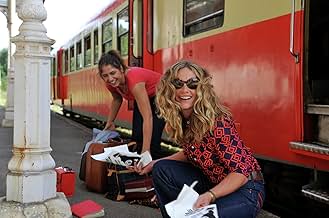
It's 1971 France. Delphine Benchiessa (Izïa Higelin) works at her family's rural farm. Her father berates her for being too slow to find a man. Unbeknownst to him, she's a lesbian. Her girlfriend surprises her by marrying a local boy. In Paris, she gets caught up with a group of militant feminists. She falls for their leader Carole (Cécile de France). After her father suffers a stroke, Delphine is forced to go home and take care of the farm.
It's another version of the tragic lesbian love story. I do wonder if 1971 France is a little too late to have this story. Usually, it's Victorian ladies on a gravel beach trying to discover lesbianism. In reality, rural conservatism and family dynamics do account for it. These ladies are not ignorant of the world. The 70's is not all disco and gay. It's still a fight for rights and acceptance. The danger isn't as high, and the story becomes smaller. Delphine could always run off and abandon the farm. It's not like society prevents her from getting a job in Paris. The issue becomes more internal and personal. It's a relationship movie.
Feminism and forbidden love in rural 70s France
This is a sensitive portrayal of two women from different backgrounds in conservative, rural France. Delphine, a country girl in Paris is introduced to feminism at a time (1971) shortly after the student riots in Paris, the bra-burning feminism of late 60s USA, and the teen-led cultural revolution in music, art and fashion. Paris was a world away from her farm in the Limousin. It is a film about feminism and lesbianism with strong female leads directed by an experienced female director who was, herself, a teenager at the time the film was set. As such it is authentic and tender, not titillating. It is a film about relationships, between Delphine and her mother, her Parisian girlfriend, the boy she is expected to marry and above all the conflict between the city and the country.
It is a film that could only be made in Europe and only set in the 70s and was justifiably nominated for a Lumiere, France's equivalent to the Golden Globes. Jellybeansucker should stick to sucking jelly beans and watching simplistic action movies. This is for those who prefer content to pace.
Le saviez-vous
- AnecdotesDirector Catherine Corsini stated that she named the two main characters Carole and Delphine after real life artists and feminists Carole Roussopoulos and Delphine Seyrig.
- GaffesAfter a swim in the pond, the girls lay out to take some sun. As Carole lays naked on the blanket resting her head on Delphine, her arms are raised and we can see she does not have any underarm hair. As the girls start to kiss and caress Carole's armpit is exposed again but this time full of underarm hair.
- ConnexionsReferenced in Théo et Hugo dans le même bateau (2016)
- Bandes originalesL'Hymne du MLF, d'apres Le Chant des Marais
(Johann Esser/Wolfgang Langhoff/Rudi Goguel)
With the kind permission of Edition Peters Group
All rights reserved
Meilleurs choix
Connectez-vous pour évaluer et surveiller les recommandations personnalisées
- How long is Summertime?Propulsé par Alexa
Détails
- Date de sortie
- Pays d’origine
- Site officiel
- Langues
- Aussi connu sous le nom de
- Summertime
- Lieux de tournage
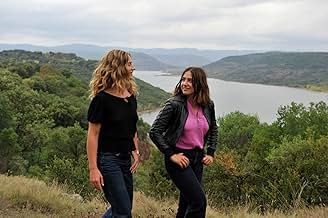
- Haute-Vienne, France(scenes in the country)
- sociétés de production
- Consultez plus de crédits d'entreprise sur IMDbPro
Box-office
- Budget
- 4 800 000 € (estimation)
- Brut – États-Unis et Canada
- 35 322 $ US
- Fin de semaine d'ouverture – États-Unis et Canada
- 15 413 $ US
- 24 juill. 2016
- Brut – à l'échelle mondiale
- 3 778 938 $ US
Contribuer à cette page
Suggérer une modification ou ajouter du contenu manquant