ÉVALUATION IMDb
6,8/10
62 k
MA NOTE


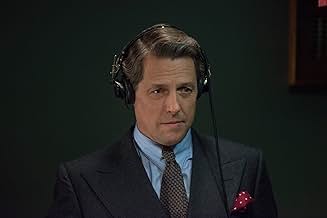
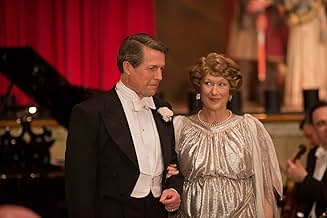
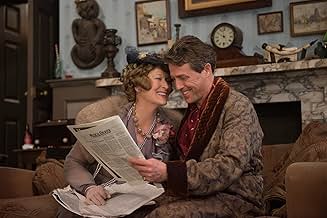
L'histoire de Florence Foster Jenkins, une héritière new-yorkaise qui rêvait de devenir chanteuse d'opéra, malgré une voix terrible.L'histoire de Florence Foster Jenkins, une héritière new-yorkaise qui rêvait de devenir chanteuse d'opéra, malgré une voix terrible.L'histoire de Florence Foster Jenkins, une héritière new-yorkaise qui rêvait de devenir chanteuse d'opéra, malgré une voix terrible.
- Réalisation
- Scénaristes
- Vedettes
- Nommé pour 2 oscars
- 10 victoires et 48 nominations au total


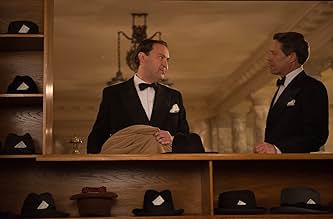
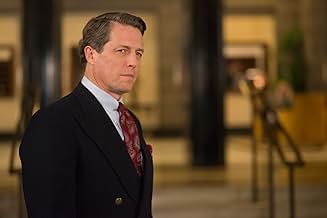


6,861.7K
1
2
3
4
5
6
7
8
9
10
Avis en vedette
If a thing's worth doing, it's worth doing badly.
There's something rather wonderful about people who manage to do things incredibly badly - William MacGonagall, the world's worst poet, and Eddie the Eagle Edwards, the world's worst ski-jumper, spring to mind; but Florence Foster Jenkins is in the pantheon as the world's worst singer. I have a CD of the few recordings she made, and not the least remarkable aspect of Meryl Streep's performance is that she superbly captures La Jenkins' extraordinary singing voice. This, however, is only one part of a beautiful performance, in which Streep gives us a touchingly vulnerable Jenkins. I saw this film expecting to laugh - and indeed there are some great comic moments. What I didn't expect, however, was to find myself sympathising with the title character so much, to the extent that I found myself rooting for her - not to give a magnificent recital, but at least to BELIEVE that she had. Hugh Grant plays Jenkins' sort-of husband (they never actually married in real life, though the film implies that they did) and manager. It's a fine performance, and he's lost none of his ease with comic scenes. He also has some heartwarmingly touching scenes in which he gives Jenkins the (platonic) love she is so desperate for, and when he tries to shield her from the truth. Even so, I was never quite sure how to reconcile this side of his character with the double-life he leads without Jenkins' knowledge. Simon Helberg is excellent as Jenkins' much put-upon accompanist, and Nina Arianda provides a good turn as a gold-digger who displays some unexpected heart. Highly recommended.
7sol-
Blissful Ignorance
Inspired by the true story of a former stage performer who tried to make it as a singer in the 1940s despite having no actual talent, 'Florence Foster Jenkins' is a far more layered motion picture than it might sound on paper. The film is actually more about Florence's husband than Florence herself, and convincing as Meryl Streep is in the title role, this is Hugh Grant's film all the way, delivering a fine turn as her devoted husband who smiles throughout all her terrible singing and works hard to keep the critics at bay to avoid her feelings being crushed. On an even more complex note, Grant has a girlfriend who he lives with in a separate apartment (paid by Florence), and amidst the layers of his character are his conflicting feelings of gratitude toward Florence and a desire to live his own life. Grant is very funny too with excellent support from Simon Helberg as a nebbish accompanying pianist and there are several laugh-out-loud moments as his attempts to keep Florence blissfully ignorant spiral out of control. Delightful as the film may be, it is not without its drawbacks. In particular, the film never feels like it properly delves into Florence's past (by concentrating on her husband more than her) and intriguing side elements like a fear of knives and a mysterious satchel are brought up without ever being properly resolved. Christian McKay also feels wasted in a very small role. The virtues here though far outshine the vices and with creative costumes throughout and a catchy, upbeat Alexandre Desplat score, 'Florence Foster Jenkins' is a pleasure to both watch and listen to, quite aside from the high quality acting and curious story.
A near career best performance from Streep
Surely only those with some knowledge of musical history and consequently at least some love of music, or perhaps a penchant for eccentricity like myself, will ever have heard of Florence Foster Jenkins, reputedly the world's worst singer, so without a ready-made audience why a biopic now, (two, if you count the new French film "Marguerite")? Maybe someone somewhere saw in this tale of a deluded grande dame a star vehicle for a talented actress of a certain age as well as an audience-pleasing combination of comedy and pathos and that's exactly what you get. No real knowledge of the subject is necessary to enjoy Stephen Frears' hugely enjoyable biopic "Florence Foster Jenkins" which combines comedy, pathos and a close to career best performance from Meryl Streep, (who else), to terrific effect and if you think Streep can play anything, in her sleep if necessary, pause a moment. On a technical level she may be the most versatile actress in the world but much too often she's been accused of failing to connect on an emotional level. I've always felt her Margaret Thatcher a great piece of mimicry but hardly worthy of a third Oscar and there are those who will claim that her Florence Foster Jenkins is nothing more than a shameless ploy for that elusive fourth Oscar. I will simply say that if she is to win that fourth Oscar surely it has to be for this great performance. Streep clicks on every level; this a tragic-comic performance of the first water in which Meryl never puts a foot wrong and yes, technically it's a marvel too with Streep doing her own appallingly off-key singing, (no mean feat for an actress with a superb voice). This isn't just the best thing she's done since "Doubt" but one of the best things she's ever done.
Amazingly it isn't all a one-woman show; the big revelation here is Hugh Grant as Jenkins' husband, the man who loves her, you might say exploits her, and does his best to protect her. It's the least Hugh Grant-like performance of his career and he's never been better. Likewise "The Big Bang Theory's" Simon Helberg as Cosme McMoon, Jenkins' accompanist, is outstanding in a difficult role. It's also beautifully written by Nicholas Martin, looks great, (the period detail is spot on), and is very well directed by Frears. As we head into the silly season of superhero blockbusters and the kind of of films designed to keep the kids quiet in the summer months this splendid biography may be the last good movie we will see at our multiplexes for months.
Amazingly it isn't all a one-woman show; the big revelation here is Hugh Grant as Jenkins' husband, the man who loves her, you might say exploits her, and does his best to protect her. It's the least Hugh Grant-like performance of his career and he's never been better. Likewise "The Big Bang Theory's" Simon Helberg as Cosme McMoon, Jenkins' accompanist, is outstanding in a difficult role. It's also beautifully written by Nicholas Martin, looks great, (the period detail is spot on), and is very well directed by Frears. As we head into the silly season of superhero blockbusters and the kind of of films designed to keep the kids quiet in the summer months this splendid biography may be the last good movie we will see at our multiplexes for months.
Entertaining but loses much of the complexity available
I think describing FFJ as "the worst singer ever" is unimaginative and also missleading. She was after all someone who took the probably enormous trouble to learn arias that would take great skill and technique to master. They are not easy to sing "badly", or to even get through at all. Consequently Meryl Streep's vocal performance here is amazing. But the film shows some lack of imagination as well: how about the mystery of how aware Jenkins really was of the quality of her singing, which could hardly be described on a simple axis from bad to good? Also, wasn't Jenkins herself active in creating her own little bubble of audience and her public persona? Here, St Clair Bayfield is shown as single-handedly managing and protecting her, which creates a dynamic both troubling and simplistic.
A gently comedic story of love and deceit.
Perpetuating little white lies is part of everyday life and keeps society ticking over. But to what point is it acceptable to massage an ego with a dirty black lie. A real whopper. And is such a lie perpetuated by love? Greed? Or the pursuit of personal glory? This is the rather subtle sub-text behind the story of Florence Foster Jenkins.
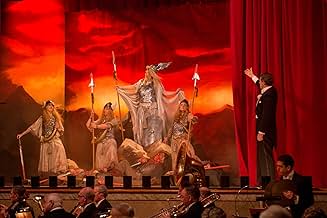
Based on a true story, Florence Foster Jenkins tells the story of a truly awful singer (Meryl Streep), cossetted in her closed world of a 1944 New York hotel and pampered by her husband St Clair Mayfield (Hugh Grant), who is otherwise entwined with the sensuous Kathleen (Rebecca Ferguson). Together with ex-actor Mayfield, the wealthy Florence is the co-star of the show at her self-owned "Verdi Club" where she has a non-speaking role enacting various 'tableau' scenes. But in the interests of following her dreams she recruits the help of famous singing instructor Carlo Edwards (the marvellous David Haig) and an enthusiastic and personable young pianist Cosme McMoon (Simon Helberg, "The Big Bang Theory"). Carlo is aware of what he is in for (he wants to keep the arrangement 'on the quiet'); Cosme is not (to great comic effect).
This classic re-telling of 'The Emperor's New Clothes' ultimately takes us on a journey to a packed concert at the Carnegie Hall, where many of the tickets have been given away to rowdy and drunk servicemen.
It's impossible to describe a film as "delightful just delightful" without hearing the velvety tones of Hugh Grant saying those words. But that's what it is. A treat of moving and at times wildly funny storytelling from director Stephen Frears ("Philomena", "The Queen") that just works from beginning to end.
Meryl Streep is just glorious in the titular role, oozing charm. Those UK readers will probably fondly remember the piano playing 'skills' of the late, great comedian Les Dawson (google it for a youtube clip) who had to be an absolutely brilliant pianist to be able to deliberately play so badly. In a similar way, we know (from the likes of "Mamma Mia") that Streep knows how to belt out a good tune, so it requires some considerable skill to deliver Florence's songs as well (or as badly) as she does. Bravo Ms Streep, Bravo!
And Hugh Grant is often quite unfairly criticized for playing Hugh Grant in every movie (as if Tom Hanks and Harrison Ford are much different?), but here he turns in a totally sterling performance. The drivers behind Mayfield's character are never totally clear (and I won't spoil that here), but in the final reel the motivating factor becomes crystal clear, and Grant has never been better. (Bravo Mr Grant, Bravo!).
To round off the accolades for the lead performances, Simon Helberg turns in a genius comic performance as the goggle-eyed pianist, who lights up every scene he's in and delivers his lines (e.g. one about a naval encounter) with perfect comic timing.
Shining again in a supporting role is Rebecca Ferguson ("Mission Impossible: Rogue Nation") who once again is dazzling. Among the bright young acting newcomers of the likes of Vikander and Rooney, Ferguson (who is approaching her mid-30s) brings a level of sophisticated glamour and maturity to the screen that is strongly reminiscent of the great starlets of the 1940's and 50's like Kathrine Hepburn or Lana Turner. She is fast becoming one of my favourite actresses. Also worthy of note is Nina Arianda as gold- digging starlet Agnes Stark – effectively playing (at least at first) the "little boy in the crowd" in the Emperor's fable.
Written by TV-writer Nicholas Martin in his big-screen debut, the story is slowly and subtly unwoven, only progressively revealing the plot points in an intelligent manner. Other screenwriters take note: this is how to do it.
Cinematography is by the great Danny Cohen ("The Danish Girl"; "Room") and with the Production Design, Costuming and Special effects crew 1940's New York is vibrantly brought to life.
While the film's leisurely pace might make the younger set fidgety, this is a treat particularly for older viewers looking for a great night out at the cinema. The film got a good old-fashioned round of applause at my showing when the credits came up. "Delightful just delightful". Go see it.
(Please visit http://bob-the-movie-man.com for the graphical version of this review and to comment with your thoughts. Thanks).
Based on a true story, Florence Foster Jenkins tells the story of a truly awful singer (Meryl Streep), cossetted in her closed world of a 1944 New York hotel and pampered by her husband St Clair Mayfield (Hugh Grant), who is otherwise entwined with the sensuous Kathleen (Rebecca Ferguson). Together with ex-actor Mayfield, the wealthy Florence is the co-star of the show at her self-owned "Verdi Club" where she has a non-speaking role enacting various 'tableau' scenes. But in the interests of following her dreams she recruits the help of famous singing instructor Carlo Edwards (the marvellous David Haig) and an enthusiastic and personable young pianist Cosme McMoon (Simon Helberg, "The Big Bang Theory"). Carlo is aware of what he is in for (he wants to keep the arrangement 'on the quiet'); Cosme is not (to great comic effect).
This classic re-telling of 'The Emperor's New Clothes' ultimately takes us on a journey to a packed concert at the Carnegie Hall, where many of the tickets have been given away to rowdy and drunk servicemen.
It's impossible to describe a film as "delightful just delightful" without hearing the velvety tones of Hugh Grant saying those words. But that's what it is. A treat of moving and at times wildly funny storytelling from director Stephen Frears ("Philomena", "The Queen") that just works from beginning to end.
Meryl Streep is just glorious in the titular role, oozing charm. Those UK readers will probably fondly remember the piano playing 'skills' of the late, great comedian Les Dawson (google it for a youtube clip) who had to be an absolutely brilliant pianist to be able to deliberately play so badly. In a similar way, we know (from the likes of "Mamma Mia") that Streep knows how to belt out a good tune, so it requires some considerable skill to deliver Florence's songs as well (or as badly) as she does. Bravo Ms Streep, Bravo!
And Hugh Grant is often quite unfairly criticized for playing Hugh Grant in every movie (as if Tom Hanks and Harrison Ford are much different?), but here he turns in a totally sterling performance. The drivers behind Mayfield's character are never totally clear (and I won't spoil that here), but in the final reel the motivating factor becomes crystal clear, and Grant has never been better. (Bravo Mr Grant, Bravo!).
To round off the accolades for the lead performances, Simon Helberg turns in a genius comic performance as the goggle-eyed pianist, who lights up every scene he's in and delivers his lines (e.g. one about a naval encounter) with perfect comic timing.
Shining again in a supporting role is Rebecca Ferguson ("Mission Impossible: Rogue Nation") who once again is dazzling. Among the bright young acting newcomers of the likes of Vikander and Rooney, Ferguson (who is approaching her mid-30s) brings a level of sophisticated glamour and maturity to the screen that is strongly reminiscent of the great starlets of the 1940's and 50's like Kathrine Hepburn or Lana Turner. She is fast becoming one of my favourite actresses. Also worthy of note is Nina Arianda as gold- digging starlet Agnes Stark – effectively playing (at least at first) the "little boy in the crowd" in the Emperor's fable.
Written by TV-writer Nicholas Martin in his big-screen debut, the story is slowly and subtly unwoven, only progressively revealing the plot points in an intelligent manner. Other screenwriters take note: this is how to do it.
Cinematography is by the great Danny Cohen ("The Danish Girl"; "Room") and with the Production Design, Costuming and Special effects crew 1940's New York is vibrantly brought to life.
While the film's leisurely pace might make the younger set fidgety, this is a treat particularly for older viewers looking for a great night out at the cinema. The film got a good old-fashioned round of applause at my showing when the credits came up. "Delightful just delightful". Go see it.
(Please visit http://bob-the-movie-man.com for the graphical version of this review and to comment with your thoughts. Thanks).


Le saviez-vous
- AnecdotesMeryl Streep does her own singing. Simon Helberg does his own piano playing.
- GaffesThe sailors in the audience at Carnegie Hall would never have worn their hats during the performance. Men removed their hats indoors.
- Citations
Florence Foster Jenkins: People may say I couldn't sing, but no one can ever say I didn't sing.
- Bandes originalesOh! Susanna
Written by Stephen Foster
Performed by Carl Davis and Stefan Bednarczyk
Arranged by Terry Davies
Meilleurs choix
Connectez-vous pour évaluer et surveiller les recommandations personnalisées
- How long is Florence Foster Jenkins?Propulsé par Alexa
Détails
- Date de sortie
- Pays d’origine
- Sites officiels
- Langues
- Aussi connu sous le nom de
- Florence: la mejor peor de todas
- Lieux de tournage
- Kelvingrove Art Gallery & Museum, Glasgow, Strathclyde, Écosse, Royaume-Uni(Carnegie Hall - exterior)
- sociétés de production
- Consultez plus de crédits d'entreprise sur IMDbPro
Box-office
- Budget
- 29 000 000 $ US (estimation)
- Brut – États-Unis et Canada
- 27 383 770 $ US
- Fin de semaine d'ouverture – États-Unis et Canada
- 6 601 313 $ US
- 14 août 2016
- Brut – à l'échelle mondiale
- 49 052 787 $ US
- Durée
- 1h 51m(111 min)
- Couleur
- Mixage
- Rapport de forme
- 2.35 : 1
Contribuer à cette page
Suggérer une modification ou ajouter du contenu manquant