

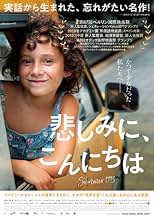
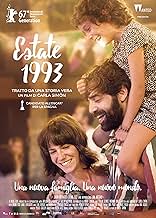
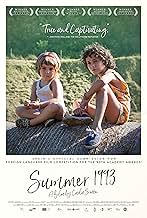
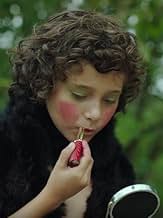
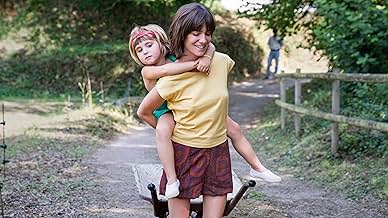
Ajouter une intrigue dans votre langueAfter her mother's death, six-year-old Frida is sent to her uncle's family to live with them in the countryside. But Frida finds it hard to forget her mother and adapt to her new life.After her mother's death, six-year-old Frida is sent to her uncle's family to live with them in the countryside. But Frida finds it hard to forget her mother and adapt to her new life.After her mother's death, six-year-old Frida is sent to her uncle's family to live with them in the countryside. But Frida finds it hard to forget her mother and adapt to her new life.
- Réalisation
- Scénariste
- Vedettes
- Prix
- 38 victoires et 59 nominations au total


Paula Blanco Barnés
- Cesca
- (as Paula Blanco)
Dolores Fortis
- Carnissera
- (as Dolors Fortis Artacho)
Tere Solà
- Senyora Carnisseria
- (as Tere Solà Nasarre)
Josep Torrent
- Doctor
- (as Josep Torrent Alabau)
Cristina Matas
- Infermera
- (as Cristina Matas Calvet)
7,19K
1
2
3
4
5
6
7
8
9
10
Avis en vedette
How a young girl copes with her mom's death will break your heart
Summer 1993" (2017 release from Catalonia; 97 min.) brings the story of Frida, a 6 or 7 yr. old girl. As the movie opens, we see Frida's stuff being boxed up, and Frida along with a couple driving out of the city. The couple discuss the situation in hushed terms but we pick up quickly that Frida's mom just passed away (we're not quite sure of what), and that Frida is now taken care of by her mom's brother Esteve and his wife Marga. The couple have a daughter of their own, 3 or 4 yr. old Anna. How will Frida adopt to her new environment? more importantly, how will the little girl process the death of her mom? At this point we're 10 min. into the mvie, but to tell you more of the plot would spoil your viewing experience, you'll just have to see for yourself how it all plays out.
Couple of comments: this movie is written and directed by Carla Simon, based on her memoirs and with Frida standing in for Carla. Set in rural Catalonia, we observe how Frida tries to settle into this new family, while at the same time dealing with her overwhelming sense of loss and sadness. Not surprisingly, Frida is at times scared, confused, angry, or withdrawn (and at times all of those at once). There seemingly is no "plot" to speak of, but that is in fact not the case at all. It's just that the "plot" reveals itself with subtlety. Of course none of this would have been possible but for the astonishing performance of the little girl who plays Frida, wow, just wow Not enough can be said about that. The director smartly gives us a lot of interaction between Frida and Anna, with at times uninterrupted shots that seemingly go forever (in reality: a minute or two). The closing scene of the movie is both brilliant and heartbreaking. (Afterwards, the movie shows it is dedicated to the memory of Carla Simon's mother.)
"Summer 1993" premiered at the 2017 Berlin film festival, to immediate acclaim. I have no idea why it's taken 18 months for the movie to reach US theaters. The movie opened this weekend at my local art-house theater here in Cincinnati, and I couldn't wait to see it. The Saturday matinee screening where I saw this at was attended nicely (but nowhere close to sold out). If you like a top notch foreign movie that examines how a young girl copes with her mom's death, I readily recommend you seek this out, be it in the theater, on VOD, or eventually on DVD/Blu-ray, and draw your own conclusion.
Couple of comments: this movie is written and directed by Carla Simon, based on her memoirs and with Frida standing in for Carla. Set in rural Catalonia, we observe how Frida tries to settle into this new family, while at the same time dealing with her overwhelming sense of loss and sadness. Not surprisingly, Frida is at times scared, confused, angry, or withdrawn (and at times all of those at once). There seemingly is no "plot" to speak of, but that is in fact not the case at all. It's just that the "plot" reveals itself with subtlety. Of course none of this would have been possible but for the astonishing performance of the little girl who plays Frida, wow, just wow Not enough can be said about that. The director smartly gives us a lot of interaction between Frida and Anna, with at times uninterrupted shots that seemingly go forever (in reality: a minute or two). The closing scene of the movie is both brilliant and heartbreaking. (Afterwards, the movie shows it is dedicated to the memory of Carla Simon's mother.)
"Summer 1993" premiered at the 2017 Berlin film festival, to immediate acclaim. I have no idea why it's taken 18 months for the movie to reach US theaters. The movie opened this weekend at my local art-house theater here in Cincinnati, and I couldn't wait to see it. The Saturday matinee screening where I saw this at was attended nicely (but nowhere close to sold out). If you like a top notch foreign movie that examines how a young girl copes with her mom's death, I readily recommend you seek this out, be it in the theater, on VOD, or eventually on DVD/Blu-ray, and draw your own conclusion.
Clueless viewers.
It's really sad & not promising for humanity when people view a magnificent film like this & call it boring. It shows how our society, & especially school & the unconscionable entertainment industry, cater to the lowest levels of human nature, ignoring the pain, the love, & the good that we have but often don't know how to share or express.
Films like this can provide a genuine education at any level, with teachers serving as discussion leaders to help children express their pain, deal with their fears, & learn to appreciate one another while dealing with their differences & becoming supportive rather than competing, dominating, or constantly defeating one another as the morally bankrupt western civilization teaches them now.
Films like this can provide a genuine education at any level, with teachers serving as discussion leaders to help children express their pain, deal with their fears, & learn to appreciate one another while dealing with their differences & becoming supportive rather than competing, dominating, or constantly defeating one another as the morally bankrupt western civilization teaches them now.
Well-observed child's tale
Carla Simon's well-observed tale of a young girl who's orphaned and forced to move into her uncle's home. Frida (Laia Artigas ) is the girl and her uncle Esteve (David Verdaguer) has a wife Marga (Bruna Cusi) and an even younger daughter Anna (Paula Robles).
Frida's mother's passing of an "illness" isn't defined at the outset, but, the constant medical tests the young girl has to be subjected to and the panic that ensues when she bleeds on a playground give you a pretty good idea of what will be revealed (not to mention setting it 25 years ago). But, SUMMER 1993 isn't really about that topic, it's more about coping without parents, and trying to blend in with her uncle's family. It's often awkward, and even painful, but it's never less than perceptive even if it never quite reaches the next level. The movie's path never seems in doubt, no matter the obstacles put in the characters' way. The music selections are interesting and unexpected with touches of soulful jazz. The ending concludes on a different note than one might forsee - but, it's just about right.
This was Spain's official submission for the Foreign Language Oscar last year (it was not nominated or short-listed).
Frida's mother's passing of an "illness" isn't defined at the outset, but, the constant medical tests the young girl has to be subjected to and the panic that ensues when she bleeds on a playground give you a pretty good idea of what will be revealed (not to mention setting it 25 years ago). But, SUMMER 1993 isn't really about that topic, it's more about coping without parents, and trying to blend in with her uncle's family. It's often awkward, and even painful, but it's never less than perceptive even if it never quite reaches the next level. The movie's path never seems in doubt, no matter the obstacles put in the characters' way. The music selections are interesting and unexpected with touches of soulful jazz. The ending concludes on a different note than one might forsee - but, it's just about right.
This was Spain's official submission for the Foreign Language Oscar last year (it was not nominated or short-listed).
Complement and Contrast to The Florida Project
Greetings again from the darkness. In Sean Baker's 2017 surprise indie hit THE FLORIDA PROJECT, we viewed a challenging family environment through the ever-optimistic eyes of a young girl intent on making the best of every day. On the opposite end of the spectrum is this autobiographical tale from writer/director Carla Simon in her first feature film. Co-written with Valentina Viso, this story is about one young girl's struggle with grief and a cold-water splash into a new family.
Six year old Frida is left orphaned when her mother dies. She eavesdrops through half-closed doors as adults make arrangements for who will take care of her. Uncle Esteve (David Verdaguer) and Aunt Marga (Bruna Cusi) agree to raise her, requiring the young girl to relocate from Barcelona to a remote Catalonia village bordering a forest. It's an idyllic setting for most young kids, however, paradise doesn't exist for a young girl who has lost both parents.
Initially it seems to be simply 'kids being kids'. As more oddities occur while Frida plays with her 3 year old cousin Anna, we begin to believe that Frida's rebellious acts may actually be that of a disturbed young child incapable of dealing with nearly unbearable sorrow. Clearly Aunt Marga runs a more disciplined household than Frida's (apparently) eccentric mother, though it's quite obvious to any parent that Frida is vying for attention - literally competing with the younger Anna for the love of parents. It's heartbreaking to watch.
We view most everything from the viewpoint and perspective of the kids. Even the camera angles are often eye-level for a 6 year old. This is a terrific approach by filmmaker Simon since Child Psychology is at the core of the story. As adults, we look to teach and protect, while sometimes overlooking the undeveloped emotional maturity in youngsters.
There is brilliance in the story-telling process here as adult viewers (it's certainly not a movie for kids) will catch the hints and partial details that Frida can't possibly process. The disease that killed her mother, though never stated, becomes clear. That cause also leads to unexpected reactions to Frida by others. The lack of sentimentality or over-dramatization is delivered through lazy summer days that lull us into complacency before awakening us to what could be. Two amazing child actresses, Laia Artigas (Frida) and Paula Robles (Anna) keep us captivated as director Simon unfolds her life onscreen.
Six year old Frida is left orphaned when her mother dies. She eavesdrops through half-closed doors as adults make arrangements for who will take care of her. Uncle Esteve (David Verdaguer) and Aunt Marga (Bruna Cusi) agree to raise her, requiring the young girl to relocate from Barcelona to a remote Catalonia village bordering a forest. It's an idyllic setting for most young kids, however, paradise doesn't exist for a young girl who has lost both parents.
Initially it seems to be simply 'kids being kids'. As more oddities occur while Frida plays with her 3 year old cousin Anna, we begin to believe that Frida's rebellious acts may actually be that of a disturbed young child incapable of dealing with nearly unbearable sorrow. Clearly Aunt Marga runs a more disciplined household than Frida's (apparently) eccentric mother, though it's quite obvious to any parent that Frida is vying for attention - literally competing with the younger Anna for the love of parents. It's heartbreaking to watch.
We view most everything from the viewpoint and perspective of the kids. Even the camera angles are often eye-level for a 6 year old. This is a terrific approach by filmmaker Simon since Child Psychology is at the core of the story. As adults, we look to teach and protect, while sometimes overlooking the undeveloped emotional maturity in youngsters.
There is brilliance in the story-telling process here as adult viewers (it's certainly not a movie for kids) will catch the hints and partial details that Frida can't possibly process. The disease that killed her mother, though never stated, becomes clear. That cause also leads to unexpected reactions to Frida by others. The lack of sentimentality or over-dramatization is delivered through lazy summer days that lull us into complacency before awakening us to what could be. Two amazing child actresses, Laia Artigas (Frida) and Paula Robles (Anna) keep us captivated as director Simon unfolds her life onscreen.
Influential!!
This is a visual narration of the child's mentality on family, loss, life, game and death.
I mostly loved that the movie avoids making audience put in a ultra-sensitive position. The movie tells its story by gently touching our emotions although it is very easy to fall into trap of agitation, with a naturally sorrowful story.


Le saviez-vous
- AnecdotesLaia Artigas and Paula Robles were cast for Frida and Anna respectively because they displayed a power struggle relationship during the casting process.
- ConnexionsFeatures El retorno de D'Artacan (1990)
- Bandes originalesToma mucha fruta
Written by Chop Suey (as Cesar Sala Garcia) and David Pallol Font
Performed by Bom Bom Chip
Meilleurs choix
Connectez-vous pour évaluer et surveiller les recommandations personnalisées
- How long is Summer 1993?Propulsé par Alexa
Détails
Box-office
- Budget
- 960 000 € (estimation)
- Brut – États-Unis et Canada
- 185 903 $ US
- Fin de semaine d'ouverture – États-Unis et Canada
- 21 307 $ US
- 27 mai 2018
- Brut – à l'échelle mondiale
- 3 054 855 $ US
- Durée
- 1h 37m(97 min)
- Couleur
- Mixage
- Rapport de forme
- 1.85 : 1
Contribuer à cette page
Suggérer une modification ou ajouter du contenu manquant