ÉVALUATION IMDb
6,6/10
4,4 k
MA NOTE


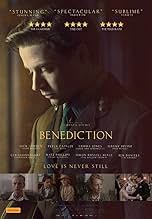
L'histoire de la vie du poète, écrivain et soldat anglais Siegfried Sassoon.L'histoire de la vie du poète, écrivain et soldat anglais Siegfried Sassoon.L'histoire de la vie du poète, écrivain et soldat anglais Siegfried Sassoon.
- Réalisation
- Scénariste
- Vedettes
- Prix
- 9 victoires et 19 nominations au total





6,64.3K
1
2
3
4
5
6
7
8
9
10
Avis en vedette
One can appreciate Sassoon's poetry and the loaded trivia that TE Lawrence was his friend
"Many live for the moment, you live for the eternity" British poet Siegfried Sassoon's son to his father in his final days--as the poet continues to bemoan the dead soldiers of of WWI who died for a cause that had changed from what it was when they enlisted. Thanks to Terrence Davies' film I have come to appreciate Sassoon's poetry. As a film, I prefer the comparable film "Under Milkwood" on the life and poetry of Dylan Thomas. A trivial highlight of the film: T E Lawrence (a.k.a. Lawrence of Arabia) attending the very private wedding of Sassoon! Though mentioned briefly as an admirer of the poet Sassoon, Noel Coward never gets shown in the film. Some aspects of the screenplay are very impressive, while some are not (switching back and forth in time, needlessly, those relating to one of Sassoon's many gay paramours).
Moderately interesting collage
My initial reaction was, "unfocused and messy," but someone else called it a collage, and I think that is a more accurate description of the film.
It's not a biography, it's not really about war, or love, or living a closeted life during a specific period in UK history; it's not about aging; it's not about poetry, or trauma. The title suggests it might be about guidance, blessing, or redemption, but in regard to what, I can't really say.
It's also about all of those things, depending on the minute. The movie changes focus quite a few times, and I found that incredibly frustrating. After two and a half hours, I did not leave with any firmed-up impression of Sassoon, or the basic intention of the film.
Having said that, the lead actor and the rest are all perfectly enjoyable to watch, the dialogue is organic, and aside from spliced-in war footage, it is pleasing to the eye. It's a good choice for watching on demand or otherwise at home. But it's not a movie that lingers.
It's not a biography, it's not really about war, or love, or living a closeted life during a specific period in UK history; it's not about aging; it's not about poetry, or trauma. The title suggests it might be about guidance, blessing, or redemption, but in regard to what, I can't really say.
It's also about all of those things, depending on the minute. The movie changes focus quite a few times, and I found that incredibly frustrating. After two and a half hours, I did not leave with any firmed-up impression of Sassoon, or the basic intention of the film.
Having said that, the lead actor and the rest are all perfectly enjoyable to watch, the dialogue is organic, and aside from spliced-in war footage, it is pleasing to the eye. It's a good choice for watching on demand or otherwise at home. But it's not a movie that lingers.
Ignore the naysayers...this is a beautiful, deeply poetic, ethereal masterpiece...
Ignore the naysayers. This is a beautiful, deeply sad, elegant, and poetic film from one of the greatest filmmakers working today, Terence Davies. Many here are dismissing this film as "catty", "stereotypical", etc. It's not in the least. It's a film based on the life of Siegfried Sassoon, a real UK poet who served in WW1 with Wilfred Owen, the brilliant soldier who wrote the poetry that was the basis for Benjamin Britten's magnificent War Requiem and who was a friend/lover of Sassoon. Sasson was a poet himself, an artist, and like all artists, felt alienated throughout his life from the world he lived in. We see that art world from behind the curtain, and anyone who has ever worked, or been privvy to, the behind the scenes of the artistic world will attest this is how it is. This is the huge source of Sassoon's "alienation", not just that he's a homosexual, which many reviewers are insisting. There's a wonderful line that sums him up perfectly, and that is "most people live in the moment. You want to live in eternity". That's a beautiful, poetic summation not only of Sassoon's life, but of art in general. Davies's films often draw on art for their inspiration, and this one is no exception.
All of the performances are 1st rate, the cinematography is exquisite, the production design is breath taking, and the dialogue is some of the best I've heard in a film in a very, very long time. Thanks to Mr. Terence Davies for making such an extraordinary movie.
All of the performances are 1st rate, the cinematography is exquisite, the production design is breath taking, and the dialogue is some of the best I've heard in a film in a very, very long time. Thanks to Mr. Terence Davies for making such an extraordinary movie.
Slow and Stately
A slow, stately biopic about poet Siegried Sassoon and the demons that plagued him after serving in WWI.
The movie has serious Evelyn Waugh vibes, especially "Brideshead Revisited." WWI stories always fascinate me, especially when they're about how much the war screwed up the psyches of the people who were caught up in it. This film is overall satisfying, if a bit repetitive. A huge amount of time is spent on Sassoon, a more or less openly gay man, and his various love affairs, all with caricatures of flamboyant, bitchy gay men and all of them leaving you wondering what he wanted to be around them for in the first place. Seriously, were all gay men this hateful in the 1920s? But then you think about how marginalized they were, and the answer is, well, yeah, maybe they were. They had a lot to be hateful about.
The one reason to see this movie is a big one, and that's the central performance of Jack Lowden. He's magnificent in this. Easily award worthy, though a group like the Academy Awards wouldn't recognize him in a million years.
Grade: A-
The movie has serious Evelyn Waugh vibes, especially "Brideshead Revisited." WWI stories always fascinate me, especially when they're about how much the war screwed up the psyches of the people who were caught up in it. This film is overall satisfying, if a bit repetitive. A huge amount of time is spent on Sassoon, a more or less openly gay man, and his various love affairs, all with caricatures of flamboyant, bitchy gay men and all of them leaving you wondering what he wanted to be around them for in the first place. Seriously, were all gay men this hateful in the 1920s? But then you think about how marginalized they were, and the answer is, well, yeah, maybe they were. They had a lot to be hateful about.
The one reason to see this movie is a big one, and that's the central performance of Jack Lowden. He's magnificent in this. Easily award worthy, though a group like the Academy Awards wouldn't recognize him in a million years.
Grade: A-
An anti-war biopic of Siegfried Sassoon
It's an anti-war biopic of the English poet Siegfried Sassoon that covers Sassoon's life from 1914 to the 1960s.
Siegfried Sassoon (Jack Lowden/Peter Capaldi) was a Second Lieutenant during World War I. His younger brother, Hamo (Thom Ashley), is killed during the war. Siegfried is further horrified by the tremendous human toll in death and lifelong disability caused by military leadership in which he no longer believes. Already a well-known poet, he refuses further participation in the war and is sent to the Craiglockhart War Hospital near Edinburgh technically for shell shock. There Siegfried meets and befriends Wilfred Owen (Matthew Tennyson), a much younger man. Siegfried also explicitly recognizes his own homosexuality.
The film then follows his anti-war sensibilities through snippets of his poetry and his chaotic love life, mainly focused on Ivor Novello (Jeremy Irvine) and Stephen Tennant (Calam Lynch/Anton Lesser). At a certain point, he tries to escape the chaos by marrying Hester Gatty (Kate Phillips/Gemma Jones). Together they have a son. George (Richard Goulding), but clearly, the marriage does not heal Sassoon's memories.
The film uses footage from the trenches in World War I and occasionally flips in time between the young Sassoon and the elderly Sassoon. Some of the editing decisions made little sense to me, particularly the early scene forecasting his conversion to Catholicism. Some edits made the film more complex than necessary. Nevertheless, the movie successfully portrays Sassoon as disabled because of World War I, from which he never psychologically recovered. This is clear from the multiple references to Wilfred Owens' poem, "Disabled."
Siegfried Sassoon (Jack Lowden/Peter Capaldi) was a Second Lieutenant during World War I. His younger brother, Hamo (Thom Ashley), is killed during the war. Siegfried is further horrified by the tremendous human toll in death and lifelong disability caused by military leadership in which he no longer believes. Already a well-known poet, he refuses further participation in the war and is sent to the Craiglockhart War Hospital near Edinburgh technically for shell shock. There Siegfried meets and befriends Wilfred Owen (Matthew Tennyson), a much younger man. Siegfried also explicitly recognizes his own homosexuality.
The film then follows his anti-war sensibilities through snippets of his poetry and his chaotic love life, mainly focused on Ivor Novello (Jeremy Irvine) and Stephen Tennant (Calam Lynch/Anton Lesser). At a certain point, he tries to escape the chaos by marrying Hester Gatty (Kate Phillips/Gemma Jones). Together they have a son. George (Richard Goulding), but clearly, the marriage does not heal Sassoon's memories.
The film uses footage from the trenches in World War I and occasionally flips in time between the young Sassoon and the elderly Sassoon. Some of the editing decisions made little sense to me, particularly the early scene forecasting his conversion to Catholicism. Some edits made the film more complex than necessary. Nevertheless, the movie successfully portrays Sassoon as disabled because of World War I, from which he never psychologically recovered. This is clear from the multiple references to Wilfred Owens' poem, "Disabled."


Le saviez-vous
- AnecdotesSeven of Siegfried Sassoon's poems were narrated in the film: Concert Interpretation, Died of Wounds, When I'm among a Blaze of Lights, To my Mother, To my Brother, Attack, and Invocation.
- GaffesSassoon did not discard his M.C. medal as shown in this film. He tossed away the medal's corresponding ribbon. The medal itself was inherited by Sassoon's son George.
- Citations
Dr. Rivers: Why not?
Siegfried Sassoon: Too afraid, too inhibited. Shamed by an inner corruption. Or perhaps it's simply because of... What's the phrase? "The love that dare not speak its name."
Dr. Rivers: You are not alone in that respect.
Meilleurs choix
Connectez-vous pour évaluer et surveiller les recommandations personnalisées
- How long is Benediction?Propulsé par Alexa
Détails
- Date de sortie
- Pays d’origine
- Sites officiels
- Langues
- Aussi connu sous le nom de
- 베네딕션
- Lieux de tournage
- Chillington Hall, Port Lane, Brewood, Wolverhampton WV8 1RE, United Kingdom(Interiors and outdoor scenes)
- sociétés de production
- Consultez plus de crédits d'entreprise sur IMDbPro
Box-office
- Brut – États-Unis et Canada
- 201 093 $ US
- Fin de semaine d'ouverture – États-Unis et Canada
- 50 970 $ US
- 5 juin 2022
- Brut – à l'échelle mondiale
- 847 418 $ US
Contribuer à cette page
Suggérer une modification ou ajouter du contenu manquant