ÉVALUATION IMDb
7,1/10
55 k
MA NOTE


À Harlem, une femme cherche désespérément à innocenter son fiancé d'un crime alors qu'elle attend leur premier enfant.À Harlem, une femme cherche désespérément à innocenter son fiancé d'un crime alors qu'elle attend leur premier enfant.À Harlem, une femme cherche désespérément à innocenter son fiancé d'un crime alors qu'elle attend leur premier enfant.
- Réalisation
- Scénaristes
- Vedettes
- A remporté 1 oscar
- 108 victoires et 194 nominations au total


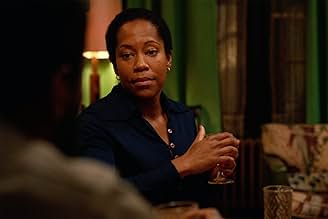







Aunjanue Ellis-Taylor
- Mrs. Hunt
- (as Aunjanue Ellis)


7,154.5K
1
2
3
4
5
6
7
8
9
10
Avis en vedette
Cut
I want to love this film and everything about it except, just about every scene is three times longer than it needs to be.
Beautifully shot, but emotionally languid
Based on James Baldwin's 1974 novel of the same name, If Beale Street Could Talk is really two stories in one; there's the love story at the narrative's core, giving the film much of its tonal qualities, and on the surface, there's a socio-political protest, which provides most of the main plot points. At a quick glance, this should be a masterpiece - there's the foundation of James Baldwin, arguably the most significant African-American author of all time, and this is the first English-language adaptation of one of his novels; there's writer/director Barry Jenkins, fresh off the Oscar-winning Moonlight - L'histoire d'une vie (2016); there's a theme that is (sadly) almost as pertinent now as it was in 1974; there's James Laxton's extraordinarily vibrant cinematography; there's a bevvy of hugely talented actors; there's Nicholas Britell's absorbing and melancholy score. This should have been a home run. However, although I found it aesthetically faultless, much like Moonlight, I felt the totality was considerably less than the sum of its exceptional parts. The biggest problem is the somnolent love story. Employing a Terrence Malick-esque esoteric voiceover, Jenkins lifts entire passages directly from Baldwin. However, what reads beautifully in the novel is badly out of place in the film, even in voiceover, and has the effect of rendering the two central characters completely unrealistic, with their love for one another idealised to such an extent as to become ridiculous.
New York, 1974; 19-year old Clementine "Tish" Rivers (KiKi Layne) and 22-year old Alonzo "Fonny" Hunt (Stephan James), who have known one another since they were children, have fallen in love, and are planning to get married and raise a family. Fonny has quit his job working for a furniture manufacturer, hoping instead to make it as a sculptor. However, when he is accused of rape, the victim mistakenly identifies him in a line-up, and he is charged and detained. Awaiting his trial, Tish visits him in jail, telling him she is pregnant. Ecstatic at the news, Fonny says he can't be in prison when the baby is born, and so Tish and her family determine to do anything it takes to get him out as soon as possible. With this as the central framework, the story is told in a non-linear style, jumping back and forth from one time period to another, which has an important thematic effect that I'll discuss below.
Aesthetically, much like Moonlight, If Beale Street Could Talk looks amazing. From Laxton's vibrant cinematography to Caroline Eselin's colour coordinated costume design (just look at all the yellow in the opening scene - in both the photography and the wardrobe), everything we see rings true, like a Jack Garofalo photograph come to life. Even more visually lyrical than Moonlight, the saturated colour palette of Beale Street recalls Douglas Sirk's Technicolour-soaked melodramas. Jenkins has been very open about his admiration for filmmakers such as Sirk, Claire Denis, and Hsiao-Hsien Hou. However, he is most clearly indebted to Wong Kar-Wai; seen in Beale Street's non-linear narrative and relatively slight plot, its poetic tone, the centrality of music, and its tendency to use visuals rather than dialogue to convey thematic points (although Jenkins is nowhere near as formally experimental as Wong).
As in both Medicine for Melancholy (2008) and Moonlight, Jenkins occasionally has characters speak directly to camera. They're not breaking the fourth wall, however. Such scenes are dialogue scenes, with two characters speaking to one another, so when one speaks directly to camera, it's as if the camera is between the two of them. It's a technique that was used most famously (and effectively) in Le silence des agneaux (1991), where each character looked directly into camera when speaking to Clarisse Starling (Jodie Foster), whereas she always looked just slightly off-camera, setting up a fascinating visual contrast which encourages us to identify with her. Beale Street doesn't do anything as interesting or subtle with the technique, but Jenkins's tendency to use it during moments of heightened emotion does have the effect of suturing the audience into the milieu of the film.
As mentioned above, the use of a non-linear narrative structure has an important thematic effect. We know from the second scene that Fonny is in jail, meaning that as we watch Tish and Fonny planning their future, renting an apartment, having sex for the first time etc, there's a permanent shadow over everything we see; we know that things go wrong, because we know much more than the characters do. For the most part, this contributes to the tone of the film, thus justifying itself. However, Jenkins overuses the technique. I understand why the film is told out of sequence, but I don't understand why it's told out of sequence to such an extent. Compare this with Sean Penn's La promesse (2001). For the most part, it's a linear narrative, except that the first scene shows us the protagonist, Jerry Black (Jack Nicholson) as a broken-down alcoholic. The rest of the film takes place prior to this scene, so when we see Nicholson fall in love with Lori (Robin Wright) and spend a blissful Christmas with her and her daughter, we know that something terrible is coming, knowledge that casts a shadow over the entire film. Penn accomplishes this with a single scene, right at the start of the film. Beale Street, on the other hand, jumps all over the place, never settling into a standardised rhythm, with the cumulative effect becoming one of distraction rather than immersion.
Which brings me to the film's most significant problem - the love story at its centre just didn't work for me. This is partly because of the emotional distance Jenkins maintains, but it's primarily because Fonny and Tish don't seem like real people, not in the way they gaze into one another's eyes as if they are seeing each other for the first time, not in the way they speak to one another as if every syllable is of earth-shattering portentousness. They rarely speak normally; instead, they adopt the eloquence of James Baldwin. In lifting sections directly from the novel, Jenkins has failed to consider the differing demands of the medium - what works on the page, doesn't necessarily work on the screen, and the reproduction of Baldwin's rich and lugubrious prose is simply unrealistic, with the delivery sounding stilted and awkward, and, most egregiously, far beyond the lexicon of the characters. This is especially apparent in Tish, whose expressive voiceover is far beyond anything we see of her character in the film itself.
In this sense, they don't come across as people with their own interiority and psychological verisimilitude, instead functioning as cogs in the machinations of Jenkins's thematic concerns. Tish, in particular, feels like a cypher, because of her dual role as a young girl trying to get her man out of jail, and a sage-like observer of institutionalised racism. Fonny too has an important dual role - that of a young man falsely imprisoned, and that of a tragic figure standing in for the millions of African-Americans unjustly imprisoned throughout history. Jenkins doubles down on this point by intercutting the film with black-and-white photographs of Henry Smith, Jesse Washington, Will Brown, Emmett Till, and the Freedom Summer Murders. The point is clear; Fonny is a grand representative of the crimes committed against Africa-Americans in the US. However, his character never attains the kind of grandeur such a representative must, by definition, possess.
Another problem concerns the depiction of Bell (Ed Skrein), the racist cop who frames Fonny. Played as a leering pantomime villain, with bad hair, bad teeth, and bad skin, he's obviously a metaphor for the ugliness of racism, but he's so completely over the top, it rips you right out of the film. On the other hand, Regina King's portrayal of Tish's mother, Sharon, is exceptional. If you really want to see what an acting powerhouse King can be, she's never been better than she was in the second season of The Leftovers (2014), and she brings much of the silent depth with which she portrayed Erika Murphy in that show to Beale Street. The scene where she heads to Puerto Rico to try to persuade the rape victim, Victoria Rogers (Emily Rios), that Fonny didn't rape her is one of the most harrowing things you'll see on screen all year, with King conveying her emotional state primarily by her facial gestures.
Beale Street is an undeniably beautiful film that depicts the love between two astonishingly attractive people (it's worth noting that in the novel, Fonny's unattractiveness is emphasised). Jenkins's interpretation turns Fonny and Tish into a Ken and Barbie-esque couple, undermining Baldwin's depiction of them as existing in a realistic milieu. Taking a meditative approach to the material, Jenkins's adaptation never rings true. Whereas Baldwin's Tish and Fonny are flawed, contradictory, and relatable, Jenkins's protagonists are too-perfect-to-be-real, with every agonisingly serious pronouncement they make to one another pushing them further and further away from connecting with the audience on an emotional level.
New York, 1974; 19-year old Clementine "Tish" Rivers (KiKi Layne) and 22-year old Alonzo "Fonny" Hunt (Stephan James), who have known one another since they were children, have fallen in love, and are planning to get married and raise a family. Fonny has quit his job working for a furniture manufacturer, hoping instead to make it as a sculptor. However, when he is accused of rape, the victim mistakenly identifies him in a line-up, and he is charged and detained. Awaiting his trial, Tish visits him in jail, telling him she is pregnant. Ecstatic at the news, Fonny says he can't be in prison when the baby is born, and so Tish and her family determine to do anything it takes to get him out as soon as possible. With this as the central framework, the story is told in a non-linear style, jumping back and forth from one time period to another, which has an important thematic effect that I'll discuss below.
Aesthetically, much like Moonlight, If Beale Street Could Talk looks amazing. From Laxton's vibrant cinematography to Caroline Eselin's colour coordinated costume design (just look at all the yellow in the opening scene - in both the photography and the wardrobe), everything we see rings true, like a Jack Garofalo photograph come to life. Even more visually lyrical than Moonlight, the saturated colour palette of Beale Street recalls Douglas Sirk's Technicolour-soaked melodramas. Jenkins has been very open about his admiration for filmmakers such as Sirk, Claire Denis, and Hsiao-Hsien Hou. However, he is most clearly indebted to Wong Kar-Wai; seen in Beale Street's non-linear narrative and relatively slight plot, its poetic tone, the centrality of music, and its tendency to use visuals rather than dialogue to convey thematic points (although Jenkins is nowhere near as formally experimental as Wong).
As in both Medicine for Melancholy (2008) and Moonlight, Jenkins occasionally has characters speak directly to camera. They're not breaking the fourth wall, however. Such scenes are dialogue scenes, with two characters speaking to one another, so when one speaks directly to camera, it's as if the camera is between the two of them. It's a technique that was used most famously (and effectively) in Le silence des agneaux (1991), where each character looked directly into camera when speaking to Clarisse Starling (Jodie Foster), whereas she always looked just slightly off-camera, setting up a fascinating visual contrast which encourages us to identify with her. Beale Street doesn't do anything as interesting or subtle with the technique, but Jenkins's tendency to use it during moments of heightened emotion does have the effect of suturing the audience into the milieu of the film.
As mentioned above, the use of a non-linear narrative structure has an important thematic effect. We know from the second scene that Fonny is in jail, meaning that as we watch Tish and Fonny planning their future, renting an apartment, having sex for the first time etc, there's a permanent shadow over everything we see; we know that things go wrong, because we know much more than the characters do. For the most part, this contributes to the tone of the film, thus justifying itself. However, Jenkins overuses the technique. I understand why the film is told out of sequence, but I don't understand why it's told out of sequence to such an extent. Compare this with Sean Penn's La promesse (2001). For the most part, it's a linear narrative, except that the first scene shows us the protagonist, Jerry Black (Jack Nicholson) as a broken-down alcoholic. The rest of the film takes place prior to this scene, so when we see Nicholson fall in love with Lori (Robin Wright) and spend a blissful Christmas with her and her daughter, we know that something terrible is coming, knowledge that casts a shadow over the entire film. Penn accomplishes this with a single scene, right at the start of the film. Beale Street, on the other hand, jumps all over the place, never settling into a standardised rhythm, with the cumulative effect becoming one of distraction rather than immersion.
Which brings me to the film's most significant problem - the love story at its centre just didn't work for me. This is partly because of the emotional distance Jenkins maintains, but it's primarily because Fonny and Tish don't seem like real people, not in the way they gaze into one another's eyes as if they are seeing each other for the first time, not in the way they speak to one another as if every syllable is of earth-shattering portentousness. They rarely speak normally; instead, they adopt the eloquence of James Baldwin. In lifting sections directly from the novel, Jenkins has failed to consider the differing demands of the medium - what works on the page, doesn't necessarily work on the screen, and the reproduction of Baldwin's rich and lugubrious prose is simply unrealistic, with the delivery sounding stilted and awkward, and, most egregiously, far beyond the lexicon of the characters. This is especially apparent in Tish, whose expressive voiceover is far beyond anything we see of her character in the film itself.
In this sense, they don't come across as people with their own interiority and psychological verisimilitude, instead functioning as cogs in the machinations of Jenkins's thematic concerns. Tish, in particular, feels like a cypher, because of her dual role as a young girl trying to get her man out of jail, and a sage-like observer of institutionalised racism. Fonny too has an important dual role - that of a young man falsely imprisoned, and that of a tragic figure standing in for the millions of African-Americans unjustly imprisoned throughout history. Jenkins doubles down on this point by intercutting the film with black-and-white photographs of Henry Smith, Jesse Washington, Will Brown, Emmett Till, and the Freedom Summer Murders. The point is clear; Fonny is a grand representative of the crimes committed against Africa-Americans in the US. However, his character never attains the kind of grandeur such a representative must, by definition, possess.
Another problem concerns the depiction of Bell (Ed Skrein), the racist cop who frames Fonny. Played as a leering pantomime villain, with bad hair, bad teeth, and bad skin, he's obviously a metaphor for the ugliness of racism, but he's so completely over the top, it rips you right out of the film. On the other hand, Regina King's portrayal of Tish's mother, Sharon, is exceptional. If you really want to see what an acting powerhouse King can be, she's never been better than she was in the second season of The Leftovers (2014), and she brings much of the silent depth with which she portrayed Erika Murphy in that show to Beale Street. The scene where she heads to Puerto Rico to try to persuade the rape victim, Victoria Rogers (Emily Rios), that Fonny didn't rape her is one of the most harrowing things you'll see on screen all year, with King conveying her emotional state primarily by her facial gestures.
Beale Street is an undeniably beautiful film that depicts the love between two astonishingly attractive people (it's worth noting that in the novel, Fonny's unattractiveness is emphasised). Jenkins's interpretation turns Fonny and Tish into a Ken and Barbie-esque couple, undermining Baldwin's depiction of them as existing in a realistic milieu. Taking a meditative approach to the material, Jenkins's adaptation never rings true. Whereas Baldwin's Tish and Fonny are flawed, contradictory, and relatable, Jenkins's protagonists are too-perfect-to-be-real, with every agonisingly serious pronouncement they make to one another pushing them further and further away from connecting with the audience on an emotional level.
Heartwarming & Heartbreaking In Equal Doses
A sumptuously shot, delicately layered & beautifully composed symphony of love, hope, tragedy, sacrifice & communal bonding, If Beale Street Could Talk is a pure, poetic & passionate piece of work from Barry Jenkins that presents the filmmaker making terrific use of his skillset to deliver yet another emotionally resonant fable.
The story follows a young African-American woman whose life takes a tragic turn after her fiancé is wrongfully arrested for a crime he didn't commit. With the couple expecting their first child, she races against time to prove his innocence and seeks support from her family who help her throughout her pregnancy and with the case.
Fresh from his Academy Award-winning Moonlight, writer-director Barry Jenkins translates James Baldwin's novel on the film canvas with honesty & authenticity, thus making sure the story's essence remains in tact. Each scene is crafted with care & compassion, and the resulting imagery from that is rich in both colours & emotions.
From a technical standpoint, If Beale Street Could Talk is sophisticated filmmaking throughout. The images aren't just gorgeously rendered but are more than capable of narrating the entire story without any verbal exposition. The unhurried pacing is deliberate yet may not appease all while Nicholas Britell's stirring score is as fitting as it is emotionally evocative.
Coming to the performances, the film packs a reliable cast in Kiki Layne, Stephan James, Regina King, Colman Domingo, Brian Tyree Henry & Ed Skrein, and none of them falter in their respective roles. Layne & James play the young couple and share a heartfelt chemistry on screen. Skrein is easily detestable as the racist cop. And King leaves her own mark with a solid input.
On an overall scale, If Beale Street Could Talk is an amalgamation of polished direction, sincere writing, arresting photography, mesmerising score & committed performances that manages to be heartwarming & heartbreaking in equal doses, and finds Barry Jenkins channeling his creative energy to give expression to his African-American legacy through the eyes of a young couple, their families & their lives.
The story follows a young African-American woman whose life takes a tragic turn after her fiancé is wrongfully arrested for a crime he didn't commit. With the couple expecting their first child, she races against time to prove his innocence and seeks support from her family who help her throughout her pregnancy and with the case.
Fresh from his Academy Award-winning Moonlight, writer-director Barry Jenkins translates James Baldwin's novel on the film canvas with honesty & authenticity, thus making sure the story's essence remains in tact. Each scene is crafted with care & compassion, and the resulting imagery from that is rich in both colours & emotions.
From a technical standpoint, If Beale Street Could Talk is sophisticated filmmaking throughout. The images aren't just gorgeously rendered but are more than capable of narrating the entire story without any verbal exposition. The unhurried pacing is deliberate yet may not appease all while Nicholas Britell's stirring score is as fitting as it is emotionally evocative.
Coming to the performances, the film packs a reliable cast in Kiki Layne, Stephan James, Regina King, Colman Domingo, Brian Tyree Henry & Ed Skrein, and none of them falter in their respective roles. Layne & James play the young couple and share a heartfelt chemistry on screen. Skrein is easily detestable as the racist cop. And King leaves her own mark with a solid input.
On an overall scale, If Beale Street Could Talk is an amalgamation of polished direction, sincere writing, arresting photography, mesmerising score & committed performances that manages to be heartwarming & heartbreaking in equal doses, and finds Barry Jenkins channeling his creative energy to give expression to his African-American legacy through the eyes of a young couple, their families & their lives.
A Breathtaking Look at a Love Story in 1970s Harlem
I think it is safe to say that If Beale Street Could Talk was my most anticipated film of 2018, given how masterful the trailer was. I was so excited. The trailer made me sob tears of sadness, but also of joy, and I could not wait for the film. Well, I saw the film today, and despite how excellent the film was, I was slightly disappointed. And when I say disappointed, I do not mean the film was bad by any means. But aw man, I was really expecting a flipping masterpiece.
Now, here are the positives. If Beale Street Could Talk is the most aesthetically pleasing film I have ever seen. From the vibrant colors (especially the shades of yellow) to the 360 degree camera movement to the beautiful close ups of every man and woman's face, I could not help but be in awe of the cinematography and editing in this film. It is extraordinary. This is hands down the most beautiful film I have ever seen. It was absolutely superb.
I also thought this was the best acted film of probably the past several years, if I am being honest. Newcomer KiKi Layne delivers such an extraordinary performance, from her subtle facial movements to her beautiful inflections in her voice to her mannerisms. I loved her performance so much. I also thought Stephan James had the most charming and romantic dialogue, but his delivery made it even more consistent and real. The chemistry between the two blew Lady Gaga and Bradley Cooper's interactions from A Star is Born out of the water. I also do not want to neglect all of the supporting cast, especially from Colman Domingo and Regina King.
The music broke my heart. It is constructed so eloquently, and as I listen to "Agape" by Nicholas Britell, I want to start sobbing. It is that well-done. The score has this sense of mysterious intrigue, yet euphoric hypnotism that also has a hint of sadness and uncertainty that draws you in so perfectly. It is my favorite score of the decade, if I am being honest. It is that well-composed.
Now, I can go on and on about the merits of this film, because there are tons. But I do have some problems, and it breaks my heart that there is even anything "wrong" with this movie. Now, I was under the impression that this film would be about the love story between two African Americans during the 1970s, that would be tested amidst a false accusation and an unexpected pregnancy. Now, while I was up for all of that, I feel like the film becomes a tad bit unfocused. While the first half of the film deals with the love story so passionately, the second half takes time away from our two leads and gives time to supporting characters that are not as important to me. I understand that the false accusation had to be delved into a bit, but the film got a little too involved with that, and it made me kind of disappointed that the love story was being neglected for the sake of explaining more of something I didn't care as much about. I just feel like Barry Jenkins gave everything his all with about eighty percent of the film, but he wasn't as into some of the legal/false accusation stuff, and felt the need to include it for whatever reason. That is just me though. I also think a minor performance from a character was kind of awful. It was a very small, yet critical part of the film, and given how superb everyone else was, this one woman's acting stuck out like a sore thumb.Along with that, a friend of Fonny shows up, and although he delivers a fantastic performance, I think the scene involving him was unimportant and did not really tie with the rest of the film all that much.
I also think the film was not just unfocused, but a little tonally inconsistent too. One second, the film has you in tears, but without even giving time for the audience to breathe, a narration happens with pumped up jazz and Harlem Renaissance music that feels a little too soon. There are moments of sadness, tears, despair, but also hope, feelings that I thought were displayed perfectly here. However, some comedy was included along with some genuine moments of suspense, but I don't think they really fit. What I am really trying to say is that all of these individual elements are phenomenal on their own, but they do not mesh well together at certain parts here, which makes the film drag in some places, which I really hate saying, because I loved so much of the film.
Anyways, I want to see this film over and over again, regardless of my complaints. It is a such a fantastic and unique love story that is in the backdrop of some horrible times within the United States. Perhaps, the problems I have will be forgiven in the future. Only time will tell. Regardless of what happens, the film's score will always have a special place in my ears.
Now, here are the positives. If Beale Street Could Talk is the most aesthetically pleasing film I have ever seen. From the vibrant colors (especially the shades of yellow) to the 360 degree camera movement to the beautiful close ups of every man and woman's face, I could not help but be in awe of the cinematography and editing in this film. It is extraordinary. This is hands down the most beautiful film I have ever seen. It was absolutely superb.
I also thought this was the best acted film of probably the past several years, if I am being honest. Newcomer KiKi Layne delivers such an extraordinary performance, from her subtle facial movements to her beautiful inflections in her voice to her mannerisms. I loved her performance so much. I also thought Stephan James had the most charming and romantic dialogue, but his delivery made it even more consistent and real. The chemistry between the two blew Lady Gaga and Bradley Cooper's interactions from A Star is Born out of the water. I also do not want to neglect all of the supporting cast, especially from Colman Domingo and Regina King.
The music broke my heart. It is constructed so eloquently, and as I listen to "Agape" by Nicholas Britell, I want to start sobbing. It is that well-done. The score has this sense of mysterious intrigue, yet euphoric hypnotism that also has a hint of sadness and uncertainty that draws you in so perfectly. It is my favorite score of the decade, if I am being honest. It is that well-composed.
Now, I can go on and on about the merits of this film, because there are tons. But I do have some problems, and it breaks my heart that there is even anything "wrong" with this movie. Now, I was under the impression that this film would be about the love story between two African Americans during the 1970s, that would be tested amidst a false accusation and an unexpected pregnancy. Now, while I was up for all of that, I feel like the film becomes a tad bit unfocused. While the first half of the film deals with the love story so passionately, the second half takes time away from our two leads and gives time to supporting characters that are not as important to me. I understand that the false accusation had to be delved into a bit, but the film got a little too involved with that, and it made me kind of disappointed that the love story was being neglected for the sake of explaining more of something I didn't care as much about. I just feel like Barry Jenkins gave everything his all with about eighty percent of the film, but he wasn't as into some of the legal/false accusation stuff, and felt the need to include it for whatever reason. That is just me though. I also think a minor performance from a character was kind of awful. It was a very small, yet critical part of the film, and given how superb everyone else was, this one woman's acting stuck out like a sore thumb.Along with that, a friend of Fonny shows up, and although he delivers a fantastic performance, I think the scene involving him was unimportant and did not really tie with the rest of the film all that much.
I also think the film was not just unfocused, but a little tonally inconsistent too. One second, the film has you in tears, but without even giving time for the audience to breathe, a narration happens with pumped up jazz and Harlem Renaissance music that feels a little too soon. There are moments of sadness, tears, despair, but also hope, feelings that I thought were displayed perfectly here. However, some comedy was included along with some genuine moments of suspense, but I don't think they really fit. What I am really trying to say is that all of these individual elements are phenomenal on their own, but they do not mesh well together at certain parts here, which makes the film drag in some places, which I really hate saying, because I loved so much of the film.
Anyways, I want to see this film over and over again, regardless of my complaints. It is a such a fantastic and unique love story that is in the backdrop of some horrible times within the United States. Perhaps, the problems I have will be forgiven in the future. Only time will tell. Regardless of what happens, the film's score will always have a special place in my ears.
I wanted to love it but...
The acting was great, especially Regina King. She deserves every award she is nominated for in this pic. I heard so much about this film at TIFF and I was so looking forward to seeing it, but I didn't get around to it until December. The direction and pacing were almost too deliberate, to the point of distraction, and at times the camera work left me feeling motion sick. What it comes down to, though, is the ending. It felt unfinished and I walked away from the film feeling like the story hadn't been told. Too bad, really, because it was starting to look like a beautiful, if tragic, film.
Iconic On-Screen Romances
Iconic On-Screen Romances
Take a look at some of the most swoon-worthy pairings in movies and on TV.


Le saviez-vous
- AnecdotesThe name Deux Soeurs is displayed at the perfume counter where Tish works. Deux Soeurs is not a known parfumerie, but Deux Soeurs, LLC is credited as the film's copyright holder. The story also features two pairs of sisters, "two sisters" which is what deux soeurs translates into in French.
- GaffesWhen Tish is waiting on a subway platform where the 1960s-style enamel column plates say that the station is 135th St (probably on the 8th Ave line rather than on the Lenox Ave line). However, the mosaic on the wall above the tracks features a capital 'B' -- suggesting that filming may have taken place in the now-closed-off part of the Bowery station on the Nassau St line.
- Citations
Sharon Rivers: I don't want to sound foolish, but remember love is what brought you here. And if you've trusted love this far, don't panic now. Trust it all the way.
- ConnexionsFeatured in WatchMojo: Top 10 Early Oscar Contenders You NEED to See (2018)
- Bandes originalesMist of a Dream
Written by Sidney Banks
Performed by Birdlegs & Pauline
Courtesy of The Numero Group
By arrangement with Bank Robber Music
Meilleurs choix
Connectez-vous pour évaluer et surveiller les recommandations personnalisées
- How long is If Beale Street Could Talk?Propulsé par Alexa
Détails
- Date de sortie
- Pays d’origine
- Sites officiels
- Langues
- Aussi connu sous le nom de
- If Beale Street Could Talk
- Lieux de tournage
- sociétés de production
- Consultez plus de crédits d'entreprise sur IMDbPro
Box-office
- Budget
- 12 000 000 $ US (estimation)
- Brut – États-Unis et Canada
- 14 915 773 $ US
- Fin de semaine d'ouverture – États-Unis et Canada
- 224 476 $ US
- 16 déc. 2018
- Brut – à l'échelle mondiale
- 20 596 567 $ US
- Durée
- 1h 59m(119 min)
- Couleur
- Mixage
- Rapport de forme
- 2.00 : 1
Contribuer à cette page
Suggérer une modification ou ajouter du contenu manquant