ÉVALUATION IMDb
8,2/10
40 k
MA NOTE


Un documentaire sur la Première Guerre mondiale avec des images inédites commémorant le centenaire de la fin de la guerre.Un documentaire sur la Première Guerre mondiale avec des images inédites commémorant le centenaire de la fin de la guerre.Un documentaire sur la Première Guerre mondiale avec des images inédites commémorant le centenaire de la fin de la guerre.
- Nominé pour le prix 1 BAFTA Award
- 6 victoires et 14 nominations au total



Thomas Adlam
- Self - Bedfordshire Regiment
- (voice)
- (as Capt Thomas Adlam VC)
William Argent
- Self - Royal Naval Air Service
- (voice)
- (as LM William Argent)
John Ashby
- Self - The Duke of Cambridge's Own (Middlesex Regiment)
- (voice)
- (as Cpl John Ashby)
Attwood
- Self - British Army
- (voice)
- (as Cpl Attwood)
Walter Aust
- Self - East Yorkshire Regiment
- (voice)
- (as Pte Walter Aust)
Donald Bain
- Self - Seaforth Highlanders
- (voice)
- (as Pte Donald Bain)
Thomas Baker
- Self - Chatham Battalion, Royal Naval Division
- (voice)
- (as Pte Thomas Baker)
George Banton
- Self - 50th Division Headquarters
- (voice)
- (as Sig George Banton)
Walter Becklake
- Self - Northhampyonshire Yeomanry
- (voice)
- (as L Cpl Walter Becklake MM)
Arthur Beeton
- Self - Royal Navy Air Service
- (voice)
- (as POM Arthur Beeton)
Robert Bell
- Self - British Army
- (voice)
- (as Mr Robert Bell)
William Benham
- Self - Hawke Battalion, Royal Navy Division
- (voice)
- (as Sub Lt William Benham)
Joseph Biglin
- Self - Durham Light Infantry
- (voice)
- (as Pte Joseph Biglin)
Edwin Bigwood
- Self - Worcestershire Regiment
- (voice: )
- (as Pte Edwin Bigwood)
Horace Birks
- Self - Tanks Corps
- (voice)
- (as Capt Horace Birks)
Edmund Blunden
- Self - Royal Sussex Regiment
- (voice)
- (as Lt Edmund Blunden MC)
Clarence Bourne
- Self - Army Service Corps
- (voice)
- (as S Sgt Clarence Bourne)
Allan Bray
- Self - The Duke of Edinburgh's ((Whiltshire Regiment))
- (voice)
- (as L Cpl Allan Bray)
8,240.3K
1
2
3
4
5
6
7
8
9
10
Avis en vedette
Mesmerising footage of the Great War.
I needed some time for this to sink in before commenting on it. This was equal parts funny, exciting, moving, harrowing, horrifying, upsetting.
Firstly, it's not a glossy documentary. There are some harrowing scenes in this that will, and should, upset you.
The first 25 minutes are of original black and white, speeded up footage with the original voices of troops telling their story over the top of it.
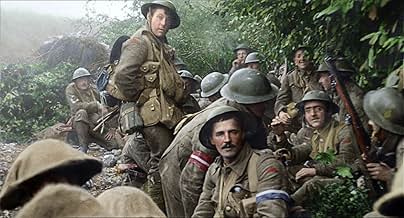
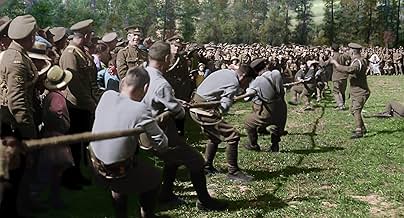
Then something amazing happens. The screen widens, the footage smoothes out, the colours shines through and in an instant your and seeing everything in so much more detail.
That said this was the first time I've seen footage from The Great War that didn't feel disconnected. It feels real. Seeing the colour on their cheeks and eyes, the dirt, the mud, the blood brings the old footage to life. Occasionally the colourisation takes on a slightly animated feel but never enough to draw you out of the engrossing scenes laid out before you.
Then the frame rate adjustment is amazing. Having computers generate the missing frames to adjust the variable 15-18fps to the regular 24fps is a visual butter knife that smoothes out the jerky footage.
Having the soldiers talk sounds like a mistake but it's done in such a subtle and sensitive way it never feels false. They've been lip synced perfectly and apparently even with the right accent for the infantry units depicted.
This was powerful viewing. Computers and technology being used for something so important, to allow 100+ year old footage to look so modern and yet not feel sanitised is amazing.
This should become compulsory viewing for every one, all schools too.
With footage thats this accessible there's no reason history should be forgotten.
Firstly, it's not a glossy documentary. There are some harrowing scenes in this that will, and should, upset you.
The first 25 minutes are of original black and white, speeded up footage with the original voices of troops telling their story over the top of it.
Then something amazing happens. The screen widens, the footage smoothes out, the colours shines through and in an instant your and seeing everything in so much more detail.
That said this was the first time I've seen footage from The Great War that didn't feel disconnected. It feels real. Seeing the colour on their cheeks and eyes, the dirt, the mud, the blood brings the old footage to life. Occasionally the colourisation takes on a slightly animated feel but never enough to draw you out of the engrossing scenes laid out before you.
Then the frame rate adjustment is amazing. Having computers generate the missing frames to adjust the variable 15-18fps to the regular 24fps is a visual butter knife that smoothes out the jerky footage.
Having the soldiers talk sounds like a mistake but it's done in such a subtle and sensitive way it never feels false. They've been lip synced perfectly and apparently even with the right accent for the infantry units depicted.
This was powerful viewing. Computers and technology being used for something so important, to allow 100+ year old footage to look so modern and yet not feel sanitised is amazing.
This should become compulsory viewing for every one, all schools too.
With footage thats this accessible there's no reason history should be forgotten.
This should be compulsory viewing
Everyone over the age of 13 should be made to watch this.
This is simple exceptional work at every level from Peter Jackson and his team.
It showed the pure fragility of life, and how the soldiers dealt with it, mainly with humour and machine gun boiled tea.
It's haunting yet funny, disturbing yet uplifting. It's war. And this is the closest I ever want to come to it.
This is simple exceptional work at every level from Peter Jackson and his team.
It showed the pure fragility of life, and how the soldiers dealt with it, mainly with humour and machine gun boiled tea.
It's haunting yet funny, disturbing yet uplifting. It's war. And this is the closest I ever want to come to it.
From a freelance colourising artist
As this historically important anniversary draws to a close, I just want to say that my viewing of this film was that of utter amazement. As a photo colouriser/restorer, I was absolutely astonished at the work PJ's team put into this. The transition from the original film material, then to the stabilised and corrected FPS and then the full colour and sound was one of the most spectacular things I have ever seen on the screen. The colour is natural and really helps emphasise the grittiness of war and brings out hidden details that may have been missed in the B&W source. Usually I prefer film not to be tampered with, but as Jackson says, this is how the men saw it - in living colour. The addition of the voiceovers from the surviving soldiers themselves is a great choice and doesn't distract and flows along nicely with the visuals. Throughout I expressed various emotions of sadness and shock, but surprisingly a few laughs, particularly one shot showing a soldier banging a tune on another soldiers helmet as they march.
I do wish I had seen this on the big screen and I imagine what I have said is enhanced 100x more with that type of viewing. A fitting tribute to the men that did and didn't come home and I hope it is recognised and picks up many awards.
The most important documentary you'll ever see
100 years on from the Great War we cannot pretend to know what life was like serving in the trenches. This incredible film brings us as close to experiencing it as we are ever going to get.
It is harrowing, it is poignant, it is funny. Above all else this film is heartbreaking. No punch is pulled, no attempt is made to hide the brutality of war or the hardship of the common soldier.
Quite simply this amazing documentary should be made compulsory viewing in all schools and for every soapbox, warmongering politician that would send our youth into hell.
It is harrowing, it is poignant, it is funny. Above all else this film is heartbreaking. No punch is pulled, no attempt is made to hide the brutality of war or the hardship of the common soldier.
Quite simply this amazing documentary should be made compulsory viewing in all schools and for every soapbox, warmongering politician that would send our youth into hell.
We DO remember them.
"Trapped in a Charlie Chaplin World". So says director Peter Jackson in a post-screening discussion with Mark Kermode, describing early black and white documentary footage. Whereas modern film runs at 24 fps, most of the old footage is hand cranked, with speeds as low as 12 fps which leads to its jerky nature. Jackson in this project with the Imperial War Museum took their WW1 footage and put it through a 'pipeline process. This cleaned-up and restored the original footage; used clever computer interpolation to add in the missing 6 to 12 frames per second; and then colourised it.
The results are outstanding. Jackson wisely focuses the film on the specific slice of WW1 action from the trenches. And those anonymous figures become real, live, breathing humans on screen. It is obviously tragic that some (and as commented by Jackson, many in one scene) are not to be breathing humans for much longer.
These effects take a while to kick in. The early scenes in the documentary are in the original black and white, describing the recruitment process, and how many of the recruits were under-age. (To explain the varied comments in the film, they should have been 18, although officially shouldn't have been sent overseas until 19).
It is when the troops arrive in France that we suddenly go from black-and-white to the fully restored and colourised footage, and it is a gasp-inducing moment.
All of the audio commentary is from original BBC recordings of war veterans recounting their actual experiences in the trench. Some sound like heroes; some sound like rogues; all came out changed men. Supporting music of WW1 ditties, including the incredibly rude "Mademoiselle from Armentières" over the end credits, is provided by Plan 9.
But equally impressive is the dubbing of the characters onscreen. Jackson employed forensic lip-readers to determine what the soldiers on-screen were saying, and reproduced the speech using appropriate regional accents for the regiments concerned. Jackson also recounts how the words associated with a "pep-talk" speech to troops by an officer he found on an original slip of paper within the regimental records: outstanding. Added sound effects include real-life shelling by the New Zealand army. It all adds to the overall atmosphere of the film.
The film itself is a masterpiece of technical innovation that will change in the future the way in which we should be able to see this sort of early film footage forever. As a documentary it's near-perfection. But if I have a criticism of the cinema showing I attended it is that the 3D tended to detract rather than add to the film. Perhaps this is just my eyesight, but 3D always tends to make images slightly more blurry. Where (like "Gravity") there are great 3D effects to showcase, it's worth the slight negative to get the massive positive. But here, there was no such benefit: 2D would have been better. For those in the UK (and possibly through other broadcasters worldwide) the film is being shown on BBC2 tonight (11/11/18) at 9:30: I will be watching it again to compare and contrast.
Jackson dedicated the film to his grandfather. And almost all of us Brits will have relatives affected by this "war to end all wars". In my case, my grandfather was shot and severely wounded at Leuze Wood on the Somme, lying in the mud for four days and four nights before being recovered... by the Germans! Fortunately he was well-treated and, although dying young, recovered enough to father my father - else I wouldn't be here today writing this. On this Rememberance Sunday, 100 years on, it is a time for us to truly remember the sacrifice these men and boys gave to what, all in the film agree, was a pretty obstinate and pointless conflict.
The results are outstanding. Jackson wisely focuses the film on the specific slice of WW1 action from the trenches. And those anonymous figures become real, live, breathing humans on screen. It is obviously tragic that some (and as commented by Jackson, many in one scene) are not to be breathing humans for much longer.
These effects take a while to kick in. The early scenes in the documentary are in the original black and white, describing the recruitment process, and how many of the recruits were under-age. (To explain the varied comments in the film, they should have been 18, although officially shouldn't have been sent overseas until 19).
It is when the troops arrive in France that we suddenly go from black-and-white to the fully restored and colourised footage, and it is a gasp-inducing moment.
All of the audio commentary is from original BBC recordings of war veterans recounting their actual experiences in the trench. Some sound like heroes; some sound like rogues; all came out changed men. Supporting music of WW1 ditties, including the incredibly rude "Mademoiselle from Armentières" over the end credits, is provided by Plan 9.
But equally impressive is the dubbing of the characters onscreen. Jackson employed forensic lip-readers to determine what the soldiers on-screen were saying, and reproduced the speech using appropriate regional accents for the regiments concerned. Jackson also recounts how the words associated with a "pep-talk" speech to troops by an officer he found on an original slip of paper within the regimental records: outstanding. Added sound effects include real-life shelling by the New Zealand army. It all adds to the overall atmosphere of the film.
The film itself is a masterpiece of technical innovation that will change in the future the way in which we should be able to see this sort of early film footage forever. As a documentary it's near-perfection. But if I have a criticism of the cinema showing I attended it is that the 3D tended to detract rather than add to the film. Perhaps this is just my eyesight, but 3D always tends to make images slightly more blurry. Where (like "Gravity") there are great 3D effects to showcase, it's worth the slight negative to get the massive positive. But here, there was no such benefit: 2D would have been better. For those in the UK (and possibly through other broadcasters worldwide) the film is being shown on BBC2 tonight (11/11/18) at 9:30: I will be watching it again to compare and contrast.
Jackson dedicated the film to his grandfather. And almost all of us Brits will have relatives affected by this "war to end all wars". In my case, my grandfather was shot and severely wounded at Leuze Wood on the Somme, lying in the mud for four days and four nights before being recovered... by the Germans! Fortunately he was well-treated and, although dying young, recovered enough to father my father - else I wouldn't be here today writing this. On this Rememberance Sunday, 100 years on, it is a time for us to truly remember the sacrifice these men and boys gave to what, all in the film agree, was a pretty obstinate and pointless conflict.


Le saviez-vous
- AnecdotesMuch of the footage had never been seen, having sat in the vaults of London's Imperial War Museum for many years.
- GaffesSeveral shots of tanks appear in the film, both Mark V (Mark Five) and Mark V* (Mark Five Star). They have been colourised green. In reality, tanks of these types were painted "a neutral brown colour". See the article by the British Tank Museum which states that. "Surrendering to the inevitable, towards the end of 1916 it was ordered that the tanks should be painted in a 'neutral brown colour' all over." These tanks entered service in 1918, and were factory-painted brown.
- Citations
Soldier: [waving at camera] Hi, mum.
- Générique farfelu"Filmed on location on the Western Front, 1914 to 1918"
- ConnexionsFeatured in Front Row: Episode #3.3 (2018)
Meilleurs choix
Connectez-vous pour évaluer et surveiller les recommandations personnalisées
- How long is They Shall Not Grow Old?Propulsé par Alexa
Détails
- Date de sortie
- Pays d’origine
- Sites officiels
- Langue
- Aussi connu sous le nom de
- Вони не постаріють
- Lieux de tournage
- sociétés de production
- Consultez plus de crédits d'entreprise sur IMDbPro
Box-office
- Brut – États-Unis et Canada
- 17 956 913 $ US
- Brut – à l'échelle mondiale
- 21 656 913 $ US
- Durée
- 1h 39m(99 min)
- Couleur
- Mixage
- Rapport de forme
- 1.33 : 1(original footage)
- 1.85 : 1
Contribuer à cette page
Suggérer une modification ou ajouter du contenu manquant