

Dans l'Angleterre des années 1800, une jeune femme bien intentionnée mais égoïste se mêle de la vie amoureuse de ses amis.Dans l'Angleterre des années 1800, une jeune femme bien intentionnée mais égoïste se mêle de la vie amoureuse de ses amis.Dans l'Angleterre des années 1800, une jeune femme bien intentionnée mais égoïste se mêle de la vie amoureuse de ses amis.
- Réalisation
- Scénaristes
- Vedettes
- Nommé pour 2 oscars
- 8 victoires et 53 nominations au total





6,769.6K
1
2
3
4
5
6
7
8
9
10
Avis en vedette
This period drama is an absolute delight
Based on a timeless novel Emma by Jane Austen, this latest movie adaptation of her book is a beautiful, gorgeous and entertaining re-make that should easily please Austen fans old and new as it looks phenomenal. Its cast, led by the terrific and wonderful Anya Taylor-Joy, are/is utterly splendid. "Emma's" script is adapted by novelist Eleanor Catton (The Luminaries) and manages to capture much of Austen's own comedy, translating it elegantly to the screen. The result is a stylish and eminently watchable movie adaptation. In addition to the script, the production values are stellar, while movie is visually stunning and impeccably researched - it really felt like an authentic window into the 1800s. At the end, film - updated in all the right ways - is filled with an abundance of genuine charm. For those who are fans of the period drama this is a must see, while this gentle film, also, deserves to introduce Austen to a whole new generation.
Rating: 7+/8-
Rating: 7+/8-
Confused by the bad reviews...
Recently got a chance to watch this. I like the film with Gwyneth Paltrow, and absolutely love the BBC miniseries, so I was cautious watching this, especially with the several bad reviews. I don't know if it was because I went in with low expectations, but I was delighted by this movie! Admittedly if you don't know the story, it can move fast, but to be fair, the book is long and tedious, with a lot to fit in two hours, which is one of my problems with the 2008 movie. The visuals and fashions of this movie are beautiful, and Emma's character did show improvement unlike some of the comments I saw. This one definitely captured Jane Austen's humor, and you can be guaranteed to laugh a few times. The BBC mini-series is still my top rated, but the 2020 "Emma." is, in my opinion, a notch above the 2008 "Emma", but would definitely recommend all adaptations, especially the book.
All bonnet and no breeches
Autumn de Wilde's Emma, with Anya Taylor-Joy and Johnny Flynn, is not my cup of tea, I'm afraid. My review might be influenced by how much I love Jane Austen's novel and how many times I've watched the 2009 miniseries, but I always give every adaptation a try. And I can't really judge if what I was watching would make sense to an Austen virgin, shall we say, so what seemed disjointed and rushed to me might work perfectly for others.
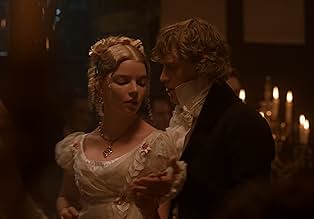
I'll start with the good: I loved the costumes and the interiors, which were sumptuously beautiful. The wood-shaving ringlets on the women and the high collars on the men were distracting, though. And of course Anya Taylor-Joy made for a quirky and regal Emma (Austenites will be pleased to note that she has perfect posture.) I also loved how Anya Taylor-Joy and Amber Anderson as Jane actually played the pianoforte during the Coles' party (but could have done without Mr Knightley's contribution, when Frank Churchill is supposed to be singing with Jane). BUT. The music was horrendously jarring, alternating between Hanna Barbera cartoon incidentals and freakish folk music. The supporting characters suffered once again - I couldn't honestly tell the difference between Mrs Weston, Mrs Knightley and Mrs Elton, except that Isabella was for some reason a complete cow in this version, and Mr Elton and Frank Churchill were also interchangeable (perhaps that's why Elton never seemed to be without his dog collar, to help tell them apart). Bill Nighy's Mr Woodhouse was a weird combination of fusspot and Edwardian fop, and Johnny Flynn's Mr Knightley strayed way off character by stripping off in his first scene and never really recovered for me. (Apparently, that was a way of 'humanising' the character because he is always 'mansplaining' - very woke.) Anya wasn't kidding when she talked about the focus being on 'bodily functions', by the way - not only are we 'treated' to Knightley's backside, but Emma hitches up her skirts to warm her bare arse by the fire, and the 'cannot make speeches' proposal scene is a bloody mess. Literally. The script leans so heavily on lines from the novel that I think Eleanor Catton thought she was writing an essay for an English Lit exam - Austenites will be happy, but there was no feeling behind any of the grand words. When Emma and Mr Knightley argue, they constantly shout over each other, for instance, instead of the usual playful back and forth.
The whole film felt like a weird mashup between a stage musical and a Victorian farce, with choreographed servants and slapstick humour. There was also a lot of 1996 Emma in there, taking pastel and pastoral scenery from the film and Andrew Davies' wearisome obsession with wealth from the television two-parter. Not on a sliding scale of Emma and Miss Bates, but in how Mr Knightley's strawberry picking party turns into a National Trust promotional video for Wilton House, Salisbury. There's also a lot of emphasis on servants dressing their masters and mistresses, presumably to fit in more scenes of 'natural nudity'.
I went, I watched, I did my duty to Emma. But I think I'll stick with the 2009 miniseries.
I'll start with the good: I loved the costumes and the interiors, which were sumptuously beautiful. The wood-shaving ringlets on the women and the high collars on the men were distracting, though. And of course Anya Taylor-Joy made for a quirky and regal Emma (Austenites will be pleased to note that she has perfect posture.) I also loved how Anya Taylor-Joy and Amber Anderson as Jane actually played the pianoforte during the Coles' party (but could have done without Mr Knightley's contribution, when Frank Churchill is supposed to be singing with Jane). BUT. The music was horrendously jarring, alternating between Hanna Barbera cartoon incidentals and freakish folk music. The supporting characters suffered once again - I couldn't honestly tell the difference between Mrs Weston, Mrs Knightley and Mrs Elton, except that Isabella was for some reason a complete cow in this version, and Mr Elton and Frank Churchill were also interchangeable (perhaps that's why Elton never seemed to be without his dog collar, to help tell them apart). Bill Nighy's Mr Woodhouse was a weird combination of fusspot and Edwardian fop, and Johnny Flynn's Mr Knightley strayed way off character by stripping off in his first scene and never really recovered for me. (Apparently, that was a way of 'humanising' the character because he is always 'mansplaining' - very woke.) Anya wasn't kidding when she talked about the focus being on 'bodily functions', by the way - not only are we 'treated' to Knightley's backside, but Emma hitches up her skirts to warm her bare arse by the fire, and the 'cannot make speeches' proposal scene is a bloody mess. Literally. The script leans so heavily on lines from the novel that I think Eleanor Catton thought she was writing an essay for an English Lit exam - Austenites will be happy, but there was no feeling behind any of the grand words. When Emma and Mr Knightley argue, they constantly shout over each other, for instance, instead of the usual playful back and forth.
The whole film felt like a weird mashup between a stage musical and a Victorian farce, with choreographed servants and slapstick humour. There was also a lot of 1996 Emma in there, taking pastel and pastoral scenery from the film and Andrew Davies' wearisome obsession with wealth from the television two-parter. Not on a sliding scale of Emma and Miss Bates, but in how Mr Knightley's strawberry picking party turns into a National Trust promotional video for Wilton House, Salisbury. There's also a lot of emphasis on servants dressing their masters and mistresses, presumably to fit in more scenes of 'natural nudity'.
I went, I watched, I did my duty to Emma. But I think I'll stick with the 2009 miniseries.
All very breezy and breathless, but it works well in doing it this way
I felt quite tired at the start of this film; it enters with a lot of sweeping movement, fast talking, and grand sets and costumes which offer far more detail than can be taken in. It had been a long day for me, but it did feel like it was a film trying to do too much. I was wrong in this first impression, but the approach of movement and pace did continue, and it gave the film a feel of being superficial and relying on pace and energy. To be fair, it makes this approach work and it is moves and looks delightful. It offers lots of nice touches that make it more than this, but it is ultimately not anything shockingly different from what you'd expect (which it probably shouldn't be anyway).
The delivery of Emma as having more of a sharp edge is a nice touch, as it lets the viewer see what is charming about her, but also that she is not aware of the negative aspects of her own character, and thus does not control them. This adds a lot to the narrative that others do not, and Taylor-Joy does very well with the role. She is supported well, although mostly by those doing one or two things really well (eg Nighy and Hart). The design of the film is wonderful - great costumes, and locations throughout. In the end it does have a fast and breezy tone that I did take a minute to get into, but in the end it was cheering and quite lightly delightful as a film.
The delivery of Emma as having more of a sharp edge is a nice touch, as it lets the viewer see what is charming about her, but also that she is not aware of the negative aspects of her own character, and thus does not control them. This adds a lot to the narrative that others do not, and Taylor-Joy does very well with the role. She is supported well, although mostly by those doing one or two things really well (eg Nighy and Hart). The design of the film is wonderful - great costumes, and locations throughout. In the end it does have a fast and breezy tone that I did take a minute to get into, but in the end it was cheering and quite lightly delightful as a film.
Fine production, if not the best "Emma" out there
This was the last movie my wife and I saw in the actual theater-- back in March 2020 -- just days before covid-19 lockdown began. As of July we're wondering when we'll ever get to see another. In the meantime we've acquired a big UHD TV and subscriptions to a bunch of streaming services. But there's still nothing to match watching on a big screen with a packed audience of engaged viewers.
Anyway: long before there was "Mean Girls" and "Clueless", there was Jane Austen's novel about a good-hearted but manipulative, un-self-aware young woman who has a great deal of learning to do about real people. This most recent version of "Emma" is very nice and certainly worth seeing in whatever format. I think it's neither better nor worse than the good 1996 version (the one with Gwyneth Paltrow in the title role) -- they both have fine production values and fine casts, just different emphases, shadings of the various characters, and the choices for cuts made to the story to make it fit into a normal 2-hour run time. Anya Taylor-Joy is not only a good, distinctively featured young actress but she also *looks* as young as Jane Austen's heroine is intended to be, about age 20. She has the (often baseless) self-confidence arising from a privileged, untroubled upbringing, but a journey of self-discovery awaits her, and that's what makes the story.
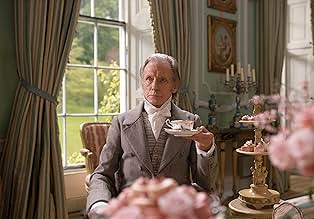
Other standout characters include Mia Goth, who plays friend/protegee Harriet Smith as even more of a hapless stooge than usual; and the incomparable Bill Nighy as Emma's father Mr. Woodhouse. Is he really just a hypochondriac always fussing over cold drafts and fireplaces? It becomes clear that he knows and sees a good deal more than his loving but blithely unobservant daughter gives him credit for. And Nighy can steal scenes without saying a word, just by body posture and a raised eyebrow. He's a cinematic treasure. Johnny Flynn as Mr. Knightley is fine but a bit forgettable in the end.
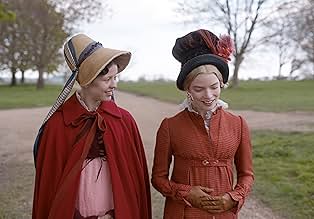
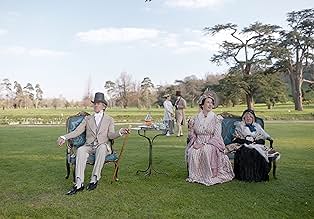
And the scenery. It's so lush and green and bright that you have to consciously shake yourself to realize that no, the English countryside is really NOT always warm and sunlit as it is here. But this is fiction, and it just helps us settle in and enjoy the comfortable ride through this classic tale. For the best screen version of Emma out there, though, I happily recommend the 2009 TV miniseries starring Romola Garai. She's perfect for the part, and its 4-hour length lets the full story expand and breathe the way it should.
Anyway: long before there was "Mean Girls" and "Clueless", there was Jane Austen's novel about a good-hearted but manipulative, un-self-aware young woman who has a great deal of learning to do about real people. This most recent version of "Emma" is very nice and certainly worth seeing in whatever format. I think it's neither better nor worse than the good 1996 version (the one with Gwyneth Paltrow in the title role) -- they both have fine production values and fine casts, just different emphases, shadings of the various characters, and the choices for cuts made to the story to make it fit into a normal 2-hour run time. Anya Taylor-Joy is not only a good, distinctively featured young actress but she also *looks* as young as Jane Austen's heroine is intended to be, about age 20. She has the (often baseless) self-confidence arising from a privileged, untroubled upbringing, but a journey of self-discovery awaits her, and that's what makes the story.
Other standout characters include Mia Goth, who plays friend/protegee Harriet Smith as even more of a hapless stooge than usual; and the incomparable Bill Nighy as Emma's father Mr. Woodhouse. Is he really just a hypochondriac always fussing over cold drafts and fireplaces? It becomes clear that he knows and sees a good deal more than his loving but blithely unobservant daughter gives him credit for. And Nighy can steal scenes without saying a word, just by body posture and a raised eyebrow. He's a cinematic treasure. Johnny Flynn as Mr. Knightley is fine but a bit forgettable in the end.
And the scenery. It's so lush and green and bright that you have to consciously shake yourself to realize that no, the English countryside is really NOT always warm and sunlit as it is here. But this is fiction, and it just helps us settle in and enjoy the comfortable ride through this classic tale. For the best screen version of Emma out there, though, I happily recommend the 2009 TV miniseries starring Romola Garai. She's perfect for the part, and its 4-hour length lets the full story expand and breathe the way it should.


Le saviez-vous
- AnecdotesAll of the music performances in the film are real, played by the actors in character. None is staged.
- GaffesThe Sequence subtitled Winter begins with a carriage drawing up in front of a large tree in full leaf.
- Citations
Miss Bates: Mother, you MUST sample the tart!
- Générique farfeluThe film's title has a period at the end, meant to signify the movie as a "period piece" set in the original era.
Meilleurs choix
Connectez-vous pour évaluer et surveiller les recommandations personnalisées
- How long is Emma.?Propulsé par Alexa
Détails
- Date de sortie
- Pays d’origine
- Site officiel
- Langue
- Aussi connu sous le nom de
- Emma
- Lieux de tournage
- sociétés de production
- Consultez plus de crédits d'entreprise sur IMDbPro
Box-office
- Budget
- 10 000 000 $ US (estimation)
- Brut – États-Unis et Canada
- 10 055 355 $ US
- Fin de semaine d'ouverture – États-Unis et Canada
- 234 482 $ US
- 23 févr. 2020
- Brut – à l'échelle mondiale
- 28 934 712 $ US
- Durée
- 2h 4m(124 min)
- Couleur
- Mixage
- Rapport de forme
- 1.85 : 1
Contribuer à cette page
Suggérer une modification ou ajouter du contenu manquant