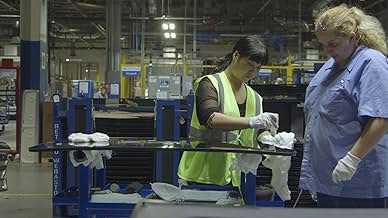
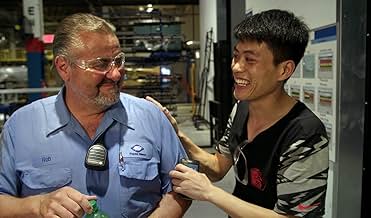
Fin 2008, une usine ferme dans l'Ohio. En 2014, un milliardaire chinois la rachète et investit dans la production de vitres pour l'automobile. L'usine compte 2000 employés en 2014. Les USA r... Tout lireFin 2008, une usine ferme dans l'Ohio. En 2014, un milliardaire chinois la rachète et investit dans la production de vitres pour l'automobile. L'usine compte 2000 employés en 2014. Les USA rencontrent la République populaire de Chine.Fin 2008, une usine ferme dans l'Ohio. En 2014, un milliardaire chinois la rachète et investit dans la production de vitres pour l'automobile. L'usine compte 2000 employés en 2014. Les USA rencontrent la République populaire de Chine.
- A remporté 1 oscar
- 19 victoires et 49 nominations au total
- Self - Furnace Off-Loader
- (as Bobby)
Avis en vedette
Thought provoking and mature exploration of a meeting of two potentially warring cultures.
However, this is a fine piece of work.
It tells the story of a Chinese windscreen-manufacturer reseeding the site of a massive General Motors factory in Dayton Ohio some three years after its closure.
The main premise of the film is that this is a meeting of two cultures, both business and anthropological, and how the rise in Chinese commercial enterprise, even deep in rust-belt, Republican USA, is a success that won't go away.
But the Chinese drive a hard bargain: much lower wages, poorer health and safety ideology, an intolerance of unions and a hard work ethic (in China overtime is compulsory, not optional).
The filmmakers - Stephen Bognar and Julia Rheichert - are seasoned pros and have an interesting technique that makes this such an agreeable watch. It's not controversial, there's little humour and there are no pyrotechnics. It's just a laconic stroll through the lives of the people on both sides of this cultural ravine, gradually exposing what it's like for each of them.
They take no sides, they critique no-one, but clearly there is stuff in here that could enrage a very large percentage of its viewers, no matter their cultural persuasion.
That's what makes it work. That and a good soundtrack and a pleasing use of cinematography.
It's not doc of the year, for me, but it IS an intelligent piece of documentary film-making that is as far from the Michael Moore one-sided tidal-wave of opinion and argument as one could get, and, for that, it is to be admired.
A most entertaining yet informative documentary
Absolutely fascinating film
Anyone concerned about the effects on real people of globalization should see this film
At the Q&A at the premiere at IFC Center, co-director Julia Reichert was at pains to stress that the film was never meant to be polemical, that this was an effort to immerse and learn. While some of the silllier aspects of both cultures, (but especially the regimented and self-congratulatory aspects of the Chinese). come through with particular acuity, you can't help buy muse on how Americans have acted with equal tin-earedness and cultural arrogance around the world, over many more decades than the Chinese have been at this game.
At the same time, America's neediness of manufacturing jobs, even if they don't pay a living wage, and the ways that so many of what we would normally consider our core values go out the window to accommodate anyone who will invest in them, come through particularly clearly. This all comes together in a fight over the establishment of a union that would protect workers' rights and uphold our eroding safety and environmental standards that is the vivid core of the movie.
A final note: This film has an extraordinarily compelling musical score by someone names Chad Cannon that propels and highlights the narrative and is amazingly effective on its own terms. Although the idiom is different, Cannon's score does for this film much of what Philip Glass's have done over the years for the films of Errol Morris, and that is high praise indeed.
385 million workers will be out of job by 2030
I think for the most of the film you will be asking yourself a question where is all of this going, the answer is out there and it is quite broad.
One of the most shocking moments is the reveal of Chinese work culture. Workers are literally robots, they have numbers, they don't waste any time, they work 16 hours a day 26 days a month non stop.
In China, the corporation you work for is glorified to the point that you start to feel like you are part of a cult rather than a company that is simply making profit.
While it might be normal for China that there are small kids dancing, weddings happening and corporate bosses praised during one of the company celebrations, personally to me this looked surreal to the point of crazy.
For me the job is just a job, it's there because you need to make money, everything else is big bosses making big bucks off your back, nothing less nothing more, for chinese it's a cult.
Now I don't know if the goal of the globalization is to make everyone work like in China, but if it is, then everyone, literally everyone is in deep trouble, especially the biosphere of our planet ...
Le saviez-vous
- AnecdotesDirectors Steven Bognar and Julia Reichert previously worked on the short documentary The Last Truck: Closing of a GM Plant (2009). It is about how the plant was shut down by General Motors, a topic in this movie.
- Citations
Himself - Fuyao Safety Director: Everybody at every level will say that we really, really want to be safe. But safety doesn't pay the bills.
- ConnexionsFeatured in The Oscars (2020)
Meilleurs choix
- How long is American Factory?Propulsé par Alexa
Détails
- Date de sortie
- Pays d’origine
- Site officiel
- Langues
- Aussi connu sous le nom de
- American Factory
- Lieux de tournage
- sociétés de production
- Consultez plus de crédits d'entreprise sur IMDbPro
- Durée
- 1h 50m(110 min)
- Couleur
- Mixage
- Rapport de forme
- 1.78 : 1
- 1.85 : 1