Calendrier de lancementLes 250 meilleurs filmsFilms les plus populairesParcourir les films par genreBx-office supérieurHoraire des présentations et billetsNouvelles cinématographiquesPleins feux sur le cinéma indien
    À l’affiche à la télévision et en diffusion en temps réelLes 250 meilleures séries téléÉmissions de télévision les plus populairesParcourir les séries TV par genreNouvelles télévisées
    À regarderBandes-annonces récentesIMDb OriginalsChoix IMDbIMDb en vedetteGuide du divertissement familialBalados IMDb
    OscarsBest Of 2025Holiday Watch GuideGotham AwardsPrix STARmeterCentre des prixCentre du festivalTous les événements
    Personnes nées aujourd’huiCélébrités les plus populairesNouvelles des célébrités
    Centre d’aideZone des contributeursSondages
Pour les professionnels de l’industrie
  • Langue
  • Entièrement prise en charge
  • English (United States)
    Partiellement prise en charge
  • Français (Canada)
  • Français (France)
  • Deutsch (Deutschland)
  • हिंदी (भारत)
  • Italiano (Italia)
  • Português (Brasil)
  • Español (España)
  • Español (México)
Liste de visionnement
Ouvrir une session
  • Entièrement prise en charge
  • English (United States)
    Partiellement prise en charge
  • Français (Canada)
  • Français (France)
  • Deutsch (Deutschland)
  • हिंदी (भारत)
  • Italiano (Italia)
  • Português (Brasil)
  • Español (España)
  • Español (México)
Utiliser l'application
  • Distribution et équipe technique
  • Commentaires des utilisateurs
  • Anecdotes
IMDbPro

The Invaders

  • 1912
  • Not Rated
  • 41m
ÉVALUATION IMDb
6,1/10
423
MA NOTE
The Invaders (1912)
CourteDrameOuest

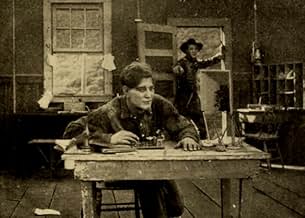
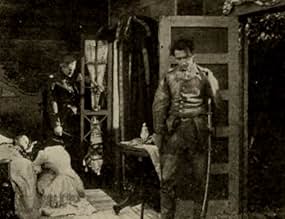
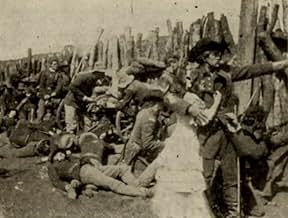
Ajouter une intrigue dans votre langueThe U.S. Army and the Indians sign a peace treaty. However, a group of surveyors trespass on the Indians' land and violate the treaty. The Army refuses to listen to the Indians' complaints, ... Tout lireThe U.S. Army and the Indians sign a peace treaty. However, a group of surveyors trespass on the Indians' land and violate the treaty. The Army refuses to listen to the Indians' complaints, and the surveyors are killed by the Indians. A vicious Indian war ensues, culminating in a... Tout lireThe U.S. Army and the Indians sign a peace treaty. However, a group of surveyors trespass on the Indians' land and violate the treaty. The Army refuses to listen to the Indians' complaints, and the surveyors are killed by the Indians. A vicious Indian war ensues, culminating in an Indian attack on an army fort.

  • Réalisation
    • Francis Ford
    • Thomas H. Ince
  • Scénariste
    • C. Gardner Sullivan
  • Vedettes
    • Francis Ford
    • Ethel Grandin
    • Ann Little
  • Voir l’information sur la production à IMDbPro
  • ÉVALUATION IMDb
    6,1/10
    423
    MA NOTE
    • Réalisation
      • Francis Ford
      • Thomas H. Ince
    • Scénariste
      • C. Gardner Sullivan
    • Vedettes
      • Francis Ford
      • Ethel Grandin
      • Ann Little
    • 10Commentaires d'utilisateurs
    • 4Commentaires de critiques
  • Voir l’information sur la production à IMDbPro
  • Voir l’information sur la production à IMDbPro
  • Photos3

    Voir l’affiche
    Voir l’affiche
    Voir l’affiche

    Distribution principale7

    Modifier
    Francis Ford
    Francis Ford
    • Colonel James Bryson
    Ethel Grandin
    Ethel Grandin
    • Colonel Bryson's Daughter
    Ann Little
    Ann Little
    • Sky Star
    Ray Myers
    Ray Myers
    • Lieutenant White
    William Eagle Shirt
    William Eagle Shirt
    • The Sioux Chief
    Art Acord
    Art Acord
    • Telegrapher
    Tilly Baldwin
    • Cowgirl
    • Réalisation
      • Francis Ford
      • Thomas H. Ince
    • Scénariste
      • C. Gardner Sullivan
    • Tous les acteurs et membres de l'équipe
    • Production, box office et plus encore chez IMDbPro

    Commentaires des utilisateurs10

    6,1423
    1
    2
    3
    4
    5
    6
    7
    8
    9
    10

    Avis en vedette

    Snow Leopard

    Interesting, Believable Melodrama

    This interesting and believable melodrama benefits from its even-handed portrayal of its characters and from its realistic settings. It tells a sad, thoughtful story about a typical conflict on the western frontier, and it tells the story well. It depicts the Native American characters in a sensitive yet non-romanticized fashion, dealing honestly both with the offenses committed against them and with their own weaknesses.

    The main story starts with a Native American tribe that puts its confidence in a treaty with the US government, only to find out very shortly that they have been deceived. The further developments from this setup are intertwined with some romantic sub-plots involving characters from both groups. These romances are used mostly to drive the action, but at times they are also used to illustrate some worthwhile ideas.

    "The Invaders" is very good for its time in telling a fairly involved story with good technique, and in using good, detailed settings that work well. Except for the sometimes plain-vanilla characters, it is well above the average quality of movies made in 1912. It is also worth seeing for the action and the interesting story.
    7springfieldrental

    An Example of the Ince Movie Factory System

    To get a good look at the "studio factory" system Thomas Ince set up near Los Angeles, November 1912's "The Invaders" is a great example of the type of Westerns and other movies the innovative "Father of the Western" was producing. Francis Ford (John's bother) directed this stirring adventure, using real Native Americans to play the disgruntle Indians who rebel against the white man for abrogating their treaties.

    John Ford, the director with the most Oscars, had an older brother, Francis, who appears as the Colonel in "The Invaders." Francis, who served in the Army during the Spanish-American War, gravitated towards film soon after and worked under Ince out West as a director/actor. He was involved in close to 400 films. Today's viewers may know him as the old man dying on his deathbed in John Ford's "The Quiet Man," only to wake up, get out of bed and run towards the epic fist fight occurring outdoors between John Wayne and Victor McLaglen.

    Ford was part of a massive enterprise run by Thomas Ince, a former actor-turned-director who took the reigns of New York Picture Company's western operations, Bison Studios. Once Ince arrived in Los Angeles, he got his employers to agree to lease 18,000 acres between Santa Monica and Malibu where he could realize his dream of reinventing the way movies could be made. He immediately had numerous simple sets built, creating every imaginary backdrop to serve all types of film categories. He hired literally an entire army of wild west show actors with its livestock from Oklahoma as well as an entire Sioux tribe numbering 200.

    With such overhead expenses, Ince realized Bison would have to pump out a number of films each month using an entirely new production system than what the movie industry had been operating since its inception. No more would the director have deliberate sole control of constructing an entire film. Ince placed a producer in charge to oversee one entire movie, from its beginning to completion. Unique was how a movie originated. A detailed script would be submitted by company writers for approval by the studio executives (mostly Ince). The script, a first in cinema, would describe each movement of its actors, what the title cards would state, and the types of sets required. The producer, with the director's advice, would cast the actors and oversee the process throughout its production. Finally, an editor specializing in slicing a film together would take over the duties that a director would normally do. Hence, this assembly-line method of constructing a movie would allow Ince's studio to release as many as three films a week, over 150 in 1913 alone.

    This system would be adopted by major movie studios in the future, assuring an insatiable movie-going public a constant stream of new films for their local theaters.
    8wmorrow59

    A cinematic milestone: the first great Western epic

    For those of us who grew up watching Hollywood Westerns on TV, that is, slickly produced, Technicolor extravaganzas with elaborate action sequences, stunt falls, and lots of expensive costumes, this early Western drama will come as a revelation. The people in this film, whether Indians or U.S. Cavalry soldiers, look like regular people rather than actors, while the settings look weather-beaten and dusty, like actuality footage from a documentary rather than a fiction film. And although the climactic battle sequence is action-packed and suspenseful, it's also kind of ragged compared to the polished cowboy and Indian sagas we're accustomed to, the ones directed by, say, John Ford or Raoul Walsh. The Invaders is very well made for its day, but it isn't slick. It was produced before "Hollywood" as such existed, and certainly long before the tropes of studio system storytelling had become clichéd from over-use. Most strikingly, the film's Indians were portrayed by actual Oglala Sioux performers, non-professionals who embody their roles with no apparent self-consciousness and with understated dignity. When this movie was made in 1912 the conflict depicted here (set shortly after the Civil War) was still within living memory, and although this story is fictional the details are drawn from occurrences at the time of the Indian Wars. The Sioux performers appear too young to have taken part in person, but they probably heard stories of the era from parents and grandparents. Consequently, this is one of those silent films with a 19th century setting which offers us a time travel experience of sorts, an opportunity to re-experience history as re-enacted by persons close to the events. It certainly feels considerably more authentic than movies of the 1940s and '50s featuring Western towns that resemble theme parks, bogus musical numbers, and Indians played by everyone from Boris Karloff to Natalie Wood. The people who made The Invaders appear to know what they're talking about, and the Sioux Indians who play themselves look like they know all too well how it feels to sign a treaty with white men only to see it ignored.

    This film was produced at the famous Thomas Ince ranch, one of Hollywood's first great studios, then still in its first year of operation. It was directed either by Ince himself or by Francis Ford, John's older brother, who plays the prominent role of the cavalry commandant Colonel Bryson. Bryson's daughter is courted by a handsome young soldier, and this subplot is presented in direct correlation with the courtship of the Sioux Chief's daughter by a young brave: a parallel that humanizes the Indians for contemporary audiences who may have been accustomed to seeing them typically portrayed as blood-thirsty savages played by white actors in "red-face." This, plus the film's emphasis on treaties signed and then broken by the whites, shows a sympathy for the Indians' cause that may come as a surprise to latter-day viewers, although sympathy for the Indians and indignation over the injustices they suffered seems to have been more common in the silent days than it would be later on. Significantly, the "invaders" of the title are white surveyors sent by the railroad onto Indian land, in violation of a recently signed treaty. Early on, one of the surveyors spots the Chief's daughter and engages in a flirtation with her. It's a sweet scene for a moment or two, but we quickly feel a sense of dread, a premonition that this courtship can only lead to trouble, and soon enough that premonition is fulfilled.

    The Invaders has recently been made available as part of an excellent box set of DVDs called "More Treasures from American Film Archives." It's offered with a commentary track by a history professor named Rennard Strickland, and while his remarks were interesting I question his conclusion that the ending is a happy one. He was referring to the finale in which some of the cavalry fort's defenders are rescued, so it's certainly a happy ending for them, but in a broader sense the conflict between the Native Americans of the plains states and the U. S. Government did not end happily for all parties, and anyone with any feeling for the fate of the Oglala Sioux will be saddened by the time this movie is over. Still, we can be grateful The Invaders survives: it stands as the cinema's first great Western epic as well as a fascinating historical time capsule that captures a way of life in its final stages.
    10morrisonhimself

    Astonishingly high quality film for 1912

    In a rather miserable version at YouTube, the person posting the film makes several errors, including wrongly claiming it was "directed by Thomas Ince."

    In fact, Ince produced and Francis Ford directed and starred, although IMDb says Ince co-directed.

    For 1912, "The Invaders" is fascinating and incredibly well done. The acting is occasionally a bit over-wrought, though not for 1912.

    In that version at YouTube, there are very few intertitles, which seems strange since the great C. Gardner Sullivan is the writer. Sometimes, because of the paucity of intertitles, a viewer might not know entirely just what is going on.

    However, the story, because of the acting and directing, is mostly very clear to viewers.

    Again, remember: It's 1912. As the prologue says, viewers in 1912 were not very far removed from the scene and action of actual frontier battles. Custer recklessly led his command to destruction in 1876, not even 40 years before the production and presentation of this movie.

    The Battle of Little Bighorn was more closely contemporary to the 1912 audience than, for example, the Battle of the Bulge is to a 2017 audience.

    I am very impressed by "The Invaders," for its treatment of the "Indians," for its production values, and for its story-telling virtues.

    I hope you will brave the poor quality of the print at YouTube and give a look at "The Invaders."
    deickemeyer

    It tells a long, fascinating story of an army post

    This three-reel picture of Indian warfare is one of the first of its kind. It tells a long, fascinating story of an army post in frontier times. The massacre of a surveying corps is graphic, though the after scene was a little too realistic. Do not such scenes shock average observers beyond the point of enjoyment? There is a tremendous sweep of mountain vista and fine reproduction of battle scenes. The burning of the telegraph poles, the attack on the depleted fort, and the young lieutenant's dash for assistance were admirably handled. The principals, including the Indian girl, gave creditable performances. A big story of the kind. - The Moving Picture World, December 7, 1912

    Plus de résultats de ce genre

    Le cheval de fer
    7,2
    Le cheval de fer
    Tumbleweeds
    6,6
    Tumbleweeds
    The Winning of Barbara Worth
    6,9
    The Winning of Barbara Worth
    Riffraff
    6,8
    Riffraff
    This Side of the Law
    6,5
    This Side of the Law
    49e Parallèle
    7,3
    49e Parallèle
    Menschen am Sonntag
    7,3
    Menschen am Sonntag
    Shoulder Arms
    7,3
    Shoulder Arms
    The Great Train Robbery
    7,2
    The Great Train Robbery
    My Little Chickadee
    6,8
    My Little Chickadee
    The Undercover Man
    6,7
    The Undercover Man
    Zert
    7,1
    Zert

    Intérêts connexes

    Benedict Cumberbatch in La merveilleuse histoire d'Henry Sugar (2023)
    Courte
    Naomie Harris, Mahershala Ali, Janelle Monáe, André Holland, Herman Caheej McGloun, Edson Jean, Alex R. Hibbert, and Tanisha Cidel in Moonlight - L'histoire d'une vie (2016)
    Drame
    John Wayne and Harry Carey Jr. in La prisonnière du désert (1956)
    Ouest

    Histoire

    Modifier

    Le saviez-vous

    Modifier
    • Anecdotes
      One of the films in the three-disk boxed DVD set called "More Treasures from American Film Archives (2004)," compiled by the National Film Preservation Foundation from five American film archives. This film is preserved by the Library of Congress (from the AFI/Blackhawk collection), has a running time of 41 minutes and an added piano score.
    • Citations

      Title Card: SKY STAR OVERHEARS THE PLAN TO MASSACRE THE WHITES.

    • Connexions
      Referenced in Adam Piron: What Is an Indian? (2025)

    Meilleurs choix

    Connectez-vous pour évaluer et surveiller les recommandations personnalisées
    Se connecter

    Détails

    Modifier
    • Date de sortie
      • 29 novembre 1912 (United States)
    • Pays d’origine
      • United States
    • Langues
      • None
      • English
    • Aussi connu sous le nom de
      • The Empire Builders
    • société de production
      • Kay-Bee Pictures
    • Consultez plus de crédits d'entreprise sur IMDbPro

    Spécifications techniques

    Modifier
    • Durée
      • 41m
    • Couleur
      • Black and White
    • Mixage
      • Silent
    • Rapport de forme
      • 1.33 : 1

    Contribuer à cette page

    Suggérer une modification ou ajouter du contenu manquant
    • En savoir plus sur la façon de contribuer
    Modifier la page

    En découvrir davantage

    Consultés récemment

    Veuillez activer les témoins du navigateur pour utiliser cette fonctionnalité. Apprenez-en plus.
    Télécharger l'application IMDb
    Connectez-vous pour plus d’accèsConnectez-vous pour plus d’accès
    Suivez IMDb sur les réseaux sociaux
    Télécharger l'application IMDb
    Pour Android et iOS
    Télécharger l'application IMDb
    • Aide
    • Index du site
    • IMDbPro
    • Box Office Mojo
    • Données IMDb de licence
    • Salle de presse
    • Publicité
    • Emplois
    • Conditions d'utilisation
    • Politique de confidentialité
    • Your Ads Privacy Choices
    IMDb, une entreprise d’Amazon

    © 1990-2025 by IMDb.com, Inc.