ÉVALUATION IMDb
8,0/10
16 k
MA NOTE

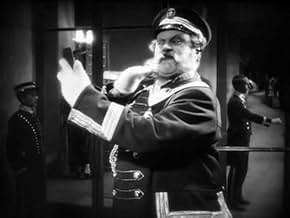
En 1924, à Berlin. Le portier d'un grand hôtel, fier de l'uniforme qu'il porte depuis des années, est renvoyé de son poste pour cause de vieillesse, et relégué au rang de garçon de lavabos, ... Tout lireEn 1924, à Berlin. Le portier d'un grand hôtel, fier de l'uniforme qu'il porte depuis des années, est renvoyé de son poste pour cause de vieillesse, et relégué au rang de garçon de lavabos, ce qui est, pour lui, une déchéance sociale.En 1924, à Berlin. Le portier d'un grand hôtel, fier de l'uniforme qu'il porte depuis des années, est renvoyé de son poste pour cause de vieillesse, et relégué au rang de garçon de lavabos, ce qui est, pour lui, une déchéance sociale.
- Réalisation
- Scénariste
- Vedettes
- Prix
- 2 victoires au total


O.E. Hasse
- Small Role
- (uncredited)

Harald Madsen
- Wedding Musician
- (uncredited)
Neumann-Schüler
- Small Role
- (uncredited)

Carl Schenstrøm
- Wedding Musician
- (uncredited)
Erich Schönfelder
- Small role
- (uncredited)
8,016.2K
1
2
3
4
5
6
7
8
9
10
Avis en vedette
Not Murnau's best, but a damn fine film anyway
F.W Murnau is best known for his expressionistic horror movies, such as 'Nosferatu' and the excellent 'Faust'. This movie is somewhat different from those, as it's a more personal and down to earth sort of tale. Still, despite this not being a member of the horror genre; Murnau's style still allows for much of the great visuals that made his horror movies great. The story itself has definite horror elements, which although they don't involve vampires or the devil; are arguably more frightening, as it dictates and event that could well happen to anyone. The film tackles the idea of 'downfall', and as the prologue states; one can be a prince one day, but what is he tomorrow? This tale is told through the story of a hotel porter that has worked hard all his life but loses his job through incredible bad luck when the manager catches him taking a break. Heartbroken and humiliated, our hero is offered another job; but it only allows for his humiliation to continue, as the job is that of a lowly bathroom attendant. We then follow his struggle as he comes to terms with his loss and the reaction of his family and neighbours.
F.W. Murnau uses no story cards for this silent film, which shows his flair for storytelling. Imagining some of today's 'great' filmmakers telling a story without dialogue is preposterous, but Murnau shows his prowess by doing just that, and doing it down to a fine art. People often cite 'Citizen Kane' for being the film that took storytelling to the next level, and although it did do that; surely some of the credit has to go to F.W. Murnau. This film features what is perhaps the first ever fantasy sequence, a sequence that is, of course, a favourite of today's cinema. Murnau's technical mastery is also shown in many other sequences, including one in particular that sees a scene appear in the middle of a letter. It's quite unbelievable that this was made over eighty years ago, just due to the amazing work on show in the film.
The film falls down a bit towards the end, because of an ill-advised twist. This was put upon F.W. Murnau by the studio releasing the film, who wanted a happy ending. This is just another example of a studio spoiling a great movie, and even before I saw that piece of information in the trivia section for this movie; it was evident to me that it isn't the way that Murnau wanted to take the story from the way it almost appeared to be tacked on to the end of the film. Still, the hour and ten minutes running up the ending are almost as good as silent cinema gets, and in spite of the studio's best efforts to ruin it; The Last Laugh stands tall as on of Murnau's finest films.
F.W. Murnau uses no story cards for this silent film, which shows his flair for storytelling. Imagining some of today's 'great' filmmakers telling a story without dialogue is preposterous, but Murnau shows his prowess by doing just that, and doing it down to a fine art. People often cite 'Citizen Kane' for being the film that took storytelling to the next level, and although it did do that; surely some of the credit has to go to F.W. Murnau. This film features what is perhaps the first ever fantasy sequence, a sequence that is, of course, a favourite of today's cinema. Murnau's technical mastery is also shown in many other sequences, including one in particular that sees a scene appear in the middle of a letter. It's quite unbelievable that this was made over eighty years ago, just due to the amazing work on show in the film.
The film falls down a bit towards the end, because of an ill-advised twist. This was put upon F.W. Murnau by the studio releasing the film, who wanted a happy ending. This is just another example of a studio spoiling a great movie, and even before I saw that piece of information in the trivia section for this movie; it was evident to me that it isn't the way that Murnau wanted to take the story from the way it almost appeared to be tacked on to the end of the film. Still, the hour and ten minutes running up the ending are almost as good as silent cinema gets, and in spite of the studio's best efforts to ruin it; The Last Laugh stands tall as on of Murnau's finest films.
10thao
Citizen Kane of its time
The camera work and the sets in this film where so breathtaking and powerful that they changed the film language forever. It is in many ways the Citizen Kane of its time.
It was so revolutionary that Hollywood (Fox) tried desperately to get Murnau to work for them and teach them how to do all these things (which he did some years later). The main revolutionary thing was the fluidity of the camera (or the unchanged camera, as it was called). There was no steady cam at this time, but still they managed to strap the camera to the body of the cameraman without getting a shaky pictures.
The set is just amazing. It is difficult to believe that this is not a real city. All the special effects help also to make this believable (special effects that are still today astonishing and believable).
The makeup is also great. Emil Jannings was only 40 years old when he made this film but he really looks like an old man (and acts like one too).
But the greatest thing about this film is how much Murnau manages to say with out the help of inter titles. This is visual storytelling at it's best.
Murnau had come a long way from Nosferatu but he still had a long way to go and a lot to teach us before his untimely death. The Last Laugh is not only one of his best films, it is also most likely his most important one, and one of the most important films in film history.
It was so revolutionary that Hollywood (Fox) tried desperately to get Murnau to work for them and teach them how to do all these things (which he did some years later). The main revolutionary thing was the fluidity of the camera (or the unchanged camera, as it was called). There was no steady cam at this time, but still they managed to strap the camera to the body of the cameraman without getting a shaky pictures.
The set is just amazing. It is difficult to believe that this is not a real city. All the special effects help also to make this believable (special effects that are still today astonishing and believable).
The makeup is also great. Emil Jannings was only 40 years old when he made this film but he really looks like an old man (and acts like one too).
But the greatest thing about this film is how much Murnau manages to say with out the help of inter titles. This is visual storytelling at it's best.
Murnau had come a long way from Nosferatu but he still had a long way to go and a lot to teach us before his untimely death. The Last Laugh is not only one of his best films, it is also most likely his most important one, and one of the most important films in film history.
A Distinctive Classic
This classic is distinctive in several respects. The expressionistic style and creative camera work, along with a noteworthy leading performance by Emil Jannings, turn a simple story into a thought-provoking experience. It is also very interesting for its almost complete lack of title cards, demonstrating how a skilled practitioner of the art of silent cinema can convey all kinds of attitudes and emotions without employing dialogue of any kind.
The actual story is very simple. Jannings portrays a doorman at a fine hotel, who takes enormous pride in his position, his work, and especially his uniform. One day the hotel manager passes by, misunderstands what he sees, and decides that the doorman is too old for the job. The next day, a new doorman takes his place, and he is relegated to working in the washroom. The rest of the film then shows the effect of this change on the doorman and on the way that others view him and treat him. The plot developments themselves are conveyed efficiently and succinctly, so that the emphasis is on the feelings and perceptions of the characters. The acting, camera work, and settings are all used very carefully to emphasize the changes that take place inside Jannings' character and in the attitudes of others towards him as a result of his demotion.
These changes are often very (deliberately) exaggerated, and there are times when they honestly strain credibility a bit too much. And it is not always easy to watch the doorman's anguish, but it gives you plenty to think about - part of his suffering comes from the foolish attitudes of others, but much of it also comes from his own over-dependence on his position for his happiness. It is remarkable how much is expressed without even using title cards - there is just one in the entire movie, a note that introduces the last part of the film, when further developments occur that introduce a new set of themes.
"The Last Laugh" is worth seeing for anyone who likes silent films, for its thought-provoking story and perhaps even more so for its creative and masterful use of silent film techniques.
The actual story is very simple. Jannings portrays a doorman at a fine hotel, who takes enormous pride in his position, his work, and especially his uniform. One day the hotel manager passes by, misunderstands what he sees, and decides that the doorman is too old for the job. The next day, a new doorman takes his place, and he is relegated to working in the washroom. The rest of the film then shows the effect of this change on the doorman and on the way that others view him and treat him. The plot developments themselves are conveyed efficiently and succinctly, so that the emphasis is on the feelings and perceptions of the characters. The acting, camera work, and settings are all used very carefully to emphasize the changes that take place inside Jannings' character and in the attitudes of others towards him as a result of his demotion.
These changes are often very (deliberately) exaggerated, and there are times when they honestly strain credibility a bit too much. And it is not always easy to watch the doorman's anguish, but it gives you plenty to think about - part of his suffering comes from the foolish attitudes of others, but much of it also comes from his own over-dependence on his position for his happiness. It is remarkable how much is expressed without even using title cards - there is just one in the entire movie, a note that introduces the last part of the film, when further developments occur that introduce a new set of themes.
"The Last Laugh" is worth seeing for anyone who likes silent films, for its thought-provoking story and perhaps even more so for its creative and masterful use of silent film techniques.
Masterful
Der Letzte Mann is nothing short of the epitome of viewing pleasure. Beautifully shot, the urban landscape in which a noble doorman earns his keep (and humanity) is throughout dream-like, infused with a decidedly ethereal quality. Added to a magical visual backdrop is a haunting musical score, highlighted by sweeping cello chords which cut straight to the heart. With regard to prominent themes, the picture speaks volumes about the fragility of human existence and, specifically, human dignity. The shallow and arbitrary nature of a society bent predominantly on the acquisition and elevation of pecuniary wealth, as well as the perseverance of the individual through it all, is illustrated masterfully through both the zenith and nadir of the doorman's existence, as documented in this truly excellent work of the interwar period.
Murnau's Best
In 1920s Germany, a hotel doorman takes great pride in both his job and the grand uniform that denotes his position. The uniform earns him the unquestioning respect of his neighbours, so when he is demoted through no fault of his own to the lowly position of lavatory attendant, the doorman is devastated. Stealing the uniform that once was his, he makes a sad attempt to fool his neighbours into thinking he still manages the door of the prestigious Atlantic Hotel but, before long, the truth is uncovered, and the respect they once paid him quickly dissolves.
The Last Laugh stands as one of the finest creations of a remarkable director, F.W. Murnau, whose credits include Nosferatu, Faust and Sunrise. Filmed without use of subtitles – and to appreciate what an astounding achievement this is, try imagining a dramatic film made without any form of dialogue today – Murnau crafts a beautiful, compelling and tragic tale that stands as both testimony to his undoubted skills and to the artistic heights to which silent cinema often aspired.
The venerated German actor Emil Jannings was only 40 when he took on the role of the unnamed porter, and yet a combination of Waldemar Jabs painstaking make-up and Jannings' own ability to convey his character's heartache in simple ways, such as the stoop of his shoulders or a bent leg, means he gives a towering performance that never threatens, however, to overshadow the story being told.
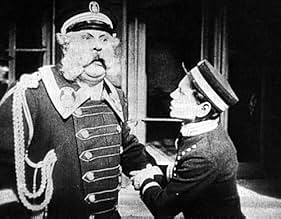
The story revolves as much around the grandiose uniform Jannings wears as it does the man. A symbol of the contemporary German importance attached to uniforms and their unavoidably militaristic connotations, the uniform is portrayed as making the man – and it is only the contentious ending that spins the message that it is not uniforms but compassion and kindness that make men great – not only through the respect he receives from all around him, but in the transformation the porter undergoes whenever he is parted from it. From a ramrod-backed creature of magnificence, with elaborately arranged hair and whiskers, he turns into a fumbling old man with bowed back and shaking hands. In the hands of a lesser actor, the demands of this transformation may have descended into cheap caricature, but Jannings never lets us lose sight of the proud man lurking within the bowed and beaten body.
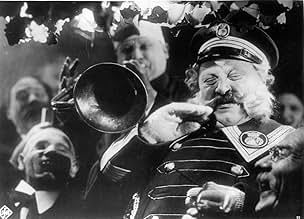
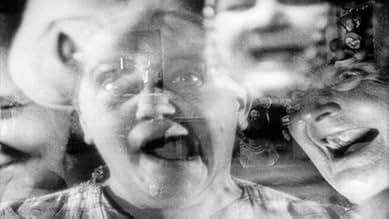
Karl Freund's camera-work is a revelation in this film, right from the opening shot as we descend with the lift into the foyer of the opulent Atlantic hotel. Numerous tricks are used without drawing attention to their use and thus distracting the viewer from the tragedy that is taking place: the drunken POV shot (achieved by strapping the camera to Freund's chest) in Jannings' flat after his niece's wedding reception; the blurred fantasy sequences (themselves a breakthrough in film narrative) achieved by smearing Vaseline onto the camera lens, and the use of dialectic montage and dolly shots, were all groundbreaking techniques never before used, but copied forevermore.
Murnau directs the film with the assurance of a man at the top of his form – where he would arguably remain until his tragically early death – and the care taken with this film is evident throughout every shot. This is why Murnau made relatively few films in an era when many directors churned them out at a rate of a dozen or more per year. The degree of a director's conscientiousness is always evident on the screen, and it is always a pleasure to view a Murnau film, because it is clear that his commitment to his work was always second to none.
The Last Laugh stands as one of the finest creations of a remarkable director, F.W. Murnau, whose credits include Nosferatu, Faust and Sunrise. Filmed without use of subtitles – and to appreciate what an astounding achievement this is, try imagining a dramatic film made without any form of dialogue today – Murnau crafts a beautiful, compelling and tragic tale that stands as both testimony to his undoubted skills and to the artistic heights to which silent cinema often aspired.
The venerated German actor Emil Jannings was only 40 when he took on the role of the unnamed porter, and yet a combination of Waldemar Jabs painstaking make-up and Jannings' own ability to convey his character's heartache in simple ways, such as the stoop of his shoulders or a bent leg, means he gives a towering performance that never threatens, however, to overshadow the story being told.
The story revolves as much around the grandiose uniform Jannings wears as it does the man. A symbol of the contemporary German importance attached to uniforms and their unavoidably militaristic connotations, the uniform is portrayed as making the man – and it is only the contentious ending that spins the message that it is not uniforms but compassion and kindness that make men great – not only through the respect he receives from all around him, but in the transformation the porter undergoes whenever he is parted from it. From a ramrod-backed creature of magnificence, with elaborately arranged hair and whiskers, he turns into a fumbling old man with bowed back and shaking hands. In the hands of a lesser actor, the demands of this transformation may have descended into cheap caricature, but Jannings never lets us lose sight of the proud man lurking within the bowed and beaten body.
Karl Freund's camera-work is a revelation in this film, right from the opening shot as we descend with the lift into the foyer of the opulent Atlantic hotel. Numerous tricks are used without drawing attention to their use and thus distracting the viewer from the tragedy that is taking place: the drunken POV shot (achieved by strapping the camera to Freund's chest) in Jannings' flat after his niece's wedding reception; the blurred fantasy sequences (themselves a breakthrough in film narrative) achieved by smearing Vaseline onto the camera lens, and the use of dialectic montage and dolly shots, were all groundbreaking techniques never before used, but copied forevermore.
Murnau directs the film with the assurance of a man at the top of his form – where he would arguably remain until his tragically early death – and the care taken with this film is evident throughout every shot. This is why Murnau made relatively few films in an era when many directors churned them out at a rate of a dozen or more per year. The degree of a director's conscientiousness is always evident on the screen, and it is always a pleasure to view a Murnau film, because it is clear that his commitment to his work was always second to none.


Le saviez-vous
- AnecdotesThe first "dolly" (a device that allows a camera to move during a shot) was created for this film. According to Edgar G. Ulmer, who worked on the film, the idea to make the first dolly came from the desire to focus on Emil Jannings' face during the first shot of the movie, as he moved through the hotel. They obviously didn't know how to make a dolly technically, so they created the first one out of a baby's carriage. They then pulled the carriage on a sort of railway that was built in the studio.
- GaffesWhen the porter comes home with the stolen coat, the third button down (which fell off earlier) is still there until a close-up of him at the door.
- Autres versionsThere is an Italian edition of this film on DVD, re-edited in double version (1.33:1 and 1.78:1) with the contribution of film historian Riccardo Cusin. This version is also available for streaming on some platforms.
- ConnexionsEdited into Allemagne année 90 neuf zéro (1991)
Meilleurs choix
Connectez-vous pour évaluer et surveiller les recommandations personnalisées
- How long is The Last Laugh?Propulsé par Alexa
Détails
Box-office
- Brut – États-Unis et Canada
- 94 812 $ US
- Durée
- 1h 28m(88 min)
- Couleur
- Mixage
- Rapport de forme
- 1.33 : 1
Contribuer à cette page
Suggérer une modification ou ajouter du contenu manquant