ÉVALUATION IMDb
7,0/10
3,8 k
MA NOTE


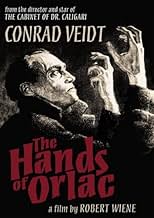
Ajouter une intrigue dans votre langueA world-famous pianist loses both hands in an accident. When new hands are grafted on, he doesn't know they once belonged to a murderer.A world-famous pianist loses both hands in an accident. When new hands are grafted on, he doesn't know they once belonged to a murderer.A world-famous pianist loses both hands in an accident. When new hands are grafted on, he doesn't know they once belonged to a murderer.
- Réalisation
- Scénaristes
- Vedettes

Conrad Veidt
- Paul Orlac
- (as Veidt)
Alexandra Sorina
- Yvonne Orlac
- (as Sorina)
Fritz Strassny
- Der alte Orlac
- (as Strassny)
Paul Askonas
- Der Diener
- (as Askonas)
Carmen Cartellieri
- Regine
- (as Cartellieri)
Hans Homma
- Dr. Serral
- (as Homma)

Fritz Kortner
- Nera
- (as Kortner)
7,03.7K
1
2
3
4
5
6
7
8
9
10
Avis en vedette
A Gothic and Dark German Expressionist Film
The pianist Paul Orlac (Conrad Veidt) is on tour and his wife Yvonne Orlac (Alexandra Sorina) anxiously waits for his return. While traveling back home, there is a train wreck at Montgeron and Orlac is very injured in both hands in the accident.
Yvonne begs to Dr. Serral (Hans Homma) to save his hands that are his life. Meanwhile, the robber and murderer Vasseur that claims that is innocent is sentenced to death since the police investigator had found his fingerprints everywhere near the victim. Dr. Serral transplants Vasseur's hands in Orlac and when he recovers, he feels that there is something wrong with his hands.
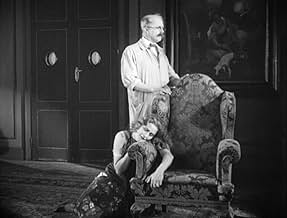
Orlac asks the surgeon about the hands and learns that he belonged to a criminal, and Orlac decides to never touch Yvonne again with those hands. His family becomes poor since he is not working anymore and Yvonne pays a visit to her father-in-law (Fritz Strassny) to ask for help. However, Orlac's father is a cruel man and does not help her. When Orlac returns home, Yvonne asks him to visit his father and when he arrives at his house, he finds his father dead. They call the police and they find Vasseur's fingerprint everywhere. Orlac is the only heir of his father fortune but sooner he is followed by a stranger named Nera (Fritz Kortner) that blackmails him and demands a small fortune. Orlac is not sure that he had killed his father and goes with Yvonne to the police. Sooner they discover a secret about Vasseur.
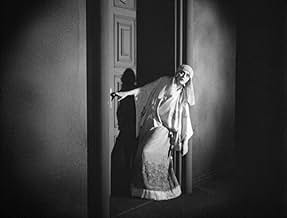
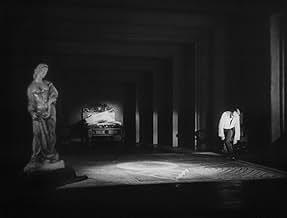
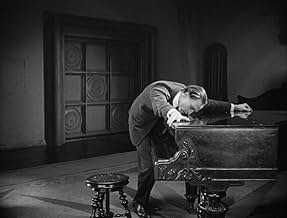
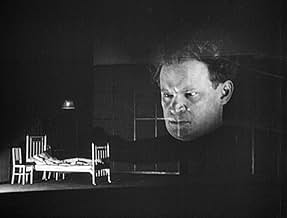
"Orlacs Hände" is a Gothic and dark German Expressionist film with an unbelievable plot (but who matters?) but wonderful theatrical performances like in most silent classics and perfect use of shadows in a gloomy atmosphere. The music score fits perfectly to the film and this is the first time that I watch this little masterpiece. My vote is eight.
Title (Brazil): "As Mãos de Orlac" ("The Hands of Orlac")
Yvonne begs to Dr. Serral (Hans Homma) to save his hands that are his life. Meanwhile, the robber and murderer Vasseur that claims that is innocent is sentenced to death since the police investigator had found his fingerprints everywhere near the victim. Dr. Serral transplants Vasseur's hands in Orlac and when he recovers, he feels that there is something wrong with his hands.
Orlac asks the surgeon about the hands and learns that he belonged to a criminal, and Orlac decides to never touch Yvonne again with those hands. His family becomes poor since he is not working anymore and Yvonne pays a visit to her father-in-law (Fritz Strassny) to ask for help. However, Orlac's father is a cruel man and does not help her. When Orlac returns home, Yvonne asks him to visit his father and when he arrives at his house, he finds his father dead. They call the police and they find Vasseur's fingerprint everywhere. Orlac is the only heir of his father fortune but sooner he is followed by a stranger named Nera (Fritz Kortner) that blackmails him and demands a small fortune. Orlac is not sure that he had killed his father and goes with Yvonne to the police. Sooner they discover a secret about Vasseur.
"Orlacs Hände" is a Gothic and dark German Expressionist film with an unbelievable plot (but who matters?) but wonderful theatrical performances like in most silent classics and perfect use of shadows in a gloomy atmosphere. The music score fits perfectly to the film and this is the first time that I watch this little masterpiece. My vote is eight.
Title (Brazil): "As Mãos de Orlac" ("The Hands of Orlac")
Excellent performances, ponderous pacing needs better musical score
I've been looking for a DVD of THE HANDS OF ORLAC ever since I knew the film existed. Now it's finally here, and like most silent films it's a mixed bag. I find the image on the new KINO disc to be acceptable considering the problematic nature of the source material. There's a loss of definition in some scenes, but there are also moments of sharpness in the restored Murnau Foundation print. It's a shame we can never experience non-talking films the way 1920s audiences did, without washed-out contrasts, image-flickers, frame-jitters, dirt, and print damage. Even the best restorations don't look new.
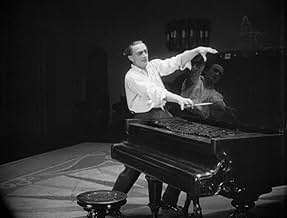
The plot concerns a concert pianist whose hands are smashed in a train wreck. A surgeon replaces them with the hands an executed criminal. Soon the pianist is obsessed with thoughts he might be a killer. The performances are generally excellent in the Expressionistic style. Conrad Veidt's exaggerated grimacing as his character Paul Orlac approaches madness is tempered by moments that are extremely moving.
The score of mostly string music on the KINO disc is creepy and works well for a while, but is so monotonous over the entire length of an already ponderously paced film that I grew tired of it. This film cries out for music that varies its mood to fit what is happening on screen. Contrasts in the mood of the music would make the creepy parts seem even creepier. An optional score in a traditional style would have been nice. Nevertheless, the Gothic set design and shadow-infested cinematography by Gunther Krampf - particularly the scenes at Orlac's father's house - create the atmosphere we know and love in early horror films. These chiaroscuro light-and-shadow effects just cannot be achieved with color.
However, to evoke fear without the modern cheats of gore and violence - to create what the Germans call "stimmung" (mood) - requires not only imaginative lighting and set design, but time. Unfortunately director Robert Weine spends too much time on the actors' very deliberate expressionistic movements at the expense of pacing.
The ending is likewise unsatisfactory, although it does follow Maurice Renard's novel. I won't give too much away other than to say the ending undercuts an apparently fantastic element, yet makes the "logical" explanation seem almost as implausible. Nevertheless, the build-up to the resolution as well as Veidt's engrossing performance makes this a worthwhile, if uninspired, film.
The plot concerns a concert pianist whose hands are smashed in a train wreck. A surgeon replaces them with the hands an executed criminal. Soon the pianist is obsessed with thoughts he might be a killer. The performances are generally excellent in the Expressionistic style. Conrad Veidt's exaggerated grimacing as his character Paul Orlac approaches madness is tempered by moments that are extremely moving.
The score of mostly string music on the KINO disc is creepy and works well for a while, but is so monotonous over the entire length of an already ponderously paced film that I grew tired of it. This film cries out for music that varies its mood to fit what is happening on screen. Contrasts in the mood of the music would make the creepy parts seem even creepier. An optional score in a traditional style would have been nice. Nevertheless, the Gothic set design and shadow-infested cinematography by Gunther Krampf - particularly the scenes at Orlac's father's house - create the atmosphere we know and love in early horror films. These chiaroscuro light-and-shadow effects just cannot be achieved with color.
However, to evoke fear without the modern cheats of gore and violence - to create what the Germans call "stimmung" (mood) - requires not only imaginative lighting and set design, but time. Unfortunately director Robert Weine spends too much time on the actors' very deliberate expressionistic movements at the expense of pacing.
The ending is likewise unsatisfactory, although it does follow Maurice Renard's novel. I won't give too much away other than to say the ending undercuts an apparently fantastic element, yet makes the "logical" explanation seem almost as implausible. Nevertheless, the build-up to the resolution as well as Veidt's engrossing performance makes this a worthwhile, if uninspired, film.
Decent silent horror melodrama with a tour de force performance from Conrad Veidt.
Interesting and well made German silent version of Maurice Renard's novel "Les Mains d'Orlac" from the same folks behind the highly regarded expressionist classic THE CABINET OF DR. CALIGARI (1920). Conrad Veidt gives an outstanding, creepy and memorable dramatic performance as the tormented Orlac, a famous pianist whose hands are replaced by those of an executed thief and murderer after a train accident. He soon begins to think he's not only received a maniac's hands, but also his desire to commit crimes. The cavernous and sparsely decorated interiors as well as the typically exaggerated performances often give this the feel of a theatrical production, and while the movie is a little overlong and slow-going (definitely requires a more patient type of viewer to appreciate it), it's still worthwhile for Veidt's amazing performance, some nice visuals and a surprise twist ending. I also need to point out that the Kino DVD of the film runs 110 minutes, though it is listed here as running just 98. Bonus features on the disc include scene comparisons of domestic and international cuts, excerpts of Renard's Novel, an essay by author John Soister, a trailer and an image gallery.
The same tale would later be the basis for 1935's MAD LOVE (starring the inimitable Peter Lorre) and 1960's THE HANDS OF ORLAC (starring Mel Ferrer, and also with supporting turns from Christopher Lee and Donald Pleasence), as well as the uncredited basis for 1962's HANDS OF A STRANGER and several other films.
The same tale would later be the basis for 1935's MAD LOVE (starring the inimitable Peter Lorre) and 1960's THE HANDS OF ORLAC (starring Mel Ferrer, and also with supporting turns from Christopher Lee and Donald Pleasence), as well as the uncredited basis for 1962's HANDS OF A STRANGER and several other films.
Good Film
Hands of Orlac, The (1924)
*** (out of 4)
This German version of the famous story is certainly a lot better than the boring 1961 version with Christopher Lee and is also a step up from the more famous 1935 film Mad Love with Peter Lorre. As the story goes, a concert pianist (Conrad Veidt) has his hands damaged during a train wreck but doctor's do a transplant and accidentally give him the hands of a killer. Soon afterwards the hands take on a life of their own and start killing. Here's another German Expressionism horror film that really takes control of the viewer and takes them for a ride. The director, Robert Wiene, also made the masterpiece The Cabinet of Dr. Caligari and this film serves as one of the more chilling silent horror films. The best aspect is the performance from Veidt who I found just as good here as he was in The Man Who Laughs. He's able to get sympathy out of the character and he also manages to be very menacing during the murder scenes. The film also has some very eerie and creepy moments including the first scene where the hands come to life. This is a rather rare film and various versions are out there. I was able to view the longest cut of the film (93 minutes) but the title cards were in German with Spanish subs. The music score was also quite horrid so I actually turned the sound off while watching this. With a proper screening I'd certainly raise the rating.
*** (out of 4)
This German version of the famous story is certainly a lot better than the boring 1961 version with Christopher Lee and is also a step up from the more famous 1935 film Mad Love with Peter Lorre. As the story goes, a concert pianist (Conrad Veidt) has his hands damaged during a train wreck but doctor's do a transplant and accidentally give him the hands of a killer. Soon afterwards the hands take on a life of their own and start killing. Here's another German Expressionism horror film that really takes control of the viewer and takes them for a ride. The director, Robert Wiene, also made the masterpiece The Cabinet of Dr. Caligari and this film serves as one of the more chilling silent horror films. The best aspect is the performance from Veidt who I found just as good here as he was in The Man Who Laughs. He's able to get sympathy out of the character and he also manages to be very menacing during the murder scenes. The film also has some very eerie and creepy moments including the first scene where the hands come to life. This is a rather rare film and various versions are out there. I was able to view the longest cut of the film (93 minutes) but the title cards were in German with Spanish subs. The music score was also quite horrid so I actually turned the sound off while watching this. With a proper screening I'd certainly raise the rating.
an important step in the transition from arthouse Expressionism to the techniques of film noir
Director Robert Wiene and star Conrad Veidt reteam for this Austrian horror suspense drama. Veidt plays Paul Orlac, a famous concert pianist who gets severely injured in a train crash. Dr. Serral (Hans Homma) tries an experimental technique wherein he grafts the hands of a dead man onto Orlac's arms, and the surgery is a success, but afterward, when Orlac learns that the hands belonged to an executed murderer, he starts to lose his mind, believing that the hands are commanding him to kill again. Also featuring Alexandra Sorina, Fritz Strassny, Paul Askonas, Carmen Cartellieri, and Fritz Kortner.
Wiene continues to use Expressionistic techniques and visual schemes, but they are toned down, and used to accentuate the narrative rather than overwhelming the proceedings. The film marks an important step in the transition from purely arthouse Expressionism to the techniques used in the visual language of film noir. Veidt gives an intense, tortured performance, although Kortner pales in comparison to the later remake Mad Love and Peter Lorre's take on the character. Most sources list this as being roughly 90 minutes, but the version I watched was 113 minutes. I felt that could have been trimmed down a bit, as some scenes dragged. That being said, I enjoyed the film quite a bit, and the cinematography was beautiful.
Wiene continues to use Expressionistic techniques and visual schemes, but they are toned down, and used to accentuate the narrative rather than overwhelming the proceedings. The film marks an important step in the transition from purely arthouse Expressionism to the techniques used in the visual language of film noir. Veidt gives an intense, tortured performance, although Kortner pales in comparison to the later remake Mad Love and Peter Lorre's take on the character. Most sources list this as being roughly 90 minutes, but the version I watched was 113 minutes. I felt that could have been trimmed down a bit, as some scenes dragged. That being said, I enjoyed the film quite a bit, and the cinematography was beautiful.


Le saviez-vous
- AnecdotesThis film was incomplete for decades, due to footage that never made it into the American prints and footage that had been cut due to censorship in German prints. The film was restored to its original length in 1995 by F. W. Murnau Stiftung.
- GaffesWhen Orlac reads a newspaper, the headlines are in German but the body in French.
- Citations
Dr. Serral: The spirit governs the hand... nature and a firm will can do anything.
- Générique farfeluIn the opening credits, all cast members are billed by their last names only.
- Autres versionsFirst released in 1924 in Austria and several months later in Germany, the original print ran to 2,507m (92 minutes). In June 1928, it premiered in the United States with an entire reel edited out which prompted a mixed critical reception. In 1995, the film was restored by Bundesarchiv-Filmarchiv in Berlin, Friedrich-Wilhelm-Murnau-Stiftung and the Deutsches Filminstitut with the co-operation of Jugoslovenska Kinoteka in Belgrad. This version had new music by Henning Lohner and was also given background noises and the sound effects of an interrogation scene of which was not universally approved. A new restoration was released on Region 1 DVD in 2008 by Kino Lorber which was based on the 1995 restoration and restored by Bret Wood, with a score by composer Paul Mercer and additional footage courtesy of The Raymond Rohauer Collection in Columbus, Ohio and took the running time to 110 minutes. In 2013 Filmarchiv Austria restored the film with material from its archives, running to 93 minutes. This had a score composed by Donald Sosin, performed by the composer at the piano and Dennis James at the Rieger organ. The 2013 restoration, with a score by Johannes Kalitze, was released on Blu-ray in Germany in 2019 and later in the United Kingdom in 2021.
- ConnexionsEdited into Histoire(s) du cinéma: Fatale beauté (1994)
Meilleurs choix
Connectez-vous pour évaluer et surveiller les recommandations personnalisées
- How long is The Hands of Orlac?Propulsé par Alexa
Détails
- Durée
- 1h 32m(92 min)
- Mixage
- Rapport de forme
- 1.33 : 1
Contribuer à cette page
Suggérer une modification ou ajouter du contenu manquant