ÉVALUATION IMDb
7,9/10
64 k
MA NOTE


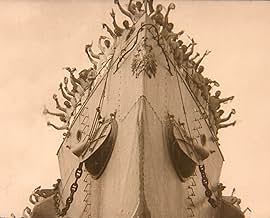
Au milieu de la révolution russe de 1905, l'équipage du cuirassé Potemkine se révolte contre le régime brutal et tyrannique des officiers du navire. La manifestation de rue qui en résulte à ... Tout lireAu milieu de la révolution russe de 1905, l'équipage du cuirassé Potemkine se révolte contre le régime brutal et tyrannique des officiers du navire. La manifestation de rue qui en résulte à Odessa entraîne un massacre par la police.Au milieu de la révolution russe de 1905, l'équipage du cuirassé Potemkine se révolte contre le régime brutal et tyrannique des officiers du navire. La manifestation de rue qui en résulte à Odessa entraîne un massacre par la police.
- Réalisation
- Scénaristes
- Vedettes
- Prix
- 1 victoire au total
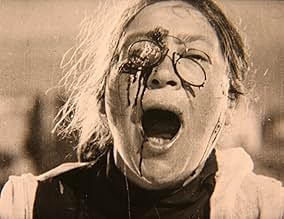


Ivan Bobrov
- Young Sailor Flogged While Sleeping
- (as I. Bobrov)

Nina Poltavtseva
- Woman With Pince-nez
- (as N. Poltavtseva)


Iona Biy-Brodskiy
- Student
- (as Brodsky)

Sergei Eisenstein
- Odessa Citizen
- (as Sergei M. Eisenstein)

Andrey Fayt
- Recruit
- (as A. Fait)
7,964.3K
1
2
3
4
5
6
7
8
9
10
Sommaire
Reviewers say 'Battleship Potemkin' is acclaimed for its pioneering montage and editing, significantly impacting cinema. The 1905 Russian Revolution portrayal, especially the Odessa Steps scene, is lauded for its potent visuals and emotional resonance. Many praise its technical innovations and contribution to filmmaking. However, some criticize its political propaganda and shallow character development. Nonetheless, 'Battleship Potemkin' is widely recognized as a cinematic masterpiece and a vital historical film.
Avis en vedette
Excellent piece of cinema-history
There is something special about watching the really old films, especially when it is a film as influential as 'Bronenosets Potyomkin' ('The Battleship Potemkin'). Besides the historical value of the film I was surprised how much I really enjoyed it. Director Sergei Eisenstein takes reel events and changes them a little for this powerful film.
The story begins on the battleship Potemkin where the men are served rotten meat. A sailor named Vakulinchuk (Aleksandr Antonov) steps up and after a series of events mutiny is what follows. Out of revenge an officer is able to kill Vakulinchuk. The men on the ship want to honor him and try to bring their revolution to the shore, to the city of Odessa. They place him in the harbor in a tent with a sign that says he was killed over a boil of soup. The people of Odessa sympathize with the sailors from the Potemkin and they are welcomed in their city. A massacre, in one of the most famous sequences of the cinema, is what follows on the Odessa Staircase.
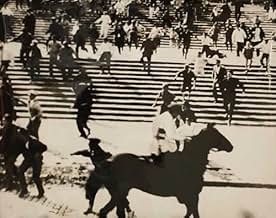
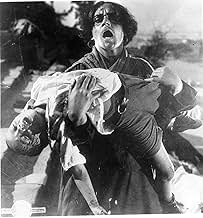
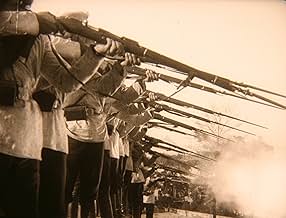
It is especially this great sequence that shows some real horrors, uncompromising I should add. There are images, like the slit eyeball from 'Un Chien Andalou', you will remember. The people on the staircase, troops firing at them, a crushed hand, a woman with her child shot dead, but most of all a carriage with a baby in it, rolling down the staircase. Every image is effective, showing things what few (or no) films did back then. I was amazed of how good this scene still works today; I was watching in disbelieve.
On a technical scale the film is also very good. Most of the time we believe we are watching what the film wants us to see, the visuals work. Eisenstein is able to make things even more effective the way he cuts between the images. Famous for its montage, 'Bronenosets Potyomkin' sometimes seems like a choreographed sequence of presented images, with a rhythm and a tempo. I could say so much more about this film, one you should have seen if you are interested in the history of the cinema. If you do not really care you might give it a chance. It is one of the most effective silent films I can think of, still very accessible for a large audience.
The story begins on the battleship Potemkin where the men are served rotten meat. A sailor named Vakulinchuk (Aleksandr Antonov) steps up and after a series of events mutiny is what follows. Out of revenge an officer is able to kill Vakulinchuk. The men on the ship want to honor him and try to bring their revolution to the shore, to the city of Odessa. They place him in the harbor in a tent with a sign that says he was killed over a boil of soup. The people of Odessa sympathize with the sailors from the Potemkin and they are welcomed in their city. A massacre, in one of the most famous sequences of the cinema, is what follows on the Odessa Staircase.
It is especially this great sequence that shows some real horrors, uncompromising I should add. There are images, like the slit eyeball from 'Un Chien Andalou', you will remember. The people on the staircase, troops firing at them, a crushed hand, a woman with her child shot dead, but most of all a carriage with a baby in it, rolling down the staircase. Every image is effective, showing things what few (or no) films did back then. I was amazed of how good this scene still works today; I was watching in disbelieve.
On a technical scale the film is also very good. Most of the time we believe we are watching what the film wants us to see, the visuals work. Eisenstein is able to make things even more effective the way he cuts between the images. Famous for its montage, 'Bronenosets Potyomkin' sometimes seems like a choreographed sequence of presented images, with a rhythm and a tempo. I could say so much more about this film, one you should have seen if you are interested in the history of the cinema. If you do not really care you might give it a chance. It is one of the most effective silent films I can think of, still very accessible for a large audience.
One of the greatest movies ever made.
Originally supposed to be just a part of a huge epic The Year 1905 depicting the Revolution of 1905, Potemkin is the story of the mutiny of the crew of the Potemkin in Odessa harbor. The film opens with the crew protesting maggoty meat and the captain ordering the execution of the dissidents. An uprising takes place during which the revolutionary leader is killed. This crewman is taken to the shore to lie in state. When the townspeople gather on a huge flight of steps overlooking the harbor, czarist troops appear and march down the steps breaking up the crowd. A naval squadron is sent to retake the Potemkin but at the moment when the ships come into range, their crews allow the mutineers to pass through. Eisenstein's non-historically accurate ending is open-ended thus indicating that this was the seed of the later Bolshevik revolution that would bloom in Russia. The film is broken into five parts: Men and Maggots, Drama on the Quarterdeck, An Appeal from the Dead, The Odessa Steps, and Meeting the Squadron.
Eisenstein was a revolutionary artist, but at the genius level. Not wanting to make a historical drama, Eisenstein used visual texture to give the film a newsreel-look so that the viewer feels he is eavesdropping on a thrilling and politically revolutionary story. This technique is used by Pontecorvo's The Battle of Algiers.
Unlike Pontecorvo, Eisenstein relied on typage, or the casting of non-professionals who had striking physical appearances. The extraordinary faces of the cast are what one remembers from Potemkin. This technique is later used by Frank Capra in Mr. Deeds Goes to Town and Meet John Doe. But in Potemkin, no one individual is cast as a hero or heroine. The story is told through a series of scenes that are combined in a special effect known as montage--the editing and selection of short segments to produce a desired effect on the viewer. D.W. Griffith also used the montage, but no one mastered it so well as Eisenstein.
The artistic filming of the crew sleeping in their hammocks is complemented by the graceful swinging of tables suspended from chains in the galley. In contrast the confrontation between the crew and their officers is charged with electricity and the clenched fists of the masses demonstrate their rage with injustice.
Eisenstein introduced the technique of showing an action and repeating it again but from a slightly different angle to demonstrate intensity. The breaking of a plate bearing the words "Give Us This Day Our Daily Bread" signifies the beginning of the end. This technique is used in Last Year at Marienbad. Also, when the ship's surgeon is tossed over the side, his pince-nez dangles from the rigging. It was these glasses that the officer used to inspect and pass the maggot-infested meat. This sequence ties the punishment to the corruption of the czarist-era.
The most noted sequence in the film, and perhaps in all of film history, is The Odessa Steps. The broad expanse of the steps are filled with hundreds of extras. Rapid and dramatic violence is always suggested and not explicit yet the visual images of the deaths of a few will last in the minds of the viewer forever.
The angular shots of marching boots and legs descending the steps are cleverly accentuated with long menacing shadows from a sun at the top of the steps. The pace of the sequence is deliberately varied between the marching soldiers and a few civilians who summon up courage to beg them to stop. A close up of a woman's face frozen in horror after being struck by a soldier's sword is the direct antecedent of the bank teller in Bonnie in Clyde and gives a lasting impression of the horror of the czarist regime.
The death of a young mother leads to a baby carriage careening down the steps in a sequence that has been copied by Hitchcock in Foreign Correspondent, by Terry Gilliam in Brazil, and Brian DePalma in The Untouchables. This sequence is shown repeatedly from various angles thus drawing out what probably was only a five second event.
Potemkin is a film that immortalizes the revolutionary spirit, celebrates it for those already committed, and propagandizes it for the unconverted. It seethes of fire and roars with the senseless injustices of the decadent czarist regime. Its greatest impact has been on film students who have borrowed and only slightly improved on techniques invented in Russia several generations ago.
Eisenstein was a revolutionary artist, but at the genius level. Not wanting to make a historical drama, Eisenstein used visual texture to give the film a newsreel-look so that the viewer feels he is eavesdropping on a thrilling and politically revolutionary story. This technique is used by Pontecorvo's The Battle of Algiers.
Unlike Pontecorvo, Eisenstein relied on typage, or the casting of non-professionals who had striking physical appearances. The extraordinary faces of the cast are what one remembers from Potemkin. This technique is later used by Frank Capra in Mr. Deeds Goes to Town and Meet John Doe. But in Potemkin, no one individual is cast as a hero or heroine. The story is told through a series of scenes that are combined in a special effect known as montage--the editing and selection of short segments to produce a desired effect on the viewer. D.W. Griffith also used the montage, but no one mastered it so well as Eisenstein.
The artistic filming of the crew sleeping in their hammocks is complemented by the graceful swinging of tables suspended from chains in the galley. In contrast the confrontation between the crew and their officers is charged with electricity and the clenched fists of the masses demonstrate their rage with injustice.
Eisenstein introduced the technique of showing an action and repeating it again but from a slightly different angle to demonstrate intensity. The breaking of a plate bearing the words "Give Us This Day Our Daily Bread" signifies the beginning of the end. This technique is used in Last Year at Marienbad. Also, when the ship's surgeon is tossed over the side, his pince-nez dangles from the rigging. It was these glasses that the officer used to inspect and pass the maggot-infested meat. This sequence ties the punishment to the corruption of the czarist-era.
The most noted sequence in the film, and perhaps in all of film history, is The Odessa Steps. The broad expanse of the steps are filled with hundreds of extras. Rapid and dramatic violence is always suggested and not explicit yet the visual images of the deaths of a few will last in the minds of the viewer forever.
The angular shots of marching boots and legs descending the steps are cleverly accentuated with long menacing shadows from a sun at the top of the steps. The pace of the sequence is deliberately varied between the marching soldiers and a few civilians who summon up courage to beg them to stop. A close up of a woman's face frozen in horror after being struck by a soldier's sword is the direct antecedent of the bank teller in Bonnie in Clyde and gives a lasting impression of the horror of the czarist regime.
The death of a young mother leads to a baby carriage careening down the steps in a sequence that has been copied by Hitchcock in Foreign Correspondent, by Terry Gilliam in Brazil, and Brian DePalma in The Untouchables. This sequence is shown repeatedly from various angles thus drawing out what probably was only a five second event.
Potemkin is a film that immortalizes the revolutionary spirit, celebrates it for those already committed, and propagandizes it for the unconverted. It seethes of fire and roars with the senseless injustices of the decadent czarist regime. Its greatest impact has been on film students who have borrowed and only slightly improved on techniques invented in Russia several generations ago.
Possibly the most influential film of all time
A milestone in cinematic history, 'Bronenosets Potyomkin' is one of the handful of great films out there that richly deserves to be called a classic. It was the picture that made Sergei M. Eisenstein a figurehead of film-making at the time. And today, it is still remembered as the wonderful piece of cinema it always has been.
'Potyomkin' is a film that NEEDS to be seen as one entity, not to be picked at. Don't just watch those clip shows where they only present the 'Odessa steps' sequence and then move on to 'Citizen Kane' or 'The Godfather', see it all in it's glorious 75-minute running time to really understand and enjoy it. Don't expect every infinitesimal detail to be perfect though, I mean the acting of the '20s silent era makes 'Scooby Doo' look like a master of understated realism, certain plot points may seem illogical and some of the battle sequences look dated, but it is still an immensely enjoyable movie.
The most memorable moments in the film are the mutiny on the battleship, Vakulinchuk's body falling off the ship, the sailor under the tent at the end of the pier, the mother holding her dead child, the baby carriage on the Odessa steps and the lion rising up to roar as further carnage ensues. For each new pair of eyes that look upon it, 'The Battleship Potemkin' comes alive once again.
'Potyomkin' is a film that NEEDS to be seen as one entity, not to be picked at. Don't just watch those clip shows where they only present the 'Odessa steps' sequence and then move on to 'Citizen Kane' or 'The Godfather', see it all in it's glorious 75-minute running time to really understand and enjoy it. Don't expect every infinitesimal detail to be perfect though, I mean the acting of the '20s silent era makes 'Scooby Doo' look like a master of understated realism, certain plot points may seem illogical and some of the battle sequences look dated, but it is still an immensely enjoyable movie.
The most memorable moments in the film are the mutiny on the battleship, Vakulinchuk's body falling off the ship, the sailor under the tent at the end of the pier, the mother holding her dead child, the baby carriage on the Odessa steps and the lion rising up to roar as further carnage ensues. For each new pair of eyes that look upon it, 'The Battleship Potemkin' comes alive once again.
A gripping story told with style and passion as well as a 'must see' piece of cinema history
With workers striking in Russia, the crew of the battleship Potemkin feel a certain kinship for the plight of their brothers. When they are served rotting, maggot infested meat some of the crew object, only to find themselves singled out and placed in front of a firing squad. With the marines seconds away from firing the deadly shots, ordinary seaman Grigory Vakulinchuk steps into the breach and intervenes to save the men by appealing to the firing squad to ignore their orders. When the officers take their revenge and kill Vakulinchuk, all are bonded together in the struggle; a bond that reaches to the city of Odessa where the rebellion grows, leading to a bloody and historic series of events.
It is hard to imagine that anybody who has seen quite a few films in the past few decades would be unaware of this film, but it is perhaps understandable that fewer have had the opportunity to actually sit down and watch. I had never seen this film before but had seen countless references to it in other films and therefore considering it an important film to at least see once. The story is based on real events and this only serves to make it more interesting but even without this context it is still an engaging story. The story doesn't have much in the way of characters but it still brings out the brutality and injustice of events and it is in this that it hooked me surprisingly violent (implied more than modern gore) it demonising the actions and shows innocents falling at all sides in key scenes. The version I saw apparently had the original score (I'm not being snobby modern rescores could be better for all I know) and I felt it worked very well to match and improve the film's mood; dramatic, gentle or exciting, it all works very well.
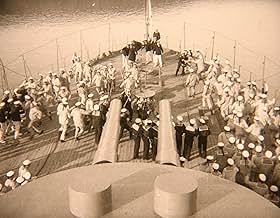
The feel of the film was a surprise to me because it stood up very well viewed with my modern eyes. At one or two points the model work was very clearly model work but mostly the film is technically impressive. The masses of extras, use of ships and cities and just the way it captures such well organised chaos are all very impressive and would be even done today. What is more impressive with time though is how the film has a very strong and very clean style to it it is not as gritty and flat as many silent films of the period that I have seen; instead it is very crisp and feels very, very professional. Of course watching it in 2004 gives me the benefit of hindsight where I can look back over many films that have referenced the images or directors who have mentioned the film in interviews; but even without this 20:20 vision it is still possible to see how well done the film is and to note how memorable much of it is the steps and the firing squad scenes are two very impressive moments that are very memorable. The only real thing that might bug modern audiences is the acting; it isn't bad but silent acting is very different from acting with sound. Here the actors all over act and rely on their bodies to do much of their delivery word cards just don't do the emotional job so they have to make extra effort to deliver this.
Overall this is a classic film that has influenced many modern directors. The story is engaging and well worth hearing; the directing is crisp and professional, producing many scenes that linger in the memory; the music works to deliver the emotional edge that modern audiences would normally rely on acting and dialogue to deliver and the whole film is over all too quickly! An essential piece of cinema for those that claim to love the media but also a cracking good film in its own right.
It is hard to imagine that anybody who has seen quite a few films in the past few decades would be unaware of this film, but it is perhaps understandable that fewer have had the opportunity to actually sit down and watch. I had never seen this film before but had seen countless references to it in other films and therefore considering it an important film to at least see once. The story is based on real events and this only serves to make it more interesting but even without this context it is still an engaging story. The story doesn't have much in the way of characters but it still brings out the brutality and injustice of events and it is in this that it hooked me surprisingly violent (implied more than modern gore) it demonising the actions and shows innocents falling at all sides in key scenes. The version I saw apparently had the original score (I'm not being snobby modern rescores could be better for all I know) and I felt it worked very well to match and improve the film's mood; dramatic, gentle or exciting, it all works very well.
The feel of the film was a surprise to me because it stood up very well viewed with my modern eyes. At one or two points the model work was very clearly model work but mostly the film is technically impressive. The masses of extras, use of ships and cities and just the way it captures such well organised chaos are all very impressive and would be even done today. What is more impressive with time though is how the film has a very strong and very clean style to it it is not as gritty and flat as many silent films of the period that I have seen; instead it is very crisp and feels very, very professional. Of course watching it in 2004 gives me the benefit of hindsight where I can look back over many films that have referenced the images or directors who have mentioned the film in interviews; but even without this 20:20 vision it is still possible to see how well done the film is and to note how memorable much of it is the steps and the firing squad scenes are two very impressive moments that are very memorable. The only real thing that might bug modern audiences is the acting; it isn't bad but silent acting is very different from acting with sound. Here the actors all over act and rely on their bodies to do much of their delivery word cards just don't do the emotional job so they have to make extra effort to deliver this.
Overall this is a classic film that has influenced many modern directors. The story is engaging and well worth hearing; the directing is crisp and professional, producing many scenes that linger in the memory; the music works to deliver the emotional edge that modern audiences would normally rely on acting and dialogue to deliver and the whole film is over all too quickly! An essential piece of cinema for those that claim to love the media but also a cracking good film in its own right.
Vivid & Memorable
This classic is filled with vivid images that stay in your mind after you have watched it, and there is a lot to appreciate in the way that the key scenes were set up and photographed. The visuals are so impressive that the movie's imperfections are usually not so noticeable, and they don't keep it from being a memorable film.
The movie certainly deserves the praise that it gets both for the influence that it has had, and for some ideas that for the time were most creative. The famed 'Odessa Steps' sequence alone demonstrates both fine technical skill and a keen awareness of how to drive home an image to an audience. It deserves to be one of cinema's best remembered sequences. Some of the other scenes also demonstrate, to a lesser degree, the same kind of skill.
It says a lot for how effective all of the visuals are that so many viewers think so highly of "Battleship Potemkin" despite a story that is sometimes heavy-handed, and despite characters and acting that are both rather thin. These features might simply stem from the collectivist philosophy that lies behind the story, and they are obscured most of the time by Eisenstein's unsurpassed ability to present pictures that viewers will not forget.
Despite the flaws, this is a movie that most fans of silent films, and anyone interested in the history of movies, will want to see. There's nothing else in its era that's quite like it.
The movie certainly deserves the praise that it gets both for the influence that it has had, and for some ideas that for the time were most creative. The famed 'Odessa Steps' sequence alone demonstrates both fine technical skill and a keen awareness of how to drive home an image to an audience. It deserves to be one of cinema's best remembered sequences. Some of the other scenes also demonstrate, to a lesser degree, the same kind of skill.
It says a lot for how effective all of the visuals are that so many viewers think so highly of "Battleship Potemkin" despite a story that is sometimes heavy-handed, and despite characters and acting that are both rather thin. These features might simply stem from the collectivist philosophy that lies behind the story, and they are obscured most of the time by Eisenstein's unsurpassed ability to present pictures that viewers will not forget.
Despite the flaws, this is a movie that most fans of silent films, and anyone interested in the history of movies, will want to see. There's nothing else in its era that's quite like it.


Le saviez-vous
- AnecdotesThe flag seen flying on the ship after the crew had mutinied is white, which is the color of the tsars, but this was done so that it could be hand-painted red (the color of communism) on the celluloid. Since this is a black-and-white film, if the flag had been red it would have shown as black in the film. The flag was hand-tinted red for 108 frames by director Sergei Eisenstein for the film's premier.
- GaffesIn the Imperial squadron near the end, there are closeups of triple gun turrets of Gangut-class dreadnought. It possibly was made this way to show the power of Imperial fleet, but battleships of 1905 were much smaller pre-dreadnoughts, with twin turrets only, just like "Potemkin". "Ganguts" entered service in 1914.
- Autres versionsSergei Eisenstein's premiere version opened with an unattributed quote from Leon Trotsky's "1905": The spirit of mutiny swept the land. A tremendous, mysterious process was taking place in countless hearts: the individual personality became dissolved in the mass, and the mass itself became dissolved in the revolutionary impetus. This quote was removed by Soviet censors in 1934, and replaced by a quotation from V.I. Lenin's "Revolutionary Days": Revolution is war. Of all the wars known in history, it is the only lawful, rightful, just and truly great war...In Russia this war has been declared and won. The original text was restored in 2004.
- ConnexionsEdited into Seeds of Freedom (1943)
Meilleurs choix
Connectez-vous pour évaluer et surveiller les recommandations personnalisées
- How long is Battleship Potemkin?Propulsé par Alexa
Détails
- Date de sortie
- Pays d’origine
- Langues
- Aussi connu sous le nom de
- Battleship Potemkin
- Lieux de tournage
- Sevastopol, Crimea, Ukraine(battleship scenes)
- société de production
- Consultez plus de crédits d'entreprise sur IMDbPro
Box-office
- Brut – États-Unis et Canada
- 51 198 $ US
- Fin de semaine d'ouverture – États-Unis et Canada
- 5 641 $ US
- 16 janv. 2011
- Brut – à l'échelle mondiale
- 70 368 $ US
- Durée
- 1h 15m(75 min)
- Couleur
- Mixage
- Rapport de forme
- 1.37 : 1
Contribuer à cette page
Suggérer une modification ou ajouter du contenu manquant