

Une femme soupçonne que son nouveau locataire est le psychopathe qui tue des femmes à Londres.Une femme soupçonne que son nouveau locataire est le psychopathe qui tue des femmes à Londres.Une femme soupçonne que son nouveau locataire est le psychopathe qui tue des femmes à Londres.
- Réalisation
- Scénaristes
- Vedettes


June Tripp
- Daisy - A Mannequin
- (as June)


Wallace Bosco
- Pub Customer
- (uncredited)
Daisy Campbell
- Mother
- (uncredited)
Maudie Dunham
- First Victim
- (uncredited)

Reginald Gardiner
- Dancer at Ball
- (uncredited)
Eve Gray
- Showgirl Victim
- (uncredited)

Alfred Hitchcock
- Extra in Newspaper Office
- (uncredited)

Alma Reville
- Woman Listening to Wireless
- (uncredited)
7,314.6K
1
2
3
4
5
6
7
8
9
10
Avis en vedette
A compelling whodunit
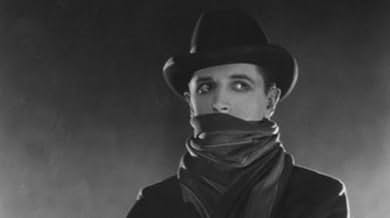
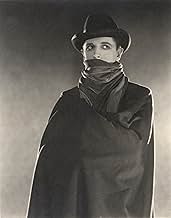
A stranger (Ivor Novello) in fog-bound London seeks accommodation from a family and they provide him with a small apartment upstairs. Their blond daughter is drawn towards this fascinating and somewhat mysterious gentleman. Her parents become suspicious of the intentions of the lodger and they live in fear of her safety. There is a serial killer abroad in the foggy streets and who knows? this stranger could be that maniac.
It is interesting to view an early Hitchcock film as far back as the silent era. I am surprised at the quality (despite a few scratches here and there). The addition of music is rather overdone in my opinion but it does fill in the empty silence and does add a dramatic effect. No doubt in the early days a capable pianist (below the screen) bashed out some impromptu music to fit the mood of each scene.
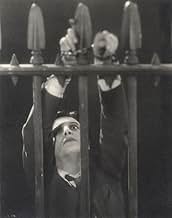
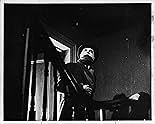
It is an uncomplicated story but that does not mean the guilty person is easily recognized (if at all!) Hitchcock likes to tease with a lodger who has shifty eyes, who paces the floor (what an original idea to photograph through a transparent floor), who has the wall pictures removed and who creeps out silently at night.
I feel that the atmosphere created is exceptional. Certainly a bit theatrical with exaggerated eye expressions but compelling nevertheless.
When you see a film of this vintage you realise how much film production had already advanced in the 20's and without the aid of all our recent technological contrivances.
It is interesting to view an early Hitchcock film as far back as the silent era. I am surprised at the quality (despite a few scratches here and there). The addition of music is rather overdone in my opinion but it does fill in the empty silence and does add a dramatic effect. No doubt in the early days a capable pianist (below the screen) bashed out some impromptu music to fit the mood of each scene.
It is an uncomplicated story but that does not mean the guilty person is easily recognized (if at all!) Hitchcock likes to tease with a lodger who has shifty eyes, who paces the floor (what an original idea to photograph through a transparent floor), who has the wall pictures removed and who creeps out silently at night.
I feel that the atmosphere created is exceptional. Certainly a bit theatrical with exaggerated eye expressions but compelling nevertheless.
When you see a film of this vintage you realise how much film production had already advanced in the 20's and without the aid of all our recent technological contrivances.
A very good early Hitchcock film
A story loosely based on Jack the Ripper. In London a killer called the Avenger goes around killing blond-haired girls. Around this time Mr. and Mrs. Bunting take in a lodger (Ivor Novello). He's quiet but very odd. He takes a liking to their blond-haired daughter Daisy (June Tripp). But then the Buntings begin to suspect that he may be the Avenger and want Daisy as his next victim...
Hitchcock's first thriller and a very good one. Very few title cards are used--he uses images to carry the film. Sometimes it works but, more than once, I was confused. It was one of his first films though so this can be forgiven. It also moves a bit too slow. But it's still worth seeing.
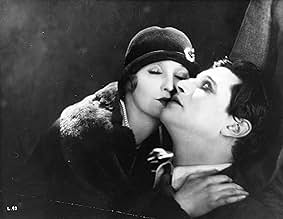
You can see the beginnings of his later work peeking through and there are some sequences so well directed that they're stunning (the one where Novello and Tripp kiss is just SO beautiful). Also the acting is actually quite good by everybody--especially Novello. He was a box office draw in the 1920s and it's easy to see why. The man is not only a good actor he was undeniably beautiful. It's easy to see why he was once called one of the most beautiful men alive.
Novello was gay--I wonder if Hitch knew that. There are two lines in this film where people talk about his character--"Good thing he doesn't like girls" and "Even if he is a bit queer". These lines are quite interesting now--I wonder if they were put in on purpose or just happened to be written without anyone knowing. Interesting to think about...
Hitchcock's first thriller and a very good one. Very few title cards are used--he uses images to carry the film. Sometimes it works but, more than once, I was confused. It was one of his first films though so this can be forgiven. It also moves a bit too slow. But it's still worth seeing.
You can see the beginnings of his later work peeking through and there are some sequences so well directed that they're stunning (the one where Novello and Tripp kiss is just SO beautiful). Also the acting is actually quite good by everybody--especially Novello. He was a box office draw in the 1920s and it's easy to see why. The man is not only a good actor he was undeniably beautiful. It's easy to see why he was once called one of the most beautiful men alive.
Novello was gay--I wonder if Hitch knew that. There are two lines in this film where people talk about his character--"Good thing he doesn't like girls" and "Even if he is a bit queer". These lines are quite interesting now--I wonder if they were put in on purpose or just happened to be written without anyone knowing. Interesting to think about...
Hitchcock's breakthrough hit...
... a thriller based on the book by Marie Belloc Lowndes. A mysterious killer known as "the Avenger" is terrorizing the streets of London. He targets women with blonde, curly hair, and the police are at a loss to stop him. Meanwhile, a sketchy new lodger (Ivor Novello) takes up residence in the rooming house of a landlady (Marie Ault) and her husband (Arthur Chesney). The landlady becomes convinced that the lodger is really the Avenger, which proves problematic as the lodger has caught the attention of the landlady's daughter, Daisy (June Tripp). Also featuring Malcolm Keen as Daisy's policeman boyfriend.
Inspired by the Jack the Ripper case, this was Hitchcock's first suspense picture, and was an immediate success, with one critic at the time even calling this the "best British film ever made". This is my second time watching it, and the first time watching the beautiful BFI restoration. The quality of the print is outstanding, and the commissioned score is excellent. Hitchcock uses a number of visually impressive double exposure shots, and I also liked the stylized intertitles. I still find the movie a tad too long, and Novello, who looks striking, is a silent-era-style ham, but it's still worth checking out for silent film fans. Arthur Chesney, playing the landlord, was the lookalike younger brother of Edmund Gwenn, and the former husband of Estelle Winwood.
Inspired by the Jack the Ripper case, this was Hitchcock's first suspense picture, and was an immediate success, with one critic at the time even calling this the "best British film ever made". This is my second time watching it, and the first time watching the beautiful BFI restoration. The quality of the print is outstanding, and the commissioned score is excellent. Hitchcock uses a number of visually impressive double exposure shots, and I also liked the stylized intertitles. I still find the movie a tad too long, and Novello, who looks striking, is a silent-era-style ham, but it's still worth checking out for silent film fans. Arthur Chesney, playing the landlord, was the lookalike younger brother of Edmund Gwenn, and the former husband of Estelle Winwood.
Important Historically & Very Good In Its Own Right
Usually remembered as Alfred Hitchcock's first thriller, "The Lodger" is also a very good film in its own right. Although the acting is somewhat dated, and although there is not a really appropriate musical score that has survived, it has the carefully crafted plot and suspense that Hitchcock would become famous for.
The opening sequence uses the director's creative touches in setting the mood of a city terrorized by a mysterious killer, "The Avenger", who is targeting light-haired women. Then we meet the actual characters: an older couple and their daughter Daisy, and Daisy's policeman boyfriend. When a mysterious lodger appears and rents the family's extra room, his strange behavior begins to make them suspect that he might be the mad killer, even as he builds a close friendship with Daisy. As the story proceeds, tension and fear continue to build until an ending that is exciting, if somewhat melodramatic.
Hitchcock shows his mastery of silent film technique in using a wide variety of camera techniques and props to communicate the emotions of the characters. The acting is mostly good, although Ivor Novello as "the lodger" overplays his role rather noticeably. This is the kind of movie that could really benefit from a good musical soundtrack, and the fact that it is exciting to watch even without an appropriate score shows the quality of Hitchcock's craftsmanship.
Anyone who enjoys Hitchcock or silent films will definitely want to see "The Lodger".
The opening sequence uses the director's creative touches in setting the mood of a city terrorized by a mysterious killer, "The Avenger", who is targeting light-haired women. Then we meet the actual characters: an older couple and their daughter Daisy, and Daisy's policeman boyfriend. When a mysterious lodger appears and rents the family's extra room, his strange behavior begins to make them suspect that he might be the mad killer, even as he builds a close friendship with Daisy. As the story proceeds, tension and fear continue to build until an ending that is exciting, if somewhat melodramatic.
Hitchcock shows his mastery of silent film technique in using a wide variety of camera techniques and props to communicate the emotions of the characters. The acting is mostly good, although Ivor Novello as "the lodger" overplays his role rather noticeably. This is the kind of movie that could really benefit from a good musical soundtrack, and the fact that it is exciting to watch even without an appropriate score shows the quality of Hitchcock's craftsmanship.
Anyone who enjoys Hitchcock or silent films will definitely want to see "The Lodger".
For a 1926 production it's inventive, smart, and a great opening to Hitchcock
The Lodger (1927)
This is the first of three movies in a 30 year period based on the same plot, and in terms of plot this is the best of them. (There is also a recent one that is the worst of the bunch.) It is, for sure, an early Alfred Hitchcock film. It's early in the sense that it's still creaky at times. It's Hitchcock because it's tightly made, visually dramatic, and it combines sympathy and suspense really well.
If you are into what makes Hitchcock tick, you really have to see this movie. Not that you should mind--it's great stuff. First of all you get the presumably innocent man accused of a string of murders (this is ambiguous). Then you have the mixing of sex and murder (or lust and murder--there is no sex here). And then you have the way Hitchcock mixes every day regular people and very safe and homey situations with genuine terrible murderous events. And finally there is his filming and editing.
Take a look even at the very first shot--a close up a screaming woman shot at an angle (a "Dutch angle"). Look next at how dark and impressionistic the next shots are of a horrified crowd, a cop, and a reporter. Later there are other interesting cuts to lead you to thinking a certain way about the characters. And the overlapping of images. And the shot of a man walking overhead on glass, as if you can see through the ceiling.
The humor and clever conversation of later versions of this story are naturally lost on us here. Also in good Hitch fashion there are few intertitle cards. Good thing. The visuals tell the story. And wait until the final scenes, the Pieta all over again, really gorgeous. Some of these last shots were redone at the request of the studio to change the impressions of the main character, a handsome man with an acting reputation to protect. Hitchcock went along, and it seems to be acceptable all around by the time it was released.
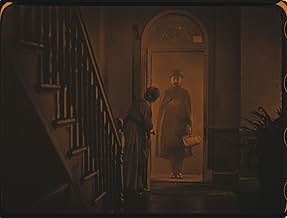
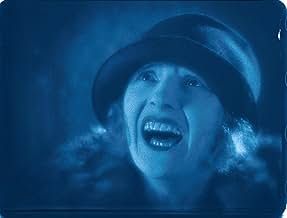
It's hard to find a decent "print" of this (a version from a good copy of the film, on DVD or streaming), but it has recently been restored and re-scored (orchestrated) and that's for sure the one to get. It is so far only a U.K. release, apparently even a blu-ray version is out (look for the red and black Constructivist cover). Criterion has not released a version. The original release has different scenes tinted blue or amber for greater effect and the usual version on Hitchcock DVDs and DVD sets in the U.S. is all black and white.
So, if you don't like silent films and can't stand choppy or grainy or badly cropped releases of early films, don't see this. But if you can find the clean new restoration, or you just love Hitchcock, or if you really like silent films (they get more and more amazing the more you see), then see this! It's the director's first really characteristic feature.
This is the first of three movies in a 30 year period based on the same plot, and in terms of plot this is the best of them. (There is also a recent one that is the worst of the bunch.) It is, for sure, an early Alfred Hitchcock film. It's early in the sense that it's still creaky at times. It's Hitchcock because it's tightly made, visually dramatic, and it combines sympathy and suspense really well.
If you are into what makes Hitchcock tick, you really have to see this movie. Not that you should mind--it's great stuff. First of all you get the presumably innocent man accused of a string of murders (this is ambiguous). Then you have the mixing of sex and murder (or lust and murder--there is no sex here). And then you have the way Hitchcock mixes every day regular people and very safe and homey situations with genuine terrible murderous events. And finally there is his filming and editing.
Take a look even at the very first shot--a close up a screaming woman shot at an angle (a "Dutch angle"). Look next at how dark and impressionistic the next shots are of a horrified crowd, a cop, and a reporter. Later there are other interesting cuts to lead you to thinking a certain way about the characters. And the overlapping of images. And the shot of a man walking overhead on glass, as if you can see through the ceiling.
The humor and clever conversation of later versions of this story are naturally lost on us here. Also in good Hitch fashion there are few intertitle cards. Good thing. The visuals tell the story. And wait until the final scenes, the Pieta all over again, really gorgeous. Some of these last shots were redone at the request of the studio to change the impressions of the main character, a handsome man with an acting reputation to protect. Hitchcock went along, and it seems to be acceptable all around by the time it was released.
It's hard to find a decent "print" of this (a version from a good copy of the film, on DVD or streaming), but it has recently been restored and re-scored (orchestrated) and that's for sure the one to get. It is so far only a U.K. release, apparently even a blu-ray version is out (look for the red and black Constructivist cover). Criterion has not released a version. The original release has different scenes tinted blue or amber for greater effect and the usual version on Hitchcock DVDs and DVD sets in the U.S. is all black and white.
So, if you don't like silent films and can't stand choppy or grainy or badly cropped releases of early films, don't see this. But if you can find the clean new restoration, or you just love Hitchcock, or if you really like silent films (they get more and more amazing the more you see), then see this! It's the director's first really characteristic feature.


Le saviez-vous
- AnecdotesFor the opening scene, where the Avenger's murder victim faces the camera and screams, Sir Alfred Hitchcock filmed the scene by having the actress lie down on a large sheet of glass, with her golden hair spread out around her head. He then lit the actress from underneath the sheet of glass, and filmed her with a camera mounted on its side, with the lens pointed at a downward angle. This gave the appearance that her hair (with its golden curls, so important to the murderer) was ringed in a halo of light.
- GaffesWhen The Lodger (Ivor Novello) and Daisy (June Tripp) are playing chess, but the board is set up inappropriately. The square in the right corner should always be white. In this case, the bottom-right square is dark (black). This is the most obvious when The Lodger (Ivor Novello) is poking the coals in the fireplace.
- Citations
Joe Betts: Does this lodger of yours mean any harm to Daisy?
The Landlady: Don't be silly, Joe. He's not that sort. Even if he's a bit queer, he's a gentleman.
- Générique farfeluClosing credits: Thank you to everyone who supported the BFI's Silent Hitchcock restoration project.
- Autres versionsThe original version of The Lodger directed by Alfred Hitchcock in 1926 was restored in 1999 in honor of the directors 100th anniversary. The film was restored by the British National Film & TV Archives and a new score by Ashley Irwin was commissioned by ZDF/ARTE (Germany) and premiered on August 13, 1999 (what would have been Hitchcock's 100th birthday).
- ConnexionsEdited into Histoire(s) du cinéma: Une vague nouvelle (1999)
Meilleurs choix
Connectez-vous pour évaluer et surveiller les recommandations personnalisées
Détails
Box-office
- Budget
- 12 000 £ (estimation)
- Brut – à l'échelle mondiale
- 83 568 $ US
- Durée
- 1h 32m(92 min)
- Couleur
- Mixage
- Rapport de forme
- 1.33 : 1
Contribuer à cette page
Suggérer une modification ou ajouter du contenu manquant