

Une femme soupçonne que son nouveau locataire est le psychopathe qui tue des femmes à Londres.Une femme soupçonne que son nouveau locataire est le psychopathe qui tue des femmes à Londres.Une femme soupçonne que son nouveau locataire est le psychopathe qui tue des femmes à Londres.
- Réalisation
- Scénaristes
- Vedettes


June Tripp
- Daisy - A Mannequin
- (as June)


Wallace Bosco
- Pub Customer
- (uncredited)
Daisy Campbell
- Mother
- (uncredited)
Maudie Dunham
- First Victim
- (uncredited)

Reginald Gardiner
- Dancer at Ball
- (uncredited)
Eve Gray
- Showgirl Victim
- (uncredited)

Alfred Hitchcock
- Extra in Newspaper Office
- (uncredited)

Alma Reville
- Woman Listening to Wireless
- (uncredited)
7,314.6K
1
2
3
4
5
6
7
8
9
10
Avis en vedette
A compelling whodunit
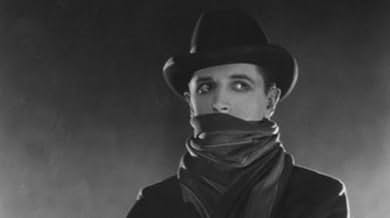
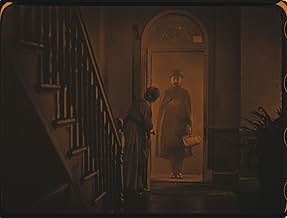
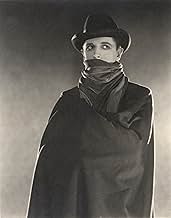
A stranger (Ivor Novello) in fog-bound London seeks accommodation from a family and they provide him with a small apartment upstairs. Their blond daughter is drawn towards this fascinating and somewhat mysterious gentleman. Her parents become suspicious of the intentions of the lodger and they live in fear of her safety. There is a serial killer abroad in the foggy streets and who knows? this stranger could be that maniac.
It is interesting to view an early Hitchcock film as far back as the silent era. I am surprised at the quality (despite a few scratches here and there). The addition of music is rather overdone in my opinion but it does fill in the empty silence and does add a dramatic effect. No doubt in the early days a capable pianist (below the screen) bashed out some impromptu music to fit the mood of each scene.
It is an uncomplicated story but that does not mean the guilty person is easily recognized (if at all!) Hitchcock likes to tease with a lodger who has shifty eyes, who paces the floor (what an original idea to photograph through a transparent floor), who has the wall pictures removed and who creeps out silently at night.
I feel that the atmosphere created is exceptional. Certainly a bit theatrical with exaggerated eye expressions but compelling nevertheless.
When you see a film of this vintage you realise how much film production had already advanced in the 20's and without the aid of all our recent technological contrivances.
It is interesting to view an early Hitchcock film as far back as the silent era. I am surprised at the quality (despite a few scratches here and there). The addition of music is rather overdone in my opinion but it does fill in the empty silence and does add a dramatic effect. No doubt in the early days a capable pianist (below the screen) bashed out some impromptu music to fit the mood of each scene.
It is an uncomplicated story but that does not mean the guilty person is easily recognized (if at all!) Hitchcock likes to tease with a lodger who has shifty eyes, who paces the floor (what an original idea to photograph through a transparent floor), who has the wall pictures removed and who creeps out silently at night.
I feel that the atmosphere created is exceptional. Certainly a bit theatrical with exaggerated eye expressions but compelling nevertheless.
When you see a film of this vintage you realise how much film production had already advanced in the 20's and without the aid of all our recent technological contrivances.
Fun stuff, very Hitchcock!
This movie is fantastic and fascinating mostly because of its director, but it would be fun either way. I'd say that it's better than many films of the same period, but not to the same extreme degree that Hitchcock's movies eventually achieved.
You can see it's his work, though. Hitchcock knew that what made a suspenseful movie good had nothing to do with gore or loud noises, and this shows even in his early work. The Lodger has a distinctly Hitchcock feel to it--fun and scary--and it's interesting to see how he gets around the lack of sound, considering the fact that most (all?) of his other films were talkies.
You can see it's his work, though. Hitchcock knew that what made a suspenseful movie good had nothing to do with gore or loud noises, and this shows even in his early work. The Lodger has a distinctly Hitchcock feel to it--fun and scary--and it's interesting to see how he gets around the lack of sound, considering the fact that most (all?) of his other films were talkies.
The real Hitchcock is born
This is the first real Hitchcock movie. The one in which he really starts to use all his abilities, although we can see that they are still not mature yet. It's very interesting because he makes a lot of experiments in this film, like the glass ceiling, and we see how hard he wanted, at the time, to really make his mark, to stand above the rest. Although the ending is not very good, the first 20 minutes of The Lodger are impressive, with Hitchcock slowly telling us (visually, of course) about the killer and his particularities, until the arrival of Ivor Novello. A must-see picture to any real Hitchcock fan
A very good early Hitchcock film
A story loosely based on Jack the Ripper. In London a killer called the Avenger goes around killing blond-haired girls. Around this time Mr. and Mrs. Bunting take in a lodger (Ivor Novello). He's quiet but very odd. He takes a liking to their blond-haired daughter Daisy (June Tripp). But then the Buntings begin to suspect that he may be the Avenger and want Daisy as his next victim...
Hitchcock's first thriller and a very good one. Very few title cards are used--he uses images to carry the film. Sometimes it works but, more than once, I was confused. It was one of his first films though so this can be forgiven. It also moves a bit too slow. But it's still worth seeing.
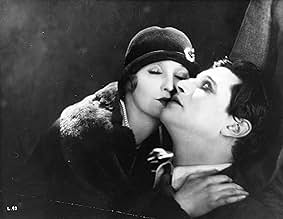
You can see the beginnings of his later work peeking through and there are some sequences so well directed that they're stunning (the one where Novello and Tripp kiss is just SO beautiful). Also the acting is actually quite good by everybody--especially Novello. He was a box office draw in the 1920s and it's easy to see why. The man is not only a good actor he was undeniably beautiful. It's easy to see why he was once called one of the most beautiful men alive.
Novello was gay--I wonder if Hitch knew that. There are two lines in this film where people talk about his character--"Good thing he doesn't like girls" and "Even if he is a bit queer". These lines are quite interesting now--I wonder if they were put in on purpose or just happened to be written without anyone knowing. Interesting to think about...
Hitchcock's first thriller and a very good one. Very few title cards are used--he uses images to carry the film. Sometimes it works but, more than once, I was confused. It was one of his first films though so this can be forgiven. It also moves a bit too slow. But it's still worth seeing.
You can see the beginnings of his later work peeking through and there are some sequences so well directed that they're stunning (the one where Novello and Tripp kiss is just SO beautiful). Also the acting is actually quite good by everybody--especially Novello. He was a box office draw in the 1920s and it's easy to see why. The man is not only a good actor he was undeniably beautiful. It's easy to see why he was once called one of the most beautiful men alive.
Novello was gay--I wonder if Hitch knew that. There are two lines in this film where people talk about his character--"Good thing he doesn't like girls" and "Even if he is a bit queer". These lines are quite interesting now--I wonder if they were put in on purpose or just happened to be written without anyone knowing. Interesting to think about...
"Murder wet from the press"
The Lodger was the feature which Hitchcock himself described as his first true film (it was actually his third complete one), and film historians, particularly auteurists tend to focus upon it because it is it introduces themes of murder and suspense that Hitch's name would later be synonymous with.
To be honest, the first thing that strikes me upon watching The Lodger is its sense of rhythm. Hitchcock's earliest films were always very rhythmic and the opening moments of The Lodger are a great example, with a dynamic and attention grabbing sequence of shots and title cards. Much of this however may be down to the style of the seldom referenced screenwriter Eliot Stannard, who has a credit on all but one of Hitchcock's silents. Stannard was a master at telling stories in purely visual terms, and his screenplays often go as far as to map out series of interlocking images.
The next very obvious thing about The Lodger is that right from the start Hitchcock was more interested in cinematic technique than he was in performances or artistry. The Lodger is crammed with Expressionist effects, in particular double exposures. Hitch clearly hadn't learnt the art of subtlety yet and these are massively overused. We can also tell early on that Hitchcock was interested in using his camera to involve the audience in the film, throwing in point-of-view shots or drawing our attention to specific items. In this regard his technique was not yet refined. He was develop it in his later silents.
Of course what generally interests followers of Hitchcock's career is the fact that The Lodger is the first time he deals with the grisly subject of murder. It's true that there are many Hitchcockian elements here murder, blondes, a love triangle and even a MacGuffin in the form of the Avenger whom all the characters are concerned about but isn't the focus of the story. There is a kind of morbid sensationalism concerning the killings, something we'd see right through to the other end of Hitch's career with the comment about "ripped whores" in 1972's Frenzy. There's also of course a "wrong man", although here he appears more as the subject of a whodunit. The later Hitchcock would have focused upon the plight of the wrongly accused, and made a more suspenseful film in the process.
All in all, The Lodger isn't really as significant an early Hitchcock as some would believe. For one thing there is the influence of screenwriter Stannard and the fact that Hitchcock, although he may have relished the material, was still very young and inexperienced. The fact is The Lodger may contain more of Stannard's influence than it does Hitchcock's. It's not as if Hitchcock immediately began making more murder thrillers. The majority of his British thrillers are of the espionage/adventure variety, and it would take up until the early 40s for Hitchcock to really begin making masterpieces in the domestic murder genre. It's also nowhere near being Hitch's best silent film, even though it tends to be remembered over more polished works like The Ring and The Manxman. Taken out of context though, it is a fairly decent late silent thriller, with only a few minor flaws in plot and direction.
To be honest, the first thing that strikes me upon watching The Lodger is its sense of rhythm. Hitchcock's earliest films were always very rhythmic and the opening moments of The Lodger are a great example, with a dynamic and attention grabbing sequence of shots and title cards. Much of this however may be down to the style of the seldom referenced screenwriter Eliot Stannard, who has a credit on all but one of Hitchcock's silents. Stannard was a master at telling stories in purely visual terms, and his screenplays often go as far as to map out series of interlocking images.
The next very obvious thing about The Lodger is that right from the start Hitchcock was more interested in cinematic technique than he was in performances or artistry. The Lodger is crammed with Expressionist effects, in particular double exposures. Hitch clearly hadn't learnt the art of subtlety yet and these are massively overused. We can also tell early on that Hitchcock was interested in using his camera to involve the audience in the film, throwing in point-of-view shots or drawing our attention to specific items. In this regard his technique was not yet refined. He was develop it in his later silents.
Of course what generally interests followers of Hitchcock's career is the fact that The Lodger is the first time he deals with the grisly subject of murder. It's true that there are many Hitchcockian elements here murder, blondes, a love triangle and even a MacGuffin in the form of the Avenger whom all the characters are concerned about but isn't the focus of the story. There is a kind of morbid sensationalism concerning the killings, something we'd see right through to the other end of Hitch's career with the comment about "ripped whores" in 1972's Frenzy. There's also of course a "wrong man", although here he appears more as the subject of a whodunit. The later Hitchcock would have focused upon the plight of the wrongly accused, and made a more suspenseful film in the process.
All in all, The Lodger isn't really as significant an early Hitchcock as some would believe. For one thing there is the influence of screenwriter Stannard and the fact that Hitchcock, although he may have relished the material, was still very young and inexperienced. The fact is The Lodger may contain more of Stannard's influence than it does Hitchcock's. It's not as if Hitchcock immediately began making more murder thrillers. The majority of his British thrillers are of the espionage/adventure variety, and it would take up until the early 40s for Hitchcock to really begin making masterpieces in the domestic murder genre. It's also nowhere near being Hitch's best silent film, even though it tends to be remembered over more polished works like The Ring and The Manxman. Taken out of context though, it is a fairly decent late silent thriller, with only a few minor flaws in plot and direction.


Le saviez-vous
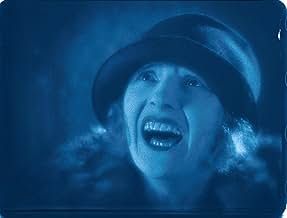
- AnecdotesFor the opening scene, where the Avenger's murder victim faces the camera and screams, Sir Alfred Hitchcock filmed the scene by having the actress lie down on a large sheet of glass, with her golden hair spread out around her head. He then lit the actress from underneath the sheet of glass, and filmed her with a camera mounted on its side, with the lens pointed at a downward angle. This gave the appearance that her hair (with its golden curls, so important to the murderer) was ringed in a halo of light.
- GaffesWhen The Lodger (Ivor Novello) and Daisy (June Tripp) are playing chess, but the board is set up inappropriately. The square in the right corner should always be white. In this case, the bottom-right square is dark (black). This is the most obvious when The Lodger (Ivor Novello) is poking the coals in the fireplace.
- Citations
Joe Betts: Does this lodger of yours mean any harm to Daisy?
The Landlady: Don't be silly, Joe. He's not that sort. Even if he's a bit queer, he's a gentleman.
- Générique farfeluClosing credits: Thank you to everyone who supported the BFI's Silent Hitchcock restoration project.
- Autres versionsThe original version of The Lodger directed by Alfred Hitchcock in 1926 was restored in 1999 in honor of the directors 100th anniversary. The film was restored by the British National Film & TV Archives and a new score by Ashley Irwin was commissioned by ZDF/ARTE (Germany) and premiered on August 13, 1999 (what would have been Hitchcock's 100th birthday).
- ConnexionsEdited into Histoire(s) du cinéma: Une vague nouvelle (1999)
Meilleurs choix
Connectez-vous pour évaluer et surveiller les recommandations personnalisées
Détails
Box-office
- Budget
- 12 000 £ (estimation)
- Brut – à l'échelle mondiale
- 83 568 $ US
- Durée
- 1h 32m(92 min)
- Couleur
- Mixage
- Rapport de forme
- 1.33 : 1
Contribuer à cette page
Suggérer une modification ou ajouter du contenu manquant