ÉVALUATION IMDb
6,5/10
1,3 k
MA NOTE
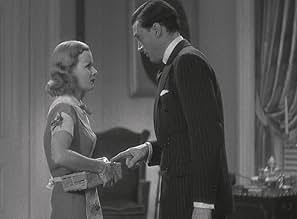
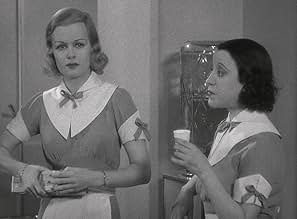
Ajouter une intrigue dans votre langueSassy manicurist Eve Fallon is recruited as an even more brassy reporter and she helps police detective boyfriend Danny Barr break a jewel theft ring and solve the murder of a baby.Sassy manicurist Eve Fallon is recruited as an even more brassy reporter and she helps police detective boyfriend Danny Barr break a jewel theft ring and solve the murder of a baby.Sassy manicurist Eve Fallon is recruited as an even more brassy reporter and she helps police detective boyfriend Danny Barr break a jewel theft ring and solve the murder of a baby.
- Réalisation
- Scénaristes
- Vedettes
- Prix
- 2 victoires au total
Henry Brandon
- Don Butler
- (as Henry Kleinbach)
Fred Anderson
- Elevator Operator
- (uncredited)
William Arnold
- Customer
- (uncredited)
Mary Bovard
- Manicurist
- (uncredited)
Don Brodie
- Customer
- (uncredited)
Ralph Brooks
- Man Exiting Elevator
- (uncredited)
6,51.2K
1
2
3
4
5
6
7
8
9
10
Avis en vedette
A strange entry in the Cary Grant Oeuvre
And in that of Raoul Walsh, as well. The early scenes, which try really hard to be cute, show no influence of Walsh. When it gets more into the career of policeman Grant, we see some fast-paced action and it makes sense as a Walsh project. Sort of.
Grant was young and hadn't become a major star yet. He looks great and does a creditable job. His female co-star is Joan Bennett. Now there was an interesting actress: She worked with all the great foreign directors when they came to Hollywood. She made several movies for Fritz Lang. She worked for Max Ophuls. She worked for Jean Renoir.
Here she is a blonde, like sister Constance. She's fine.
Walter Pidgeon looks young too. He is cast in the sort of role Robert Montgomery or Warren William got more frequently: He's a charming crook.
When the movie begins, Bennett is a manicurist. Then, suspiciously quickly, she's an ace newspaper reporter. Was this little film assembled from various attempts or is the plot just a little unconvincing? There are many wonderful reaction shots that move quickly from close-up of one bit player or extra to close-up of another. I think the most famous use of this sort of extreme close-up is that of the chatty woman in "Brief Encounter." But the ones here are great. Indeed, they elevate what is essentially a trivial movie up a notch or two.
Grant was young and hadn't become a major star yet. He looks great and does a creditable job. His female co-star is Joan Bennett. Now there was an interesting actress: She worked with all the great foreign directors when they came to Hollywood. She made several movies for Fritz Lang. She worked for Max Ophuls. She worked for Jean Renoir.
Here she is a blonde, like sister Constance. She's fine.
Walter Pidgeon looks young too. He is cast in the sort of role Robert Montgomery or Warren William got more frequently: He's a charming crook.
When the movie begins, Bennett is a manicurist. Then, suspiciously quickly, she's an ace newspaper reporter. Was this little film assembled from various attempts or is the plot just a little unconvincing? There are many wonderful reaction shots that move quickly from close-up of one bit player or extra to close-up of another. I think the most famous use of this sort of extreme close-up is that of the chatty woman in "Brief Encounter." But the ones here are great. Indeed, they elevate what is essentially a trivial movie up a notch or two.
Cary Grant Still Shines
Big Brown Eyes would have been a big fat bomb if Cary Grant hadn't carried the movie. Even in such an early picture (1936) his debonair, yet cheeky gentleman style is evident. Playing a detective seemed odd, yet no matter what role he is cast in, he makes it his own. His romantic interest, Joan Bennett, seemed a tad too hard around the edges to play his girlfriend, but she did manage some decent repertoire with Grant, especially when the packing scene in Grant's apartment. Overall, the picture is uneven. It can't decide if it is a serious crime/drama or a light comedy. There is a scene where a stray bullet kills a baby (intimated) and there is nothing funny about that. Another scene a man is shot while arranging roses. It's incongruent action like these scenes that makes this movie just short of unwatchable. I have yet to see a Cary Grant movie that I didn't like, and this one seems a practice for his all out great flick His Gal Friday. Big Brown Eyes is watchable, only because of Cary Grant.
Forensics And Manicurist Training
Cary Grant and Joan Bennett co-star in Big Brown Eyes which had it been done over at Warner Brothers would have been standard material for James Cagney and Joan Blondell. In fact the whole project was an unusual one for Paramount, it was a gritty urban drama that Warner Brothers specialized in.
Grant is a police detective and Bennett a manicurist turned reporter (only in Hollywood) who team up in life and who team up to solve a series of robberies. What begins as high end jewel robberies turns deadly serious when during a payoff gone bad, a baby is killed in the park by a stray bullet.
When the doer Lloyd Nolan is acquitted in court due to perjured testimony and political influence, Grant quits the force and Bennett goes back to manicuring and look for justice in an unofficial manner. Need I say they get it though you have to see Big Brown Eyes to find out how its done. But I will say that forensics and Bennett's manicurist training does help a lot.
Walter Pidgeon is also in the cast as a crooked politician, hip deep in the rackets, a type that Thomas E. Dewey was putting in jail with increasing frequency in New York at the time. Two very funny supporting performances come from Marjorie Gateson as an amorous robbery victim with an eye for Cary Grant and Douglas Fowley who was one of the gang that they trick into squealing. That is the highlight of the movie.
Big Brown Eyes is a slick comedy directed by Raoul Walsh who gets the whole cast in sync like a Swiss watch. An unusual film for Cary Grant, but his fans will like it.
Grant is a police detective and Bennett a manicurist turned reporter (only in Hollywood) who team up in life and who team up to solve a series of robberies. What begins as high end jewel robberies turns deadly serious when during a payoff gone bad, a baby is killed in the park by a stray bullet.
When the doer Lloyd Nolan is acquitted in court due to perjured testimony and political influence, Grant quits the force and Bennett goes back to manicuring and look for justice in an unofficial manner. Need I say they get it though you have to see Big Brown Eyes to find out how its done. But I will say that forensics and Bennett's manicurist training does help a lot.
Walter Pidgeon is also in the cast as a crooked politician, hip deep in the rackets, a type that Thomas E. Dewey was putting in jail with increasing frequency in New York at the time. Two very funny supporting performances come from Marjorie Gateson as an amorous robbery victim with an eye for Cary Grant and Douglas Fowley who was one of the gang that they trick into squealing. That is the highlight of the movie.
Big Brown Eyes is a slick comedy directed by Raoul Walsh who gets the whole cast in sync like a Swiss watch. An unusual film for Cary Grant, but his fans will like it.
Babykiller
This little movie is more than forgotten. It is so mundane that no one has decided they can make a nickle from it, despite having some of the very same features and creative crew as projects that are celebrated. Cary Grant is about the same here, as in, say, "Charade."
I have to admit, it is flat. It all can be laid at the feet of the writer, I suppose.
These comedies are delicate. I suppose they cannot be engineered, like so much in film can. Oh, the execution can of course, but if the writer doesn't froth intuitively, nothing can spin it in after the fact.
But then again, this was the 30's where experimentation was the rule. And I suppose you need several failures before you get a "His Girl Friday" (which this resembles) out of so many tries.
Ted's Evaluation -- 1 of 3: You can find something better to do with this part of your life.
I have to admit, it is flat. It all can be laid at the feet of the writer, I suppose.
These comedies are delicate. I suppose they cannot be engineered, like so much in film can. Oh, the execution can of course, but if the writer doesn't froth intuitively, nothing can spin it in after the fact.
But then again, this was the 30's where experimentation was the rule. And I suppose you need several failures before you get a "His Girl Friday" (which this resembles) out of so many tries.
Ted's Evaluation -- 1 of 3: You can find something better to do with this part of your life.
Everybody was so young!
"Big Brown Eyes" is from 1936 and directed by Raoul Walsh. Joan Bennett was still a blond, and here, Cary Grant plays Dan Barr, a detective trying to recover someone's stolen jewels. Bennett plays his jealous manicurist girlfriend Eve, who takes a job on a newspaper after she quits manicuring.
Walter Pidgeon plays Cortig, the head of the jewel theft ring which is also involved in the murder of a child who was hit by one of Cortig's stray bullets. He's joined by Lloyd Nolan. Thanks to his crooked attorney, Cortig is found not guilty. Dan is so upset he quits the force to go out on his own and get justice. Eve returns to her manicure job; both are very defeated by the trial.
This is an okay, fast-moving film with Bennett playing what today would be considered a stereotype, you know, the gum-cracking, wisecracking blond. Grant is very handsome and slips easily into his role. He's not the "Cary Grant" persona quite yet. That's a couple of years away.
I don't know who the Big Brown Eyes were, but it must have been Cary Grant. I saw Joan Bennett in person near the end of her life - she was very tiny, with very black hair, and had beautiful blue eyes.
Walter Pidgeon plays Cortig, the head of the jewel theft ring which is also involved in the murder of a child who was hit by one of Cortig's stray bullets. He's joined by Lloyd Nolan. Thanks to his crooked attorney, Cortig is found not guilty. Dan is so upset he quits the force to go out on his own and get justice. Eve returns to her manicure job; both are very defeated by the trial.
This is an okay, fast-moving film with Bennett playing what today would be considered a stereotype, you know, the gum-cracking, wisecracking blond. Grant is very handsome and slips easily into his role. He's not the "Cary Grant" persona quite yet. That's a couple of years away.
I don't know who the Big Brown Eyes were, but it must have been Cary Grant. I saw Joan Bennett in person near the end of her life - she was very tiny, with very black hair, and had beautiful blue eyes.
Le saviez-vous
- AnecdotesAt 20 minutes, Eve Fallon (Joan Bennett) says to Danny Barr (Cary Grant), with a flirtatious wink, "if you happen to be around my way, come up and see me some time". This appears to refer to a famous, almost identical line said by Mae West to Cary Grant in "She Done Him Wrong" (1933), a playful in-joke that would have been obvious to contemporary audiences.
- Citations
Richard Morey: Cortig, if you bought a gift for a girl and she refused to accept it, what would you do?
Russ Cortig: [with a slow smile] I'd give it to my wife.
- ConnexionsFeatured in The True Adventures of Raoul Walsh (2014)
Meilleurs choix
Connectez-vous pour évaluer et surveiller les recommandations personnalisées
- How long is Big Brown Eyes?Propulsé par Alexa
Détails
- Durée
- 1h 17m(77 min)
- Couleur
- Rapport de forme
- 1.37 : 1
Contribuer à cette page
Suggérer une modification ou ajouter du contenu manquant