
Ajouter une intrigue dans votre langueIn Fox's contribution to the all-star revue cycle of early talkies, showboat singer Margie, hearing that the show is in arrears, goes to New York to gather all of the former stars to stage a... Tout lireIn Fox's contribution to the all-star revue cycle of early talkies, showboat singer Margie, hearing that the show is in arrears, goes to New York to gather all of the former stars to stage a minstrel show as a benefit.In Fox's contribution to the all-star revue cycle of early talkies, showboat singer Margie, hearing that the show is in arrears, goes to New York to gather all of the former stars to stage a minstrel show as a benefit.
- Réalisation
- Scénaristes
- Vedettes
- Prix
- 2 victoires au total


5,5196
1
2
3
4
5
6
7
8
9
10
Avis en vedette
All talking, all singing, all nonsense
Lavish story-revue from 1929, originally filmed in a widescreen process called Grandeur, puts most of Fox's roster in a minstrel show format; there's a plot surrounding it, but it's forgotten after the first half hour or so. You have to endure some badly dated acts, including the insufferable El Brendel and the sappy Janet Gaynor (she doesn't sing, she coos) and Charles Farrell (body of Adonis, voice of a fifth grader), but along the way you do get some good stuff, and an entertaining look at what was considered top-notch diversion around the time the stock market was crashing. Marjorie White does some hot scat singing and steps lightly; Ann Pennington and Dixie Lee dance up a storm; Victor McGlaglen and Edmund Lowe do a buddy number (McLaglen can actually sing, Lowe can't); the boxing champ James J. Corbett is a personable interlocutor; Will Rogers, Warner Baxter, and George Jessel do cameos; and poor old Charles Evans' show boat gets saved. The chorus girls are beefy and klutzy (Betty Grable's in there somewhere), the production design's clever, and there's an odd lighting effect that turns actors from blackface to white with the flick of a light switch. Heaven knows you couldn't get away with this stuff today, but the songs are catchy, there's some fine dancing, and among the large roster of early talkie musicals, this one's fairly diverting.
This "treasure" should have stayed buried
This film, which was just another musical in that crowded time of 1929-30, is truly dreadful to experience today. ANY of the musicals done by the other studios during this time would have been better. Charles Farrell and Janet Gaynor do a horrible number guaranteed to rot your teeth from all the sugar. Why Fox insisted on putting Frank Richardson in a musical is anybody's guess. A hideous shrieking screeching singer who could give a deaf person a headache. A few of the chorus numbers are okay, but pale next to the work in films like King of Jazz or Show of Shows. This was originally filmed in the early wide-screen process "Grandeur", but now is seen in an old dupe like the vastly superior Just Imagine from the same studio. I like Charles Farrell as Gale Storm's father in My Little Margie, and Janet Gaynor in the terrific A Star Is Born from 1937, but together, they may have been part of the reason for the big backlash against musicals in 1930. They are.......Icky!
Pretty good film; nice musical from the year of musicals; Marjorie White is a lot of fun!
Seems like every third sound film of 1929-1930 either was a musical or had a lot of musical numbers in it. Last night I finally decided to watch a musical I've had sitting around for over a year. I was very pleasantly surprised by the film! "Happy Days" (1929) advertises itself as a film with over 100 great entertainers. It certainly isn't bad for a Fox produced film. This one has as its main star Marjorie White, but it features Charles E. Evans and Richard Keene, but it also has in it: Will Rogers, George Jessel, Warner Baxter, Janet Gaynor, Charles Farrell, El Brendel, Victor McLaglen, Edmund Lowe, Stuart Erwin, James J. Corbett (yes, the boxer!), William Collier, Sr., Rex Bell, Walter Catlett, and I'm not finished. If you look in the chorus line, there's Betty Grable. Oh, did I mention Dixie Lee (at this time helping promote the career of her husband, Bing Crosby), Nick Stuart, Frank Albertson, 'Whispering' Jack Smith, Ann Pennington, J. Farrell MacDonald, Lew Brice, Sharon Lynn, Tom Patricola, Tom Kennedy, Lucien Littlefield, and I'm tired of writing these names...
Show actually is not just a revue, but revolves around a story. White's father, Charles E. Evans is captain of a Show Boat. It's going broke and he can't pay the piper. She decides she's going to New York to the night clubs and round up all the performers who had their beginnings with her pop on the boat and bring them back to the boat for a show to save the boat and her pop. Of course she only needs to go to one night club - at least it looks that way in the movie - and everybody wants to do his or her bit. It evidently works, because when the film ends, it's after the last number, with no thank yous, good byes, or "It's a success!". It just ends.
Best number by far is the Ann Pennington dance "Snake Hips", also with Sharon Lynn, followed by the Dixie Lee rendition of "Crazy Feet". Farrell and Gaynor sing a song that probably should have remained unsung. McLaglen and Lowe do a routine that jokes about their Quirt and Flagg routines in their soldier movies, though it never mentions Quirt and Flagg, only McLaglen and Lowe. Lots of other numbers and routines. Only one that was just plain stupid, and that was El Brendel. I know, some just love the guy. Oh, well, to each his/her own.
Highly recommended for those interested in the early sound musicals. This is basically Fox's answer to all the revues done in those first couple of years by the different studios. It's quite good. 80 minutes or just a few more. It won't grate if you know what you're getting into. For those only looking for "Singin' in the Rain" or "Cabaret", stay away or sit back and learn. If you look at the viewer ratings on the IMDb, they range from 1 star to 9. Most are 7 or 8, so most have enjoyed it; but there are certainly exceptions. For the record, the sound and the photography are spot on, not so much the creaky early stuff. Some of the songs aren't perfect in any sense by modern standards sound-wise, but for the day are quite decent. Much of the revue style music is straight on camera shots, but there are a few that seem precursors to Busby Berkeley. This is also the second film released in 70mm wide screen. It's the debut films of both Marjorie White and Betty Grable.
Show actually is not just a revue, but revolves around a story. White's father, Charles E. Evans is captain of a Show Boat. It's going broke and he can't pay the piper. She decides she's going to New York to the night clubs and round up all the performers who had their beginnings with her pop on the boat and bring them back to the boat for a show to save the boat and her pop. Of course she only needs to go to one night club - at least it looks that way in the movie - and everybody wants to do his or her bit. It evidently works, because when the film ends, it's after the last number, with no thank yous, good byes, or "It's a success!". It just ends.
Best number by far is the Ann Pennington dance "Snake Hips", also with Sharon Lynn, followed by the Dixie Lee rendition of "Crazy Feet". Farrell and Gaynor sing a song that probably should have remained unsung. McLaglen and Lowe do a routine that jokes about their Quirt and Flagg routines in their soldier movies, though it never mentions Quirt and Flagg, only McLaglen and Lowe. Lots of other numbers and routines. Only one that was just plain stupid, and that was El Brendel. I know, some just love the guy. Oh, well, to each his/her own.
Highly recommended for those interested in the early sound musicals. This is basically Fox's answer to all the revues done in those first couple of years by the different studios. It's quite good. 80 minutes or just a few more. It won't grate if you know what you're getting into. For those only looking for "Singin' in the Rain" or "Cabaret", stay away or sit back and learn. If you look at the viewer ratings on the IMDb, they range from 1 star to 9. Most are 7 or 8, so most have enjoyed it; but there are certainly exceptions. For the record, the sound and the photography are spot on, not so much the creaky early stuff. Some of the songs aren't perfect in any sense by modern standards sound-wise, but for the day are quite decent. Much of the revue style music is straight on camera shots, but there are a few that seem precursors to Busby Berkeley. This is also the second film released in 70mm wide screen. It's the debut films of both Marjorie White and Betty Grable.
The Worst!
I'm a big Marjorie White fan,but as a young actress, on the stage since childhood, and already a big hit in Sunny Side Up, why she agreed to take the part in this one, along with Charles Farrell and Janet Gaynor, I'll never know. On the whole, I find the entire film patently old-fashioned (even for its own time), ridiculously unfunny, except for George Jessel and Will Rogers, and I find it offensive to a great degree, the scene where the guy picks up Marjorie and physically throws her across the room, and the enormous chorus scene of blackface actors just horribly silly. And add El Brendel, the un-funniest comic of his time, and what we end with is a really forgettable piece, insulting, and not entertaining at all!
One of the few early talkie revues to have a plot
Just about every major studio did at least one revue film in 1929 and 1930. MGM started the trend with the successful "Hollywood Revue of 1929" which still remains intact today. Since other studios were groping for successful formulas during the transition to sound, they naturally jumped on the bandwagon. However, none of them except maybe "Paramount on Parade" came off as well as Hollywood Revue.
Fox did a revue before this film, the now lost "Fox Movietone Revue". This was their second effort, and it actually has a plot so that there is a reason for the show. Colonel Billy Batcher has a show boat that plods along the Mississippi. However, with the coming of talking pictures he can no longer compete and his showboat is attached by a sheriff for back payment of debts. Margie, raised by the colonel, decides to go to New York to ask the big stars that got their start in the colonel's show to give him a hand.
Strangely enough, all of the stars belong to one New York club, also strange is that all of the alumni of the colonel's show seem to be signed with Fox, and even stranger yet they are all men since this is a "men only" club. How Margie gets into the club is one of the most humorous parts of the film. The scene inside the club is quite interesting as we get to see all of the male stars of Fox at the time, including those that don't have very big parts in the revue itself including Warner Baxter and Will Rogers.
The solution to the colonel's problems, of course, lie in the big Fox movie stars doing a revue for his benefit. The revue portion is only the second part of the film. Again, the revue largely segregates the men from the women in the performances given. The first part of the revue is a minstrel show with all of the stars in black face. As each is addressed by the interlocutor, the star's face turns from black to white - an odd photographic trick to make the star recognizable to the audience perhaps. Featured performers in this part are Frank Richardson singing "Mona" and Victor McLaglen and Edmund Lowe singing a buddy song. Lost as a fact to today's audiences, McLaglen and Lowe did several buddy pictures for Fox in the early sound era.
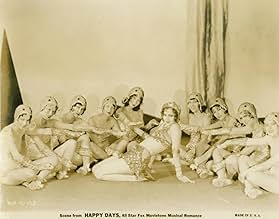
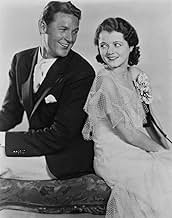
The minstrel section closes and several individual acts come up, including two great jazz numbers - "Crazy Feet" performed by Dixie Lee and chorus and "Snake Hips" performed by Sharon Lynn, Anne Pennington, and chorus. Look for Betty Grable in the chorus - she's in there. Charles Farrell and Janet Gaynor perform a romantic duet singing "We'll Build a Little World of Our Own". The whole thing closes with Whispering Jack Smith singing the title song of "Happy Days" to battling lovers Margie and Dick.
What is wrong with this film? Like all of the revues done at the time, Fox forgot that revues were about displaying your biggest assets - the studio stars, not necessarily the numbers and skits in the revue themselves. Nobody in the show provides any context or in some cases, even names for the stars as they are introduced to perform. Given how film history turned out, the choice of focus just seems odd. Great attention is paid to Victor McLaglen, Edmund Lowe, and El Brendel. Unless you are a classic movie fanatic you won't have any idea who these people are today, with the exception of McLaglen, and that is because of films he did long after he left Fox behind. Charles Farrell and Janet Gaynor are not even introduced, and maybe in 1929 no introduction was deemed necessary, but today most people would be wondering who on earth these people were. That particularly holds true for Farrell. Finally, the biggest stars Fox had on contract at the time - George Jessel, Warner Baxter, and Will Rogers are invisible after the short comic scene in the men-only club in New York. This is what MGM got right about its revue - it introduced each star as he/she performed and talked a little about what they had been doing at the studio.
The best thing this picture has going for it is Marjorie White as Margie, and she wasn't even a contract Fox player. She's funny and bursting with energy, and probably best known as playing the female lead in the first Three Stooges short a year before she died in a car accident in 1935.
I'd still recommend this film for fans of the early talkies and of film history, but everybody else will probably be lost.
Fox did a revue before this film, the now lost "Fox Movietone Revue". This was their second effort, and it actually has a plot so that there is a reason for the show. Colonel Billy Batcher has a show boat that plods along the Mississippi. However, with the coming of talking pictures he can no longer compete and his showboat is attached by a sheriff for back payment of debts. Margie, raised by the colonel, decides to go to New York to ask the big stars that got their start in the colonel's show to give him a hand.
Strangely enough, all of the stars belong to one New York club, also strange is that all of the alumni of the colonel's show seem to be signed with Fox, and even stranger yet they are all men since this is a "men only" club. How Margie gets into the club is one of the most humorous parts of the film. The scene inside the club is quite interesting as we get to see all of the male stars of Fox at the time, including those that don't have very big parts in the revue itself including Warner Baxter and Will Rogers.
The solution to the colonel's problems, of course, lie in the big Fox movie stars doing a revue for his benefit. The revue portion is only the second part of the film. Again, the revue largely segregates the men from the women in the performances given. The first part of the revue is a minstrel show with all of the stars in black face. As each is addressed by the interlocutor, the star's face turns from black to white - an odd photographic trick to make the star recognizable to the audience perhaps. Featured performers in this part are Frank Richardson singing "Mona" and Victor McLaglen and Edmund Lowe singing a buddy song. Lost as a fact to today's audiences, McLaglen and Lowe did several buddy pictures for Fox in the early sound era.
The minstrel section closes and several individual acts come up, including two great jazz numbers - "Crazy Feet" performed by Dixie Lee and chorus and "Snake Hips" performed by Sharon Lynn, Anne Pennington, and chorus. Look for Betty Grable in the chorus - she's in there. Charles Farrell and Janet Gaynor perform a romantic duet singing "We'll Build a Little World of Our Own". The whole thing closes with Whispering Jack Smith singing the title song of "Happy Days" to battling lovers Margie and Dick.
What is wrong with this film? Like all of the revues done at the time, Fox forgot that revues were about displaying your biggest assets - the studio stars, not necessarily the numbers and skits in the revue themselves. Nobody in the show provides any context or in some cases, even names for the stars as they are introduced to perform. Given how film history turned out, the choice of focus just seems odd. Great attention is paid to Victor McLaglen, Edmund Lowe, and El Brendel. Unless you are a classic movie fanatic you won't have any idea who these people are today, with the exception of McLaglen, and that is because of films he did long after he left Fox behind. Charles Farrell and Janet Gaynor are not even introduced, and maybe in 1929 no introduction was deemed necessary, but today most people would be wondering who on earth these people were. That particularly holds true for Farrell. Finally, the biggest stars Fox had on contract at the time - George Jessel, Warner Baxter, and Will Rogers are invisible after the short comic scene in the men-only club in New York. This is what MGM got right about its revue - it introduced each star as he/she performed and talked a little about what they had been doing at the studio.
The best thing this picture has going for it is Marjorie White as Margie, and she wasn't even a contract Fox player. She's funny and bursting with energy, and probably best known as playing the female lead in the first Three Stooges short a year before she died in a car accident in 1935.
I'd still recommend this film for fans of the early talkies and of film history, but everybody else will probably be lost.


Le saviez-vous
- AnecdotesThe second film released in 70mm widescreen (The Big Trail (1930) was the first).
- Autres versionsFilmed and released in two versions: standard (35 mm) and widescreen in the Grandeur process (70 mm). For its premiere showing, the widescreen version played at the Roxy Theatre in New York City, and was the first film ever shown entirely in widescreen. No print of the widescreen version is known to exist.
- ConnexionsFeatured in Biography: Betty Grable: Behind the Pin-up (1995)
- Bandes originalesWe'll Build a Little World of Our Own
(uncredited)
Music by James F. Hanley
Lyrics by James Brockman
Copyright 1930 by Red Star Music Co. Inc
Performed by Janet Gaynor and Charles Farrell
Meilleurs choix
Connectez-vous pour évaluer et surveiller les recommandations personnalisées
Détails
- Durée
- 1h 20m(80 min)
Contribuer à cette page
Suggérer une modification ou ajouter du contenu manquant