

Lorsque la police d'une ville allemande ne parvient pas à attraper un enfant assassin, d'autres criminels se joignent à la chasse à l'homme.Lorsque la police d'une ville allemande ne parvient pas à attraper un enfant assassin, d'autres criminels se joignent à la chasse à l'homme.Lorsque la police d'une ville allemande ne parvient pas à attraper un enfant assassin, d'autres criminels se joignent à la chasse à l'homme.
- Réalisation
- Scénaristes
- Vedettes
- Prix
- 2 victoires au total




Sommaire
Avis en vedette
Fritz Lang's Finest Film
The story of M concerns a serial killer who preys on children & presents an underworld society whose usual business is disrupted due to the everyday raids carried out by the police to apprehend the killer-on-loose. Driven by police's continued failure & increasing losses in their business, the criminal bosses ultimately decide to take matters in their own hands & try to capture the killer all by themselves.
Directed by Fritz Lang, this is the film that the esteemed director called his finest & it's not really difficult to see why. The screenplay & direction brims with creativity, the suspense is wonderfully created & utilized, black-n-white photography is crisp & inventive, editing never lets the story settle down, score & sound effects work in seamless harmony, and Peter Lorre steals the show with a highly compelling performance.
On an overall scale, M is a cinematic treasure that has innovation written all over it. Whether it's the narrative style, leitmotifs, camera angles, sound mixing, symbolism or expressions, the contribution this German classic has made in the world of filmmaking is groundbreaking. A thought-provoking & well-researched study into the mind of a disturbed character, M is a strong meditation on the morals of right & wrong, that has a lot to say about our very own society.
Thoroughly recommended.
German Expressionism at its cinematic best
This film is ground-breaking for many reasons: It is Fritz Lang's first talking picture, it is one of the first in the serial killer genre and it was overtly anti-Nazi. This film was banned in Germany shortly after it premiered, and Fritz Lang and Peter Lorre, both Jews, soon fled the country. It has superb acting (most notably, Peter Lorre's trial scene in the catacombs) and very stark yet at times gritty cinematography. The story is indeed suspenseful and at times, very creepy (what whistling child killer isn't?). The entire movie, however is extremely thought-provoking and challenging, much like the German Expressionist movement itself.
This is not a movie for everyone; some may find it boring, some may find it too abstract. It also has one of the most bizarre shots I've ever seen in film - essentially it's a 30 second shot of the police inspector talking on the phone, but you're under his desk and looking up his pants leg. It actually kind of baffled me and made me chuckle for a second, but it was avant garde if anything.
To those who appreciate early cinema that truly makes you think, both about the film and the subtext with which it was written and filmed, it is a must-see.
--Shelly
Influential and unforgettable masterpiece.
Even though M was Lang's (and Germany's) first sound film, many historians cite it as the initial masterpiece of cinema to appear following the introduction of sound into films in the late 1920's. While most early "talkies" return films to their static, visually monotonous, stage- imitative beginnings and thus limit rather than expand the artistic possibilities of the medium, M avoids the failing by skillfully balancing asynchronous, off-screen sounds with the more limiting use of synchronous dialogue. The film's editing, particularly its elaborate use of parallel cutting, also contributes kinetic energy and fluidity to the storytelling. Of course, many of the film's sound effects are also imaginative and memorable, none more so than the compulsive whistling of the film's central character, the stalker and serial killer of little girls Hans Beckert (magnificently played by Peter Lorre).
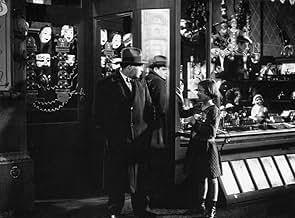
Sound is also an important contributor to M's rich and influential use of off screen space. One famous example is the scene that introduces Beckert as a shadow against his own Wanted poster, creepily intoning to his next victim, Elsie Beckmann, "You have a very pretty ball." Not only is Beckert's shadow a bow toward Lang's expressionist artistic roots, but it ironically places the murderer in the implied space in front of the image - that is, among us, the human community of viewers of which he is an innocuous-appearing, albeit monstrous, member. Another example of Lang's use of off-screen space is the montage of shots whose common denominator is Elsie's absence from them: an empty chair at the Beckmann dinner table, the vertiginous stairwell down which Elsie's mother searches compulsively and futilely for signs of her daughter's arrival, the attic play area that awaits Elsie's return from school. Most memorable of all - and most often alluded to visually in other films - is the series of shots that indirectly record Beckert's assault and murder of the innocent child, representing these off screen events metonymically via the entry of Elsie's ball from bushes along on the right edge of the frame and the release of her balloon from telephone wires and off the left edge of the frame. Never in the history of cinema has something so terrible been communicated through such powerfully understated images.
Beyond its technical brilliance, the keys to M's lasting impact are its psychologically convincing portrait of Hans Beckert's twisted compulsion and the still relevant ambivalence of his capture and "trial." Unlike contemporary cinematic examples of the serial killer, Beckert is not presented simply as a grotesque psychopath. Nor is the issue of how society should deal with him at all clear-cut. To be sure, the gut-reaction of most film audiences is to root on the underworld mobsters and petty thieves who, beating the established authorities to their mutual quarry, capture Beckert and bring him to a mock- formal trial whose conclusion is foregone. Like many in America today, Beckert's accusers are disinclined to listen to insanity pleas and would just as soon be rid of the "monster" in the surest way possible: a summary death penalty with as little fretting about legal rights as possible.
Considering the heinousness of Beckert's crimes and the imperfections of a legal/medical system that could well turn him loose to kill again, this emotional response is hard to resist. Yet M is by no means an endorsement of vigilantism - quite the contrary. Through the unlikely rhetorical persuasions of Beckert's unkempt "court appointed" defense attorney and Beckert's own impassioned monologue, Lang strongly implies that impatience with democratic judicial procedure and a paranoid eagerness to scapegoat others (guilty or not) in the name of order are symptomatic of the social hysteria breeding Nazism in 1930s Germany. That the ruthless killer who heads the underworld looks, dresses, and gestures like a Gestapo officer is no accident. Moreover, the letter "M" chalked on Beckert's back by one of his pursuers not only stands for "murderer" but also alludes to God's marking of Cain. While the popular misconception holds that the mark of Cain symbolizes his evil, it in fact represents God's warning to Cain's flawed fellow creatures not to mete out wrathful vengeance, but to leave justice in God's hands. Translated into secular terms (and literally entering the shot from the top of the frame), God's hands in M belong to the legitimate authorities that intervene at the last moment to arrest and try Hans Beckert "in the name of the Law."
Ahead of its time
The murderer, artfully played by Peter Lorre, has been killing children that have no link to him personally for months. The police, despite all of their efforts, are unable to catch him, mainly because there is no rhyme or reason in his choice of victims. At first there is a focus on the victims and the hole left in their families by their killing. Then, the film shifts to two normally opposed groups - the police and the underworld. After several months of no results by the authorities, the police are unhappy because it reflects badly upon them, and the underworld is unhappy because their activities are being disrupted because of the police doing constant raids in their efforts to capture the killer.
In a particularly well-done part of the film the scene shifts back and forth between a conference of police and one of the underworld. They discuss how they are going to catch the killer. The police settle upon the idea of looking for people with a history of past mental problems that were pronounced cured and released. The underworld decides to enlist an invisible group - the beggars - to follow every child at all times and therefore catch the killer. Both groups focus on the right suspect, the question is - who gets there first? M is a fascinating film that raises many topics - the death penalty, a group of criminals that are criminals by choice causing less stress on society than a lone criminal that acts out of an uncontrollable compulsion, and the motivations of the authorities often being their own bureaucratic survival rather than the larger issue of ending a series of horrible acts against humanity.
A masterpiece of visual drama; brilliantly acted by Peter Lorre. **** out of ****.
"M" is a cinematic masterpiece of visual drama. The stunning performances define the careers of exceptional actors such as Peter Lorre and Gustaf Grundgens. Director Fritz Lang gives depth and dimension to his production by distinctly capturing the ecstasy of the film's many characters and focusing accurately on individual situations. This is an intriguing journey into the mind of a psychotic child murderer, blending terror, complexity, and malignity in one amazing motion picture.
Screenwriters Paul Falkenburg and Adlof Jansen construct the characters of "M" with distinctive personalities and three dimensional emotions. Many lesser filmmakers give their characters no creativity outside the confines of the script. In this movie each individual character has a mind of their own; they are free to roam the landscape of a inviting atmosphere.
Fabricating such an impressive atmosphere is some of the best cinematography and lighting effects that I can remember watching. This resplendent component creates the film's terrific moody ambiance. Suspense is one thing "M" contains in full context. The movie's third act is sheer peak-high tension.
Shot in black and white, "M" stars Peter Lorre as Peter-Hans Beckert, an extremely disturbed child murderer in the process of wreaking havoc on a neighborhood. Parents everywhere are living in fear of their children being kidnapped and abruptly annihilated.
This picture contains a brilliantly crafted setup. The visual setting creates a strongly developed opening. Every scene works to either complicate the initial problem or propels the story through a firm narrative through line.
The film captures the chaos of the town in terror perfectly. "M" is more about the results of a serial killer than an actual serial killer. Never do we directly witness a murder; the violent encounters are implied. This method of film making perhaps makes the movie's impact even greater. With an creative perspective through a third person point of view, the filmmakers repeatedly give us examples of a solid structure through characters and occurrences.
"M" offers a unforgettable, challenging performance by Peter Lorre. This extraordinary actor is tormenting and disturbing without embracing in extreme violent conduct. He perspires with momentum and rapture. This productions closing scenes are so deeply penetrating they entirely captivate the viewer. Isn't this what movies are supposed to do?


Le saviez-vous
- AnecdotesContrary to popular belief, Fritz Lang did not change the title from "The Murderers are Among Us" to "M" due to fear of persecution by the Nazis. He changed the title during filming, influenced by the scene where one of the criminals writes the letter on his hand. Lang thought "M" was a more interesting title.
- GaffesWhen the gangsters find M in the attic and turn on the light, the clock behind M moves back five minutes from 11:55 to 11:50.
- Citations
Hans Beckert: I can't help what I do! I can't help it, I can't...
Criminal: The old story! We never can help it in court!
Hans Beckert: What do you know about it? Who are you anyway? Who are you? Criminals? Are you proud of yourselves? Proud of breaking safes or cheating at cards? Things you could just as well keep your fingers off. You wouldn't need to do all that if you'd learn a proper trade or if you'd work. If you weren't a bunch of lazy bastards. But I... I can't help myself! I have no control over this, this evil thing inside of me, the fire, the voices, the torment!
Schraenker: Do you mean to say that you have to murder?
Hans Beckert: It's there all the time, driving me out to wander the streets, following me, silently, but I can feel it there. It's me, pursuing myself! I want to escape, to escape from myself! But it's impossible. I can't escape, I have to obey it. I have to run, run... endless streets. I want to escape, to get away! And I'm pursued by ghosts. Ghosts of mothers and of those children... they never leave me. They are always there... always, always, always!, except when I do it, when I... Then I can't remember anything. And afterwards I see those posters and read what I've done, and read, and read... did I do that? But I can't remember anything about it! But who will believe me? Who knows what it's like to be me? How I'm forced to act... how I must, must... don't want to, must! Don't want to, but must! And then a voice screams! I can't bear to hear it! I can't go on! I can't... I can't...
- Générique farfeluAll of the original credits appear only in the beginning with no music.
- Autres versionsIn the English and French language versions, in addition to having been dubbed, had some footage re shot. These scenes include the telephone conversation between the minister and the police commissioner, and the ending of the film. Peter Lorre's performance in the trial was re shot, however this time he spoke his lines in English or French, depending upon the version. The shots of him are lit and photographed much differently than Fritz Lang's original footage. Additionally, a shot of the police arriving was inserted, taken from an earlier part of the film (whereas in the original German version no police forces are shown at all). The court scenes have been eliminated and replaced with happy endings where young children play a game similar to the one seen in the opening (English) or a smiling couple watching their children play in the street (French).
- ConnexionsEdited into Juden ohne Maske (1937)
Meilleurs choix
Détails
Box-office
- Brut – États-Unis et Canada
- 35 566 $ US
- Fin de semaine d'ouverture – États-Unis et Canada
- 6 123 $ US
- 17 mars 2013
- Brut – à l'échelle mondiale
- 35 566 $ US
- Durée
- 1h 57m(117 min)
- Couleur
- Mixage
- Rapport de forme
- 1.19 : 1
- 1.20 : 1