ÉVALUATION IMDb
7,4/10
8,4 k
MA NOTE


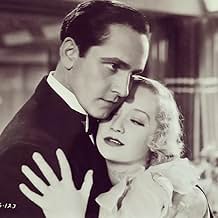
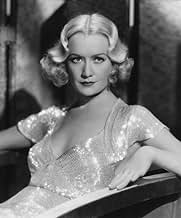
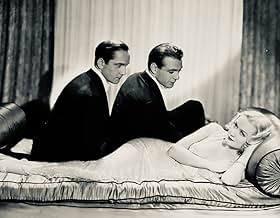
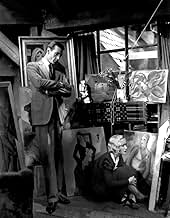
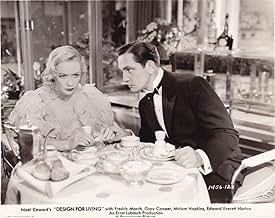
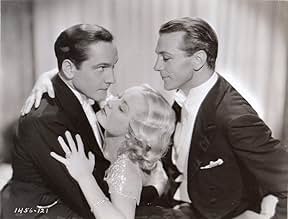
Une femme est incapable de se décider entre deux hommes dont elle est amoureuse, et le trio décide de vivre ensemble dans une relation amicale et platonique.Une femme est incapable de se décider entre deux hommes dont elle est amoureuse, et le trio décide de vivre ensemble dans une relation amicale et platonique.Une femme est incapable de se décider entre deux hommes dont elle est amoureuse, et le trio décide de vivre ensemble dans une relation amicale et platonique.
- Réalisation
- Scénaristes
- Vedettes
- Prix
- 3 victoires au total


Cosmo Kyrle Bellew
- Man
- (uncredited)

Lionel Belmore
- Theatre Patron
- (uncredited)
Thomas Braidon
- Douglas' Second Manager
- (uncredited)

Nora Cecil
- Tom's Secretary
- (uncredited)

Emile Chautard
- Train Conductor
- (uncredited)

Mathilde Comont
- Heavy Woman
- (uncredited)

Adrienne D'Ambricourt
- Cafe Proprietress
- (uncredited)

James Donlan
- Fat Man with Ring
- (uncredited)

Harry Dunkinson
- Mr. Egelbauer
- (uncredited)

Estelle Etterre
- Woman in audience
- (uncredited)
7,48.4K
1
2
3
4
5
6
7
8
9
10
Avis en vedette
Pre Code Elegance
Delightful even if more Ben Hecht than Noel Coward. The "menage a trois" has real brains, wit and magic. All due to the sensational chemistry between Gary Cooper, Fredric March, Miriam Hopkins and, of course, the unmistakable Lubitch touch. I was going to say that the film seems written today but the sad truth is there is nobody today that could write with this extraordinary elegance. Frediric March is masculine and volcanic, Gary Cooper feminine and irresistible and Miriam Hopkins, a sensational modern comedienne. As if this wasn't enough, Edward Everett Horton as Mr Wrong. The scene in which Hopkins compares Cooper and March to hats is one of my all time favorites.
Another Gem from Paramount
Intelligent script, witty dialogue, sexy stars, sophisticated story, deft direction…What more can I say? It's Lubitsch and Paramount at its Pre-Code best! This was another of those "vintage" films of which you had the chance of reading a lot about, but before Universal released "The Gary Cooper Collection", where it's included, you had nowhere to watch it. Of course, I bought promptly the aforementioned set.
The picture tells the story of free-spirited Gilda Farrell, a young lady who works at a Parisian Advertising Agency, managed by that great seasoned pro, Edward Everett Horton, who by chance meets on board a train, struggling, penniless, artists George Curtis, a painter (Gary Cooper) and Thomas Chambers, a playwright (Fredric March), in which may be one of the most "risqué" plots of all the Pre-Code Era, dealing openly with the pros and cons of a mènage-a-trois.
Miriam Hopkins portrays the deliciously mischievous Gilda, giving a top, tongue-in-cheek performance, looking absolutely beautiful and full of glow from within; it's really in her films directed by Lubitsch that her appeal shines at its most and she looks at her attractive-best.
Fredric March is good too as the "more down-to-earth-but-nevertheless-madly-in-love" playwright, who lives with buddy Gary Cooper in a miserable tenement, until Miriam Hopkins comes in scene and to "the rescue".
But the revelation, in my opinion, is Gary Cooper; after seeing him in many of his 1930s films, I feel that I like him best in the variety of roles he got to play in those years: a young idealist in "Peter Ibbetson", a sensitive soldier in "A Farewell to Arms", a sophisticated artist in this one, etc. He really was a good actor from the beginning of his "talkies" career (I haven't seen his Silents, so I cannot give an opinion), showing much skill and depth in his interpretations. In this film he plays excellently opposite such strong talents as Miriam Hopkins and Fredric March, absolutely "a la par".
In all, a highly enjoyable film. Smart Entertainment. A must.
The picture tells the story of free-spirited Gilda Farrell, a young lady who works at a Parisian Advertising Agency, managed by that great seasoned pro, Edward Everett Horton, who by chance meets on board a train, struggling, penniless, artists George Curtis, a painter (Gary Cooper) and Thomas Chambers, a playwright (Fredric March), in which may be one of the most "risqué" plots of all the Pre-Code Era, dealing openly with the pros and cons of a mènage-a-trois.
Miriam Hopkins portrays the deliciously mischievous Gilda, giving a top, tongue-in-cheek performance, looking absolutely beautiful and full of glow from within; it's really in her films directed by Lubitsch that her appeal shines at its most and she looks at her attractive-best.
Fredric March is good too as the "more down-to-earth-but-nevertheless-madly-in-love" playwright, who lives with buddy Gary Cooper in a miserable tenement, until Miriam Hopkins comes in scene and to "the rescue".
But the revelation, in my opinion, is Gary Cooper; after seeing him in many of his 1930s films, I feel that I like him best in the variety of roles he got to play in those years: a young idealist in "Peter Ibbetson", a sensitive soldier in "A Farewell to Arms", a sophisticated artist in this one, etc. He really was a good actor from the beginning of his "talkies" career (I haven't seen his Silents, so I cannot give an opinion), showing much skill and depth in his interpretations. In this film he plays excellently opposite such strong talents as Miriam Hopkins and Fredric March, absolutely "a la par".
In all, a highly enjoyable film. Smart Entertainment. A must.
Nice touch!
I bought the Gary Cooper collection because of "Design for Living". It didn't disappoint me. This movie is classy, it's full of wit and sexually free. I found the plot intriguing, the set excellent, the costumes fine and Lubitsch inspired together with Ben Hecht (lovely and smart screenplay).
The movie shows 4 actors only, which could be considered its strength if the actors were all good. 1 out of 4 is good and 2 out of 4 are really good. 1 out of 4 has got nothing to do with such environments, dialogs and sophisticated comedy. Gary Cooper does not fit to me. He's a sort of amazing good looking and so dashing statue to look at. Nothing more. He just doesn't look comfortable in acting spoiling intellectual shades. He doesn't work to me.
Miriam Hopkins is good, she's mischievous, charming and funny. She plays the free woman with intelligence, combining sensuality and brain. Audience - even the male one - does understand why she can't choose between the two guys and she conquers it. Every woman would like to be her; that's the message she strongly brought on the screen: being free of living life the way she desires.
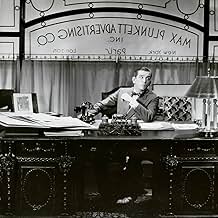
Edward Everett Horton is perfect, hilarious and very elegant. He's the right choice to play Plunkett Inc. and he didn't let it down. He IS Plunkett Inc.!
Fredric March is so charming, sophisticated, sexy and so right for Thomas. He does much better here than in other movies (e.g. Anna Karenina) which could seem more suitable for him. He's perfect for Lubitsch so much and his performance is a top one. He's a fine comedian too, he's measured and passionate at the same time and he's really handsome. His sensuality is made up either by intellectual attitude or a physical one.
Don't know why he's been forgotten, a wonderful actor like he is. Can anybody tell me?
I do suggest to get this movie and to enjoy it since it's really a nice touch in our collection. We do need nice and elegant touches. Especially nowadays.
The movie shows 4 actors only, which could be considered its strength if the actors were all good. 1 out of 4 is good and 2 out of 4 are really good. 1 out of 4 has got nothing to do with such environments, dialogs and sophisticated comedy. Gary Cooper does not fit to me. He's a sort of amazing good looking and so dashing statue to look at. Nothing more. He just doesn't look comfortable in acting spoiling intellectual shades. He doesn't work to me.
Miriam Hopkins is good, she's mischievous, charming and funny. She plays the free woman with intelligence, combining sensuality and brain. Audience - even the male one - does understand why she can't choose between the two guys and she conquers it. Every woman would like to be her; that's the message she strongly brought on the screen: being free of living life the way she desires.
Edward Everett Horton is perfect, hilarious and very elegant. He's the right choice to play Plunkett Inc. and he didn't let it down. He IS Plunkett Inc.!
Fredric March is so charming, sophisticated, sexy and so right for Thomas. He does much better here than in other movies (e.g. Anna Karenina) which could seem more suitable for him. He's perfect for Lubitsch so much and his performance is a top one. He's a fine comedian too, he's measured and passionate at the same time and he's really handsome. His sensuality is made up either by intellectual attitude or a physical one.
Don't know why he's been forgotten, a wonderful actor like he is. Can anybody tell me?
I do suggest to get this movie and to enjoy it since it's really a nice touch in our collection. We do need nice and elegant touches. Especially nowadays.
10capel
A Delight
Few films have had as much nonsense written about them as Ernst Lubitsch's "Design For Living." From the moment it was released, it was criticized for rewriting Noel Coward's then-daring play (Ben Hecht, the screenwriter, said: "There's only one line of Coward's left in the picture--see if you can find it!"); for casting Americans in parts that had originally been played by Coward, Alfred Lunt, and Lynn Fontanne; for toning down the gay subtexts of Coward's play. All that is, of course, completely irrelevant; the question is not whether the play is faithful to the source material, but whether it's good. And it is, it is.
There are flaws in the film. This was one of the first times Lubitsch had made a movie with little or no music on the soundtrack; previously, in his musicals and his sublime "Trouble In Paradise," he had used background music to cover up potential dead spots and carry the film along. Here there is none of that, with the result that some of the early scenes seem oddly paced. But the wit of the script (written by Hecht but, as always with Lubitsch, carefully supervised and contributed to by the director himself) and the appeal of the performers (more about them later) pull the film through the occasional rough spots, and the second half of the movie is just about perfect.
Another idiotic thing that is often said about "Design For Living" is that Lubitsch and Hecht rewrote Coward due to fear of the censors. In fact, the censors must have had a heart attack when they saw "Design," for this is one of the most sexually frank of the pre-Code Hollywood movies; premarital sex, cohabitation, adultery and frigidity are all clearly portrayed-- but, as always with Lubitsch, they are implied rather than shown. Lubitsch's trademark door and blackout gags are here, and they are hilarious; again, it's not Noel Coward--it's Lubitsch, the cinema's greatest comic filmmaker at the peak of his powers.
But there's something else here that isn't found in most Lubitsch films, and it comes from Ben Hecht, whose cynical, fast-talking, very American style of writing gives the characters a flavor quite unlike the more Continental wit of Lubitsch's usual heroes. (This is also one of the few Lubitsch films where the lead characters are American rather than European.) Critics have sometimes complained that Hecht's somewhat inelegant style was unworthy of either Coward or Lubitsch. Again, I disagree; the moments of Hechtian farce (like the hilarious party scene) are beautifully handled by Lubitsch and turn the film into a forerunner of screwball comedy, the place where Continental charm and hard-driving Americanism meet.
Now to the actors. The "British is Better" attitude of many critics made it inevitable that Lubitsch's American cast would be pilloried. Again, this is not Noel Coward and a Noel Coward style of acting wouldn't work in this context. All the leading players are actually quite wonderful: Miriam Hopkins, one of Lubitsch's favorite actresses, has the best role and gives a marvelously energetic performance as the flighty, pretentious free spirit who tries to substitute art for sex; Gary Cooper is at the height of his youthful charm, with a surprisingly light comic touch and great teamwork with Fredric March. March, who can often be heavy-handed in film comedy, is here charming and funny; it's a tribute to Lubitsch that he got such a genial performance out of him. And, of course, there's Edward Everett Horton, one of Hollywood's finest character actors in one of his finest roles.
If you know and love the Noel Coward play, don't expect this movie to be a faithful adaptation. Think of it as an original work of comedic art that happens to utilize some of the story elements of Coward's play. It's not Noel Coward; it's a splendid romantic farce that, like all great comedies, has serious themes underneath the fun: Sexual freedom, male vs. female roles in society, art, love, friendship. So see it (if you can; it's not on video, alas). It's not Noel Coward, it's Ernst Lubitsch, and despite the occasional flaws, it's Lubitsch at his best.
There are flaws in the film. This was one of the first times Lubitsch had made a movie with little or no music on the soundtrack; previously, in his musicals and his sublime "Trouble In Paradise," he had used background music to cover up potential dead spots and carry the film along. Here there is none of that, with the result that some of the early scenes seem oddly paced. But the wit of the script (written by Hecht but, as always with Lubitsch, carefully supervised and contributed to by the director himself) and the appeal of the performers (more about them later) pull the film through the occasional rough spots, and the second half of the movie is just about perfect.
Another idiotic thing that is often said about "Design For Living" is that Lubitsch and Hecht rewrote Coward due to fear of the censors. In fact, the censors must have had a heart attack when they saw "Design," for this is one of the most sexually frank of the pre-Code Hollywood movies; premarital sex, cohabitation, adultery and frigidity are all clearly portrayed-- but, as always with Lubitsch, they are implied rather than shown. Lubitsch's trademark door and blackout gags are here, and they are hilarious; again, it's not Noel Coward--it's Lubitsch, the cinema's greatest comic filmmaker at the peak of his powers.
But there's something else here that isn't found in most Lubitsch films, and it comes from Ben Hecht, whose cynical, fast-talking, very American style of writing gives the characters a flavor quite unlike the more Continental wit of Lubitsch's usual heroes. (This is also one of the few Lubitsch films where the lead characters are American rather than European.) Critics have sometimes complained that Hecht's somewhat inelegant style was unworthy of either Coward or Lubitsch. Again, I disagree; the moments of Hechtian farce (like the hilarious party scene) are beautifully handled by Lubitsch and turn the film into a forerunner of screwball comedy, the place where Continental charm and hard-driving Americanism meet.
Now to the actors. The "British is Better" attitude of many critics made it inevitable that Lubitsch's American cast would be pilloried. Again, this is not Noel Coward and a Noel Coward style of acting wouldn't work in this context. All the leading players are actually quite wonderful: Miriam Hopkins, one of Lubitsch's favorite actresses, has the best role and gives a marvelously energetic performance as the flighty, pretentious free spirit who tries to substitute art for sex; Gary Cooper is at the height of his youthful charm, with a surprisingly light comic touch and great teamwork with Fredric March. March, who can often be heavy-handed in film comedy, is here charming and funny; it's a tribute to Lubitsch that he got such a genial performance out of him. And, of course, there's Edward Everett Horton, one of Hollywood's finest character actors in one of his finest roles.
If you know and love the Noel Coward play, don't expect this movie to be a faithful adaptation. Think of it as an original work of comedic art that happens to utilize some of the story elements of Coward's play. It's not Noel Coward; it's a splendid romantic farce that, like all great comedies, has serious themes underneath the fun: Sexual freedom, male vs. female roles in society, art, love, friendship. So see it (if you can; it's not on video, alas). It's not Noel Coward, it's Ernst Lubitsch, and despite the occasional flaws, it's Lubitsch at his best.
10reelguy2
Torn between two lovers
Miriam Hopkins finds herself in love with both Gary Cooper and Fredric March (who can blame her?), so she does what any sensible Pre-Code woman would do: she decides to live with both of them!
It's a tribute to movie audiences of the early 1930s that a sophisticated comedy like Design for Living could a.) Get produced, and b.) Be a success at the box office. The dumbing down of current films means that the delicious innuendo in Design for Living would go over the head of most of today's audience.
The key to the Lubitsch Touch was in the perfect timing of physical gestures and the delivery of the lines. Trouble in Paradise and Design for Living were the best in this respect. Personally, I prefer the lack of music in Design for Living. I think it dates the film less than Lubitsch's other efforts.
I don't mind that Ben Hecht wrote most of the film's dialog rather than Noel Coward, who wrote the original play. All I know is that the dialog is very very funny and quite naughty, making this the ultimate Pre-Code film.
Miriam Hopkins could do no wrong in a Lubitsch film, and her work here is brilliant. She's intelligent and uncompromisingly honest. Her leading men, Gary Cooper and Fredric March, are both sexy and hilarious. Gary Cooper is a particular revelation, displaying a flair for comedy that is quite unexpected. As Cooper's friend and rival for the affection of Hopkins, March is also very funny, which comes as no surprise after his brilliant parody of John Barrymore in The Royal Family of Broadway (1930).
Prepare to laugh yourself silly during what may be the funniest film ever made.
It's a tribute to movie audiences of the early 1930s that a sophisticated comedy like Design for Living could a.) Get produced, and b.) Be a success at the box office. The dumbing down of current films means that the delicious innuendo in Design for Living would go over the head of most of today's audience.
The key to the Lubitsch Touch was in the perfect timing of physical gestures and the delivery of the lines. Trouble in Paradise and Design for Living were the best in this respect. Personally, I prefer the lack of music in Design for Living. I think it dates the film less than Lubitsch's other efforts.
I don't mind that Ben Hecht wrote most of the film's dialog rather than Noel Coward, who wrote the original play. All I know is that the dialog is very very funny and quite naughty, making this the ultimate Pre-Code film.
Miriam Hopkins could do no wrong in a Lubitsch film, and her work here is brilliant. She's intelligent and uncompromisingly honest. Her leading men, Gary Cooper and Fredric March, are both sexy and hilarious. Gary Cooper is a particular revelation, displaying a flair for comedy that is quite unexpected. As Cooper's friend and rival for the affection of Hopkins, March is also very funny, which comes as no surprise after his brilliant parody of John Barrymore in The Royal Family of Broadway (1930).
Prepare to laugh yourself silly during what may be the funniest film ever made.


Le saviez-vous
- AnecdotesConsiderable censorship difficulties arose because of sexual discussions and innuendos, although the Hays Office eventually approved the film for release. However, the film was banned by the Legion of Decency and was refused a certificate for re-release by censor Joseph Breen in 1934 when the Production Code was more rigorously enforced.
- GaffesCamera shadow visible on window frame as Gilda sets the table.
- Citations
Max Plunkett: Immorality may be fun, but it isn't fun enough to take the place of one hundred percent virtue and three square meals a day.
- ConnexionsFeatured in Complicated Women (2003)
- Bandes originalesThe Star Spangled Banner
(1814) (uncredited)
Music by John Stafford Smith
Hummed by Gary Cooper and Fredric March
Meilleurs choix
Connectez-vous pour évaluer et surveiller les recommandations personnalisées
Détails
- Date de sortie
- Pays d’origine
- Langues
- Aussi connu sous le nom de
- Una mujer para dos
- Lieux de tournage
- société de production
- Consultez plus de crédits d'entreprise sur IMDbPro
Box-office
- Brut – à l'échelle mondiale
- 157 $ US
- Durée
- 1h 31m(91 min)
- Couleur
- Rapport de forme
- 1.33 : 1
Contribuer à cette page
Suggérer une modification ou ajouter du contenu manquant