ÉVALUATION IMDb
7,9/10
30 k
MA NOTE


Un réalisateur de comédies prend la route, vêtu comme un vagabond pour découvrir la vie, ce qui lui offre un réveil brutal.Un réalisateur de comédies prend la route, vêtu comme un vagabond pour découvrir la vie, ce qui lui offre un réveil brutal.Un réalisateur de comédies prend la route, vêtu comme un vagabond pour découvrir la vie, ce qui lui offre un réveil brutal.
- Réalisation
- Scénariste
- Vedettes
- Prix
- 2 victoires au total


Charles R. Moore
- Colored Chef
- (as Charles Moore)


7,930.3K
1
2
3
4
5
6
7
8
9
10
Avis en vedette
The Perfect Film?
As a TV Producer of "entertainment" shows, I make a point of watching this film at least once a year and giving DVDs of it to all who may disparage what I do.
Preston Sturges achieves the impossible in this movie: he has his cake and eats it too. He makes a perfect film - he manages to make a socially significant statement while wrapping it up in a comedy confection.
His hero, John L. Sullivan (Joel McCrea - a very underestimated actor) is a
succcessful director of frivolous musicals and comedies who, one day, decides he needs to make a Capra-esque "serious"film. His studio chiefs and immediate staff are against it and point out that he is rich and privileged, what does he know about the less fortunate? Sullivan retorts with an ingenious plan:
Sullivan: "You're perfectly right...but I'll tell you what I'm going to do first: I'm going to get some old clothes and some old shoes from wardrobe and start out with ten cents in my pocket...and I'm not coming back till I know what trouble it..I'm going out on the road to find out what it's like to be poor and needy and then I'm going to make a picture about it."
Burrows(his butler): If you'll permit me to say so, sir, the subject is not an interesting one. The poor know all about poverty and only the morbid rich would find the topic glamorous.
Nevertheless, Sullivan does it and unwittingly (and hilariously) discovers the true value comedy has in the lives of those with little else to laugh about...
It's genius. Exquisitely written, directed and acted (Sturges uses his usual ensemble plus the ever watchable Veronica Lake, even here in her most improbable disguises [I met her, professionally, in England in the 70s, she was still a class act and her "rider" demanded her drink of choice - vodka and cranberry juice).
Sullivan's Travels is a true gem of American Cinema. Ten out of ten.
Preston Sturges achieves the impossible in this movie: he has his cake and eats it too. He makes a perfect film - he manages to make a socially significant statement while wrapping it up in a comedy confection.
His hero, John L. Sullivan (Joel McCrea - a very underestimated actor) is a
succcessful director of frivolous musicals and comedies who, one day, decides he needs to make a Capra-esque "serious"film. His studio chiefs and immediate staff are against it and point out that he is rich and privileged, what does he know about the less fortunate? Sullivan retorts with an ingenious plan:
Sullivan: "You're perfectly right...but I'll tell you what I'm going to do first: I'm going to get some old clothes and some old shoes from wardrobe and start out with ten cents in my pocket...and I'm not coming back till I know what trouble it..I'm going out on the road to find out what it's like to be poor and needy and then I'm going to make a picture about it."
Burrows(his butler): If you'll permit me to say so, sir, the subject is not an interesting one. The poor know all about poverty and only the morbid rich would find the topic glamorous.
Nevertheless, Sullivan does it and unwittingly (and hilariously) discovers the true value comedy has in the lives of those with little else to laugh about...
It's genius. Exquisitely written, directed and acted (Sturges uses his usual ensemble plus the ever watchable Veronica Lake, even here in her most improbable disguises [I met her, professionally, in England in the 70s, she was still a class act and her "rider" demanded her drink of choice - vodka and cranberry juice).
Sullivan's Travels is a true gem of American Cinema. Ten out of ten.
Reckless, tightrope masterpiece.
Sturges' most daringly double-edged film, laced with bitter ironies. It is also arguably the most audacious film in Hollywood's (mainstream) history, audacious because it takes the kinds of risks that can so easily fall flat on their face, and right until the final image, as Sturges becomes increasingly ambitious and multi-layered, you wonder how long he can keep it up without getting ridiculous. It never does, but the film is so full of contradictions, tensions, suppressions, clanging lurches in tone - 'Travels' is ostensibly a comedy, and one of Hollywood's best, but the last twenty minutes are truly painful to watch, harrowing and not at all funny.
The overriding source of tension, of course, is the film itself, the plot, and the emotions that are supposed to be elicited. It is very difficult, and frequently impossible to gauge the tone of any one scene. Sometimes this is straightforward, as when information is deliberately withheld from the audience, it is asked to make a judgement, and then shown to be wrong, as in the scenes where the studio moguls claim a background of deprivation (which is historically plausible). This kind of comedy is familiar enough.
But what about the later montage of Sullivan and the Girl experiencing the 'reality' of poverty - are these scenes supposed to be genuine representation of poverty? Are they part of a wider satire on pious films like 'Grapes of Wrath', which dubiously aestheticise poverty - there are a lot of Expressionistic flourishes in this sequence? Are they a kind of abstract purgatory through which Sullivan finds spiritual understanding?
There is a big difference between the representation of poverty in this sequence and the one where Sullivan is attacked and sent to prison. But is one more 'authentic' than the other - the second one bravely rejects the view of 'noble' poverty, shows how it dehumanises people, turns them instinctual and brutal; but it also provides a neat moral, which suggests that if you do somebody wrong, you will be (horribly) punished for it. This realism, therefore, is as contrived as the first. Is this Sturges' point, that the good intentions of realism are always tainted by ideological assumptions, patronising good-will, or motives of elevation. This sense of artifice, of a film comprised of varying self-reflexive modes rather than a plausible narrative, runs through 'Travels', with characters talking about the film they're in as a plot - in direst danger, Sullivan acknowledges the need for a helluva twist which duly arrives, filmed in silent slapstick with barely concealed Sturges contempt (and did his friends seem terribly put out by his death?).
This would seem to uphold 'Travels'' ostensible theme, its celebration of comedy as a sugar with which to sweeten the harshness of reality. This is a very cynical view of comedy, and a highly manipulative, conservative one - distract an unhappy populace from the injustice of their lives. The best comedies - from 'Sherlock Jr' and 'Modern Times' to 'Playtime' and 'The Discreet Charm of the Bourgeoisie' have always been about real life, encouraging their viewers to think harder about the society they live in, much more effectively than so-called naturalism.
'Travels' is no exception. It might be a celebration of comedy, but this is comedy a million miles from 'Ants in your Pants'. What other 40s film still manages to show the brutality of poverty, of the prison system, of race relations, the fate of young women in sexually voracious Hollywood (the Girl's ease with her body in the swimming pool scene speaks volumes), however we choose to read them? When Sullivan's determination at the end to continue making populist comedies is endorsed by the ringing laughter of the world's meek and suffering, the disjunction is grotesque. This is a man, on an airplane, completely removed from reality, surrounded by wealthy toadies. Those happy laughs could so easily be contemptuous guffaws, because what Sullivan wants to do, and Sturges hasn't, is hide the inequalities of capitalism, the system on which Hollywood thrives, and the flaws in which they would be only too happy to cover up with inanity. But to even suggest this is to fall into the 'Capra' trap mocked at the beginning.
This difficulty is what makes 'Travels' such a stunningly modern film - its shifts from sophisticated verbal wit to elaborate slapstick to blatant Carry On-like innuendo (the matronly sister dusting the bedpost after seeing a sweating, shirtless Sullivan work) to tragedy to hallucination and dream to satire foreshadows Melville and the New Wave, while the privileged rich man who cannot escape Hollywood would transmute into the guests who can't leave the house, or can't get dinner in later Bunuel films; or the film that begins with an end. The opening sequence takes off 'Citizen Kane'. The deadpan genderplay is quietly gobsmacking, and Veronica Lake as a (gorgeous) tramp would be alluded to by Jeanne Moreau in 'Jules et JIm'. But the joys are all Sturges', as he democratises comedy (see again that swimming pool sequence); I love in particular those glorious supporting actors: my favourite being the immortal Eric Blore and Robert Greig as Sullivan's servants.
The overriding source of tension, of course, is the film itself, the plot, and the emotions that are supposed to be elicited. It is very difficult, and frequently impossible to gauge the tone of any one scene. Sometimes this is straightforward, as when information is deliberately withheld from the audience, it is asked to make a judgement, and then shown to be wrong, as in the scenes where the studio moguls claim a background of deprivation (which is historically plausible). This kind of comedy is familiar enough.
But what about the later montage of Sullivan and the Girl experiencing the 'reality' of poverty - are these scenes supposed to be genuine representation of poverty? Are they part of a wider satire on pious films like 'Grapes of Wrath', which dubiously aestheticise poverty - there are a lot of Expressionistic flourishes in this sequence? Are they a kind of abstract purgatory through which Sullivan finds spiritual understanding?
There is a big difference between the representation of poverty in this sequence and the one where Sullivan is attacked and sent to prison. But is one more 'authentic' than the other - the second one bravely rejects the view of 'noble' poverty, shows how it dehumanises people, turns them instinctual and brutal; but it also provides a neat moral, which suggests that if you do somebody wrong, you will be (horribly) punished for it. This realism, therefore, is as contrived as the first. Is this Sturges' point, that the good intentions of realism are always tainted by ideological assumptions, patronising good-will, or motives of elevation. This sense of artifice, of a film comprised of varying self-reflexive modes rather than a plausible narrative, runs through 'Travels', with characters talking about the film they're in as a plot - in direst danger, Sullivan acknowledges the need for a helluva twist which duly arrives, filmed in silent slapstick with barely concealed Sturges contempt (and did his friends seem terribly put out by his death?).
This would seem to uphold 'Travels'' ostensible theme, its celebration of comedy as a sugar with which to sweeten the harshness of reality. This is a very cynical view of comedy, and a highly manipulative, conservative one - distract an unhappy populace from the injustice of their lives. The best comedies - from 'Sherlock Jr' and 'Modern Times' to 'Playtime' and 'The Discreet Charm of the Bourgeoisie' have always been about real life, encouraging their viewers to think harder about the society they live in, much more effectively than so-called naturalism.
'Travels' is no exception. It might be a celebration of comedy, but this is comedy a million miles from 'Ants in your Pants'. What other 40s film still manages to show the brutality of poverty, of the prison system, of race relations, the fate of young women in sexually voracious Hollywood (the Girl's ease with her body in the swimming pool scene speaks volumes), however we choose to read them? When Sullivan's determination at the end to continue making populist comedies is endorsed by the ringing laughter of the world's meek and suffering, the disjunction is grotesque. This is a man, on an airplane, completely removed from reality, surrounded by wealthy toadies. Those happy laughs could so easily be contemptuous guffaws, because what Sullivan wants to do, and Sturges hasn't, is hide the inequalities of capitalism, the system on which Hollywood thrives, and the flaws in which they would be only too happy to cover up with inanity. But to even suggest this is to fall into the 'Capra' trap mocked at the beginning.
This difficulty is what makes 'Travels' such a stunningly modern film - its shifts from sophisticated verbal wit to elaborate slapstick to blatant Carry On-like innuendo (the matronly sister dusting the bedpost after seeing a sweating, shirtless Sullivan work) to tragedy to hallucination and dream to satire foreshadows Melville and the New Wave, while the privileged rich man who cannot escape Hollywood would transmute into the guests who can't leave the house, or can't get dinner in later Bunuel films; or the film that begins with an end. The opening sequence takes off 'Citizen Kane'. The deadpan genderplay is quietly gobsmacking, and Veronica Lake as a (gorgeous) tramp would be alluded to by Jeanne Moreau in 'Jules et JIm'. But the joys are all Sturges', as he democratises comedy (see again that swimming pool sequence); I love in particular those glorious supporting actors: my favourite being the immortal Eric Blore and Robert Greig as Sullivan's servants.
Sleight of hand
No need to add to the praise others have justly given this classic, but there's one thing I think is especially clever about the plot (without giving too much of it away). The apparent moral of this Depression-era movie is that bad as conditions may be, audiences don't need to be reminded about them, instead needing escapist fare to distract them from the world's problems. Meanwhile, after setting you up to relax and enjoy a screwball comedy, Sturges succeeds in surreptitiously drawing you into just the kind of bleak "social consciousness" movie his characters are saying is impossible to get people to watch, without your realizing it at the time. Well, without my realizing it, anyway, until much later.
A celebration of the healing power of comedy
As a professional circus clown for twenty years,I think that Sullivan's Travels is the best, most lucid, explanation of what comedy is all about that has ever been made. Sure it's hokey, corny, contrived, and meandering. But so is all great comedy, from Shakespeare to Seinfeld! If you want your comedy to be tightly constructed, meaningful, unambiguous, and logical, then you do not want comedy at all -- you want some stuffy college professor's idea of What is Comedy for a term paper.
The glorious truth is that you cannot domesticate great comedy. It occurs on no regular basis, from no reliable source, and is accountable to no one for what it says and does. Preston Sturges wanted to make that point in Sullivans Travels and he does so exceedingly well with everything from slapstick frolics in the land cruiser to fleas in the bed to hectoring soliloquies about poverty from the butler.
Ten years before Chaplin tried to explain the same thing in his movie Limelight, Sturges tells a tale meant to both hearten and cozen us. It heartens us to know that a cynical, moneygrubbing place like Hollywood will continue to spin out comedies, because they make money. And it cozens us into thinking there is something magical about comedians. Anyone who has ever actually known or been married to a professional funnyperson knows they are by turns grumpy, lazy, tempermental, stubborn, and always insecure. Not the life of the party. But so what? They're clowns, god bless 'em, and that's all that counts.
You'll never understand the craft of humor if you don't watch, and love, Preston Sturges Sullivan's Travels!
The glorious truth is that you cannot domesticate great comedy. It occurs on no regular basis, from no reliable source, and is accountable to no one for what it says and does. Preston Sturges wanted to make that point in Sullivans Travels and he does so exceedingly well with everything from slapstick frolics in the land cruiser to fleas in the bed to hectoring soliloquies about poverty from the butler.
Ten years before Chaplin tried to explain the same thing in his movie Limelight, Sturges tells a tale meant to both hearten and cozen us. It heartens us to know that a cynical, moneygrubbing place like Hollywood will continue to spin out comedies, because they make money. And it cozens us into thinking there is something magical about comedians. Anyone who has ever actually known or been married to a professional funnyperson knows they are by turns grumpy, lazy, tempermental, stubborn, and always insecure. Not the life of the party. But so what? They're clowns, god bless 'em, and that's all that counts.
You'll never understand the craft of humor if you don't watch, and love, Preston Sturges Sullivan's Travels!
Outstanding Film
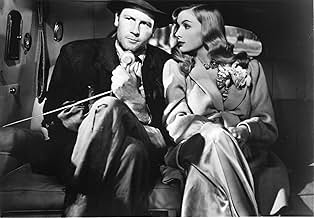
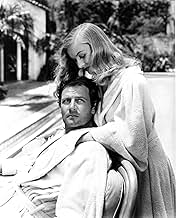
"I want this to be a picture of dignity... a true canvas of the suffering of humanity... but with a little sex in it!" Sullivan's Travels is a delightful, intelligent, satirical witty comedy mocking Hollywood. It is about a big time Hollywood director (played by Joel McCrea) who is absolutely sick and tired of making the hum-drum, silly comedies: "Hey-Hey in the Hay" and "Ants in Your Pants of 1938". Instead, he wants to make something different...an important, relevant, socially relevant drama about poverty. When he realizes he knows nothing about THAT sort of life, he sets out with 10 cents in his pocket and finds out what it's really like. Along the way, he meets Veronica Lake - who plays "The Girl". She is a discouraged aspiring actress getting no where and on the verge of leaving town. Despite her own bad luck, she takes pity on the hobo Sullivan and buys him breakfast. When she eventually finds out his true identity, she insists on accompanying him on the road due to his inexperience at such a lifestyle. Lake does a great job of the dry co-star. She's not the greatest actress but she does justice to the part and offers a bit of eye candy for the viewers in contrast. She is a joy to watch on screen, that's for sure! I want to see more of her movies.
Sullivan's Travels is a very funny film with the appeal of Lake, witty comedy and a true underlying message. It is all this whilst still perfectly "taking the mickey" out of Hollywood's (often lame) attempts at making a movie with a message. A movie which can be watched by all - essential for those lovers of classic cinema.
Sullivan's Travels is a very funny film with the appeal of Lake, witty comedy and a true underlying message. It is all this whilst still perfectly "taking the mickey" out of Hollywood's (often lame) attempts at making a movie with a message. A movie which can be watched by all - essential for those lovers of classic cinema.


Le saviez-vous
- AnecdotesCinematographer John Seitz admired Preston Sturges' unconventional approach to his work. The opening scene comprised ten pages of dialogue to cover about four and a half minutes of screen time. It was scheduled for two complete days of shooting. On the morning of the first day, Seitz found Sturges inspecting the set with a viewfinder, looking for where he could cut the scene and change camera set-ups. Seitz dared him to do it all in one take. Never one to refuse a dare, Sturges took him up on it, although the nervous Seitz had never attempted to complete a two-day work schedule in one day. With the endorsement of McCrea and the rest of the actors, Sturges pressed on, determined to set a record. The first take was fine, but the camera wobbled a little in the tracking shot following the men from screening room to office, so they tried again. They did two or three takes at the most and that was it - two full days work by 11 a.m. on the first day, a feat that had the entire studio buzzing.
- GaffesWhen the supposedly-unconscious Sullivan is being pulled into an empty boxcar by the bum who hit him, Joel McCrea is visibly pushing himself along with his foot, apparently because the other man is not strong enough to drag him.
- Citations
[last lines]
John L. Sullivan: There's a lot to be said for making people laugh. Did you know that that's all some people have? It isn't much, but it's better than nothing in this cockeyed caravan.
- Générique farfeluThe Paramount logo appears as a seal on a package.
The package is opened to reveal a book with the film title on it and the opening credits appear on pages in the book.
- ConnexionsFeatured in The Cinematographer (1951)
- Bandes originalesSpring Song
(1844) (uncredited)
Written by Felix Mendelssohn
Played as part of the score when Sullivan starts his experiment
Reprised when he starts a second time
Meilleurs choix
Connectez-vous pour évaluer et surveiller les recommandations personnalisées
Détails
- Date de sortie
- Pays d’origine
- Langue
- Aussi connu sous le nom de
- Les Voyages de Sullivan
- Lieux de tournage
- société de production
- Consultez plus de crédits d'entreprise sur IMDbPro
Box-office
- Budget
- 689 665 $ US (estimation)
- Brut – à l'échelle mondiale
- 10 390 $ US
- Durée
- 1h 30m(90 min)
- Couleur
- Rapport de forme
- 1.37 : 1
Contribuer à cette page
Suggérer une modification ou ajouter du contenu manquant