ÉVALUATION IMDb
6,5/10
5,7 k
MA NOTE


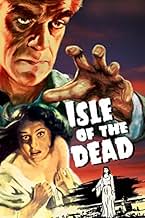
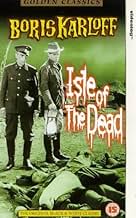
Sur une île grecque pendant la guerre de 1912, plusieurs personnes sont en quarantaine pour la peste. Une vieille paysanne superstitieuse soupçonne une jeune fille d'être une sorte de démon ... Tout lireSur une île grecque pendant la guerre de 1912, plusieurs personnes sont en quarantaine pour la peste. Une vieille paysanne superstitieuse soupçonne une jeune fille d'être une sorte de démon vampirique appelé vorvolaka.Sur une île grecque pendant la guerre de 1912, plusieurs personnes sont en quarantaine pour la peste. Une vieille paysanne superstitieuse soupçonne une jeune fille d'être une sorte de démon vampirique appelé vorvolaka.
- Réalisation
- Scénaristes
- Vedettes
- Prix
- 2 nominations au total


Jason Robards Sr.
- Albrecht
- (as Jason Robards)

Ernst Deutsch
- Dr. Drossos
- (as Ernst Dorian)
Sherry Hall
- Col. Kobestes
- (uncredited)
Erick Hanson
- Officer
- (uncredited)

Rose Hobart
- Mrs. Mary St. Aubyn (in long shot)
- (uncredited)

Skelton Knaggs
- Andrew Robbins
- (uncredited)
6,55.7K
1
2
3
4
5
6
7
8
9
10
Avis en vedette
Tense psychological thriller but not really a horror film...
... probably not even for 1945.
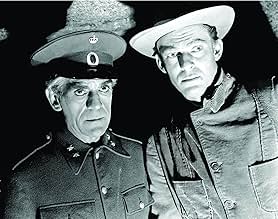
Gen. Nikolas Pherides (Boris Karloff) has just successfully beat back invading troops in 1912 Greece. He is conversing with American war correspondent Oliver Davis about his philosophy of war, when Davis says he is going over to the small island near the battlefield to look around. The general mentions his wife is buried there and says that he will go over with him to visit her grave. When they get there they find the grave has been robbed.
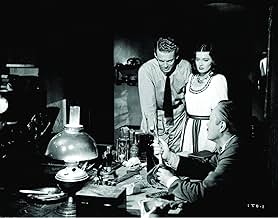
They come across the home of retired Swiss archeologist Dr. Aubrecht (Jason Robards, Sr.), his Greek housekeeper Madame Kyra, British diplomat Mr. St. Aubyn (Alan Napier) and his pale and sickly wife, her youthful Greek companion Thea, and English tinsmith Andrew Robbins. Aubrecht explains that the graves were robbed by locals years ago, searching for antiquities. The general and Davis spend the night there, but the next morning the tinsmith is found dead of the plague. This means they must all stay on the island until the winds change and the disease - always fatal -runs its course among them.
What follows is a psychological thriller that gets a bit too chatty and claustrophobic for my taste, but it has its good points. The main focus is the general, and how his desire to protect through strict control, which works well in the aggregate when he is commanding troops, turns malignant and to madness when his normally logical mind is peppered with thoughts of a vorvolaka - a type of vampire - by the superstitious and rather malicious servant Madame Kyra. Kyra insinuates Thea is the vorvolaka and that she's the reason that Mrs. St. Aubyn's health is slowly fading. The general's imagination does the rest.
Gen. Nikolas Pherides (Boris Karloff) has just successfully beat back invading troops in 1912 Greece. He is conversing with American war correspondent Oliver Davis about his philosophy of war, when Davis says he is going over to the small island near the battlefield to look around. The general mentions his wife is buried there and says that he will go over with him to visit her grave. When they get there they find the grave has been robbed.
They come across the home of retired Swiss archeologist Dr. Aubrecht (Jason Robards, Sr.), his Greek housekeeper Madame Kyra, British diplomat Mr. St. Aubyn (Alan Napier) and his pale and sickly wife, her youthful Greek companion Thea, and English tinsmith Andrew Robbins. Aubrecht explains that the graves were robbed by locals years ago, searching for antiquities. The general and Davis spend the night there, but the next morning the tinsmith is found dead of the plague. This means they must all stay on the island until the winds change and the disease - always fatal -runs its course among them.
What follows is a psychological thriller that gets a bit too chatty and claustrophobic for my taste, but it has its good points. The main focus is the general, and how his desire to protect through strict control, which works well in the aggregate when he is commanding troops, turns malignant and to madness when his normally logical mind is peppered with thoughts of a vorvolaka - a type of vampire - by the superstitious and rather malicious servant Madame Kyra. Kyra insinuates Thea is the vorvolaka and that she's the reason that Mrs. St. Aubyn's health is slowly fading. The general's imagination does the rest.
A Vorvola?
I'm still not quite sure what I saw in Isle of the Dead. I do know it succeeded in giving me the willies.
Several people gather on Greek Island during the Balkan Wars when a type of plague strikes and folks die one by one. One old peasant woman, Helene Thimig suspects young and pretty Ellen Drew of being a monster called a Vorvola which was part of the old Greek religion of Zeus and the rest of the folks from Olympus. The problem is that she gets old Greek general Boris Karloff, a brooding and suspicious man to start with, believing it as well.
Imagine Agatha Christie's And Then There Were None laced with the atmosphere of a horror film and you've got Isle of the Dead. At the end of the film you're not even sure what's happened, but the mood created in you by producer Val Lewton will linger on.
I'm not sure what a guy like Val Lewton would have done with a big budget in a studio like MGM or Paramount. Those recycled RKO sets with the proper sinister lighting were a signature with him.
So was there a Vorvola? Watch and judge for yourself.
Several people gather on Greek Island during the Balkan Wars when a type of plague strikes and folks die one by one. One old peasant woman, Helene Thimig suspects young and pretty Ellen Drew of being a monster called a Vorvola which was part of the old Greek religion of Zeus and the rest of the folks from Olympus. The problem is that she gets old Greek general Boris Karloff, a brooding and suspicious man to start with, believing it as well.
Imagine Agatha Christie's And Then There Were None laced with the atmosphere of a horror film and you've got Isle of the Dead. At the end of the film you're not even sure what's happened, but the mood created in you by producer Val Lewton will linger on.
I'm not sure what a guy like Val Lewton would have done with a big budget in a studio like MGM or Paramount. Those recycled RKO sets with the proper sinister lighting were a signature with him.
So was there a Vorvola? Watch and judge for yourself.
Under-appreciated gem
Wonderfully atmospheric film with a unique sense of place and well-drawn characters. Karloff's performance here is excellent, yet very different from his work in other films. You may be disappointed if you go in expecting something like his horror classics for Universal. This one is suggestive rather than shocking, and I'd recommend it to anyone who likes the subtle horrors of Cat People, The Innocents, or even Rosemary's Baby. Because of its literate script and interesting character development, Isle of the Dead may also appeal to others who don't usually like horror.
My favourite Val Lewton film
When searching and looking up movies on the IMDb I'll often come across movies and think to myself that 'this one should be a little bit higher,' or 'that one should be a little bit lower' -- generally speaking I'm pretty comfortable with the ratings that I see. Every now and then though I find a rating that just absolutely mystifies me. Did the people who voted watch the same movie that I did? The number is an extreme from where I think the film actually belongs. For me, Val Lewton's 'Isle of the Dead' is one of those films. It currently has a rating of 6.4 and when I saw that I was stunned to say the very least.
I first saw this movie on late night BBC (I was living in England at the time) a couple of years ago. It has stayed with me ever since. I love old movies and horror movies are one of the kinds of film that I actively seek out and watch. 'Isle of the Dead' had a lot of competition if it wanted to have any lasting impact with me. It left a great impression and is the reason that years later I've sought out the rest of Val Lewton's work. 'Isle of the Dead' remains my favourite and I truly hope that people will give it another look.
Let me start with the setting. When I originally watched it I thought it was so fresh and original to set a horror film during the Balkan's war in 1912. I can't think of any other films that have done that before or since. You get a very morbid opening scene that reveals a great deal about Karloff's character. He doesn't instruct a sub-ordinate to commit suicide, but he publicly humiliates them and pushes a revolver towards them after making it quite clear that their military career is over. He has an extreme sense of duty, justice and obligation. Fail, in his eyes, and you'll pay a deep price. He's also very protective in his nature -- especially of the men who he commands. He is modern in his approach. Reason and logic are his weapons but superstition and a sense of obligation are his foundation. This is the man who will be trapped and quarantined on an island with a group of travellers and strangers while a plague, or something more sinister, slowly kills each of them off.
The movie is extremely claustrophobic and very well done. They can see the mainland but can't go to it. They are trapped in their own rooms -- alone -- or in the house with the other quarantees. The doctor will try to save them. Science, reason and logic -- the General's core -- will protect them. But when that core begins to fail, he is influenced by superstition, folklore and hysteria ... and acts accordingly. It is a terrific part for Karloff and the General is a great character study. The psychological depth is wonderful. There MUST be a rational explanation for the deaths. They try, and fail, to fight plague-like symptoms by using plague preventative techniques. He is so wedded to finding rational solutions that when confronted with their failure, paradoxically, he decides that the rational solution must be supernatural agents at work.
'Willing Suspension of Disbelief,' seems to be an unfamiliar concept for some of the film's naysayers. The film is unbelievable because people from different countries appear to be able to converse -- without difficulty -- in one language. It is in Greece and the only non-Greek characters are a British diplomat and his wife (may we presume that being a diplomat to Greece, knowledge of how to speak it MIGHT be advantageous?) an American reporter covering the war and a Greek general (since he doesn't have an interpreter, MIGHT he not have some knowledge of the language?), an ex-pat archaeologist who has been there for over a decade (he's probably had NO opportunity to pick up ANY of the language then, eh?) and a travelling student who is eager to return home (that classical education of Greek likely being of no use to him). People don't like the costuming either -- Karloff's wig being such a distraction that it makes the film unenjoyable for them. I really have no way of responding to what seems like an infinitesimally small and nit-picky criticism. The core of the story is whether or not as a horror film and a character study it successfully builds tension and depth from beginning to end. Do consequences of actions have meaning? The tension is high from the opening scene and the stakes only get higher through the film until the final bloody conclusion. The scares are fantastic -- particularly one in the shadows and who comes out of them. There is a tremendous scene with a coffin that is the very height of anxiety, despair and cinematic tension. Is that scene predictable? OF COURSE it is! That's what makes it's eventual occurrence so intense! It is a huge pay-off that is advertised with great skill and execution. This is one of the best films that Mark Robson ever directed and I think he graduated to A-list director largely because of it.
'Isle of the Dead' is under-watched, under-rated, and a gem of cinema intense in it's own beauty. It might be my favourite horror film of the 1940's through 50's.
I first saw this movie on late night BBC (I was living in England at the time) a couple of years ago. It has stayed with me ever since. I love old movies and horror movies are one of the kinds of film that I actively seek out and watch. 'Isle of the Dead' had a lot of competition if it wanted to have any lasting impact with me. It left a great impression and is the reason that years later I've sought out the rest of Val Lewton's work. 'Isle of the Dead' remains my favourite and I truly hope that people will give it another look.
Let me start with the setting. When I originally watched it I thought it was so fresh and original to set a horror film during the Balkan's war in 1912. I can't think of any other films that have done that before or since. You get a very morbid opening scene that reveals a great deal about Karloff's character. He doesn't instruct a sub-ordinate to commit suicide, but he publicly humiliates them and pushes a revolver towards them after making it quite clear that their military career is over. He has an extreme sense of duty, justice and obligation. Fail, in his eyes, and you'll pay a deep price. He's also very protective in his nature -- especially of the men who he commands. He is modern in his approach. Reason and logic are his weapons but superstition and a sense of obligation are his foundation. This is the man who will be trapped and quarantined on an island with a group of travellers and strangers while a plague, or something more sinister, slowly kills each of them off.
The movie is extremely claustrophobic and very well done. They can see the mainland but can't go to it. They are trapped in their own rooms -- alone -- or in the house with the other quarantees. The doctor will try to save them. Science, reason and logic -- the General's core -- will protect them. But when that core begins to fail, he is influenced by superstition, folklore and hysteria ... and acts accordingly. It is a terrific part for Karloff and the General is a great character study. The psychological depth is wonderful. There MUST be a rational explanation for the deaths. They try, and fail, to fight plague-like symptoms by using plague preventative techniques. He is so wedded to finding rational solutions that when confronted with their failure, paradoxically, he decides that the rational solution must be supernatural agents at work.
'Willing Suspension of Disbelief,' seems to be an unfamiliar concept for some of the film's naysayers. The film is unbelievable because people from different countries appear to be able to converse -- without difficulty -- in one language. It is in Greece and the only non-Greek characters are a British diplomat and his wife (may we presume that being a diplomat to Greece, knowledge of how to speak it MIGHT be advantageous?) an American reporter covering the war and a Greek general (since he doesn't have an interpreter, MIGHT he not have some knowledge of the language?), an ex-pat archaeologist who has been there for over a decade (he's probably had NO opportunity to pick up ANY of the language then, eh?) and a travelling student who is eager to return home (that classical education of Greek likely being of no use to him). People don't like the costuming either -- Karloff's wig being such a distraction that it makes the film unenjoyable for them. I really have no way of responding to what seems like an infinitesimally small and nit-picky criticism. The core of the story is whether or not as a horror film and a character study it successfully builds tension and depth from beginning to end. Do consequences of actions have meaning? The tension is high from the opening scene and the stakes only get higher through the film until the final bloody conclusion. The scares are fantastic -- particularly one in the shadows and who comes out of them. There is a tremendous scene with a coffin that is the very height of anxiety, despair and cinematic tension. Is that scene predictable? OF COURSE it is! That's what makes it's eventual occurrence so intense! It is a huge pay-off that is advertised with great skill and execution. This is one of the best films that Mark Robson ever directed and I think he graduated to A-list director largely because of it.
'Isle of the Dead' is under-watched, under-rated, and a gem of cinema intense in it's own beauty. It might be my favourite horror film of the 1940's through 50's.
Superstition and Death
In 1912, during the First Balkan War, the cruel, heartless and superstitious Greek General Nikolas Pherides (Boris Karloff) rows a boat to a small island with the American Boston Star journalist Oliver Davis (Marc Cramer) to visit his wife's grave. They find it destroyed and the body missing and they overhear a woman singing. Soon they learn that the archaeologist Albrecht (Jason Robards Sr.) lives in the island with his servant Madame Kyra (Helene Thimig) and is welcoming his friends St. Aubyn (Alan Napier), his wife Mrs. Mary St. Aubyn (Katherine Emery) and their servant Thea (Ellen Drew); and Andrew Robbins (Skelton Knaggs).
Albrecht invites General Pherides and Oliver to spend the night with them but during the night, Andrew dies. General Pherides summons Dr. Drossos (Ernst Dorian) that informs that Andrew died of pestilence and advises that they have to stay quarantined in the spot for the plague until the warm and dry Sirocco wind blows in the island. Otherwise it might happen an outbreak in the continent. The superstitious Kyra convinces General Pherides that Thea is the evil demon Vorvolaka and Mrs. St. Aubyn and Oliver need to protect her against the ignorance.
"Isle of the Dead" is a dramatic horror movie about superstition and death. The claustrophobic story is very well developed, with a beautiful black and white cinematography, excellent camera work and great performance of Boris Karloff and Ellen Drew. The climax with the reappearance of the deranged Mrs. St. Aubyn is creepy and ambiguous. My vote is seven.
Title (Brazil): "A Ilha dos Mortos" ("The Isle of the Dead")
Albrecht invites General Pherides and Oliver to spend the night with them but during the night, Andrew dies. General Pherides summons Dr. Drossos (Ernst Dorian) that informs that Andrew died of pestilence and advises that they have to stay quarantined in the spot for the plague until the warm and dry Sirocco wind blows in the island. Otherwise it might happen an outbreak in the continent. The superstitious Kyra convinces General Pherides that Thea is the evil demon Vorvolaka and Mrs. St. Aubyn and Oliver need to protect her against the ignorance.
"Isle of the Dead" is a dramatic horror movie about superstition and death. The claustrophobic story is very well developed, with a beautiful black and white cinematography, excellent camera work and great performance of Boris Karloff and Ellen Drew. The climax with the reappearance of the deranged Mrs. St. Aubyn is creepy and ambiguous. My vote is seven.
Title (Brazil): "A Ilha dos Mortos" ("The Isle of the Dead")


Le saviez-vous
- AnecdotesThe war mentioned in the film is the First Balkan War of 1912-13. Greece, Bulgaria, Serbia and Montenegro fought against the declining Ottoman Empire.
- GaffesAlbrecht refers to Hermes as the god of medicine. In Greek mythology, Asclepius was the god of medicine. In terms of medical support, Hermes' assistance was sought by runners or any athletes with injuries.
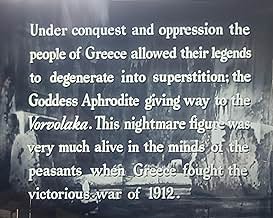
- Générique farfeluIntro: "Under conquest and oppression the people of Greece allowed their legends to degenerate into superstition; the Goddess Aphrodite giving way to the Vorvolaka. This nightmare figure was very much alive in the minds of the peasants when Greece fought the victorious war of 1912."
Meilleurs choix
Connectez-vous pour évaluer et surveiller les recommandations personnalisées
Détails
- Date de sortie
- Pays d’origine
- Langue
- Aussi connu sous le nom de
- La isla de los muertos
- Lieux de tournage
- société de production
- Consultez plus de crédits d'entreprise sur IMDbPro
Box-office
- Budget
- 246 000 $ US (estimation)
- Durée
- 1h 11m(71 min)
- Couleur
- Rapport de forme
- 1.37 : 1
Contribuer à cette page
Suggérer une modification ou ajouter du contenu manquant