ÉVALUATION IMDb
7,7/10
10 k
MA NOTE

Ajouter une intrigue dans votre langueA phonetics and diction expert makes a bet that he can teach a cockney flower girl to speak proper English and pass as a lady in high society.A phonetics and diction expert makes a bet that he can teach a cockney flower girl to speak proper English and pass as a lady in high society.A phonetics and diction expert makes a bet that he can teach a cockney flower girl to speak proper English and pass as a lady in high society.
- Réalisation
- Scénaristes
- Vedettes
- A remporté 1 oscar
- 4 victoires et 5 nominations au total


Leueen MacGrath
- Clara Eynsford Hill
- (as Leueen Macgrath)


Irene Browne
- Duchess
- (as Irene Brown)


Cathleen Nesbitt
- A Lady
- (as Kathleen Nesbitt)

7,710.3K
1
2
3
4
5
6
7
8
9
10
Avis en vedette
10ted puff
One of the greatest of all British films.
Perfect cinema. That was my reaction when I first saw Pygmalion, the first of 50 viewings and counting, and I still think so. Who could not fall in love with Leslie Howard, one of our greatest actors, so tragically assassinated in the Second World War? Wendy Hiller IS Eliza. The cast is flawless. The script... words fail me, for George Bernard Shaw was a genius, he did not simply adapt his play for the screen, it is so good that it is like it's happening before your eyes. My God, after seeing this is there anyone out there who thinks 'My Fair Lady', the slowest film musical on record, is the best screen version of Shaw? If they do, they are mad.
That film moves me not one jot, everything is so clean, so smug, so unreal. Here we see poverty, but also hope. These are not actors and actresses moving through the sets garbed in Cecil Beaton, but real people, real suffering, but humanity lights every scene like a beacon. The unbearably moving scenes of Eliza capturing society at the ball, the irresistible waltz, watch this with no tears in your eyes, I dare you. Halliwells Film Guide calls this 'one of the most heartening and adult British films of the thirties'. Too right. I cannot fault this film, it is priceless. By the way, I saw 'My Fair Lady' on stage recently, and it's miles better than the film version. Warner Bros really let Shaw down, and it's impossible to put it right. But this...well it is a big compensation. And I don't miss the songs one little bit.
There are so many classic scenes I can't pick any out. Of course viewers will spot that it was 'updated' to 1938, and the original play set in the Edwardians. That doesn't hurt it at all, 'polite' society didn't change much in the intervening years and gives the play an added 'contemporary' edge. Please, please, please see this film. You will be gripped.
That film moves me not one jot, everything is so clean, so smug, so unreal. Here we see poverty, but also hope. These are not actors and actresses moving through the sets garbed in Cecil Beaton, but real people, real suffering, but humanity lights every scene like a beacon. The unbearably moving scenes of Eliza capturing society at the ball, the irresistible waltz, watch this with no tears in your eyes, I dare you. Halliwells Film Guide calls this 'one of the most heartening and adult British films of the thirties'. Too right. I cannot fault this film, it is priceless. By the way, I saw 'My Fair Lady' on stage recently, and it's miles better than the film version. Warner Bros really let Shaw down, and it's impossible to put it right. But this...well it is a big compensation. And I don't miss the songs one little bit.
There are so many classic scenes I can't pick any out. Of course viewers will spot that it was 'updated' to 1938, and the original play set in the Edwardians. That doesn't hurt it at all, 'polite' society didn't change much in the intervening years and gives the play an added 'contemporary' edge. Please, please, please see this film. You will be gripped.
Shaw's One Academy Award
George Bernard Shaw was very wary about allowing his movies to be filmed. He had seen movies by other famous writers and dramatists thoroughly rewritten for the screen, and thoroughly wrecked as a result. So the greatest English speaking dramatist of the 20th Century held off from any involvement with motion pictures into the 1930s. Then he met Gabriel Pascal. Mr. Pascal was thoroughly honest. He admitted he did not have a cent to his name, but he also admitted a desire to produce all of Shaw's major plays as movies exactly as Shaw wanted them shown. Shaw was impressed and made an agreement giving Pascal a monopoly on all his plays for movie making. In return, Shaw was to be involved in the productions.
It turned out to be a remarkably small but fruitful partnership. Of the over fifty plays of Shaw's output (not to mention several novels), only four were produced by Pascal. They are PYGMALION (1938), MAJOR BARBARA (1940), CAESAR AND CLEOPATRA (1945), and ANDROCLES AND THE LION (1952). They are all good films, and the first three have reason to be considered great. Shaw died in 1950, so he was not there to see (after Pascal's death) the decline in standards of films based on his plays - such as Otto Preminger's brave attempt at ST. JOAN, and the wretched THE MILLIONAIRESS with Peter Sellers and Sophia Loren.
PYGMALION was a good choice for the first of the series, probably as it was the most popular comedy by Shaw. It was also one of the most controversial plays because of the problem that bedeviled the original production of 1914 and has effected it ever since: how is it supposed to end? Will Higgins and Eliza put aside their differences and admit they love each other and come together at the end?
Shaw clearly felt that Pygmalion Higgins and Galatea Doolittle were doomed not to end in an embrace. He wanted the audience to be left thinking of Eliza as one of the 20th Century's "New Women", who is independent and strong, not just a piece of weak clay to be kneaded by an artistic and overpowering male ego. In the dialog (which he uses in the play and in the movie script) Shaw insisted that Eliza favors Freddy Eynesford-Hill over Higgins because Freddy is a weakling. All her life she has been dominated by strong men (first her father Alfred, then Higgins, and (although he is kinder) Col. Pickering). Freddy is the first one to show his need for guidance and help - he is shown at the beginning of the play as little better than a servant for his mother and sister, getting them a cab in the rain.
But Shaw did not have an easy time with this view. The play was produced by Sir Herbert Beerbohm Tree, one of England's leading stars of the Edwardian and Georgian stage (he was brother of critic and writer Sir Max Beerbohm, and his son David Tree plays Freddy in this film version). Beerbohm Tree felt that there was a real romance between Higgins and Doolittle, and insisted on playing it like that, to the point of throwing a bouquet of flowers to Eliza as she is leaving. Shaw was furious at this, and wrote a seven page afterword which (mercifully) is never read at productions. I saw Peter O'Toole as Higgins in 1988, with Amanda Plummer as Eliza, Lionel Jeffries as Pickering, and the late Sir John Mills as Alfred Doolittle, and the play ended on the right note of uncertainty wanted. It did not have a thin, bearded actor as Shaw coming out to read the afterward.
In this afterward, Shaw said that Eliza learns from the brutal Higgins he is a confirmed bachelor devoted to his mother (an interesting psychological point there that another play could have been built from). She does marry Freddy, and (as Higgins had sneered) things are tough - though not due to Freddy being unfaithful but that he is not very sharp. But Col. Pickering helps them set up a florist business, and after awhile it prospers. Clara Eynesford-Hill (whose character is barely developed in the play or on the screen) does become a friend of the socialist and novelist H.G.Wells. Alfred Doolittle, after getting speech lessons from Higgins, becomes a popular speaker and writer on social issues. As you can see, Shaw's anger got the better of him.
Shaw was convinced by Pascal (for business reasons) to soften the conclusion, by showing Eliza fleeing Higgins in Freddy's car, Higgins walking alone through London to his home, slamming the door of his study, causing the phonograph to go on, playing a record of Eliza's old voice talking. As he sits with head in his hands, Eliza shows up at the door, turns off the machine, and starts talking as on the record. But Higgins realizes it is her, although he does not turn around. He sits back with a happy, if smug expression on his face, pulls his hat down over his eyes, and says (shot from his back to Eliza), "Where the devil are my slippers, Eliza?" It is suggestive of a meeting of two souls, but it leaves it still in the air. It is superior to that idiotic afterward.
George Bernard Shaw won his only Oscar for a screenplay for PYGMALION. It is a brilliant play and script, given top notched direction by Anthony Asquith and Leslie Howard, with Howard giving one of his three top performances in it as Higgins - ably matched by Wendy Hiller as Eliza and Wilfred Lawson as Doolittle. And it's conclusion was so good, it was kept by Learner and Lowe for MY FAIR LADY on stage and screen.
It turned out to be a remarkably small but fruitful partnership. Of the over fifty plays of Shaw's output (not to mention several novels), only four were produced by Pascal. They are PYGMALION (1938), MAJOR BARBARA (1940), CAESAR AND CLEOPATRA (1945), and ANDROCLES AND THE LION (1952). They are all good films, and the first three have reason to be considered great. Shaw died in 1950, so he was not there to see (after Pascal's death) the decline in standards of films based on his plays - such as Otto Preminger's brave attempt at ST. JOAN, and the wretched THE MILLIONAIRESS with Peter Sellers and Sophia Loren.
PYGMALION was a good choice for the first of the series, probably as it was the most popular comedy by Shaw. It was also one of the most controversial plays because of the problem that bedeviled the original production of 1914 and has effected it ever since: how is it supposed to end? Will Higgins and Eliza put aside their differences and admit they love each other and come together at the end?
Shaw clearly felt that Pygmalion Higgins and Galatea Doolittle were doomed not to end in an embrace. He wanted the audience to be left thinking of Eliza as one of the 20th Century's "New Women", who is independent and strong, not just a piece of weak clay to be kneaded by an artistic and overpowering male ego. In the dialog (which he uses in the play and in the movie script) Shaw insisted that Eliza favors Freddy Eynesford-Hill over Higgins because Freddy is a weakling. All her life she has been dominated by strong men (first her father Alfred, then Higgins, and (although he is kinder) Col. Pickering). Freddy is the first one to show his need for guidance and help - he is shown at the beginning of the play as little better than a servant for his mother and sister, getting them a cab in the rain.
But Shaw did not have an easy time with this view. The play was produced by Sir Herbert Beerbohm Tree, one of England's leading stars of the Edwardian and Georgian stage (he was brother of critic and writer Sir Max Beerbohm, and his son David Tree plays Freddy in this film version). Beerbohm Tree felt that there was a real romance between Higgins and Doolittle, and insisted on playing it like that, to the point of throwing a bouquet of flowers to Eliza as she is leaving. Shaw was furious at this, and wrote a seven page afterword which (mercifully) is never read at productions. I saw Peter O'Toole as Higgins in 1988, with Amanda Plummer as Eliza, Lionel Jeffries as Pickering, and the late Sir John Mills as Alfred Doolittle, and the play ended on the right note of uncertainty wanted. It did not have a thin, bearded actor as Shaw coming out to read the afterward.
In this afterward, Shaw said that Eliza learns from the brutal Higgins he is a confirmed bachelor devoted to his mother (an interesting psychological point there that another play could have been built from). She does marry Freddy, and (as Higgins had sneered) things are tough - though not due to Freddy being unfaithful but that he is not very sharp. But Col. Pickering helps them set up a florist business, and after awhile it prospers. Clara Eynesford-Hill (whose character is barely developed in the play or on the screen) does become a friend of the socialist and novelist H.G.Wells. Alfred Doolittle, after getting speech lessons from Higgins, becomes a popular speaker and writer on social issues. As you can see, Shaw's anger got the better of him.
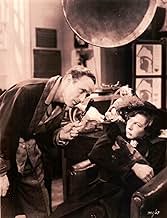
Shaw was convinced by Pascal (for business reasons) to soften the conclusion, by showing Eliza fleeing Higgins in Freddy's car, Higgins walking alone through London to his home, slamming the door of his study, causing the phonograph to go on, playing a record of Eliza's old voice talking. As he sits with head in his hands, Eliza shows up at the door, turns off the machine, and starts talking as on the record. But Higgins realizes it is her, although he does not turn around. He sits back with a happy, if smug expression on his face, pulls his hat down over his eyes, and says (shot from his back to Eliza), "Where the devil are my slippers, Eliza?" It is suggestive of a meeting of two souls, but it leaves it still in the air. It is superior to that idiotic afterward.
George Bernard Shaw won his only Oscar for a screenplay for PYGMALION. It is a brilliant play and script, given top notched direction by Anthony Asquith and Leslie Howard, with Howard giving one of his three top performances in it as Higgins - ably matched by Wendy Hiller as Eliza and Wilfred Lawson as Doolittle. And it's conclusion was so good, it was kept by Learner and Lowe for MY FAIR LADY on stage and screen.
Good, and definitely not My Fair Lady
After seeing Leslie Howard as Henry Higgins, there is no way I could find Rex Harrison half as appealing, with his chanting/singing, in My Fair Lady. Leslie Howard simply is Henry Higgins, and if he seems unappealing and unlikable, that's because he's supposed to be unappealing and unlikable -- Henry Higgins is not a nice man. Howard does an incredible job with the role, and Wendy Hiller's Eliza puts Audrey Hepburn, as lovely as she is, to shame.
If George Bernard Shaw thought that Howard's interpretation of his play was good, then who are we to argue?
If George Bernard Shaw thought that Howard's interpretation of his play was good, then who are we to argue?
Leslie Howard
I think that Leslie Howard is one of the most wonderful, spectacular actors that ever lived. He is positively great in this movie, and he won lots of recognition and awards for this role and ultimately carries the whole movie. He is a wonderful actor that will live in my heart forever!
Laura
Laura
By George, they got it the first time...
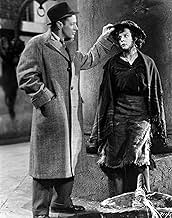
George Bernard Shaw wrote the play "Pygmalion" in 1912 and 1913 as part-social protest, part-satire, part-comedy of manners. Its central character, Henry Higgins, a London teacher of elocution and expert in regional phonetics, makes a small wager with his friend and colleague, Colonel George Pickering, that he can take a waif from the streets, one Eliza Doolittle, and pass her off as the cream of the social crop. Using a pedagogical technique consisting mostly of inhumane badgering and humiliation, he manages to pull off the feat with unexpected success – but at an emotional cost he does not foresee.
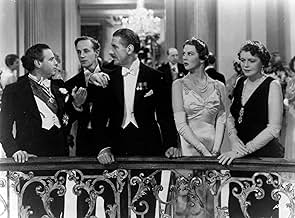
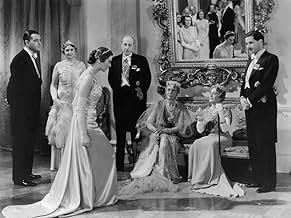
Besides the inventive montages illustrating Higgins' transformation of Eliza from Cockney flower-girl to the statuesque, gowned beauty who's mistaken for a royal princess at a diplomatic reception, there are additional items that failed to materialize in Shaw's original – the use of the phrases, "The rain in Spain stays mainly in the plains" and "Hurricanes hardly happen in Hartford, Hereford, and Hampshire," both of which later became lyrics for Lerner and Lowe's musical version. And in the play, Higgins's irritating Hungarian nemesis is not given a name; here, for the first time, he is dubbed "Kaparthy."
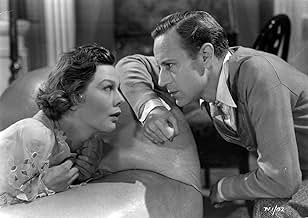
Leslie Howard, who co-directed this 1938 film, impersonates Higgins as hard-core realist - diabolical, profane, impatient, sometimes maddening. And as Eliza, Wendy Hiller has her coy moments, particularly when she is "tried out" at a tea party given by Higgins's mother. Her carefully high-toned enunciation of "the new slang" is timed to perfection.
The film, unfortunately, leaves one with the feeling that at the story's conclusion - with Higgins quietly demanding to know from Eliza the whereabouts of his slippers - both student and mentor "live happily ever after." This contrived ending must have been a compromise on the part of the producer, Gabriel Pascal, although one finds it mystifying that Shaw, who is credited with the story's adaptation, would have ever endorsed such a sentimental ending. For as Shaw had written at the end of his play over two decades earlier, "the rest of the story need not be shown...if our imaginations were not so enfeebled by their lazy dependence on the...reach-me-downs of the rag shop in which Romance keeps its stock of happy endings..." The playwright then proceeded into seven pages of prose, describing an epilogue in which Eliza married the worshipful young suitor, Freddy Eynsford-Hill, and the generous Colonel Pickering set up the newlyweds in their own business near Victoria Station. As for any relationship between Higgins and Eliza, according to Shaw, "(to this day) he storms and bullies and derides; but she stands up to him so ruthlessly that the Colonel has to ask her from time to time to be kinder to Higgins." As is the aftermath of most good stories, the worm indeed did turn.
With Wilfrid Lawson as Eliza's father, Alfred; Scott Sunderland as Pickering; and David Tree impersonates the shallow but inoffensive Freddy in high style. (He would do the same with the role of Charles Lomax three years later in "Major Barbara.") If the American schleps and male-pushovers that Ralph Bellamy used to play in "The Awful Truth" and "His Girl Friday" ever had a British cousin, David Tree was it; he did the upper-class twit better than anyone.
Besides the inventive montages illustrating Higgins' transformation of Eliza from Cockney flower-girl to the statuesque, gowned beauty who's mistaken for a royal princess at a diplomatic reception, there are additional items that failed to materialize in Shaw's original – the use of the phrases, "The rain in Spain stays mainly in the plains" and "Hurricanes hardly happen in Hartford, Hereford, and Hampshire," both of which later became lyrics for Lerner and Lowe's musical version. And in the play, Higgins's irritating Hungarian nemesis is not given a name; here, for the first time, he is dubbed "Kaparthy."
Leslie Howard, who co-directed this 1938 film, impersonates Higgins as hard-core realist - diabolical, profane, impatient, sometimes maddening. And as Eliza, Wendy Hiller has her coy moments, particularly when she is "tried out" at a tea party given by Higgins's mother. Her carefully high-toned enunciation of "the new slang" is timed to perfection.
The film, unfortunately, leaves one with the feeling that at the story's conclusion - with Higgins quietly demanding to know from Eliza the whereabouts of his slippers - both student and mentor "live happily ever after." This contrived ending must have been a compromise on the part of the producer, Gabriel Pascal, although one finds it mystifying that Shaw, who is credited with the story's adaptation, would have ever endorsed such a sentimental ending. For as Shaw had written at the end of his play over two decades earlier, "the rest of the story need not be shown...if our imaginations were not so enfeebled by their lazy dependence on the...reach-me-downs of the rag shop in which Romance keeps its stock of happy endings..." The playwright then proceeded into seven pages of prose, describing an epilogue in which Eliza married the worshipful young suitor, Freddy Eynsford-Hill, and the generous Colonel Pickering set up the newlyweds in their own business near Victoria Station. As for any relationship between Higgins and Eliza, according to Shaw, "(to this day) he storms and bullies and derides; but she stands up to him so ruthlessly that the Colonel has to ask her from time to time to be kinder to Higgins." As is the aftermath of most good stories, the worm indeed did turn.
With Wilfrid Lawson as Eliza's father, Alfred; Scott Sunderland as Pickering; and David Tree impersonates the shallow but inoffensive Freddy in high style. (He would do the same with the role of Charles Lomax three years later in "Major Barbara.") If the American schleps and male-pushovers that Ralph Bellamy used to play in "The Awful Truth" and "His Girl Friday" ever had a British cousin, David Tree was it; he did the upper-class twit better than anyone.


Le saviez-vous
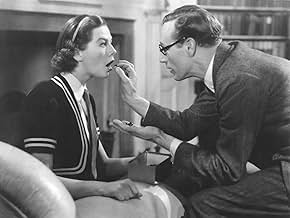
- AnecdotesThe scene in which Eliza accidentally swallows a marble while having an elocution lesson does not appear in the original play. During rehearsals for this scene, a pained expression came over Wendy Hiller's face. When she spat out the marbles she had in her mouth, she said, "Leslie, I've swallowed one!" to which Leslie Howard replied, "Never mind, there are plenty more." This caused such amusement among the watching crew that it was added to the movie and to its musical version, My Fair Lady (1964).
- GaffesAfter the ball when Mrs. Pearce serves Professor Higgins his tea, the shadow of the camera can be seen in the bottom left, moving back across his blanket.
- Citations
Eliza Doolittle: Walk? Not bloody likely. I'm going in a taxi.
- Générique farfeluOpening credits prologue: PYGMALION WAS A MYTHOLOGICAL CHARACTER WHO DABBLED IN SCULPTURE. HE MADE A STATUE OF HIS IDEAL WOMAN-GALATEA. IT WAS SO BEAUTIFUL THAT HE PRAYED THE GODS TO GIVE IT LIFE. HIS WISH WAS GRANTED.
BERNARD SHAW IN HIS FAMOUS PLAY GIVES A MODERN INTERPRETATION OF THIS THEME.
- Autres versionsThis film was made a year before the Hays Office gave Clark Gable permission to say "Frankly, my dear, I don't give a damn", so while in the British prints of this film Leslie Howard often utters the word, in the American prints the word "damn" is replaced by either "hang" or "confounded".
- ConnexionsFeatured in Metro-Goldwyn-Mayer's Big Parade of Hits for 1940 (1940)
Meilleurs choix
Connectez-vous pour évaluer et surveiller les recommandations personnalisées
- How long is Pygmalion?Propulsé par Alexa
Détails
- Date de sortie
- Pays d’origine
- Langue
- Aussi connu sous le nom de
- Pigmalion
- Lieux de tournage
- Pinewood Studios, Iver Heath, Buckinghamshire, Angleterre, Royaume-Uni(studio: made at Pinewood Studios England)
- société de production
- Consultez plus de crédits d'entreprise sur IMDbPro
Box-office
- Budget
- 87 000 £ (estimation)
- Durée
- 1h 36m(96 min)
- Couleur
- Rapport de forme
- 1.37 : 1
Contribuer à cette page
Suggérer une modification ou ajouter du contenu manquant