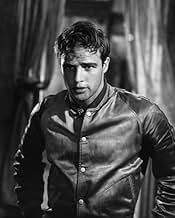
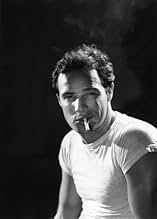
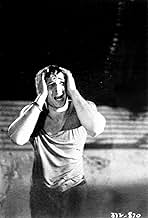
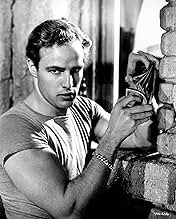
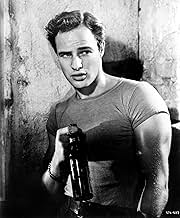
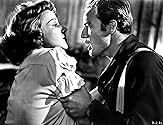
Blanche DuBois, psychologiquement fragile, emménage chez sa soeur à La Nouvelle-Orléans et est tourmentée par son beau-frère brutal alors que tout s'effondre autour d'elle.Blanche DuBois, psychologiquement fragile, emménage chez sa soeur à La Nouvelle-Orléans et est tourmentée par son beau-frère brutal alors que tout s'effondre autour d'elle.Blanche DuBois, psychologiquement fragile, emménage chez sa soeur à La Nouvelle-Orléans et est tourmentée par son beau-frère brutal alors que tout s'effondre autour d'elle.
- Réalisation
- Scénaristes
- Vedettes
- A remporté 4 oscars
- 22 victoires et 15 nominations au total
James Adamson
- Extra
- (uncredited)
Irene Allen
- Extra
- (uncredited)
Mel Archer
- Foreman
- (uncredited)
Walter Bacon
- Club Patron
- (uncredited)
Dahn Ben Amotz
- Minor Role
- (uncredited)
7,9118.9K
1
2
3
4
5
6
7
8
9
10
Avis en vedette
Love the Movie, Not the Characters
The performances in this movie are so awesome they make you forget how reprehensible most of the characters are. And the fact that Brando didn't win the best actor award is mind blowing (he lost to Borgart in The African Queen)
This is a Tennessee Williams script so you know there will be plenty of drinking and drama and destitution. And awesome lines like "you can't describe someone you're in love with" and "funerals are pretty compared to deaths" and of course "I don't want realism. I want magic!"
Brando's Stanley Kowlaski is the alpha of this story. He is the loud, abusive, good-looking über-male whose wife is seemingly turned on by his apathy and even abuse. And the fact that Vivien Leigh's Blanche is also aroused by Stanley's persona only emboldens his behavior. I'm torn by situations like this because I've always believed men who physically abuse women are horrible. But women who forgive those men also enable them. And that's the challenge I have with these situations whether they are in real life or in the arts. Who am I to condemn a guy for smacking his woman around when she is so quick to forgive?
This is the original film version of this story and I think it's better than any of the remakes. I don't like Stanley Kowlaski but I love how Marlon Brando plays him. And again, he was robbed not getting the Oscar (and I LOVE Humphrey Bogart).
This is a Tennessee Williams script so you know there will be plenty of drinking and drama and destitution. And awesome lines like "you can't describe someone you're in love with" and "funerals are pretty compared to deaths" and of course "I don't want realism. I want magic!"
Brando's Stanley Kowlaski is the alpha of this story. He is the loud, abusive, good-looking über-male whose wife is seemingly turned on by his apathy and even abuse. And the fact that Vivien Leigh's Blanche is also aroused by Stanley's persona only emboldens his behavior. I'm torn by situations like this because I've always believed men who physically abuse women are horrible. But women who forgive those men also enable them. And that's the challenge I have with these situations whether they are in real life or in the arts. Who am I to condemn a guy for smacking his woman around when she is so quick to forgive?
This is the original film version of this story and I think it's better than any of the remakes. I don't like Stanley Kowlaski but I love how Marlon Brando plays him. And again, he was robbed not getting the Oscar (and I LOVE Humphrey Bogart).
Vivien Leigh Gives One of Cinema's Greatest Performances
Tennessee Williams himself wrote of Vivien Leigh"s performance in "Streetcar Named Desire": "She brought everything I intended to the role and even much more than I had dared dream of".
Brando is wonderful as Stanley Kowalski, but the new viewers to the film seem to come away with the haunting greatness of Vivien Leigh in what is one of the most harrowing and shattering pieces of acting ever committed to film.
Although some have expressed regret that Jessica Tandy did not repeat her stage performance, it is probably good to note that her husband Hume Cronyn and Elia Kazan (the director of the film and play) both never felt that Tandy quite got the character right. If you listen to the radio performance of extracted scenes that Tandy gave on the occasion of the Pulitzer Prize award, it will reenforce the perfection of Leigh's inflections and innate understanding of the role. This inner and complete understanding is what Brando praises Leigh for in his autobiography. He agrees that she plays this Hamlet of female roles better than anyone because he felt she was quite like the character...sadly.
If anyone is interested in great acting check out "Streetcar" for Vivien Leigh's Academy Award winning performance. The supporting cast is outstanding from Kim Hunter and Karl Malden (both Oscar winners for the film)to, of course, the iconographic T-shirt-torn Brando.
Brando is wonderful as Stanley Kowalski, but the new viewers to the film seem to come away with the haunting greatness of Vivien Leigh in what is one of the most harrowing and shattering pieces of acting ever committed to film.
Although some have expressed regret that Jessica Tandy did not repeat her stage performance, it is probably good to note that her husband Hume Cronyn and Elia Kazan (the director of the film and play) both never felt that Tandy quite got the character right. If you listen to the radio performance of extracted scenes that Tandy gave on the occasion of the Pulitzer Prize award, it will reenforce the perfection of Leigh's inflections and innate understanding of the role. This inner and complete understanding is what Brando praises Leigh for in his autobiography. He agrees that she plays this Hamlet of female roles better than anyone because he felt she was quite like the character...sadly.
If anyone is interested in great acting check out "Streetcar" for Vivien Leigh's Academy Award winning performance. The supporting cast is outstanding from Kim Hunter and Karl Malden (both Oscar winners for the film)to, of course, the iconographic T-shirt-torn Brando.
10Rathko
Sexy, Brutal, and Endlessly Fascinating
There is little to be said about this movie that thousands of critics have not stated already. It is a magnificent piece of cinema, with an intricate script delivered by actors at the peak of their talents. Leigh is unbearably brittle and fragile and she dances precariously on the edge of sanity. Marlon Brando embodies a sense of brooding masculinity that other men can only dream of attaining, while creating an enduring cinema icon and delivering one of the all-time great movie lines. From the raucous jazz score to the sleazy production design bathed in smoldering grey, 'Streetcar' is a class-act from beginning to end; sexy, brutal, and endlessly fascinating.
10JFHunt
Hey Stella.....STELLA!
I often asked myself this question with mixed responses. Did Brando make Streetcar great? Or was he just great in it?
Vivien Leigh is simply haunting and never not shocking. There is more going on there than just a performance. She appears out of herself and hovering ever so softly above. As for the rumored mental illnesses, I can only speculate. I do know for sure that her visualization of Blanche DuBois is the single best performance by an actress I've seen. Well that might not mean much, but I've seen a lot of movies.
Brando made On the Waterfront a classic, but Leigh made Streetcar unforgettable. I always felt like it was a continuation from her most timeless role as Scarlett O'Hara in Gone with the Wind. Like what would have happened to Scarlett, if she was allowed to grow old. Maybe I'm just crazy. But I think the billing says it all; Vivien Leigh, Marlon Brando, Kim Hunter, Karl Malden. I don't think you could dream up a finer cast. Brando might have been the sexiest thing alive, but it's obvious that Leigh made this film great with some memorable help from some movie icons.
Brando may have sent an Indian to receive his second Oscar, but Leigh used her second as a doorstop to her bathroom.
Vivien Leigh is simply haunting and never not shocking. There is more going on there than just a performance. She appears out of herself and hovering ever so softly above. As for the rumored mental illnesses, I can only speculate. I do know for sure that her visualization of Blanche DuBois is the single best performance by an actress I've seen. Well that might not mean much, but I've seen a lot of movies.
Brando made On the Waterfront a classic, but Leigh made Streetcar unforgettable. I always felt like it was a continuation from her most timeless role as Scarlett O'Hara in Gone with the Wind. Like what would have happened to Scarlett, if she was allowed to grow old. Maybe I'm just crazy. But I think the billing says it all; Vivien Leigh, Marlon Brando, Kim Hunter, Karl Malden. I don't think you could dream up a finer cast. Brando might have been the sexiest thing alive, but it's obvious that Leigh made this film great with some memorable help from some movie icons.
Brando may have sent an Indian to receive his second Oscar, but Leigh used her second as a doorstop to her bathroom.
"Classical" vs. "Method"
Now that this filmization of "Streetcar" is over a half century old, it can be looked at in a more objective manner than that of the early fifties. The "classical/traditional" acting style of Vivien Leigh, which was placed in stark contrast to the rest of the production personnel, continues to hold its own brilliantly.
It's probably hard today for some to imagine the strong opposition Leigh's casting faced back in 1950, when this prim actress from England was chosen (mostly by studio chief Jack Warner) over "method" Broadway actress Jessica Tandy.
A goodly number of cast and production people from the hit play directed by Elia Kazan were engaged by the director for the film version, and they were not at all enthusiastic about risking a "clash" of acting styles in the leading, pivotal role of Blanche. Kazan himself was reportedly very pro-Tandy, and quite disappointed in the studio's decision.
Yet, Warner and his staff felt Tandy wasn't that well known to the general movie going public--especially in contrast to Leigh, whose marquee name was by then almost magical. In recent interviews, Kazan admitted that working with Vivien was "a real challenge."
In looking at the film today, however, it's Leigh who emerges as a genuine "star" of this production. True, her facial expressions, vocal inflections and body gestures may be the result of careful, deliberate planning, but so what? It's also the aspect that commands attention and draws the viewer to her portion of the screen throughout this film.
Her southern accent, so well learned and retained from her work as Scarlett in "GWTW," is convincing and very beautiful to hear. It also fits Blanche perfectly, as does Leigh's stylized "choreography," which was undoubtedly retained from her long-running London stage performance.
Not all the combined, formidable talents of "method" giants as Karl Malden, Kim Hunter, Marlon Brando or Kazan can diminish the hypnotic work of Leigh here. It may not have excited "Gadge" Kazan, but it remains a highlight performance in film history (and impressed the Academy enough to bestow an "Oscar" to Vivien.)
It also didn't hurt to have Alex North's pungent score, which remains this composer's finest hour.
It's probably hard today for some to imagine the strong opposition Leigh's casting faced back in 1950, when this prim actress from England was chosen (mostly by studio chief Jack Warner) over "method" Broadway actress Jessica Tandy.
A goodly number of cast and production people from the hit play directed by Elia Kazan were engaged by the director for the film version, and they were not at all enthusiastic about risking a "clash" of acting styles in the leading, pivotal role of Blanche. Kazan himself was reportedly very pro-Tandy, and quite disappointed in the studio's decision.
Yet, Warner and his staff felt Tandy wasn't that well known to the general movie going public--especially in contrast to Leigh, whose marquee name was by then almost magical. In recent interviews, Kazan admitted that working with Vivien was "a real challenge."
In looking at the film today, however, it's Leigh who emerges as a genuine "star" of this production. True, her facial expressions, vocal inflections and body gestures may be the result of careful, deliberate planning, but so what? It's also the aspect that commands attention and draws the viewer to her portion of the screen throughout this film.
Her southern accent, so well learned and retained from her work as Scarlett in "GWTW," is convincing and very beautiful to hear. It also fits Blanche perfectly, as does Leigh's stylized "choreography," which was undoubtedly retained from her long-running London stage performance.
Not all the combined, formidable talents of "method" giants as Karl Malden, Kim Hunter, Marlon Brando or Kazan can diminish the hypnotic work of Leigh here. It may not have excited "Gadge" Kazan, but it remains a highlight performance in film history (and impressed the Academy enough to bestow an "Oscar" to Vivien.)
It also didn't hurt to have Alex North's pungent score, which remains this composer's finest hour.
Le saviez-vous
- AnecdotesAs the film progresses, the set of the Kowalski apartment actually gets smaller to heighten the suggestion of Blanche's increasing claustrophobia.
- GaffesWhen Stanley is about to give Blanche the birthday "gift" of a ticket back home Marlon Brando opens the wallet to discover that the envelope with the ticket it missing. There is a sharp edit and then the scene continues with the wallet missing from Stanley's hand and replaced with the envelope containing the ticket.
- Autres versionsThe scene in which Blanche and Stanley first meet was edited a bit to take out some of the sexual tension that both had towards each other when the film was first released in 1951. In 1993, this footage was restored in the "Original Director's Version" of the film. The three minutes of newly-added footage sticks out from the rest of the film because Warner Brothers did not bother to restore these extra film elements along with the rest of the movie, leaving them very scratchy due to deterioration.
- ConnexionsEdited into Un Américain nommé Kazan (2018)
- Bandes originalesIt's Only a Paper Moon
(1933) (uncredited)
Music by Harold Arlen
Lyrics by E.Y. Harburg and Billy Rose
Sung by Vivien Leigh while doing her hair
Meilleurs choix
Connectez-vous pour évaluer et surveiller les recommandations personnalisées
Détails
- Date de sortie
- Pays d’origine
- Langues
- Aussi connu sous le nom de
- A Streetcar Named Desire
- Lieux de tournage
- Nouvelle-Orléans, Louisiane, États-Unis(railway station)
- sociétés de production
- Consultez plus de crédits d'entreprise sur IMDbPro
Box-office
- Budget
- 1 800 000 $ US (estimation)
- Brut – à l'échelle mondiale
- 55 437 $ US
- Durée
- 2h 2m(122 min)
- Couleur
- Rapport de forme
- 1.37 : 1
Contribuer à cette page
Suggérer une modification ou ajouter du contenu manquant