ÉVALUATION IMDb
7,8/10
5,2 k
MA NOTE


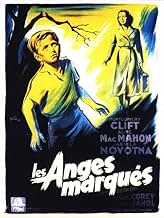
Dans le Berlin d'après-guerre, un soldat américain aide un garçon tchèque perdu à retrouver sa mère.Dans le Berlin d'après-guerre, un soldat américain aide un garçon tchèque perdu à retrouver sa mère.Dans le Berlin d'après-guerre, un soldat américain aide un garçon tchèque perdu à retrouver sa mère.
- Réalisation
- Scénaristes
- Vedettes
- A remporté 1 oscar
- 7 victoires et 7 nominations au total


7,85.2K
1
2
3
4
5
6
7
8
9
10
Avis en vedette
Warning: this fantastic movie will start you bawling!
Aside from some dated music and ponderous narration, this is a nearly perfect film. It's surprising, then, that people rarely talk about this being among Montgoery Clift's best work. I, for one, prefer this over From Here to Eternity, Raintree County or even The Heiress. This is because I rarely have encountered a movie that has so pulled me in emotionally to the story. I'm a guy and I don't just start bawling at everything, but I defy ANY person to watch this film with a dry eye! It just doesn't seem possible.
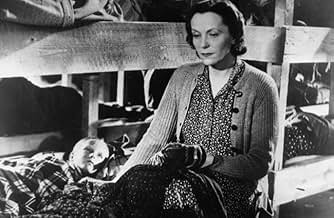
The story is less about G.I. Clift than about a sad but adorable little boy he encounters wandering around in post-war Germany. At first, the boy is wild and doesn't trust anyone, as he and his family had been through the holocaust. Somehow in the concentration camp, he and his mother had become separated and at the end of the war, he had run away from the allied resettlement program because he had a natural fear of ALL soldiers. Despite these tragedies, the boy did not give up hope of one day finding his mother, though Clift plans on taking him back to the States because he knows it is hopeless to go on searching.
You've GOT to see this film! You've GOT to show it to your kids! Although the Diary of Ann Frank and Shindler's List have received a lot of attention, this little film is every bit as poignant and important for understanding the real impact of World War II.
The story is less about G.I. Clift than about a sad but adorable little boy he encounters wandering around in post-war Germany. At first, the boy is wild and doesn't trust anyone, as he and his family had been through the holocaust. Somehow in the concentration camp, he and his mother had become separated and at the end of the war, he had run away from the allied resettlement program because he had a natural fear of ALL soldiers. Despite these tragedies, the boy did not give up hope of one day finding his mother, though Clift plans on taking him back to the States because he knows it is hopeless to go on searching.
You've GOT to see this film! You've GOT to show it to your kids! Although the Diary of Ann Frank and Shindler's List have received a lot of attention, this little film is every bit as poignant and important for understanding the real impact of World War II.
The Littlest Victims of War and Totalitarianism
This film marked the feature film screen debut of Montgomery Clift. It was not meant to be that way. Red River was made first, but held up in release due to a threatened lawsuit. So The Search ended up being the movie going public's first glimpse of Montgomery Clift.
They didn't get to see him until the film was only just about half way finished. The only character who is continuously on screen through out the film is little Ivan Jandl. What a performance too. The worst thing that could have happened to this film is to have some name Hollywood kid actor play that role. Young Ivan comes across as a real kid who went through horrors unimaginable in first world countries today.
Ivan is Czech and his family are singled out by the Nazis and put in Auschwitz. Father and sister are killed, mother and son are separated. The film is their search for each other.
Ivan after V-E Day is in another kind of camp, a refugee camp run by the United Nations Relief and Rehabilitation Agency. He's almost comatose from the shock of four years of horror. To him the men in uniforms are still to be feared even though it's not Nazi uniforms. He makes a break for it and GI Montgomery Clift picks him up and takes him back to his dwelling.
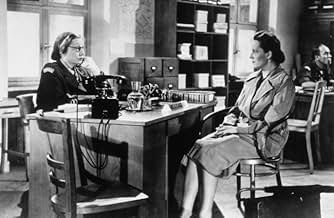
Ivan and Monty kind of grow on each other, but at the same time Ivan's mother played by Czech opera star Jarmila Novotna is pursuing her quest for her little boy. She comes to the UNRRA camp which is headed by Aline McMahon. This may very well be her best screen moment. McMahon also narrates large chunks of the film, describing the enormous task the UNRRA had in reuniting families all over Europe in addition to a whole lot of other things like food, clothing, and shelter.
Clift and Ivan have great chemistry. And no one ever portrayed sensitivity better than Montgomery Clift on the screen. You know how much empathizes with Ivan's plight with every look, every nuance, every gesture. Fred Zinneman got a great performance out of him and later on Zinneman directed Clift in his greatest film role in From Here to Eternity.
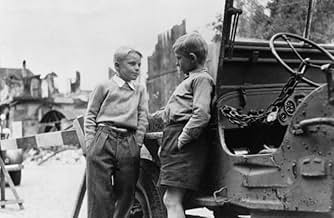
The film was shot in postwar Germany and the landscape itself and the looks of the people tell what they've been through. I wouldn't be surprised but that Clift's performance in The Search later on led him to being cast in The Big Lift, another film set in post World War II Germany.
Probably it was just as well Clift got his first exposure in this film. It guaranteed him co-star status with John Wayne when Red River finally did come out.
The Search 56 years later is a moving movie experience.
They didn't get to see him until the film was only just about half way finished. The only character who is continuously on screen through out the film is little Ivan Jandl. What a performance too. The worst thing that could have happened to this film is to have some name Hollywood kid actor play that role. Young Ivan comes across as a real kid who went through horrors unimaginable in first world countries today.
Ivan is Czech and his family are singled out by the Nazis and put in Auschwitz. Father and sister are killed, mother and son are separated. The film is their search for each other.
Ivan after V-E Day is in another kind of camp, a refugee camp run by the United Nations Relief and Rehabilitation Agency. He's almost comatose from the shock of four years of horror. To him the men in uniforms are still to be feared even though it's not Nazi uniforms. He makes a break for it and GI Montgomery Clift picks him up and takes him back to his dwelling.
Ivan and Monty kind of grow on each other, but at the same time Ivan's mother played by Czech opera star Jarmila Novotna is pursuing her quest for her little boy. She comes to the UNRRA camp which is headed by Aline McMahon. This may very well be her best screen moment. McMahon also narrates large chunks of the film, describing the enormous task the UNRRA had in reuniting families all over Europe in addition to a whole lot of other things like food, clothing, and shelter.
Clift and Ivan have great chemistry. And no one ever portrayed sensitivity better than Montgomery Clift on the screen. You know how much empathizes with Ivan's plight with every look, every nuance, every gesture. Fred Zinneman got a great performance out of him and later on Zinneman directed Clift in his greatest film role in From Here to Eternity.
The film was shot in postwar Germany and the landscape itself and the looks of the people tell what they've been through. I wouldn't be surprised but that Clift's performance in The Search later on led him to being cast in The Big Lift, another film set in post World War II Germany.
Probably it was just as well Clift got his first exposure in this film. It guaranteed him co-star status with John Wayne when Red River finally did come out.
The Search 56 years later is a moving movie experience.
Touching story of WWII's forgotten victims
I love the old WWII movies and how they portray what life was like for the men and women who served - and what it was like for the families etc. But of all the ones I've seen, I don't think I've seen a single one that highlighted the plight of the children. I'm glad this one chose to bring this sad effect of war to the public in this film.
The movie starts more like a documentary with a female narrator telling part of the story. At times the narration is a little annoying. But most of the rest of the film unfolds naturally without the narration. The film is a heartbreaking tale of the orphaned children of the war. They have nowhere to go and are shuttled from orphanages to resettlement centers. I was so shocked when I first saw the children - they looked so emaciated and dirty. They all seemed to have shell-shocked expressions on their faces. I think the director (Fred Zinneman)did a great job of casting and going for a realistic portrayal and not trying to gloss over the true realities. Being of Austrian Jewish heritage, the story no doubt hit close to home for him.
The actual location shooting in bombed out cities of Germany was also quite stark and realistic. I'm glad they chose not to try to replicate the devastation in a studio. Being filmed in 1948, 3 years after the end of the war - I was shocked to see how much destruction was still evident, with huge piles of rubble laying around. The cities looked deserted.
This was one of Montgomery Clift's first films. He doesn't appear until 36 minutes into film. He delivers a fine performance given his inexperience (although he was experienced on the stage). He is still in possession of his youthful good looks which deteriorated later. Too bad he lived such a young, tragic life as he was quite a natural talent. The young boy is quite a good actor for his age and manages to express his desperation through his body language and action since he doesn't speak for almost 2/3's of the film.
There are many memorable and shocking scenes: the drowning of one of the children, the young boy searching through a crowd of women for his mom, several scenes of his wild and desperate attempts to escape at all costs, and the hordes of children exiting from the train as they arrive at the settlement center. Many of these scenes are some I will never forget.
I'm shocked so few people have seen this (given only 37 comments and 1000+votes on IMDb at this time). I highly recommend this film if you are interested in movies about the sad effects of war.
The movie starts more like a documentary with a female narrator telling part of the story. At times the narration is a little annoying. But most of the rest of the film unfolds naturally without the narration. The film is a heartbreaking tale of the orphaned children of the war. They have nowhere to go and are shuttled from orphanages to resettlement centers. I was so shocked when I first saw the children - they looked so emaciated and dirty. They all seemed to have shell-shocked expressions on their faces. I think the director (Fred Zinneman)did a great job of casting and going for a realistic portrayal and not trying to gloss over the true realities. Being of Austrian Jewish heritage, the story no doubt hit close to home for him.
The actual location shooting in bombed out cities of Germany was also quite stark and realistic. I'm glad they chose not to try to replicate the devastation in a studio. Being filmed in 1948, 3 years after the end of the war - I was shocked to see how much destruction was still evident, with huge piles of rubble laying around. The cities looked deserted.
This was one of Montgomery Clift's first films. He doesn't appear until 36 minutes into film. He delivers a fine performance given his inexperience (although he was experienced on the stage). He is still in possession of his youthful good looks which deteriorated later. Too bad he lived such a young, tragic life as he was quite a natural talent. The young boy is quite a good actor for his age and manages to express his desperation through his body language and action since he doesn't speak for almost 2/3's of the film.
There are many memorable and shocking scenes: the drowning of one of the children, the young boy searching through a crowd of women for his mom, several scenes of his wild and desperate attempts to escape at all costs, and the hordes of children exiting from the train as they arrive at the settlement center. Many of these scenes are some I will never forget.
I'm shocked so few people have seen this (given only 37 comments and 1000+votes on IMDb at this time). I highly recommend this film if you are interested in movies about the sad effects of war.
10lugonian
Little Boy Lost
THE SEARCH (Metro-Goldwyn-Mayer, 1948), directed by Fred Zinnemann, as mentioned after the opening credits, was produced in Switzerland and in the United States occupied zone of Germany through the permission of the United States Army and through the cooperation of the I.R.O. It was the first postwar movie to be filmed in an occupied zone. Looking at the background of destroyed buildings and broken streets, it's just a crucial reminder of the suffering amongst those European families and how horrible a war can be. Currently shown on Turner Classic Movies and once available on video, it's become one of the most requested from viewers, and rightfully so. Running at 105 minutes, there isn't a single frame wasted in the story, no scenes are unnecessary.
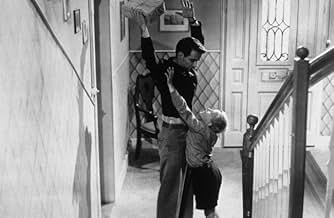
The plot in brief: Set in post World War II, a war orphan (Ivan Jandl, in his only movie role) is sheltered by an American G.I. (Montgomery Clift), while all that time, his mother (Jarmila Novotna), who has survived the hardship of the concentration camp, searches for him, knowing in her heart, that he is very much alive. And when the G.I. decides he wants to take the boy he calls "Jim" back with him to America, suspense builds for the viewers knowing that the mother is not that far away, and how they nearly miss each other in a couple of scenes. Aside from this being Clift's first movie to be released and his second film role, and that Ivan Jandl as Karel will steal one's heart, especially with his sad face, Aline MacMahon (1899-1991), as Deborah H. Murray, superintendent of the orphanage for war orphans, as well as the off screen narrator, gives possibly the best dramatic performance of her career, so sincere and natural, especially her devotion to those other children, one forgets that she's just an actress playing a role. Even her somewhat sad face adds to her personality and character. I only wished she had won, or at least been nominated, for an Academy Award for Best Supporting Actress for this performance. She deserved it. Clift, whose gun chewing soldier character comes about 45 minutes into the movie, also gives a sincere performance, and was nominated for Best Actor. Wendall Corey appears in support as Clift's Army buddy, Jerry Fisher.
I rank THE SEARCH one of director Zimmermann's most admired films, and one I never get tired of seeing whenever it's shown. Thank goodness TCM avoids showing the colorized version of THE SEARCH. Be sure to have your tissue box handy. (****)
The plot in brief: Set in post World War II, a war orphan (Ivan Jandl, in his only movie role) is sheltered by an American G.I. (Montgomery Clift), while all that time, his mother (Jarmila Novotna), who has survived the hardship of the concentration camp, searches for him, knowing in her heart, that he is very much alive. And when the G.I. decides he wants to take the boy he calls "Jim" back with him to America, suspense builds for the viewers knowing that the mother is not that far away, and how they nearly miss each other in a couple of scenes. Aside from this being Clift's first movie to be released and his second film role, and that Ivan Jandl as Karel will steal one's heart, especially with his sad face, Aline MacMahon (1899-1991), as Deborah H. Murray, superintendent of the orphanage for war orphans, as well as the off screen narrator, gives possibly the best dramatic performance of her career, so sincere and natural, especially her devotion to those other children, one forgets that she's just an actress playing a role. Even her somewhat sad face adds to her personality and character. I only wished she had won, or at least been nominated, for an Academy Award for Best Supporting Actress for this performance. She deserved it. Clift, whose gun chewing soldier character comes about 45 minutes into the movie, also gives a sincere performance, and was nominated for Best Actor. Wendall Corey appears in support as Clift's Army buddy, Jerry Fisher.
I rank THE SEARCH one of director Zimmermann's most admired films, and one I never get tired of seeing whenever it's shown. Thank goodness TCM avoids showing the colorized version of THE SEARCH. Be sure to have your tissue box handy. (****)
How to make a grown man cry
I got to this movie randomly in the night program and found it was rather undeservedly relegated to past 11pm duties on TV. For Germans, it may be hard to chew the past concentration camp experiences of Children survivors in English and American orphanages and the highlighted search of a mother for her young boy, from whom she has been separated during the war. Sentimental : Yes Heart Gripping : Yes Wonderful to watch to the (happy ???) ending ? Yes all over. Great performances by the young boy, Ivan Jandl, the mother and the orphanage manager and very convincing performances of Montgomery Clift and Wendell Corey as teachers and father stand ins. I do know the ending, but it grips me nevertheless, even on replay. And if you're not icy to the heart, it will do the same for you.


Le saviez-vous
- AnecdotesBen Mankiewicz on TCM indicated that Ivan Jandl spoke no English at the time this film was made, and that his English dialogue was phonetically memorized.
- GaffesOn Montgomery Clift's right shoulder, he wears the patch of the 102nd infantry division, but it is sewed on incorrectly; it is turned 90 degrees to the right.
- Citations
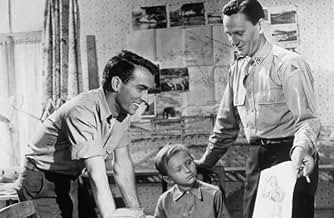
[Steve is teaching a young boy, whose name he does not know but has coined Jim, to speak English]
Ralph 'Steve' Stevenson: [to Jim] You have no idea how useful it's going to be for you to know English. You can go where ever you like. Everybody knows what 'OK' means. You can use English all over the world. Not, not just America: Canada, Africa, Australia, India. Even in England, they understand English... well, sort of.
- Autres versionsThere is an Italian edition of this film on DVD, distributed by DNA srl, "LA SETTIMA CROCE (1944) + THE SEARCH (Odissea tragica, 1948)" (2 Films on a single DVD), re-edited with the contribution of film historian Riccardo Cusin. This version is also available for streaming on some platforms.
- ConnexionsFeatured in Imaginary Witness: Hollywood and the Holocaust (2004)
Meilleurs choix
Connectez-vous pour évaluer et surveiller les recommandations personnalisées
- How long is The Search?Propulsé par Alexa
Détails
Box-office
- Budget
- 250 000 $ US (estimation)
- Durée
- 1h 44m(104 min)
- Couleur
- Mixage
- Rapport de forme
- 1.37 : 1
Contribuer à cette page
Suggérer une modification ou ajouter du contenu manquant