ÉVALUATION IMDb
7,1/10
2,1 k
MA NOTE

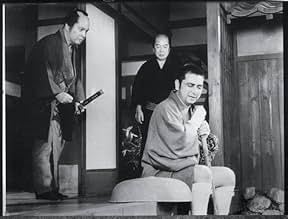
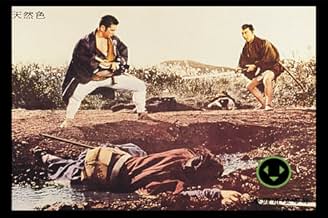
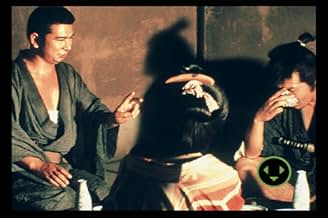
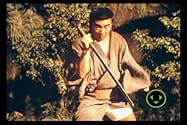
Ajouter une intrigue dans votre langueZatoichi promises to deliver a maiden safely home but finds two dangerous gangs have a mysterious interest in the young girl.Zatoichi promises to deliver a maiden safely home but finds two dangerous gangs have a mysterious interest in the young girl.Zatoichi promises to deliver a maiden safely home but finds two dangerous gangs have a mysterious interest in the young girl.
- Réalisation
- Scénaristes
- Vedettes


7,12.1K
1
2
3
4
5
6
7
8
9
10
Avis en vedette
One Angry Blind Man
This movie had some great sword-fighting sequences, as well as the usual beautiful (but kinda stupid) young woman falling for the blind gambler. I think that the most compelling sequence, though, is where he rescues the young hostage without drawing a sword. There is something about the transformation of the humble blind man to angry, sarcastic avenger that is compelling. It reminds me of those few Columbo episodes where the detective tips his hand early in the episode, for some reason.
This movie would be an excellent introduction to the series.
This movie would be an excellent introduction to the series.
A Perfectly Entertaining Chapter, if Not a Very Consequential One
Further episodic adventures through the dark corners and seedy streets of feudal Japan with the jolly, opportunistic blind samurai. In this installment, Zatoichi runs afoul of a conniving widow, escorts a wealthy heiress home from danger and, once again, gets caught up in the middle of a large-scale conflict between bickering gangs. Just another day at the office for Ichi, who's perfectly willing to go with the flow so long as he finishes the day with a full belly and a roof over his head.
After five adventures, I've begun to recognize the character's favorite, and most reliable, tricks. Joking and groveling, downplaying his own capabilities to remain incognito and catch future opponents unaware. Leaning on his expertise as a masseuse (a job which was forbidden to sighted people at the time) to access private rooms and important people, skirting the muscle of an organization to slash directly at its head. Wolfing down his food and constantly talking with his mouth full... actually, I haven't quite worked out why he does that yet. He's also prone to falling in love with the women under his protection, as is the case with this episode's distressed damsel. Or maybe that's just another of his manipulations, meant to inspire loyalty and obedience when necessary. If so, it serves to save both parties' lives when they're caught in a surprise attack and the slightest hesitation could have been lethal.
In the big picture, On the Road isn't the most meaningful of our hero's adventures. He re-treads some familiar thematic terrain, continues his transition from smaller-scale duels to big group battles, slices up the most deserving bad guys and satisfies his moral code before wandering out of town, unscathed, to darken new horizons. It's an entertaining entry, though, nicely paced and exciting, with a number of well-conceived scenes and overlapped subplots competing for his/our attention. As these Zatoichi pictures go, such attributes can't always be taken for granted.
After five adventures, I've begun to recognize the character's favorite, and most reliable, tricks. Joking and groveling, downplaying his own capabilities to remain incognito and catch future opponents unaware. Leaning on his expertise as a masseuse (a job which was forbidden to sighted people at the time) to access private rooms and important people, skirting the muscle of an organization to slash directly at its head. Wolfing down his food and constantly talking with his mouth full... actually, I haven't quite worked out why he does that yet. He's also prone to falling in love with the women under his protection, as is the case with this episode's distressed damsel. Or maybe that's just another of his manipulations, meant to inspire loyalty and obedience when necessary. If so, it serves to save both parties' lives when they're caught in a surprise attack and the slightest hesitation could have been lethal.
In the big picture, On the Road isn't the most meaningful of our hero's adventures. He re-treads some familiar thematic terrain, continues his transition from smaller-scale duels to big group battles, slices up the most deserving bad guys and satisfies his moral code before wandering out of town, unscathed, to darken new horizons. It's an entertaining entry, though, nicely paced and exciting, with a number of well-conceived scenes and overlapped subplots competing for his/our attention. As these Zatoichi pictures go, such attributes can't always be taken for granted.
Crescendo of Provocation
This was the fifth Zatôichi film in just two years. It's been a while since I saw the last one in the series, but they're great fun. Simpler than the previous films, and also far more conventional as an action-adventure, "Zatôichi kenka-tabi" ('Zatôichi on the Road', 1963) stays true to its name, although it could've been called 'The Road To Edo' as well: a road movie of chasing and hiding, of fighting and fleeing to fight again; hide and seek, and pretense. The film greatly picks up in between the fights during the scene at the inn, which is well-made. And it is this sense of, well, it's not predictability because that sounds negative... let's say 'familiarity', that makes it so easy for the viewer to jump right into it – we know where it comes from and where it goes.
It's become a running joke by now to have Zatôichi evade fighting, only to be eluded to a situation where he has to fight. He think he's only on a trip to Edo, while he's taken there to help out at a clan fight. The film is a crescendo of provocation until Zatôichi finally unsheathes his sword. This, of course, makes the films work in the long run: we need a sympathetic character, and having a character who would run around killing people for pleasure doesn't really cut it here. Yet there is a genuinely tragic undersong here: he doesn't search for trouble yet the trouble finds him, and still he is looking for trouble, as he says in the film, by having learnt to fight with the sword.
My favourite moment is the one with the white sunshades on the slope, and Zatôichi running with the children in imitation of the ending of "Det sjunde inseglet" (1957), the other one is the Kurosawan climax.
I do wonder when we're going to have a decent villain, though.
It's become a running joke by now to have Zatôichi evade fighting, only to be eluded to a situation where he has to fight. He think he's only on a trip to Edo, while he's taken there to help out at a clan fight. The film is a crescendo of provocation until Zatôichi finally unsheathes his sword. This, of course, makes the films work in the long run: we need a sympathetic character, and having a character who would run around killing people for pleasure doesn't really cut it here. Yet there is a genuinely tragic undersong here: he doesn't search for trouble yet the trouble finds him, and still he is looking for trouble, as he says in the film, by having learnt to fight with the sword.
My favourite moment is the one with the white sunshades on the slope, and Zatôichi running with the children in imitation of the ending of "Det sjunde inseglet" (1957), the other one is the Kurosawan climax.
I do wonder when we're going to have a decent villain, though.
Chivalry is tested
When Zatoichi accidentally met an unknown dying man, who asked him to save an unknown maiden, he felt obligated. He didn't even have to promise. Time and again, he did everything in his power to save the maiden in several occassions. But when he took side on a feudal quarrel, he found himself choosing between which one to honor better: The request of a dying man or the contract he made with one of the gang leaders. You've guessed what he opted. Modern gangsters may have a different code of ethics.
Darkness is the ally of the blind swordman
The following review is an extract from the book "Shintaro Katsu´s Zatoichi: Complete guide to all movies", which is now available on Amazon.
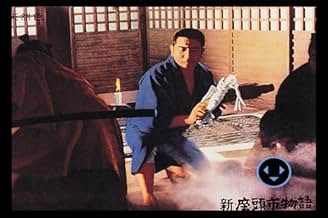
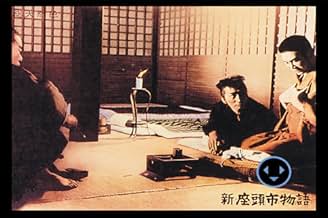
"At the beginning of this film, as a filmic preface, we see how Ichi plays a game of dice (or something similar) with a small group of dishonest opponents. The latter, despite having lost, are not willing to accept defeat, but before they can react, Zatoichi makes them reluctant to even try any hostility against him. With a lightning fast movement of his shikomizue, he cuts a candle that illuminated the room vertically, leaving his opponents astonished, and leaving the room shortly afterwards in the dark (and therefore in relative equality of conditions with others who are able to see). "Darkness is my ally..." says Zatoichi again sheathing his sword in the reed.
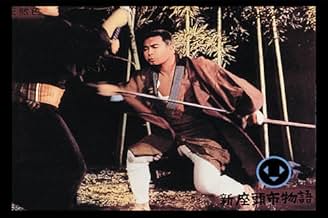
The massive duel between the two groups of yakuza recalls by its atmosphere and stylistic characteristics the great Italo-westerns, where a solitary gunman (like Clint Eastwood in Sergio Leone's "Dollar trilogy") must face several enemies at the same time. Leone and other western masters were profusely inspired by the Japanese chambara. The equivalence and parallels between samurais or ronins and solitary cowboys or outlaws are undeniable."
"At the beginning of this film, as a filmic preface, we see how Ichi plays a game of dice (or something similar) with a small group of dishonest opponents. The latter, despite having lost, are not willing to accept defeat, but before they can react, Zatoichi makes them reluctant to even try any hostility against him. With a lightning fast movement of his shikomizue, he cuts a candle that illuminated the room vertically, leaving his opponents astonished, and leaving the room shortly afterwards in the dark (and therefore in relative equality of conditions with others who are able to see). "Darkness is my ally..." says Zatoichi again sheathing his sword in the reed.
The massive duel between the two groups of yakuza recalls by its atmosphere and stylistic characteristics the great Italo-westerns, where a solitary gunman (like Clint Eastwood in Sergio Leone's "Dollar trilogy") must face several enemies at the same time. Leone and other western masters were profusely inspired by the Japanese chambara. The equivalence and parallels between samurais or ronins and solitary cowboys or outlaws are undeniable."


Le saviez-vous
- AnecdotesZatoichi's katana is a shikomizue. This is a sword which is concealed within a wooden cane, thus the cane itself is both handle and scabbard.
- GaffesThe string attached to the dragonfly is visible as it lands on a bush next to Zatoichi and Mitsu, who are being attacked, and also when it returns after the fight.
- ConnexionsFeatured in Best in Action: 1963 (2019)
Meilleurs choix
Connectez-vous pour évaluer et surveiller les recommandations personnalisées
- How long is Zatoichi on the Road?Propulsé par Alexa
Détails
- Durée
- 1h 25m(85 min)
- Mixage
- Rapport de forme
- 2.35 : 1
Contribuer à cette page
Suggérer une modification ou ajouter du contenu manquant