ÉVALUATION IMDb
6,7/10
5,3 k
MA NOTE


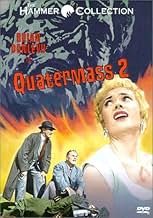
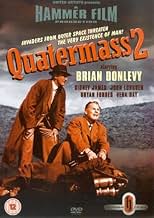
Ajouter une intrigue dans votre langueProfessor Quatermass, trying to gather support for his Lunar colonisation project, is intrigued by mysterious traces that have been showing up.Professor Quatermass, trying to gather support for his Lunar colonisation project, is intrigued by mysterious traces that have been showing up.Professor Quatermass, trying to gather support for his Lunar colonisation project, is intrigued by mysterious traces that have been showing up.
- Réalisation
- Scénaristes
- Vedettes



John Longden
- Lomax
- (as John Longdon)

Sidney James
- Jimmy Hall
- (as Sydney James)


6,75.2K
1
2
3
4
5
6
7
8
9
10
Avis en vedette
An unsung fifties sci fi classic.
I first saw this film once when I was about five or six years old on TV. Because the film had location shooting at an oil refinery, for years I was always reminded of this film when ever I drove past one, wondering if something sinister was going on inside those tanks. However, soon after I first saw this film, QUATERMASS 2 (or ENEMY FROM SPACE-as it was called here in the USA), was pulled from distribution for various legal reasons, and this film was for years impossible to view. Then the film was released from its legal limbo in the mid eighties and I purchased a video copy as soon as it came out.
Unlike so many hard to view films that have been promoted as "a long lost classic", that often turn out not to live up to their reputations when finally viewed again*, QUATERMASS 2 truly deserves its reputation as a rediscovered lost classic. It is one of the best British science fictions films from the fifties.
The films acting and direction are uniformly good. The black and white photography is excellent and the film has an excellent musical score (although sometimes the music is a bit too loud.) The scene where the giant aliens burst from the domes is one of my favorite scenes in a fantastic film. Its like something out of a nightmare: the dome begins to crack, like a giant egg, and emerging from is not a cute little chick, but a hideous malignancy. The gloomy dark gray lighting enhance this scene. However, the aliens that emerge, while gross and repulsive looking when viewed for the first time, begin to look a tad bit silly after repeated viewings.
Perhaps one of the most interesting thing about this film when viewed today, is the films story has many similarities to the "Area 51" mythology. In the film there is government owned plant where everything is top secret, it gets unlimited tax payer funding, but no one in the government dare asks whats going on. This sounds lot like what we are told about the so-called "Area 51." I'm surprised " psycho/social reductionists" like Curtis "Watch The Skies" Peebles overlooked this film. Then again, maybe we are lucky they have.
QUATERMASS 2 is an excellent fifties science fiction that should be more widely shown. Like the other films in the famous "Quatermass" series, its literate, suspenseful and thrilling.
*Sometimes the films promoted as "long lost classics" aren't even lost!
Unlike so many hard to view films that have been promoted as "a long lost classic", that often turn out not to live up to their reputations when finally viewed again*, QUATERMASS 2 truly deserves its reputation as a rediscovered lost classic. It is one of the best British science fictions films from the fifties.
The films acting and direction are uniformly good. The black and white photography is excellent and the film has an excellent musical score (although sometimes the music is a bit too loud.) The scene where the giant aliens burst from the domes is one of my favorite scenes in a fantastic film. Its like something out of a nightmare: the dome begins to crack, like a giant egg, and emerging from is not a cute little chick, but a hideous malignancy. The gloomy dark gray lighting enhance this scene. However, the aliens that emerge, while gross and repulsive looking when viewed for the first time, begin to look a tad bit silly after repeated viewings.
Perhaps one of the most interesting thing about this film when viewed today, is the films story has many similarities to the "Area 51" mythology. In the film there is government owned plant where everything is top secret, it gets unlimited tax payer funding, but no one in the government dare asks whats going on. This sounds lot like what we are told about the so-called "Area 51." I'm surprised " psycho/social reductionists" like Curtis "Watch The Skies" Peebles overlooked this film. Then again, maybe we are lucky they have.
QUATERMASS 2 is an excellent fifties science fiction that should be more widely shown. Like the other films in the famous "Quatermass" series, its literate, suspenseful and thrilling.
*Sometimes the films promoted as "long lost classics" aren't even lost!
Never trust a person with skin problems
Thanks to a good friend I'm currently undergoing what sci-fi fans refer to as "the Quatermass-experience". That simply means watching the three QUATERMASS-movies in a short time period. The first one felt like a true sci-fi classic, but I honestly couldn't really tell, because I haven't seen enough of those black & white sci-fi flicks to compare it too. But I'm working on that.
After having seen QUATERMASS 2, I'm starting to get convinced that those movies really are a stellar trilogy (even though the individual stories aren't actually related). This second installment was the first British movie ever to feature a number "2" in its title, to indicate that it's a sequel. The movie itself shows a lot of similarities with the original INVASION OF THE BODY SNATCHERS (an alien organism invading earth, loss of human identity, a common higher consciousness, a global threat at hand...). But since they were produced around the same time none of the movies can be accused of stealing from each other.
Writer Nigel Kneale presents us a solid, coherent story undermined with plausible scientific facts. To put it rather simply: an organism not of this earth infects humans and even infiltrates the highest ranks of the British government. The story moves at a decent pace and never gets boring. Val Guest's directing is as good as it gets for a movie from the 50's. He clearly knew what he was doing on the set. Some minor continuity problems can be encountered (some night shots feature a few glimpses of daylight) and at least one scene seemed a bit artificially staged for convenience's sake (the one where Broadhead and Quatermass get their passes from the ministry-chap). But all that really isn't anything to complain about.
I sort of liked Brian Donlevy as Quatermass. He really feels like the prototype of an anti-hero. He's often a bit rude and really persistent. Especially that last characteristic made his character more believable. The rest of the acting was also decent, though all of the supporting roles were too small to be memorable. And I so much liked the fact that there wasn't an obligatory love-interest in the plot for Mr. Quatermass. That simply would not have worked.
There were a few details I really liked, like when Quatermass arrives in that little town in the area of Winterton Flats (or was it Willingdon Flats?). All the inhabitants work for the alien-infested factory and they have posters on the wall with slogans like "Remember: Secrets mean sealed lips" and "Talk about your job. Lose it". Another cool thing about the story was that it was actually Quatermass who designed the factory facility with the domes, which was originally to be a moon-colonization project. Only, the government stole his design and build it here on earth, for the alien organism to adapt itself. The factory was an excellent location and felt real. So were the few special effects (mainly miniatures of the domes). The 'rocket-lift-off' shots and effects looked rather silly though. I'm glad this movie was in black & white, that way, when we finally see the alien organism in all its giant glory, it looked a bit more terrifying.
So if you're curious about the history of sci-fi movies, than you just can not miss this one. Now I'm really looking forward to see QUATERMASS AND THE PIT.
After having seen QUATERMASS 2, I'm starting to get convinced that those movies really are a stellar trilogy (even though the individual stories aren't actually related). This second installment was the first British movie ever to feature a number "2" in its title, to indicate that it's a sequel. The movie itself shows a lot of similarities with the original INVASION OF THE BODY SNATCHERS (an alien organism invading earth, loss of human identity, a common higher consciousness, a global threat at hand...). But since they were produced around the same time none of the movies can be accused of stealing from each other.
Writer Nigel Kneale presents us a solid, coherent story undermined with plausible scientific facts. To put it rather simply: an organism not of this earth infects humans and even infiltrates the highest ranks of the British government. The story moves at a decent pace and never gets boring. Val Guest's directing is as good as it gets for a movie from the 50's. He clearly knew what he was doing on the set. Some minor continuity problems can be encountered (some night shots feature a few glimpses of daylight) and at least one scene seemed a bit artificially staged for convenience's sake (the one where Broadhead and Quatermass get their passes from the ministry-chap). But all that really isn't anything to complain about.
I sort of liked Brian Donlevy as Quatermass. He really feels like the prototype of an anti-hero. He's often a bit rude and really persistent. Especially that last characteristic made his character more believable. The rest of the acting was also decent, though all of the supporting roles were too small to be memorable. And I so much liked the fact that there wasn't an obligatory love-interest in the plot for Mr. Quatermass. That simply would not have worked.
There were a few details I really liked, like when Quatermass arrives in that little town in the area of Winterton Flats (or was it Willingdon Flats?). All the inhabitants work for the alien-infested factory and they have posters on the wall with slogans like "Remember: Secrets mean sealed lips" and "Talk about your job. Lose it". Another cool thing about the story was that it was actually Quatermass who designed the factory facility with the domes, which was originally to be a moon-colonization project. Only, the government stole his design and build it here on earth, for the alien organism to adapt itself. The factory was an excellent location and felt real. So were the few special effects (mainly miniatures of the domes). The 'rocket-lift-off' shots and effects looked rather silly though. I'm glad this movie was in black & white, that way, when we finally see the alien organism in all its giant glory, it looked a bit more terrifying.
So if you're curious about the history of sci-fi movies, than you just can not miss this one. Now I'm really looking forward to see QUATERMASS AND THE PIT.
Taut, well-crafted early Hammer horror movie
The second of the Quatermass films (the first was THE QUATERMASS XPERIMENT, the "X" used to emphasise the adult X-rating the film received on its initial release) was allowed a slightly larger budget and benefited enormously from Nigel Kneale's participation in the screenplay. In this film, at least Brian Donlevy behaves a little more like Quatermass ought to, though I still don't think he was right for the part.
For my money, Quatermass should be a pipe-smoking English boffin with leather patches sewn on the elbows of his jacket. The original character was conceived as a kind of Barnes Wallis type, as portrayed by Michael Redgrave in THE DAM BUSTERS.
The movie is set in a post-war Britain that was a little panicked by the idea of nuclear weapons and even more unsettled by the knowledge that our former allies, The Soviets, had the same weapons and they were pointed at us. This was the climate that gave us Orwell's 1984 and Don Siegel's INVASION OF THE BODY SNATCHERS. Paranoia was out to get us ...
This same atmosphere lasted well into the 1960s and can also be glimpsed in TV shows like THE AVENGERS. This was the era I grew up in, so I speak from personal experience :-)
This movie is one of Hammer's better offerings of the period. Released the same year as CURSE OF FRANKENSTEIN, it more than holds its own against the other, better-known Hammer colour offerings. Indeed, it benefits from its monochrome photography, which brilliantly communicates the austerity of the years immediately following WWII.
Thoroughly recommended, this film will appeal to anyone who can get beyond the admittedly primitive 1950s special effects to be rewarded by the rich and clever story that lies beneath the slightly dodgy veneer ...
For my money, Quatermass should be a pipe-smoking English boffin with leather patches sewn on the elbows of his jacket. The original character was conceived as a kind of Barnes Wallis type, as portrayed by Michael Redgrave in THE DAM BUSTERS.
The movie is set in a post-war Britain that was a little panicked by the idea of nuclear weapons and even more unsettled by the knowledge that our former allies, The Soviets, had the same weapons and they were pointed at us. This was the climate that gave us Orwell's 1984 and Don Siegel's INVASION OF THE BODY SNATCHERS. Paranoia was out to get us ...
This same atmosphere lasted well into the 1960s and can also be glimpsed in TV shows like THE AVENGERS. This was the era I grew up in, so I speak from personal experience :-)
This movie is one of Hammer's better offerings of the period. Released the same year as CURSE OF FRANKENSTEIN, it more than holds its own against the other, better-known Hammer colour offerings. Indeed, it benefits from its monochrome photography, which brilliantly communicates the austerity of the years immediately following WWII.
Thoroughly recommended, this film will appeal to anyone who can get beyond the admittedly primitive 1950s special effects to be rewarded by the rich and clever story that lies beneath the slightly dodgy veneer ...
Terrifying Sci Fi Atmospheric Classic
Val Guest's Quatermass II is my favourite film ever. The cold, dawning revelation that builds up all the way through the first half of the film that the invasion is actually underway and that the 'zombies' not only WALK AMONG US, but are actually IN CHARGE and IN POWER is terrifyingly atmospheric. I always like to think that if the invasion ever did come, it wouldn't come through massive mother ships as per Independence Day, but from within, from the suburbs, the rural villages. Really clever invaders would use Earth's own power structures, governments and resources against it without anyone noticing, not turn up en masse in flying saucers spoiling for a fight. The idea of the invasion falling to Earth in meteorites through a form of collective intelligence (recycled in the 1973 BBC Doctor Who serial Spearhead From Space) continues this threatening vein of invasion, and provides the most atmospheric scene in the film when Quatermass stands in the open night air as whizzing sounds around him give away the increased number of the meteorites now falling (the invasion is now fully underway!). Other scenes are just downright terrifying and follow the Kneale tradition of 'terror through revelation': the lorries in London carrying the symbol; Quatermass' first glimpse through the dome viewing panel; and when it is revealed how the zombies are blocking the pipes!! This 'revelation' aspect can be seen in all of the Quatermass films and serials (in The Quatermass Conclusion: when it is revealed by the body parts that the hippies weren't 'transported', in Quatermass and the Pit: 'you mean WE are the Martians!!'). Storytelling, atmosphere and terror like this hasn't survived the onset of today's special effects. Film makers like Dean Devlin just don't need to employ methods like this anymore, and this is why thinking people's science fiction relying on chilling, atmospheric and scientifically valid stories, plots and concepts will never ever be repeated.
One of the best sci-fi films around
This film was actually the first sequel to use a number in the title (although it's American title was "Enemy from Space"). Not only was this a cleverly written film, based on Nigel Kneale's screenplay, but it was a cruel satire on English and American culture in the 1950s.
In a nutshell, Professor Bernard Quatermass, leader of England's rocket group, is at wit's end trying to get more funding for his projected moon project. The British government decides it has "projects of far greater importance.'' At the same time, workers at Quatermass' base detect scores of what look like meteorites falling close by. When Quatermass investigates, he not only finds remnants of the meteorites, but his moon base, conveniently appropriated by an unknown government entity. His lab assistant picks up one of the meteorites and it explodes in his face, immediately infecting him with an alien parasite.
Quatermass is forced to go it almost alone, helped by a cynical police inspector, a drunken beat reporter and a vigilant member of parliament who can't get even his own party members to question where millions of pounds of tax dollars are going to.
The cruel satire comes from the comparison of Western governments of the 1950s to the communist governments they vehemently opposed during the Cold War years. British citizens were taught to implicitly trust government even as it spent millions to unknowingly fund an alien invasion. Civilian workers were so glad to have jobs they don't question why the supposed "synthetic food" plant they're building needs huge doses of toxic gases like ammonia. Even when evidence of wrongdoing is brought up, government red tape squelches it.
As for the movie itself, it is much better written than the original ("The Quatermass Experiment"). Nigel Kneale softens Quatermass' dour and brusk personality. Director Val Guest effectively uses a string musical score to build a creepy atmosphere. He and Kneale even overcome the first movie's dull ending, which had an alien getting electrocuted with no suspense whatsoever. Here, the plant workers, angry that one of their own is carted away by infected security guards at gunpoint, try to storm the plant, turning the aliens' carefully planned invasion on its ear. The irony, of course, is that the plant was conceived because government bureaucracy kept it secret. Now, as the plant is threatened, the same secrecy prevents the aliens from calling for help from the police or armed forces.
The special effects are better in this film, though the giant aliens at the end are not as convincing as they could be. Still, the film is a great example of British science fiction, which relied more on plot and characterization than the special effects that dominated American science fiction.
In a nutshell, Professor Bernard Quatermass, leader of England's rocket group, is at wit's end trying to get more funding for his projected moon project. The British government decides it has "projects of far greater importance.'' At the same time, workers at Quatermass' base detect scores of what look like meteorites falling close by. When Quatermass investigates, he not only finds remnants of the meteorites, but his moon base, conveniently appropriated by an unknown government entity. His lab assistant picks up one of the meteorites and it explodes in his face, immediately infecting him with an alien parasite.
Quatermass is forced to go it almost alone, helped by a cynical police inspector, a drunken beat reporter and a vigilant member of parliament who can't get even his own party members to question where millions of pounds of tax dollars are going to.
The cruel satire comes from the comparison of Western governments of the 1950s to the communist governments they vehemently opposed during the Cold War years. British citizens were taught to implicitly trust government even as it spent millions to unknowingly fund an alien invasion. Civilian workers were so glad to have jobs they don't question why the supposed "synthetic food" plant they're building needs huge doses of toxic gases like ammonia. Even when evidence of wrongdoing is brought up, government red tape squelches it.
As for the movie itself, it is much better written than the original ("The Quatermass Experiment"). Nigel Kneale softens Quatermass' dour and brusk personality. Director Val Guest effectively uses a string musical score to build a creepy atmosphere. He and Kneale even overcome the first movie's dull ending, which had an alien getting electrocuted with no suspense whatsoever. Here, the plant workers, angry that one of their own is carted away by infected security guards at gunpoint, try to storm the plant, turning the aliens' carefully planned invasion on its ear. The irony, of course, is that the plant was conceived because government bureaucracy kept it secret. Now, as the plant is threatened, the same secrecy prevents the aliens from calling for help from the police or armed forces.
The special effects are better in this film, though the giant aliens at the end are not as convincing as they could be. Still, the film is a great example of British science fiction, which relied more on plot and characterization than the special effects that dominated American science fiction.


Le saviez-vous
- AnecdotesThis is believed to be the first film ever to use the arabic numeral 2 as an indicator that it was the sequel to another film (as opposed to Roman numerals).
- GaffesWhen hurrying to the phone in the Pressure Control Block, McLeod puts down his jacket, which slips to the floor. It appears to have returned to where he originally placed it when he retrieves it in another shot, however.
- Citations
Quatermass: They tell me you have no police here?
Dawson: Police? We don't need them - we're a law-abiding community, aren't we?
- ConnexionsFeatured in The Saturday Afternoon Movie: Enemy From Space (1966)
Meilleurs choix
Connectez-vous pour évaluer et surveiller les recommandations personnalisées
- How long is Quatermass 2?Propulsé par Alexa
Détails
Box-office
- Budget
- 92 000 £ (estimation)
- Brut – à l'échelle mondiale
- 77 $ US
- Durée
- 1h 25m(85 min)
- Couleur
Contribuer à cette page
Suggérer une modification ou ajouter du contenu manquant