ÉVALUATION IMDb
6,5/10
1,8 k
MA NOTE

Ajouter une intrigue dans votre langueDuring WWII, unmarried New Zealand women meet and marry American soldiers who are fighting in the Pacific theater.During WWII, unmarried New Zealand women meet and marry American soldiers who are fighting in the Pacific theater.During WWII, unmarried New Zealand women meet and marry American soldiers who are fighting in the Pacific theater.
- Réalisation
- Scénaristes
- Vedettes
- Prix
- 1 victoire au total
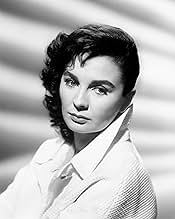
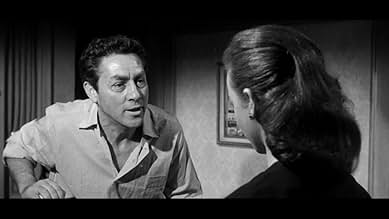




Patrick Macnee
- Pvt. Duff
- (scenes deleted)
Mary Ellen Batten
- Brunette
- (uncredited)

Nicky Blair
- US Marine
- (uncredited)

William Boyett
- US Marine
- (uncredited)
Roy Clark
- Marine at Dance
- (uncredited)
6,51.8K
1
2
3
4
5
6
7
8
9
10
Avis en vedette
A black and white gem
This movie is wonderful. It's romantic, truthful and perfectly cast. It shows how lonely women can be without the love of a man in their life, and how wounds take so long to heal, and how easily they can be made. Jean Simmons is beautiful and sensitive in her portrayal of a New Zealand lass trying to remain decent and understanding emotional pain and restriction in a time of war. Paul Newman is positively gorgeous and plays his role as a cynical soldier so well i could seriously believe him really being one. The ending of the movie, although somewhat predictable, is lovely and suitable. I recommend this film to all lovers of Jean Simmons, Paul Newman and the classically romantic dramas of the 50's.
First impressions can be deceiving...
I have to admit, when I first heard of this film, I didn't think it would keep my interest or attention. The casting, albeit comprised of talented performers, seemed a little odd: 40 year old Fontaine and 13 year old Sandra Dee as sisters sounds a little far fetched, but the pairing actually plays out believably on screen. The age difference translates into a believable mother/daughter type of sisterly relationship, which is appropriate since Fontaine's character has been left to tend to her three sisters after her parents' death.
Preconceived notions aside, the story is a compelling one, centering around four sisters in WWII New Zealand. Fontaine, Dee, Jean Simmons, and Piper Laurie all turn in admirable performances as the Lesley sisters in a plot that can sometimes seem a little implausible, or at the very least, ahead of it's time. Paul Newman also co-stars as a Marine officer who plays a pivotal role in the lives of the sisters, namely Simmons' character.
Not the best role of any of the principal actors' careers, but definitely worth seeing, especially if you are drawn to WWII era dramas.
Preconceived notions aside, the story is a compelling one, centering around four sisters in WWII New Zealand. Fontaine, Dee, Jean Simmons, and Piper Laurie all turn in admirable performances as the Lesley sisters in a plot that can sometimes seem a little implausible, or at the very least, ahead of it's time. Paul Newman also co-stars as a Marine officer who plays a pivotal role in the lives of the sisters, namely Simmons' character.
Not the best role of any of the principal actors' careers, but definitely worth seeing, especially if you are drawn to WWII era dramas.
Excellent ensemble acting with an intelligent script
War starts, the New Zealand men go off to fight, and four sisters are left to cope with that- and the arrival of the American fleet! It sounds like a recipe for the most hackneyed sort of wartime romance weepie, but this film is certainly not that.
First, this is an ensemble movie, where no one 'star' dominates. From Paul Newman (probably the best-remembered name now) on, we are given a whole clutch of accomplished and finely nuanced performances.
The cinematography is superbly judged: this is one of those lovingly observed pictures where a shot of 'two people talking' is rarely just that; the backgrounds and choice of shots are a delight. This must be viewed in the original format, not 'scanned'!
The script is intelligent and daring. Sexual topics such as promiscuity and having children outside marriage are dealt with in a surprisingly straightforward and sophisticated manner for a 1950s movie. And, it must be said, they are dealt with in a human and sympathetic fashion. There is no hint of the lurid sensationalism nor of the tight-arsed repressiveness that films of this era often display when dealing with such subject matter.
In a situation where the old well-patterned expectations have gone by the board, the sisters attempt to keep track of their universe with a wall-map of the world on which they plot where their men are now. The scope of this exercise is enlarged to include the dead, and then American 'friends'. Ultimately, the map is screwed up and thrown on the fire as the old world- including the old moral universe- goes up in smoke.
The only jarring note is the plot device allowing the film to open and close with a murder trial. One of the sisters has married a 'local'- clearly marked as unsuitable by his working class tones and chest hair! The relationship ends in worse than tears. This element of the film has all the sophistication of an Enid Blyton 'Famous Five' childrens book, and sits uneasily in such an- otherwise- intelligent performance!
First, this is an ensemble movie, where no one 'star' dominates. From Paul Newman (probably the best-remembered name now) on, we are given a whole clutch of accomplished and finely nuanced performances.
The cinematography is superbly judged: this is one of those lovingly observed pictures where a shot of 'two people talking' is rarely just that; the backgrounds and choice of shots are a delight. This must be viewed in the original format, not 'scanned'!
The script is intelligent and daring. Sexual topics such as promiscuity and having children outside marriage are dealt with in a surprisingly straightforward and sophisticated manner for a 1950s movie. And, it must be said, they are dealt with in a human and sympathetic fashion. There is no hint of the lurid sensationalism nor of the tight-arsed repressiveness that films of this era often display when dealing with such subject matter.
In a situation where the old well-patterned expectations have gone by the board, the sisters attempt to keep track of their universe with a wall-map of the world on which they plot where their men are now. The scope of this exercise is enlarged to include the dead, and then American 'friends'. Ultimately, the map is screwed up and thrown on the fire as the old world- including the old moral universe- goes up in smoke.
The only jarring note is the plot device allowing the film to open and close with a murder trial. One of the sisters has married a 'local'- clearly marked as unsuitable by his working class tones and chest hair! The relationship ends in worse than tears. This element of the film has all the sophistication of an Enid Blyton 'Famous Five' childrens book, and sits uneasily in such an- otherwise- intelligent performance!
Better than the reviews imply--finely tuned and sensitive
Until They Sail (1957)
In some ways this is a terrific movie about women at home as their soldier men fought in World War II. The setting is New Zealand, and the women are four sisters there. The men are mostly American soldiers, seen not as invaders but still as aliens who are not quite welcome, The filming in wide screen (Cinemascope, really wide) black and white is fabulous. And the acting, including key roles by Paul Newman and Jean Simmons, is great.
There isn't a stick of actual fighting here, if you want that kind of movie. Instead it's an interwoven tale of women trying to survive lost husbands in the war, and finding love, or not, in the mixed up world of war time New Zealand.
It's an interesting cast, with three women and one man (Paul Newman) as the top four billings. And a story by James Michener, with photography by Joseph Ruttenberg. Sounds like a winner, especially as the director (with MGM) was the soon to be legendary Robert Wise.
The scene is New Zealand during WWII. And it has to be added that Joan Fontaine and Jean Simmons are both first rate actresses (and Sandra Dee is getting a breakout role), all playing young women left behind by the men called to war. It's filmed in a kind of somber, clear-eye black and white, very emphatic and straight forward. It's what Paul Newman insisted was a "woman's picture," and in fact it really is about the four sisters and their varying interests in men.
Jean Simmons shines far more than the famed Joan Fontaine, and she is the counterpart for Paul Newman, who is the point man for the American presence (and the introduction to American men). The writing is a bit stiff and the editing sometimes slow, as if the nuances of fairly mundane reactions and intentions are worth lingering over. They aren't, not always. If you make it beyond the long long establishing scenes, you'll eventually get sucked in. I'm a huge fan of Simmons, who seems undeniable in any role and not just for some kind of cover girl beaiuty, and so I loved her scenes, which are numerous.
And yet, even if this movie seems to follow some ordinary romantic path, you can't help but feel, individually, for the four women wanting to not be alone. (It has some echo of "Little Women," to me.) That's the reason to hang in there. It takes time to get invested in the characters and their needs. Paul Newman is very good as usual, but more restrained than you might expect. Handsome, but without some kind of edge that made him bigger than life.
This strikes me as a drama, not a war film but about a human problem that happens to have some soldiers in it. It's not all great stuff-some of the writing is filler, or a bit dumbed down-but the best of it is felt and honest, and it's all seen (filmed) with classic beauty. The interwoven series of relationships with several women and several men has a weird echo of the earlier "The Best Years of Their Lives," and that's a good thing (and Ruttenberg holds his own against Gregg Toland in that parallel). In fact, the photography in black and white Cinemascope (anamorphic wide screen) is really special, for those who notice such things.
This is pure Hollywood, shot on an MGM lot (and studio). But it does to show how the "old" method worked so well. So, I loved this more than many of you will because of it's moviemaking aspects. It will get patient at times, but we all have to make time sometimes. As these women learned, too, without any choice.
In some ways this is a terrific movie about women at home as their soldier men fought in World War II. The setting is New Zealand, and the women are four sisters there. The men are mostly American soldiers, seen not as invaders but still as aliens who are not quite welcome, The filming in wide screen (Cinemascope, really wide) black and white is fabulous. And the acting, including key roles by Paul Newman and Jean Simmons, is great.
There isn't a stick of actual fighting here, if you want that kind of movie. Instead it's an interwoven tale of women trying to survive lost husbands in the war, and finding love, or not, in the mixed up world of war time New Zealand.
It's an interesting cast, with three women and one man (Paul Newman) as the top four billings. And a story by James Michener, with photography by Joseph Ruttenberg. Sounds like a winner, especially as the director (with MGM) was the soon to be legendary Robert Wise.
The scene is New Zealand during WWII. And it has to be added that Joan Fontaine and Jean Simmons are both first rate actresses (and Sandra Dee is getting a breakout role), all playing young women left behind by the men called to war. It's filmed in a kind of somber, clear-eye black and white, very emphatic and straight forward. It's what Paul Newman insisted was a "woman's picture," and in fact it really is about the four sisters and their varying interests in men.
Jean Simmons shines far more than the famed Joan Fontaine, and she is the counterpart for Paul Newman, who is the point man for the American presence (and the introduction to American men). The writing is a bit stiff and the editing sometimes slow, as if the nuances of fairly mundane reactions and intentions are worth lingering over. They aren't, not always. If you make it beyond the long long establishing scenes, you'll eventually get sucked in. I'm a huge fan of Simmons, who seems undeniable in any role and not just for some kind of cover girl beaiuty, and so I loved her scenes, which are numerous.
And yet, even if this movie seems to follow some ordinary romantic path, you can't help but feel, individually, for the four women wanting to not be alone. (It has some echo of "Little Women," to me.) That's the reason to hang in there. It takes time to get invested in the characters and their needs. Paul Newman is very good as usual, but more restrained than you might expect. Handsome, but without some kind of edge that made him bigger than life.
This strikes me as a drama, not a war film but about a human problem that happens to have some soldiers in it. It's not all great stuff-some of the writing is filler, or a bit dumbed down-but the best of it is felt and honest, and it's all seen (filmed) with classic beauty. The interwoven series of relationships with several women and several men has a weird echo of the earlier "The Best Years of Their Lives," and that's a good thing (and Ruttenberg holds his own against Gregg Toland in that parallel). In fact, the photography in black and white Cinemascope (anamorphic wide screen) is really special, for those who notice such things.
This is pure Hollywood, shot on an MGM lot (and studio). But it does to show how the "old" method worked so well. So, I loved this more than many of you will because of it's moviemaking aspects. It will get patient at times, but we all have to make time sometimes. As these women learned, too, without any choice.
Touching, inusual and sprawling war movie
As I wrote in the summary, this is NOT your typical war movie full of action and battles with fire-arms scenes; so, if you want to see something similar to THE LONGEST DAY or BATTLE OF BRITAIN, this movie it's not for you!
Now I am not saying that UNTIL THEY SAIL it's bad. I am saying that this movie, instead of focusing on the war actions, it focuses on the women left behind waiting their husbands from the war and their woes and all the differences between them. And, even though it's not a must-see movie, it's actually pretty good.
Visually, this movie is beautifully shot, and the locations (in New Zealand) are simply a delight to watch; the soundtrack, even though it's not outstanding, it's also pretty good. And the pace, although it dragged half-way, it's measured.
The performances are all good: Paul Newman (in one of his first movies) it's charismatic and cool as always; Joan Fontaine, Piper Laurie and Sandra Dee are credible and give heart-felt performances, and Jean Simmons, like Newman, gives a deep and touching performance. And it's directed by Robert Wise, another great director of the 1950s-1960s.
The story is very realistic and never gets over the top despite the setting and subject explored. In substance, even with a few flaws, it's well done and worth-watching.
Now I am not saying that UNTIL THEY SAIL it's bad. I am saying that this movie, instead of focusing on the war actions, it focuses on the women left behind waiting their husbands from the war and their woes and all the differences between them. And, even though it's not a must-see movie, it's actually pretty good.
Visually, this movie is beautifully shot, and the locations (in New Zealand) are simply a delight to watch; the soundtrack, even though it's not outstanding, it's also pretty good. And the pace, although it dragged half-way, it's measured.
The performances are all good: Paul Newman (in one of his first movies) it's charismatic and cool as always; Joan Fontaine, Piper Laurie and Sandra Dee are credible and give heart-felt performances, and Jean Simmons, like Newman, gives a deep and touching performance. And it's directed by Robert Wise, another great director of the 1950s-1960s.
The story is very realistic and never gets over the top despite the setting and subject explored. In substance, even with a few flaws, it's well done and worth-watching.


Le saviez-vous
- AnecdotesSandra Dee's debut ("Evelyn Leslie") But, the 1957 Soviet animated feature Snezhnaya koroleva (1957) is often listed as Dee's first film credit, because she and other Hollywood stars did the voices for the English-language version, but that English-language audio was not actually made until 1959.
- GaffesAt the start of the film, set in 1939, the four sisters put up a map of the world to keep track of the soldiers' locations, but the map is contemporary from the year the film was made (1957), showing numerous nations that did not exist in 1939, for example: Laos, Cambodia and Vietnam (which would have been French Indochina in 1939), Indonesia (formerly the Dutch East Indies), Thailand (called Siam in 1939), and Pakistan (which was part of British India), among other countries.
- Citations
Barbara Leslie Forbes: [Last lines] If my father could read the history of his daughters...
Capt. Jack Harding: He'd understand.
Barbara Leslie Forbes: As they say, to understand is to forgive. Or is it, to understand is not to forgive? I can never remember.
- ConnexionsReferences Les Révoltés du Bounty (1935)
Meilleurs choix
Connectez-vous pour évaluer et surveiller les recommandations personnalisées
Détails
- Date de sortie
- Pays d’origine
- Langue
- Aussi connu sous le nom de
- Femmes coupables
- Lieux de tournage
- société de production
- Consultez plus de crédits d'entreprise sur IMDbPro
Box-office
- Budget
- 1 841 000 $ US (estimation)
- Durée
- 1h 34m(94 min)
- Couleur
- Mixage
- Rapport de forme
- 2.35 : 1
Contribuer à cette page
Suggérer une modification ou ajouter du contenu manquant