Ajouter une intrigue dans votre langueA filmic essay on class struggle which draws on images from westerns but has no plot and is both an experiment in making a revolutionary film and an interrogation of how successfully such a ... Tout lireA filmic essay on class struggle which draws on images from westerns but has no plot and is both an experiment in making a revolutionary film and an interrogation of how successfully such a film can be revolutionary.A filmic essay on class struggle which draws on images from westerns but has no plot and is both an experiment in making a revolutionary film and an interrogation of how successfully such a film can be revolutionary.
5,8763
1
2
3
4
5
6
7
8
9
10
Avis en vedette
A film of hypocrisy and irony
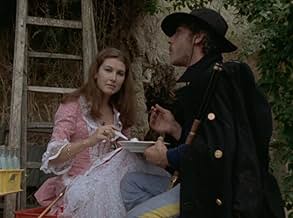
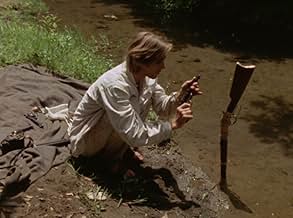
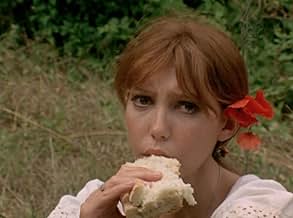
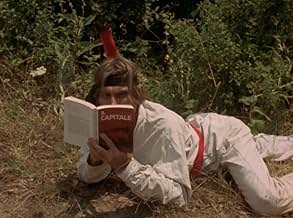
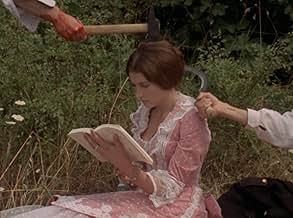
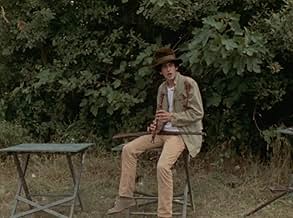
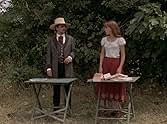
Released in 1970 and directed by the Dziga Vertov Group (Jean-Luc Godard and Jean-Pierre Gorin) this experimental 'Brechtian' political 'essay' feature film is an example of "making political films politically" in the words of Godard, or trying to. The images in the film come from a Dziga Vertov Group created Western which provides the film with it's comedy (with people dressing up and play acting in amateur dramatics style). This is not half as comical as some of the political slogans we hear on the soundtrack intoned by Anne Wiazemsky (saying what the men - Godard and 'dodgy' Daniel Cohn-Bendit - have written), featuring a lot of repetition, Godardian autobiographical elements (the self-reflexive moments rather capsize the film), and words being thrown around like imperialism, class struggle, ideology, ruling class, bourgeois, class consciousness, representation, contradiction etc. Many of these words are not defined by the filmmakers (at least not convincingly), including that favourite word of sectionalists like Godard and co 'revisionism', which in this context would appear simply to mean the many things the Dziga Vertov Group don't agree with. These include Hollywood cinema, Third World cinema, worker's self-management, anarchism, 'false realism', Sergei Eisenstein, and Dziga Vertov, amongst other things. What you assume may have been partly planned as an inquiry and critique of Hollywood cinema and it's aesthetics and ideology, employing symbolism (Glauber Rocha standing at the crossroads of cinema) and a disjunct between sound and image, is somewhat scuppered by the 'Marxist' joker Godard (Ingmar Bergman's "F...... Bore"), who once again reveals, in addition to confusion, contradiction, muddle and a great deal of hypocrisy, his very bourgeois background and (in some respects) attitudes (which the Chinese saw through). And here we reach the dominant aspect of this film, which is (as well as it's hypocrisy) it's irony - an autistic? Bourgeois telling the workers and the 'Developing World' how to think and behave, the unproletarian Godard insisting on 'proletarian dictatorship', talking about reality but seemingly having no recognition of it, and confusing counter-cinema with counter-ideology. The occasional valid thought peeps through all the ropey 'analysis' and contradictory and absurdist manure.
A truly wretched, nausea-inducing waste of film
You know those "worst films of all time" lists? This one tops my list!
How to describe it? The film is a long pointless diatribe against the West and an endorsement of French Communism. The film supposedly illustrates crimes against society committed by the west but the acting (and costuming) looked like a Haight Ashbury Summer'o'Love stock production.
The film is very grainy. Apparently Godard shot it on 8mm film. His disciples then blew it up to 35mm for its extremely limited arthouse release. The copy I suffered through had been shrunk back to 16mm (the format for rental films).
Oh, and the narration? Godard's diatribe is delivered by a somewhat bored Frenchman. That was bad enough but Godard's disciples had added an English-speaking female narrator to make the politics accessible to western audiences. The problem was, Godard refused to let them delete the French voicetrack! So.... for two wretched hours, the French and English narrations go on SIMULTANEOUSLY! Add to this the lousy acting, minimal production, and grainy film and you have EXCEDERIN HEADACHE #1.
How to describe it? The film is a long pointless diatribe against the West and an endorsement of French Communism. The film supposedly illustrates crimes against society committed by the west but the acting (and costuming) looked like a Haight Ashbury Summer'o'Love stock production.
The film is very grainy. Apparently Godard shot it on 8mm film. His disciples then blew it up to 35mm for its extremely limited arthouse release. The copy I suffered through had been shrunk back to 16mm (the format for rental films).
Oh, and the narration? Godard's diatribe is delivered by a somewhat bored Frenchman. That was bad enough but Godard's disciples had added an English-speaking female narrator to make the politics accessible to western audiences. The problem was, Godard refused to let them delete the French voicetrack! So.... for two wretched hours, the French and English narrations go on SIMULTANEOUSLY! Add to this the lousy acting, minimal production, and grainy film and you have EXCEDERIN HEADACHE #1.
Pure poetry. The ultimate cinematic exercise from Godard
Whatever you feel about the French New Wave and Godards work in this period we have to realize one thing - it had imprisoned him. The wave he himself had co-created would tie him to norms. Now it was gone. He was no longer in the searchlight, his films got smaller and smaller.
JLG was always experimental, always unique and often too much in his own world to be relatable for the public. However, he had for a certain time been an icon. Now, he was free. He could make whatever he wanted, regardless of form and norms. The end of the New Waves marks the beginning of his experimental awakening and the growth of his love for cinema.
In all regards Wind From the East can be considered an "anti"-film. A film so far from the norm of what beauty and storytelling is that it becomes an example of just that. A exercise of creativity, of styles and of ideas.
Emotionally, I get throwback to Jancso's Red Psalm(which ironically was made a two years later), because this is indeed a work of communist art - A political belief system that does not coincide with my own, from a time that disappeared long before I was born.
It speaks of revolution and violence as so many other Godards have done, but here it becomes part of both the abstract and the unconscious. But then, this is what beauty is. It's poetry - pure but perhaps not too simple. It reflects times that are gone, ideas left behind and a world unknown.
JLG was always experimental, always unique and often too much in his own world to be relatable for the public. However, he had for a certain time been an icon. Now, he was free. He could make whatever he wanted, regardless of form and norms. The end of the New Waves marks the beginning of his experimental awakening and the growth of his love for cinema.
In all regards Wind From the East can be considered an "anti"-film. A film so far from the norm of what beauty and storytelling is that it becomes an example of just that. A exercise of creativity, of styles and of ideas.
Emotionally, I get throwback to Jancso's Red Psalm(which ironically was made a two years later), because this is indeed a work of communist art - A political belief system that does not coincide with my own, from a time that disappeared long before I was born.
It speaks of revolution and violence as so many other Godards have done, but here it becomes part of both the abstract and the unconscious. But then, this is what beauty is. It's poetry - pure but perhaps not too simple. It reflects times that are gone, ideas left behind and a world unknown.
The Jean-Luc Godard Endurance Test
Film theorists like to call this type of film an example of "counter-cinema", an attempt by a filmmaker to dislocate the viewer from any pre-conceived ideas of, say, narrative and acting so that he can raise the question of what traditional narrative cinema does to the spectator. In other words, by drawing our attention to the way a film is made he can confound our enjoyment and break the hypnotic effect a traditional film has on us. But who the hell wants that? If I wanted my enjoyment confounded, I'd rent "Flowers in the Attic".
"Le Vent d'est" isn't so much a film as an essay on Communism and the insidious effect American culture has on the individual. It's also possibly the funniest thing I've ever seen. I saw this in an arthouse cinema in the late eighties and for two hours I sat biting my lower lip to prevent myself from laughing out loud. I needn't have bothered, because most of the audience had left within half an hour of the film starting. I wish I could remember it more vividly because I could share with you some of the stuff in it. One scene I do remember, though, is the one where Gian Maria Volonte (the bad guy in the Clint Eastwood spaghetti westerns) throttles some woman while someone else off-screen pelts her on the back of the head with red paint. What does it mean? Who knows? In this case, I'm proud to be a philistine.
The worst thing about this film isn't the acting, the direction, or the dialogue (these are all irrelevant in this film, anyway). No, the worst thing is that Godard is arrogant enough to suggest that the average audience has no critical faculties of its own. Even worse that he feels he has to draw it to our attention.
"Le Vent d'est" isn't so much a film as an essay on Communism and the insidious effect American culture has on the individual. It's also possibly the funniest thing I've ever seen. I saw this in an arthouse cinema in the late eighties and for two hours I sat biting my lower lip to prevent myself from laughing out loud. I needn't have bothered, because most of the audience had left within half an hour of the film starting. I wish I could remember it more vividly because I could share with you some of the stuff in it. One scene I do remember, though, is the one where Gian Maria Volonte (the bad guy in the Clint Eastwood spaghetti westerns) throttles some woman while someone else off-screen pelts her on the back of the head with red paint. What does it mean? Who knows? In this case, I'm proud to be a philistine.
The worst thing about this film isn't the acting, the direction, or the dialogue (these are all irrelevant in this film, anyway). No, the worst thing is that Godard is arrogant enough to suggest that the average audience has no critical faculties of its own. Even worse that he feels he has to draw it to our attention.
10matt-201
Godard's lost masterpiece
I saw a tatty 16mm print of this lost work of Godard's "engaged" period as a freshman in college in an empty theatre. The memory of it remains fresh--WIND FROM THE EAST struck me as Godard's most uniquely beautiful picture. A melding of tactics seminar and an overview of the history of the Western, the movie joins Godard's two great passions--cinema and politics--in a more harmonic convergence than he ever achieved elsewhere, as if Chou En-Lai collaborated with Mozart on rewrites of "The Abduction from the Seraglio."
Le saviez-vous
- AnecdotesWith a budget of $ 200,000, this was Jean-Luc Godard's most expensive film at the time.
- ConnexionsEdited into Histoire(s) du cinéma: Une histoire seule (1989)
Meilleurs choix
Connectez-vous pour évaluer et surveiller les recommandations personnalisées
Détails
Box-office
- Budget
- 220 000 $ US (estimation)
- Durée
- 1h 35m(95 min)
- Mixage
Contribuer à cette page
Suggérer une modification ou ajouter du contenu manquant