
Ajouter une intrigue dans votre langueAn engineer's wife returns home with a lost teenager. A man posing as her dad tries to get her back, causing the engineer to recall his youth as a revolutionary, obscured by dreamlike disrup... Tout lireAn engineer's wife returns home with a lost teenager. A man posing as her dad tries to get her back, causing the engineer to recall his youth as a revolutionary, obscured by dreamlike disruptions of time and space, fantasy and reality.An engineer's wife returns home with a lost teenager. A man posing as her dad tries to get her back, causing the engineer to recall his youth as a revolutionary, obscured by dreamlike disruptions of time and space, fantasy and reality.
- Réalisation
- Scénariste
- Vedettes


7,1906
1
2
3
4
5
6
7
8
9
10
Avis en vedette
New cinema
Yoshida's films are luminous, ethereal creations, languid love affairs blown into abstract shape by memory and time. In the period when he studied/essayed the great Antonioni, he gave us films of simple, perhaps ponderous beauty. But with Eros+Massacre he finally unraveled. This is a companion piece to that labyrinth.
I can't imagine what it must've been to see this back in 1970 with fresh eyes, what possibilities of cinema it may have opened. Thirty years later I can see that some of the things Yoshida foresaw panned out, others didn't. But this film is a maddening enigma that stands the test of that time passed, meaning it's not simply a cultural artifact of New Wave and the time when the revolutionary spirit was believed to be a force of change, but an entire evolutionary phase of cinema, New Wave before and after.
If the movie works then as more than bold experiment, it's because these particular ephemeral struggles are abstracted, the lifetime they in turn inspire and disappoint is fragmented, past and future spinning out of original frameworks. What we get from this rearrangement is a snapshot of human beings caught into disparate planes of existence, wishing to see or connect or recognize meaning in what they do.
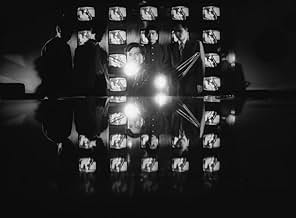
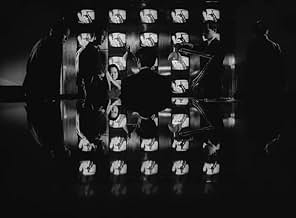
In a brilliant scene that takes place in the 80's, one of many flash forwards into future or imaginary time, the cast of characters is assembled in an open space to hold court. Unable to properly remember a key event, they turn to a figure perched in a high chair holding a film camera to arbitrate. This surrogate filmmaker allows them back in time.
We see how the two lovers met, we see where that love brought them. We get here a beautiful realization, that the man's greatest aspiration, who is a famous scientist, is to be a good husband to his wife. The camera looks back at Mariko Okada, standing a little back from her husband being interviewed, and we see her gracefully, stoically looking out a window. Yoshida's gentle tribute to the love of his life, his wife in real life.
We see an entire life, shared by these two people, be trapped in moral dilemmas and modern anxieties, thought to be important at the time, lifechanging, with hindsight though nothing but trivial. We see them struggle to remember or forget. Yoshida gives us here a bitter last goodbye to the spirit of '68, showing us how the romance with the social struggle grew sour. These ideas having led nowhere, our only chance for happiness is with our other half that completes us. The one romance that matters.
The film is the final moments of consciousness, memory looking back upon itself.
I can't imagine what it must've been to see this back in 1970 with fresh eyes, what possibilities of cinema it may have opened. Thirty years later I can see that some of the things Yoshida foresaw panned out, others didn't. But this film is a maddening enigma that stands the test of that time passed, meaning it's not simply a cultural artifact of New Wave and the time when the revolutionary spirit was believed to be a force of change, but an entire evolutionary phase of cinema, New Wave before and after.
If the movie works then as more than bold experiment, it's because these particular ephemeral struggles are abstracted, the lifetime they in turn inspire and disappoint is fragmented, past and future spinning out of original frameworks. What we get from this rearrangement is a snapshot of human beings caught into disparate planes of existence, wishing to see or connect or recognize meaning in what they do.
In a brilliant scene that takes place in the 80's, one of many flash forwards into future or imaginary time, the cast of characters is assembled in an open space to hold court. Unable to properly remember a key event, they turn to a figure perched in a high chair holding a film camera to arbitrate. This surrogate filmmaker allows them back in time.
We see how the two lovers met, we see where that love brought them. We get here a beautiful realization, that the man's greatest aspiration, who is a famous scientist, is to be a good husband to his wife. The camera looks back at Mariko Okada, standing a little back from her husband being interviewed, and we see her gracefully, stoically looking out a window. Yoshida's gentle tribute to the love of his life, his wife in real life.
We see an entire life, shared by these two people, be trapped in moral dilemmas and modern anxieties, thought to be important at the time, lifechanging, with hindsight though nothing but trivial. We see them struggle to remember or forget. Yoshida gives us here a bitter last goodbye to the spirit of '68, showing us how the romance with the social struggle grew sour. These ideas having led nowhere, our only chance for happiness is with our other half that completes us. The one romance that matters.
The film is the final moments of consciousness, memory looking back upon itself.
Japanese Radicalism, Part Two
An engineer's wife returns home with a lost teenager. A man posing as her dad tries to get her back, causing the engineer to recall his youth as a revolutionary, obscured by dreamlike disruptions of time and space, fantasy and reality.
Although I did not care for "Eros" the way some people do, I actually liked this one a bit more. Yes, the picture is washed out and I wish it was not. But the clever angles and framing made me enjoy the film from the opening shots. It has a very science fiction feeling to it at times, and I wish it had more of that.
As part of the "radicalism trilogy", I would say this is my favorite of the three. I am not crazy about Yoshishige Yoshida, but this film at least struck a bit of a cord with me.
Although I did not care for "Eros" the way some people do, I actually liked this one a bit more. Yes, the picture is washed out and I wish it was not. But the clever angles and framing made me enjoy the film from the opening shots. It has a very science fiction feeling to it at times, and I wish it had more of that.
As part of the "radicalism trilogy", I would say this is my favorite of the three. I am not crazy about Yoshishige Yoshida, but this film at least struck a bit of a cord with me.
Pure Geometric Chaos!
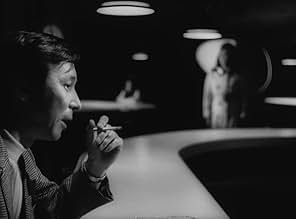
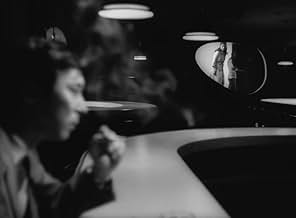
Pure geometric chaos in Yoshida Yoshishige's "Heroic Purgatory", which is also the second film in his Trilogy of Japanese Radicalism, produced under the aegis of Japan's legendary Art Theater Guild. This is probably my fav film of his, especially in terms of visuals. Watching it feels like falling into a trance, I keep chasing the high of watching Heroic Purgatory, but no other Yoshida movie has come close.
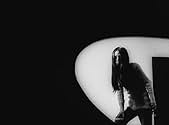
Yoshida's strength is without a doubt his image composition, the way he frames his shots is so meticulously done. The story centers around an engineer and his wife (played by the great Hiroshi Inagaki regular Mariko Okada, who is also Yoshida's spouse and long term collaborator) who find a lost teenager leading the engineer to recall his younger days as a political radical. As this narrative plays out, Nanako's husband tells the story of his past when they met in a time when he was involved in reformist politics. Underneath, this film explores the past, present and future of the early 1970's political radicalism in a volatile Japan. As the film progresses, the temporal space is crushed mixing past, present, and future together. Abandoning linear storytelling for an ethereal trip into a labyrinth of memories, fears and delusions Yoshida gives viewers a stylistic feast injected into a revolutionary thriller. Cinematographer Motokichi Hasegawa and editor Hiroyuki Yasuoka, presents a visual language that recalls other great films (appropriate given Yoshida's background as a film critic...he also wrote a book on the films of Yasujiro Ozu) while continually exploring new ground; there's so many compositions, so many scenes that defy the conventional expectations of filmmaking...it's absolutely intoxicating to behold. Toshi Ichiyanagi's score is also a tremendous win, giving an atmospheric almost science fiction-like vibe to accentuate the stunning visuals.
Yoshida's strength is without a doubt his image composition, the way he frames his shots is so meticulously done. The story centers around an engineer and his wife (played by the great Hiroshi Inagaki regular Mariko Okada, who is also Yoshida's spouse and long term collaborator) who find a lost teenager leading the engineer to recall his younger days as a political radical. As this narrative plays out, Nanako's husband tells the story of his past when they met in a time when he was involved in reformist politics. Underneath, this film explores the past, present and future of the early 1970's political radicalism in a volatile Japan. As the film progresses, the temporal space is crushed mixing past, present, and future together. Abandoning linear storytelling for an ethereal trip into a labyrinth of memories, fears and delusions Yoshida gives viewers a stylistic feast injected into a revolutionary thriller. Cinematographer Motokichi Hasegawa and editor Hiroyuki Yasuoka, presents a visual language that recalls other great films (appropriate given Yoshida's background as a film critic...he also wrote a book on the films of Yasujiro Ozu) while continually exploring new ground; there's so many compositions, so many scenes that defy the conventional expectations of filmmaking...it's absolutely intoxicating to behold. Toshi Ichiyanagi's score is also a tremendous win, giving an atmospheric almost science fiction-like vibe to accentuate the stunning visuals.
7.6/10. Recommended.
This is a very good movie, maybe even great, i enjoyed every minute, it made me search in the web for possible explanations and for sure, i am going to watch other movies of this director, in the future.
However, it's almost impossible to describe it, basically it's too enigmatic to understood it completely. But simultaneously, it was not that cryptic to made me lose my interest. There are many strange movies that annoyed me because they were more pretentious than enigmatic, playing it out like there were so many mysteries to solve, whereas, there was nothing under the surface. HEROIC PURGATORY is not like that. It constantly tease you like you are on the verge of deciphering it, even though, in the end, you're confused. But there is room for interpretation. Similar to David Lynch movies.
This reminded me more of movies based on Alain Robbe-Grillet's scripts, besides, Lynch movies are subsequent. If i had to choose a movie similar to HEROIC PURGATORY, i would say L'Immortelle (Alain Robbe-Grillet) and Paris Belongs to Us (Jacques Rivette). HP is a combination of political drama/thriller and an arthouse drama/mystery. Dream-like atmosphere, rebels, spies, identity of the characters is changing, the same person could be a martyr or a traitor. And there is a girl who claims she's the daughter of this couple (both of them are the leading characters), a girl who's not entirely sure she exists at all.
I loved this movie but it's definitely not for everyone. If you got intrigued by this description, you should watch it.
However, it's almost impossible to describe it, basically it's too enigmatic to understood it completely. But simultaneously, it was not that cryptic to made me lose my interest. There are many strange movies that annoyed me because they were more pretentious than enigmatic, playing it out like there were so many mysteries to solve, whereas, there was nothing under the surface. HEROIC PURGATORY is not like that. It constantly tease you like you are on the verge of deciphering it, even though, in the end, you're confused. But there is room for interpretation. Similar to David Lynch movies.
This reminded me more of movies based on Alain Robbe-Grillet's scripts, besides, Lynch movies are subsequent. If i had to choose a movie similar to HEROIC PURGATORY, i would say L'Immortelle (Alain Robbe-Grillet) and Paris Belongs to Us (Jacques Rivette). HP is a combination of political drama/thriller and an arthouse drama/mystery. Dream-like atmosphere, rebels, spies, identity of the characters is changing, the same person could be a martyr or a traitor. And there is a girl who claims she's the daughter of this couple (both of them are the leading characters), a girl who's not entirely sure she exists at all.
I loved this movie but it's definitely not for everyone. If you got intrigued by this description, you should watch it.
"I will get rid of what I thought my God was"
'Heroic Purgatory' has suffered most of from the obscurity into which Yoshida's trilogy of radicalism has been cast. At least an hour shorter than its predecessor, 'Eros Plus Massacre', it takes that film's tendency to narrative compression and ellipses to an extreme, and a first viewing may render elements virtually incomprehensible, as Yoshida's characteristically bleached-out, askew framing renders public, exterior space a bleached-out, ghostly horizon, glimpsed in the distance as if in perpetual mist or blinding sunlight, and domestic, and interior space an endless series of corridors or bedrooms, of secret spaces, in which characters endlessly circle the space and each other.
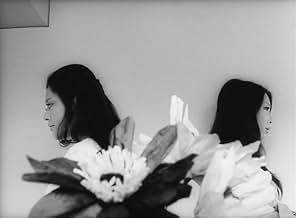
The film opens as Nanako (Mariko Okada) witnesses what appears to be the attempted suicide of a young woman, Ayu (Kazumi Tsutsui), who then follows her to the apartment she shares with her husband, engineer Rikiya (Kaizo Kamoda), the three becoming a kind of strange family unit of 'adopted' children, absent parents and power triangulations. (It's never made clear in Ayu in fact exists or is a kind of mutual projection of the childless couple). Ayu, who, at least initially, speaks only rarely, claims to be 'lost' and disowns the 'father' who comes to the couple's flat to claim her, and who may or may not be either a police spy, a member of the revolutionary cell in which Rikiya was formerly involved, or a genuine father who has lost both his wife and daughter. As the film unfolds, Rikiya recalls his past within that cell during the signing of the 1952 San Francisco treaty--a de facto ceding of colonial power to the occupying American forces, beyond the period of ostensible occupation--as a planned attempt to either kidnap or assassinate an ambassador collapses due to the possible intervention of a spy within the group. This moment is played out again and again, shifting in time and location from 1952 to 1960 (the signing of another treaty of compromise), 1970 (when the film was made) and 1980, ten years in the future: actors play multiple roles, as the original members of the 1952 cell appear to take up roles in 'official society' and their successors among the new waves of radical movements turn against them.
'Eros' memorably presented three alternate versions of the attempted murder that forms the film's climax. Here, virtually every incident appears to be replayed in numerous ways: most notably, the act of potential betrayal and the subsequent trial and possible execution of the supposed 'spy'. A puzzle film like 'Out 1' or 'Inland Empire', 'Heroic Purgatory' is nonetheless more a political than a philosophical reflection. The film ends at the train station at which much of the action has taken place, as Nanako and her 'daughter' board an empty train, only to exit once more and walk back along the platform in front of a sign which reads 'dead end'. They exchange brief dialogue. 'It's over. Nothing left'. 'There's still things to do.' 'Depart to a distant place?' 'I will get rid of what I thought my God was'. As the two women walk towards the camera (back to the city, back to society), the camera focuses on the 'Dead End' sign, previously only a blurred smudge of white in the background, before blurring it out once more. It's a perfect in-joke: the traditional signing off of a film, the boundary re-established between life and cinema, the mechanism of narrative closure that rounds off in a neat summary, with the English language signage reflecting the enforced dominance of American culture and its representational strategies. The Dead End would also seem to refer to the attempt to change society through underground political action, in which, for Yoshida, the same mistakes repeat: the hierarchy, repetition of trauma and, in particular, the patriarchal violence and sadism--which at once condemns sexuality as counter-revolutionary distraction and sublimate it into gendered cruelty. The inability to break a cycle of various kinds of repetition, even in the most radical, vanguard, progressive or advanced of movements--whether official technocracies or revolutionary organisations--is the film's purgatorial territory. It's perfectly possible to view the as presenting a jaded perspective of liberal cynicism. Yet such a view more easily, more comfortably, more cynically fits into narratives of power, defeat and resistance than the film itself offers. Struggles for power may repeat themselves, first as tragedy, then as farce: yet this also means that resistance never ends. Viewed half a century on, Yoshida's projections of the present into both past and future suggest that, for all the moments of suppression, the revolution will continue to be fought.
The film opens as Nanako (Mariko Okada) witnesses what appears to be the attempted suicide of a young woman, Ayu (Kazumi Tsutsui), who then follows her to the apartment she shares with her husband, engineer Rikiya (Kaizo Kamoda), the three becoming a kind of strange family unit of 'adopted' children, absent parents and power triangulations. (It's never made clear in Ayu in fact exists or is a kind of mutual projection of the childless couple). Ayu, who, at least initially, speaks only rarely, claims to be 'lost' and disowns the 'father' who comes to the couple's flat to claim her, and who may or may not be either a police spy, a member of the revolutionary cell in which Rikiya was formerly involved, or a genuine father who has lost both his wife and daughter. As the film unfolds, Rikiya recalls his past within that cell during the signing of the 1952 San Francisco treaty--a de facto ceding of colonial power to the occupying American forces, beyond the period of ostensible occupation--as a planned attempt to either kidnap or assassinate an ambassador collapses due to the possible intervention of a spy within the group. This moment is played out again and again, shifting in time and location from 1952 to 1960 (the signing of another treaty of compromise), 1970 (when the film was made) and 1980, ten years in the future: actors play multiple roles, as the original members of the 1952 cell appear to take up roles in 'official society' and their successors among the new waves of radical movements turn against them.
'Eros' memorably presented three alternate versions of the attempted murder that forms the film's climax. Here, virtually every incident appears to be replayed in numerous ways: most notably, the act of potential betrayal and the subsequent trial and possible execution of the supposed 'spy'. A puzzle film like 'Out 1' or 'Inland Empire', 'Heroic Purgatory' is nonetheless more a political than a philosophical reflection. The film ends at the train station at which much of the action has taken place, as Nanako and her 'daughter' board an empty train, only to exit once more and walk back along the platform in front of a sign which reads 'dead end'. They exchange brief dialogue. 'It's over. Nothing left'. 'There's still things to do.' 'Depart to a distant place?' 'I will get rid of what I thought my God was'. As the two women walk towards the camera (back to the city, back to society), the camera focuses on the 'Dead End' sign, previously only a blurred smudge of white in the background, before blurring it out once more. It's a perfect in-joke: the traditional signing off of a film, the boundary re-established between life and cinema, the mechanism of narrative closure that rounds off in a neat summary, with the English language signage reflecting the enforced dominance of American culture and its representational strategies. The Dead End would also seem to refer to the attempt to change society through underground political action, in which, for Yoshida, the same mistakes repeat: the hierarchy, repetition of trauma and, in particular, the patriarchal violence and sadism--which at once condemns sexuality as counter-revolutionary distraction and sublimate it into gendered cruelty. The inability to break a cycle of various kinds of repetition, even in the most radical, vanguard, progressive or advanced of movements--whether official technocracies or revolutionary organisations--is the film's purgatorial territory. It's perfectly possible to view the as presenting a jaded perspective of liberal cynicism. Yet such a view more easily, more comfortably, more cynically fits into narratives of power, defeat and resistance than the film itself offers. Struggles for power may repeat themselves, first as tragedy, then as farce: yet this also means that resistance never ends. Viewed half a century on, Yoshida's projections of the present into both past and future suggest that, for all the moments of suppression, the revolution will continue to be fought.


Le saviez-vous
- AnecdotesThe second movie in Yoshishige Yoshida's unofficial trilogy on Japanese radicalism. The other two titles are Erosu purasu gyakusatsu (1969) and Kaigenrei (1973).
Meilleurs choix
Connectez-vous pour évaluer et surveiller les recommandations personnalisées
- How long is Heroic Purgatory?Propulsé par Alexa
Détails
- Durée
- 1h 58m(118 min)
- Couleur
- Mixage
- Rapport de forme
- 1.33 : 1
Contribuer à cette page
Suggérer une modification ou ajouter du contenu manquant