

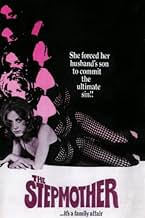
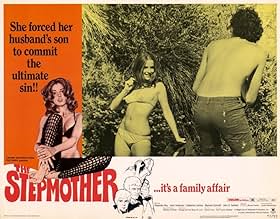
Ajouter une intrigue dans votre langueAs part of a blackmail plot, a woman is forced to seduce her new husband's son. Complications, including murder, ensue.As part of a blackmail plot, a woman is forced to seduce her new husband's son. Complications, including murder, ensue.As part of a blackmail plot, a woman is forced to seduce her new husband's son. Complications, including murder, ensue.
- Réalisation
- Scénariste
- Vedettes
- Nommé pour 1 oscar
- 1 nomination au total
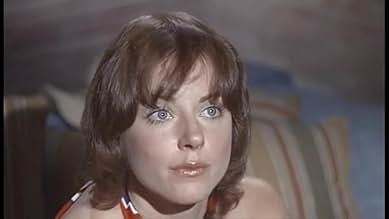


Katherine Justice
- Margo Delgado
- (as Catherine Justice)


Margaret Garcia
- Lupé
- (as Margarite Garcia)
Gil Barreto
- José
- (as Gilberto Berreto)
Bert Madrid
- Mexican Businessman
- (as Burt Madrid)
David Garfield
- Goof
- (as John D. Garfield)
4,1560
1
2
3
4
5
6
7
8
9
10
Avis en vedette
Taboo (4.4)
Ban, a sacred prohibition by which certain people or objects are considered untouchable, certain actions unperformable, certain words unspeakable. The sinful relationship between the stepmother and her stepson is the film's breaking point, revealing the dark side of desire and sexual repression. The marriage founders because of this betrayal and the lies used to hide it. The violence stems from domestic evil, not from external enemies, but from within the home. The protagonist is violent and kills in the grip of jealousy, unleashing a spiral of guilt, cover-ups, and lies. He doesn't even seek redemption, driven only by insane jealousy. The female figure is not only a seductress, but also an element of fragility, using sensuality as a mask for her existential unease.
Real estate developer Frank Delgado (Alejandro Rey), returning home from a business trip, finds a friend at home who confesses to having sex with his wife, Margo (Katherine Justice). Enraged by jealousy, Frank kills him. From that night onward, his partner Dick Hill (Larry Linville) begins to suspect something is afoot, but in an accident, he falls from a building during an argument with Frank and dies. Dick's wife, Sonya Hill (Marlene Schmidt), becomes his new partner, raising Inspector Darnezi's (John Anderson) suspicions of an affair between her and Frank.
Director Howard Avedis (4.0) attempts to craft a Hitchcockian thriller, but his success is limited, partly due to the modest means available; the screenplay (5.0) by the director himself alternates between a slow pace and sudden accelerations, with some "disjointed" or redundant sequences and an excessive use of freeze-frame; from a technical standpoint (5.0), Robert Steadman's cinematography stands out, despite its technical limitations, it manages to create a sufficiently realistic atmosphere; Audrey Granville's soundtrack is melodramatic, contrasting too much with the delicate song "Strange Are the Ways of Love" by Sammy Fain and Paul Francis Webster (nominated); the cast (4.0) is very disappointing, out of character, stiff, and unbelievable, with the only exceptions being the two female leads, Justice and Schmidt.
Best moment: Probably the beginning, where the film presents itself for what it is: poor acting, a morbid plot, technically modest, but with a beautiful song that proves that even in a pigsty, a beautiful flower can grow. Worth watching when you have nothing better to do, or you want to fall asleep listening to a voice that keeps you company.
Real estate developer Frank Delgado (Alejandro Rey), returning home from a business trip, finds a friend at home who confesses to having sex with his wife, Margo (Katherine Justice). Enraged by jealousy, Frank kills him. From that night onward, his partner Dick Hill (Larry Linville) begins to suspect something is afoot, but in an accident, he falls from a building during an argument with Frank and dies. Dick's wife, Sonya Hill (Marlene Schmidt), becomes his new partner, raising Inspector Darnezi's (John Anderson) suspicions of an affair between her and Frank.
Director Howard Avedis (4.0) attempts to craft a Hitchcockian thriller, but his success is limited, partly due to the modest means available; the screenplay (5.0) by the director himself alternates between a slow pace and sudden accelerations, with some "disjointed" or redundant sequences and an excessive use of freeze-frame; from a technical standpoint (5.0), Robert Steadman's cinematography stands out, despite its technical limitations, it manages to create a sufficiently realistic atmosphere; Audrey Granville's soundtrack is melodramatic, contrasting too much with the delicate song "Strange Are the Ways of Love" by Sammy Fain and Paul Francis Webster (nominated); the cast (4.0) is very disappointing, out of character, stiff, and unbelievable, with the only exceptions being the two female leads, Justice and Schmidt.
Best moment: Probably the beginning, where the film presents itself for what it is: poor acting, a morbid plot, technically modest, but with a beautiful song that proves that even in a pigsty, a beautiful flower can grow. Worth watching when you have nothing better to do, or you want to fall asleep listening to a voice that keeps you company.
Larry Linville was in this ... the one from MASH
Awesome. I did a double take when I first saw him in this quirky little independent ditty from the early 70s. Just out of curiosity I looked at when he started work on MASH, and it was the same year. That explains his appearance, as I don't believe he would do this after international stardom, but I don't know if all the research in the world wide web could fully explain the movie.
It's really a movie in two parts: the first half(ish) is story of a husband with a temper and jealous streak and throughout the second half the title of the movie is explored a little more and fleshed out (pun intended). Typical incoherent, excuse for a young filmmaker to get his name out by throwing in gratuitous walking-out-of-bed or to-and-from- the-bathroom-shot drive-in cinema with a director that never graduated from the genre in his short (directorial) career. There are moments of interesting story or character development, and the title song was amazingly nominated for an Oscar, but overall this is only worth watching for someone with an interest in films from the 1970s.
It's really a movie in two parts: the first half(ish) is story of a husband with a temper and jealous streak and throughout the second half the title of the movie is explored a little more and fleshed out (pun intended). Typical incoherent, excuse for a young filmmaker to get his name out by throwing in gratuitous walking-out-of-bed or to-and-from- the-bathroom-shot drive-in cinema with a director that never graduated from the genre in his short (directorial) career. There are moments of interesting story or character development, and the title song was amazingly nominated for an Oscar, but overall this is only worth watching for someone with an interest in films from the 1970s.
Not as good as The Stepfather.
Arriving home from a business trip, Frank Delgado (Alejandro Rey) finds that his wife Margo (Katherine Justice) has been entertaining his client Alan. In a jealous rage, Frank accosts Alan as he leaves his house, strangling him to death. After disposing of the body, Frank returns home, but the police are soon on his trail.
Believe it or not, drive-in flick The Stepmother was nominated for an Oscar in the best song category; it didn't win, but it's an interesting fact for avid fans of low budget '70s trash, the only people for whom this film will hold any kind of appeal.
A tawdry drama/thriller, The Stepmother is far from great cinema, suffering from a meandering storyline that takes an age to go anywhere, but it does deliver a few fun elements along the way, including those staples of the exploitation genre, violence and nudity (including the obligatory shower scene).
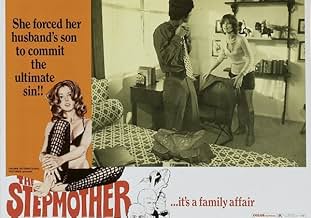
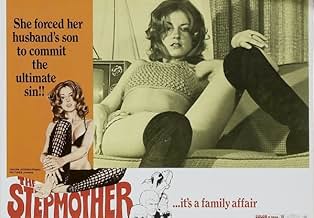
The film also features a spot of jazz flute (always a bonus in my book), bizarre use of random slo-mo and freeze frame, a crazy film director called Goof who uses beatnik speak (It's a gas! You dig?), a seduction scene between Margo and Frank's virginal son Steve (Rudy Herrera Jr.), and a couple of moments that I found unintentionally funny (the death of Frank's friend and the 'He's got a gun!' ending).
Worth seeing if only for the beautiful Ms. Justice. 4/10
Believe it or not, drive-in flick The Stepmother was nominated for an Oscar in the best song category; it didn't win, but it's an interesting fact for avid fans of low budget '70s trash, the only people for whom this film will hold any kind of appeal.
A tawdry drama/thriller, The Stepmother is far from great cinema, suffering from a meandering storyline that takes an age to go anywhere, but it does deliver a few fun elements along the way, including those staples of the exploitation genre, violence and nudity (including the obligatory shower scene).
The film also features a spot of jazz flute (always a bonus in my book), bizarre use of random slo-mo and freeze frame, a crazy film director called Goof who uses beatnik speak (It's a gas! You dig?), a seduction scene between Margo and Frank's virginal son Steve (Rudy Herrera Jr.), and a couple of moments that I found unintentionally funny (the death of Frank's friend and the 'He's got a gun!' ending).
Worth seeing if only for the beautiful Ms. Justice. 4/10
More 70's drive-in fun from Crown International
A hot-headed architect thinks his wife is cheating on him, which leads him to murder. Another, even worse guy gets the blame but the police still have suspicions. Meanwhile, the stress of all this palaver drives his wife to seduce his son.
This drive-in flick was made by exploitation specialists Crown International in the period when they were producing their most consistently interesting work. While this isn't amongst their best as such, it's still effective enough and gets by quite a bit off the back of its early 70's charms. It has to be said that it indeed does take a long while before the title of the movie attains any relevance whatsoever but that's just one of the factors that gives this one its goofy appeal I reckon. So long as you don't go into this one with unrealistic expectations, then I think a pretty good time can be had. Its simple-minded melodrama kept me entertained in any case. On a final note, and what has to be the one thing that will always make this one at least a footnote in cinema history is the quite unbelievable fact that the crooning song with Latin beat that plays over the credits entitled 'Strange Are the Ways of Love' was actually nominated for an Academy Award! There is no way on Earth I ever expected anything from Crown International got anywhere near Oscar territory. The early 70's truly were strange days indeed
This drive-in flick was made by exploitation specialists Crown International in the period when they were producing their most consistently interesting work. While this isn't amongst their best as such, it's still effective enough and gets by quite a bit off the back of its early 70's charms. It has to be said that it indeed does take a long while before the title of the movie attains any relevance whatsoever but that's just one of the factors that gives this one its goofy appeal I reckon. So long as you don't go into this one with unrealistic expectations, then I think a pretty good time can be had. Its simple-minded melodrama kept me entertained in any case. On a final note, and what has to be the one thing that will always make this one at least a footnote in cinema history is the quite unbelievable fact that the crooning song with Latin beat that plays over the credits entitled 'Strange Are the Ways of Love' was actually nominated for an Academy Award! There is no way on Earth I ever expected anything from Crown International got anywhere near Oscar territory. The early 70's truly were strange days indeed
Good cast, typical results
In the 70's, you would see a lot of skin in drama and thrillers. Then there's the sex factor that goes along with it. In "The Stepmother", there is plenty of that. Alejandro Rey("The Flying Nun") plays Frank, a successful building contractor who catches his client with his wife while he was on a business trip. He kills him, then buries his body at a beach. Unbeknownst to him, there's a fighting couple that comes up later. After getting rid of the evidence, the police comes up and tells that there are two bodies at the beach. Frank knows that he killed his client, but the other body is female. That makes him more uneasy. If that is bad, it gets worse when he accidentally kills his partner in the business. That makes him more unstable. For this one, business and pleasure, don't mix.
It has a great cast. But the ending was a letdown. It's worth the watch in certain ways. Only on a certain occasion.
2 out of 5 stars


Le saviez-vous
- AnecdotesThe Oscar nomination for "Strange Are The Ways Of Love" for Best Song marked the only time a Crown International Picture title got an Oscar nomination. It lost to "The Morning After" from L'aventure du Poséidon (1972).
- Citations
Sonya Hill: My life's empty without Dick.
- ConnexionsFeatured in Dusk to Dawn Drive-In Trash-o-Rama Show Vol. 8 (2002)
- Bandes originalesStrange Are The Ways Of Love
(theme song)
Music by Sammy Fain
Lyrics by Paul Francis Webster
Arranged by Robert Matthews
Vocal by Manuel
Meilleurs choix
Connectez-vous pour évaluer et surveiller les recommandations personnalisées
- How long is The Stepmother?Propulsé par Alexa
Détails
- Date de sortie
- Pays d’origine
- Site officiel
- Langue
- Aussi connu sous le nom de
- Impulsion
- Lieux de tournage
- Los Angeles, Californie, États-Unis(Filiming City)
- société de production
- Consultez plus de crédits d'entreprise sur IMDbPro
Contribuer à cette page
Suggérer une modification ou ajouter du contenu manquant