ÉVALUATION IMDb
7,0/10
1,6 k
MA NOTE

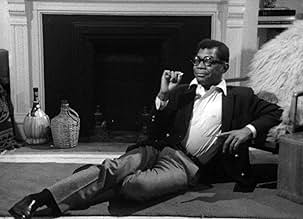
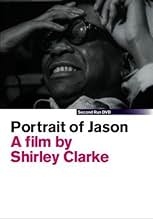
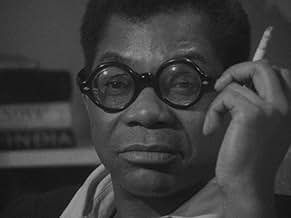
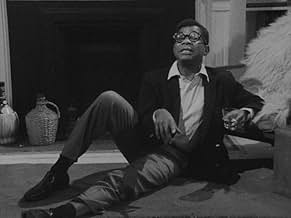
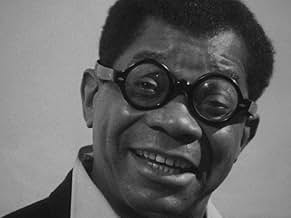
Ajouter une intrigue dans votre langueBlack gay prostitute Jason Holliday is rigorously interviewed on his story and character, revealing nuanced truths about life and art.Black gay prostitute Jason Holliday is rigorously interviewed on his story and character, revealing nuanced truths about life and art.Black gay prostitute Jason Holliday is rigorously interviewed on his story and character, revealing nuanced truths about life and art.
- Réalisation
- Vedettes
- Prix
- 1 victoire au total


7,01.6K
1
2
3
4
5
6
7
8
9
10
Avis en vedette
The cameraman got in the way of the story
Another reviewer mentioned that this was the kind of film few people would watch until the end. I found it fascinating as this was probably one of the first surviving filmed attempts to capture true stories of gay life on screen, and not just gay life, but life as an African American gay man who was 42 when this film was made in 1966, pre Stonewall. Jason was drinking and smoking pot throughout, almost as though he had to get high to remember without being distraught. Yet he has a friendly smiling demeanor pretty much throughout. He mentions what a drag it was punching a 9 to 5 clock, but then it seems that only work as a servant was available to him, and then being a servant to rich people who presumed all black servants stole from them.
I really hated the camera-work on this one. The camera frequently puts Jason out of focus, and then sometimes the screen just faded to black WHILE Jason was talking to the point that I began to wonder if I was having trouble with my satellite reception. When it happened enough times I realize that somebody thought that all of this messing with the camera was actually accentuating Jason's story when I found it darn irritating.
Still I'd recommend it. Just realize you probably have to be in a particular mood to watch it, and be willing for the subject to get around to telling the more troubling episodes from his life as he seems to have to work up to being able to get that part of his life story out there.
I really hated the camera-work on this one. The camera frequently puts Jason out of focus, and then sometimes the screen just faded to black WHILE Jason was talking to the point that I began to wonder if I was having trouble with my satellite reception. When it happened enough times I realize that somebody thought that all of this messing with the camera was actually accentuating Jason's story when I found it darn irritating.
Still I'd recommend it. Just realize you probably have to be in a particular mood to watch it, and be willing for the subject to get around to telling the more troubling episodes from his life as he seems to have to work up to being able to get that part of his life story out there.
Exploitation of Jason ; by Shirley Clarke
Jason Holliday is a man that has his share of pain and has his own ways to cope with it all.
He was interesting, but I kept feeling I was witnessing the exploitation of Jason by rich white upper class artsy woman Shirley Clarke. Shirley like many others, found a subject to exploit. So that she -without a story - could have a story. It did not feel ethical, it didnt feel good to watch it in this way. In these days and times, Jason could have done it himself, or maybe by someone in a sincere way. Exploitation like this is sadly still done to this day. Most don't seem to be able to see or feel it. Since most of the audiences of these kind of movies/documentaries are people from the same background as Shirley.
New York, New York/ it's a hell.
Notes from the underground. It helps to have a "little fella" at hand while watching this off-beat classic. Weirdly, there was no mention of Warhol's scene. Or maybe not so weirdly, as, though as wacky and self-absorbed as any "superstar", Jason was too uptown for that scene. He probably used to hang out at the Cafe Carlyle during Bobby Short's residence. / I knew a fair number of people in New York who were on Jason's kind of trip, the hustlers who focus on lonely rich folks. They justified their lifestyle as hip, or alternative, or as a kind of stardom. They were a lot like Jason, by turns fun, hypersensitive, and bitchy. Jason is fun to watch, and i can see him in "Laugh-In", or as a black gay Lenny Bruce. I saw acting potential in two hustler friends, but like Jason the only stage they understood was the stage of life.
The saddest part in this film is Jason's ho-hum night club act; you can't wait till he returns to his desperate performance-in-life.
The saddest part in this film is Jason's ho-hum night club act; you can't wait till he returns to his desperate performance-in-life.
At Least An Hour Too Long
A worthwhile person to capture on film (black and openly gay in the mid 60s) but the director needed boil Jason's stories down into a rough script and shoot off of it.
With a shooting outline and some thought to where and how the subject was going to be shot, the movie would have been dramatically better.
Still worth a watch? Yes, of course. It is a historical document like no other and worth taking in for that reason alone.
With a shooting outline and some thought to where and how the subject was going to be shot, the movie would have been dramatically better.
Still worth a watch? Yes, of course. It is a historical document like no other and worth taking in for that reason alone.
Unforgettable more than enjoyable
Shirley Clarke admitted she made films for people who already understood her wavelength. While that cannot be used as an excuse, it does make Portrait of Jason a challenge. Will you dismiss it as the nauseous ramblings of an ageing black homosexual prostitute? Or might you even pronounce it, as revered Swedish director Ingmar Bergman did, "The most fascinating film I've ever seen"? There are films that you enjoy. And films that stick with you. Ones that make an impression even if it wasn't a pleasant one. This is maybe one of those. Jason, talking of his own life, couldn't have put it better. "It only hurts when you think of it. And if you're real you'll think of it a long, long time." The moral tightrope the filmmakers tread - pushing a man to the brink of despair - is mesmerising. The techniques, which also question the nature of documentary itself, leave many questions unanswered.
There is affectionate voyeurism that we have all maybe engaged in. When friends get drunk or do silly things. There's a saying, "God remembers us by our mistakes, not our perfections." But what of more uncomfortable revelations? Made unwillingly or willingly? Does the sanctimonious label of 'truth-telling' justify hurt? Does complicity? Today we are bombarded with Jerry Springer style TV 'confessions'. We are inured to 'reality shows'. In the late 60s, documentary film-making was enjoying new found freedoms in showing 'truth'. Portrait of Jason has rightly been described as a journey into a man's soul. But it mirrors the transformation of voyeurship with the advent of the video. "The very thing that was trying to be hidden is now the thing that is trying to be exposed," Clarke explained. Where the audience was the watcher, the filmmaker is now the watcher. In Portrait of Jason, putting something on film changes the dynamic intensity what was boring in real life becomes fascinating once it is filmed and edited.
The film-making process of Portrait of Jason deliberately interacts with the subject. Not to manipulate truth, but to elicit a deeper truth. It has been called 'self-reflexive documentary.' The eponymous Jason introduces himself at length, but later contradicts himself, admitting his real name is Aaron Payne. The process has become part of the subject matter. What can be believed? Portrait of Jason is Warholian in its simplicity. A middle-aged black man talks on camera for an hour and three-quarters. But the bite is that although willing, he is obviously not only under the influence of drink and drugs: he is tired and repeatedly gets up to go home. That it has been edited down from twelve hours of footage is testimony to the reality of the camera's lengthy cross-examination.
Jason Holliday is a remarkable individual. And also a nobody. For him, this film is an opportunity to be immortalised. "It is a nice feeling," he explains. Something he will always have and treasure.
At the beginning, Jason revels in self-caricature. The fact that he is a drug-user and a prostitute. "I'm a stoned whore!" he boasts with camp exuberance. We learn he grew up with an overbearing father which he describes with the wit of a stand-up comedian. He makes amusing stories out of his road to homosexuality. He always wanted to be a stage performer and delights in showing us his material, donning a hat to do an impression of Mae West.
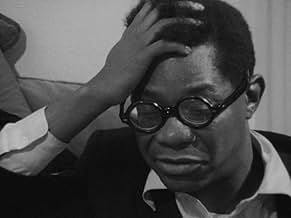
But the 'evening' wears on. Jason's ability to project his misery as something we can laugh at wears thin. He is tired. But he still rises to the call for 'material'. This, together with the questioning, connects to his desperate side. He wants to show us he is proud of his life. We are drawn in but at the same time maybe not wanting to know. "How did you get the 75 cents for the bed?" When Jason breaks down and cries we know we have hit rock bottom. Documentary 'truth' by a process of wearing down. But is it fair to do this to any human being? I leave the auditorium with a bad taste in my mouth. But days later I realise the film has made a deeper impression on me than many I have seen. The insights into racism in the U.S. ("The great problem of our time," as Shirley Clarke called it) are humbling. Certain phrases stick in my mind. "Are you lonely?" they asked him. "I'm desperate," he replies, "but I'm cool!" And in spite of the hell he has been through he says he is, "Happy about the whole thing," when asked about the filming. It was maybe not the immortalisation he expected. But Jason Holliday will certainly never be forgotten. I start to think that Clarke did him a kindness. Then I read how, in a 1983 interview, she had admitted, "I started out that evening with hatred, and there was a part of me that was out to do him in, get back at him, kill him." Did my previous judgement hold true? Even if her motives were not as clean as I had given her credit for? It seems to me that Clarke maybe uses Holliday as a means to an end, even if that end is breaking new ground in film-making. Films such as Capturing the Friedmans, many years later, although made with the family's consent, would expose their subjects to a scrutiny that was not always favourable. Yet elements of the moral uneasiness of that much later documentary are apparent in Portrait of Jason. In Freidmans, we justify intrusion because of willingness and the possibility that serious harm has been committed. But Jason doesn't stand accused. Then again, it is one of the earliest films to look at a gay protagonist in an open and (arguably) sympathetic manner. It may be that the benefits outweigh any harm. He forever tells us, "I'll never tell." But evidently needs little encouragement to do so.
There is affectionate voyeurism that we have all maybe engaged in. When friends get drunk or do silly things. There's a saying, "God remembers us by our mistakes, not our perfections." But what of more uncomfortable revelations? Made unwillingly or willingly? Does the sanctimonious label of 'truth-telling' justify hurt? Does complicity? Today we are bombarded with Jerry Springer style TV 'confessions'. We are inured to 'reality shows'. In the late 60s, documentary film-making was enjoying new found freedoms in showing 'truth'. Portrait of Jason has rightly been described as a journey into a man's soul. But it mirrors the transformation of voyeurship with the advent of the video. "The very thing that was trying to be hidden is now the thing that is trying to be exposed," Clarke explained. Where the audience was the watcher, the filmmaker is now the watcher. In Portrait of Jason, putting something on film changes the dynamic intensity what was boring in real life becomes fascinating once it is filmed and edited.
The film-making process of Portrait of Jason deliberately interacts with the subject. Not to manipulate truth, but to elicit a deeper truth. It has been called 'self-reflexive documentary.' The eponymous Jason introduces himself at length, but later contradicts himself, admitting his real name is Aaron Payne. The process has become part of the subject matter. What can be believed? Portrait of Jason is Warholian in its simplicity. A middle-aged black man talks on camera for an hour and three-quarters. But the bite is that although willing, he is obviously not only under the influence of drink and drugs: he is tired and repeatedly gets up to go home. That it has been edited down from twelve hours of footage is testimony to the reality of the camera's lengthy cross-examination.
Jason Holliday is a remarkable individual. And also a nobody. For him, this film is an opportunity to be immortalised. "It is a nice feeling," he explains. Something he will always have and treasure.
At the beginning, Jason revels in self-caricature. The fact that he is a drug-user and a prostitute. "I'm a stoned whore!" he boasts with camp exuberance. We learn he grew up with an overbearing father which he describes with the wit of a stand-up comedian. He makes amusing stories out of his road to homosexuality. He always wanted to be a stage performer and delights in showing us his material, donning a hat to do an impression of Mae West.
But the 'evening' wears on. Jason's ability to project his misery as something we can laugh at wears thin. He is tired. But he still rises to the call for 'material'. This, together with the questioning, connects to his desperate side. He wants to show us he is proud of his life. We are drawn in but at the same time maybe not wanting to know. "How did you get the 75 cents for the bed?" When Jason breaks down and cries we know we have hit rock bottom. Documentary 'truth' by a process of wearing down. But is it fair to do this to any human being? I leave the auditorium with a bad taste in my mouth. But days later I realise the film has made a deeper impression on me than many I have seen. The insights into racism in the U.S. ("The great problem of our time," as Shirley Clarke called it) are humbling. Certain phrases stick in my mind. "Are you lonely?" they asked him. "I'm desperate," he replies, "but I'm cool!" And in spite of the hell he has been through he says he is, "Happy about the whole thing," when asked about the filming. It was maybe not the immortalisation he expected. But Jason Holliday will certainly never be forgotten. I start to think that Clarke did him a kindness. Then I read how, in a 1983 interview, she had admitted, "I started out that evening with hatred, and there was a part of me that was out to do him in, get back at him, kill him." Did my previous judgement hold true? Even if her motives were not as clean as I had given her credit for? It seems to me that Clarke maybe uses Holliday as a means to an end, even if that end is breaking new ground in film-making. Films such as Capturing the Friedmans, many years later, although made with the family's consent, would expose their subjects to a scrutiny that was not always favourable. Yet elements of the moral uneasiness of that much later documentary are apparent in Portrait of Jason. In Freidmans, we justify intrusion because of willingness and the possibility that serious harm has been committed. But Jason doesn't stand accused. Then again, it is one of the earliest films to look at a gay protagonist in an open and (arguably) sympathetic manner. It may be that the benefits outweigh any harm. He forever tells us, "I'll never tell." But evidently needs little encouragement to do so.


Le saviez-vous
- AnecdotesThis film was previously thought to have been lost, until a 16 mm print of the film was discovered at the Wisconsin Center for Film and Theater Research in 2013 and has since been restored by the Academy Film Archive, Milestone Films and Modern Videofilm.
Meilleurs choix
Connectez-vous pour évaluer et surveiller les recommandations personnalisées
- How long is Portrait of Jason?Propulsé par Alexa
Détails
- Date de sortie
- Pays d’origine
- Langue
- Aussi connu sous le nom de
- Портрет Джейсона
- Lieux de tournage
- sociétés de production
- Consultez plus de crédits d'entreprise sur IMDbPro
- Durée
- 1h 45m(105 min)
- Couleur
- Mixage
Contribuer à cette page
Suggérer une modification ou ajouter du contenu manquant