ÉVALUATION IMDb
7,5/10
24 k
MA NOTE


Lors de vacances sur une île scandinave isolée avec sa jeune femme enceinte, un artiste âgé fait une dépression nerveuse tout en affrontant ses désirs refoulés.Lors de vacances sur une île scandinave isolée avec sa jeune femme enceinte, un artiste âgé fait une dépression nerveuse tout en affrontant ses désirs refoulés.Lors de vacances sur une île scandinave isolée avec sa jeune femme enceinte, un artiste âgé fait une dépression nerveuse tout en affrontant ses désirs refoulés.
- Réalisation
- Scénariste
- Vedettes
- Prix
- 2 victoires au total



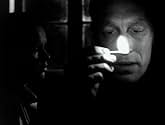


Agda Helin
- von Merken's Maid
- (uncredited)
Lenn Hjortzberg
- Kreisler
- (uncredited)
Mikael Rundquist
- Boy in Dream
- (uncredited)

Folke Sundquist
- Tamino
- (uncredited)
7,524.4K
1
2
3
4
5
6
7
8
9
10
Avis en vedette
one of bergman's best
a lot of even of the most loyal bergman fans claim that they came away from this one confused and irritated, and found it lacking in meaningful symbolism. i wonder if they watched the same movie i did?? this is just about one of the most intriguing, imaginative horror movies i've ever seen, and it is indispensable for those who enjoy the occasional dip into the proverbial pool of cinematic madness and mental derangement. i'm not in uncritical praise of everything bergman made, and some of his movies are admittedly a bit heavy handed and depressing, but i see this one as an example of what he could do when he decided to go all out. johann (max von sydow) and alma (liv ullmann)are husband and wife, and sydow's character is basically a tormented artist who has moved to the deceptively serene and quiet island with his wife to collect himself and try to escape his personal demons. to say the least, it doesn't exactly pan out that way. i believe the constant darkness and atmosphere of chaos and fear in the film is a metaphor for the human condition, because when you really reflect on it, we can never tell if the impressions we get and the ideas we have are projections of our imaginations or have some basis in reality, just as johann and his loyal wife cannot tell if these superficially amiable but suspiciously odd people are really there or are illusory creations of his mind. lindhorst, 'the birdman', is a particularly chilling character, and i would venture to say that the scene in which he puts on a puppet show for the couple and the rest of the socialites/demons is the key to the film. lindhorst creates a scene from mozart's "the magic flute", and recites (during a truly haunting close up), the dialogue from a scene crucial to the meaning of the symphony. one of the crucial characters, tamino (and anyone into mozart will understand what i'm talking about)collapses in the *palace of wisdom*, that is, a terrible place where he has discovered the tragic truth about human life and it's meaninglessness, and asks desperately "when will mine eyes the daylight see?" lindhorst is quick to recite the reply:"soon, soon fair youth..or never." he then goes on to talk about how mozart was terminally ill at the time of it's composition, and i would not be surprised if this entire scene was a metaphor for the artists' struggle with the fact of death and it's crushing finality:how can the creative individual, more sensitive to the issue of ultimate meaning as regards the human condition, be content or happy with anything when he knows that the world just might be and probably is what thomas carlyle called it, "an uncaring hall of doom"? how can we be sure of our meanings, when they could be wishful projections of our own minds, when the beliefs we have about ourselves and others cannot be purely objective or subjective? if this is the case, don't we necessarily live in a shadow house of illusions and absurdities? anyone with half a brain can see that there IS existential symbolism in this film. rich, unbearably tense, masterful horror and surrealism at it's finest. buy it.
10neil-313
Genuine horror
This seems to be one that divides fans of the master, but I loved it. It's easy to see why people see this as being a bit of an odd-one-out in Bergman's output: it's very direct in it's depiction of disturbed states of mind, directly illustrating hallucinatory states rather than just hinting at them. Others have pointed to references to other films of the horror genre, which seem undeniable.
Not that you'd mistake this for a film by anyone but Bergman. It's rich in connections with other of his films and autobiographical references (such as the terrifying description of being locked in a cupboard as a child). It can be reasonably thought of as Bergman's 'horror film' but he takes on the genre very much on his own terms.
It's a film that lingers long in the mind, with many unforgettable scenes (including the amazing Magic Flute scene) aided by Sven Nykvist's wonderful chiaroscuro photography. The use of music is (as ever with Bergman, the most musical of directors) extremely intelligent: the scene with the boy is set apart from the rest as much by the music as the photography.
Given the quality of the cast, you'd expect superb performances. As ever, von Sydow and Ullmann are excellent, with equally good supporting performances.
At times I was reminded of Rilke's only novel, The Notebook of Malte Laurids Brigge. If you don't know this, I urge you to seek out a copy: there's a distinctly Bergmanesque atmosphere to the whole work, but there are specific images that seem to link to this film.
This is a film that repays repeated viewings. Despite it's extremely disturbing subject matter, to me it's not as emotionally draining as many of Bergman's other films (such as Shame or Winter Light), in spite of (or perhaps because of) the visual horrors on display. Still, I recommend it very highly.
Not that you'd mistake this for a film by anyone but Bergman. It's rich in connections with other of his films and autobiographical references (such as the terrifying description of being locked in a cupboard as a child). It can be reasonably thought of as Bergman's 'horror film' but he takes on the genre very much on his own terms.
It's a film that lingers long in the mind, with many unforgettable scenes (including the amazing Magic Flute scene) aided by Sven Nykvist's wonderful chiaroscuro photography. The use of music is (as ever with Bergman, the most musical of directors) extremely intelligent: the scene with the boy is set apart from the rest as much by the music as the photography.
Given the quality of the cast, you'd expect superb performances. As ever, von Sydow and Ullmann are excellent, with equally good supporting performances.
At times I was reminded of Rilke's only novel, The Notebook of Malte Laurids Brigge. If you don't know this, I urge you to seek out a copy: there's a distinctly Bergmanesque atmosphere to the whole work, but there are specific images that seem to link to this film.
This is a film that repays repeated viewings. Despite it's extremely disturbing subject matter, to me it's not as emotionally draining as many of Bergman's other films (such as Shame or Winter Light), in spite of (or perhaps because of) the visual horrors on display. Still, I recommend it very highly.
"The hour when ghosts and demons are most powerful"
"Hour of the Wolf" (1968) is one of my favorite Bergman's films. I place it close to "Persona" to which it is a perfect matching piece. This impressive and disturbing movie about the loss of sanity by a tormented artist is another magnificent work of Ingmar Bergman, the closest to the horror genre he ever directed with his regular actors, Max von Sydow who is amazing as Johan and his Muse Liv Ullmann who is equally compelling as Alma, Jonah's wife. The film takes place on an isolated, windy island where Johan and pregnant Alma moved in hope for Johan to work on his paintings and where he is haunted by nightmares from the past that may or may not be just his dreams. They come to torture him during The Hour of the Wolf which Bergman describes as "the hour between night and dawn. It is the hour when most people die, when sleep is deepest, when nightmares are more real. It is the hour when the sleepless are haunted by their deepest fear, when ghosts and demons are most powerful. The Hour of the Wolf is also the hour when most children are born."
Bergman has always been obsessed and fascinated by the inner demons that imagination can create and like no other filmmaker has explored the deepest mysteries of human soul and mind.
Surrealistic, Gothic and dark horror film, with its magnificent black and white cinematography provided by Bergman's long time friend and collaborator, Sven Nykvist, "The Hour of the Wolf" is a frightening view of the mind of a mad person.
It's been mentioned in more than one comment and I agree that David Lynch might have seen "Hour of the Wolf" more than once and was influenced by it when working on his own dark and surrealistic "Erazerhead".
9.5/10
Bergman has always been obsessed and fascinated by the inner demons that imagination can create and like no other filmmaker has explored the deepest mysteries of human soul and mind.
Surrealistic, Gothic and dark horror film, with its magnificent black and white cinematography provided by Bergman's long time friend and collaborator, Sven Nykvist, "The Hour of the Wolf" is a frightening view of the mind of a mad person.
It's been mentioned in more than one comment and I agree that David Lynch might have seen "Hour of the Wolf" more than once and was influenced by it when working on his own dark and surrealistic "Erazerhead".
9.5/10
A dissenting view.
I can't agree with most of the comments above, and particularly find myself taking the completely opposing view to Adrian Ekdahl. While HOUR OF THE WOLF seems eminently worth viewing (what Bergman film isn't?), I think it's substantially less compelling and essential than SHAME, made the same year with the same two principal players.
It took me a long time to see VARGTIMMEN, and I've finally seen it tonight on the big screen. But while I feel it's an essential enough part of the overall Bergman canon, I'd have to place it squarely in the b-list as far as its coherence and overall effectiveness.
While it contains an unusual level of creepiness by Bergman standards (and a complete journey into surrealism, brief as it is, in the final reel that seems very un-Bergmanesque -- he loves his symbolic images, but rarely has he gone this ambiguously surreal route), the truth seems to be that many many directors have achieved more with this kind of film than this film does. Bergman seems a bit out of his element here. Because most of his films utilize his trademark techniques in the service of a subtle, finely-observed, provocative examination of some difficult aspect of human existence, VARGTIMMEN seems to lose its coherence quite a bit in pursuit of something which is admittedly unusual for Bergman.
Ultimately it seems to examine three themes: 1) Can we, if haunted by things that become inarticulable, go mad from them? 2) Can we, if we love or are attuned enough to those we love, share their demons with them? 3) Schizophrenia. (This appears to me to be what Johan Borg seems to be suffering from).
These are interesting themes, to be sure. But Bergman doesn't seem to really go very deeply into them. Instead, he's kind of skimming the surface (uncharacteristic for him) while enjoying (if that can be the right word) the ambiguity of our knowledge of what's going on. Strangely, while I rarely find Bergman emptily pretentious or needlessly arty (which he is obviously occasionally accused of), this film brought me as close to feeling that way as anything I've ever seen of his. Perhaps it's because he wasn't truly at home in these themes of supernatural/horror, etc. This film actually seems DERIVATIVE of better films, like a Franju's EYES WITHOUT A FACE or even DEAD OF NIGHT. Rarely does Bergman suffer in comparison with other filmmakers who came before him. SHAME (again, made that same year, virtually right after this film), is by contrast a deeply troubling, finely wrought examination of far more (to me) compelling, complex, essential and provocative human issues. I would return again and again to SHAME, but I feel no real need to see HOUR OF THE WOLF again.
It belongs in the canon, yes, and should be seen. But while it is a bit unusual visually, I think it winds up seeming rather minor thematically in the overall pantheon of his work.
It took me a long time to see VARGTIMMEN, and I've finally seen it tonight on the big screen. But while I feel it's an essential enough part of the overall Bergman canon, I'd have to place it squarely in the b-list as far as its coherence and overall effectiveness.
While it contains an unusual level of creepiness by Bergman standards (and a complete journey into surrealism, brief as it is, in the final reel that seems very un-Bergmanesque -- he loves his symbolic images, but rarely has he gone this ambiguously surreal route), the truth seems to be that many many directors have achieved more with this kind of film than this film does. Bergman seems a bit out of his element here. Because most of his films utilize his trademark techniques in the service of a subtle, finely-observed, provocative examination of some difficult aspect of human existence, VARGTIMMEN seems to lose its coherence quite a bit in pursuit of something which is admittedly unusual for Bergman.
Ultimately it seems to examine three themes: 1) Can we, if haunted by things that become inarticulable, go mad from them? 2) Can we, if we love or are attuned enough to those we love, share their demons with them? 3) Schizophrenia. (This appears to me to be what Johan Borg seems to be suffering from).
These are interesting themes, to be sure. But Bergman doesn't seem to really go very deeply into them. Instead, he's kind of skimming the surface (uncharacteristic for him) while enjoying (if that can be the right word) the ambiguity of our knowledge of what's going on. Strangely, while I rarely find Bergman emptily pretentious or needlessly arty (which he is obviously occasionally accused of), this film brought me as close to feeling that way as anything I've ever seen of his. Perhaps it's because he wasn't truly at home in these themes of supernatural/horror, etc. This film actually seems DERIVATIVE of better films, like a Franju's EYES WITHOUT A FACE or even DEAD OF NIGHT. Rarely does Bergman suffer in comparison with other filmmakers who came before him. SHAME (again, made that same year, virtually right after this film), is by contrast a deeply troubling, finely wrought examination of far more (to me) compelling, complex, essential and provocative human issues. I would return again and again to SHAME, but I feel no real need to see HOUR OF THE WOLF again.
It belongs in the canon, yes, and should be seen. But while it is a bit unusual visually, I think it winds up seeming rather minor thematically in the overall pantheon of his work.
The Madness Process of a Disturbed Artist
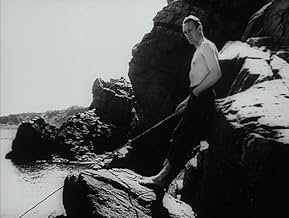
The painter Johan Borg (Max von Sydow) and his wife Alma Borg (Liv Ullmann) have been married for seven years and are living in an island. Johan is haunted by nightmares of his past. Through his notes in his diary, his wife realizes his madness process. In the end, after living with him for such a long period, she questions her sanity and what is real.
This impressive and disturbing movie about the lost of sanity by a tormented artist is another magnificent work of Ingmar Bergman, again with his favorite actor (Max von Sydow) and actress (Liv Ullmann). A very Gothic and dark horror movie, it is a frightening view of the mind of a mad person. My vote is eight.
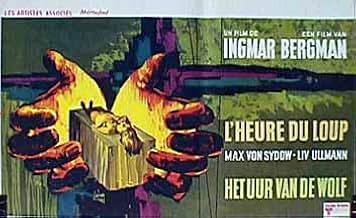
Title (Brazil): 'A Hora do Lobo' ('The Hour of the Wolf')
This impressive and disturbing movie about the lost of sanity by a tormented artist is another magnificent work of Ingmar Bergman, again with his favorite actor (Max von Sydow) and actress (Liv Ullmann). A very Gothic and dark horror movie, it is a frightening view of the mind of a mad person. My vote is eight.
Title (Brazil): 'A Hora do Lobo' ('The Hour of the Wolf')


Le saviez-vous
- AnecdotesIngmar Bergman originally penned the script in 1964 under the title "The Cannibals". A serious bout of pneumonia led him to reconsider the project whilst lying in hospital; he deemed it to be potentially too expensive in concept and execution. Bergman revised the script idea into a more low budget piece to accompany Persona (1966).
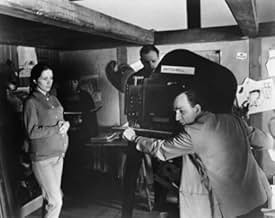
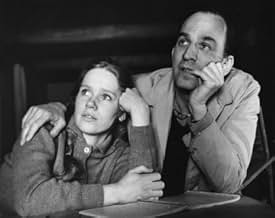
- Autres versionsThere exists an earlier version of the film with an additional, meta-cinematic framing device. In the prologue (lasting about 7 minutes), Bergman is seen on the set directing his actors. The epilogue (lasting about 1 minute) shows us the set being torn down and the crew leaving. These sequences are the only differences to the commonly seen version. Bergman has stated in an interview that he cut off these sequences himself before the general release of the film, as he came to the conclusion that they were just "self-deception". Despite this, a Swedish 35 mm print of the original, longer version does exist, although it's not available on home video in any format.
- ConnexionsEdited into 365 days, also known as a Year (2019)
Meilleurs choix
Connectez-vous pour évaluer et surveiller les recommandations personnalisées
- How long is Hour of the Wolf?Propulsé par Alexa
Détails
- Durée
- 1h 28m(88 min)
- Couleur
- Mixage
- Rapport de forme
- 1.37 : 1
Contribuer à cette page
Suggérer une modification ou ajouter du contenu manquant