

Un as de la gâchette mourant passe ses derniers jours à essayer de trouver comment mourir en souffrant le moins possible et en restant aussi digne que possible.Un as de la gâchette mourant passe ses derniers jours à essayer de trouver comment mourir en souffrant le moins possible et en restant aussi digne que possible.Un as de la gâchette mourant passe ses derniers jours à essayer de trouver comment mourir en souffrant le moins possible et en restant aussi digne que possible.
- Réalisation
- Scénaristes
- Vedettes
- Nommé pour 1 oscar
- 1 victoire et 5 nominations au total


- Girl on Streetcar
- (as Melody Thomas)

- Man Outside Metropole
- (uncredited)
Avis en vedette
REAL courage!
At the period in which this film is set, gunslingers or `shootists' were soon to go the way of the horse and buggy. The queen (Victoria) had just died. Electricity, modern plumbing, modern commerce, modern transportation, and creature comforts were beginning to take over (check out the electric ceiling fans and mosaic tiles in the saloon!). Forward to real life'. It is 1976. One by one, the mythic legends created by dime novels and Hollywood movies are being demystified. From Billy The Kid to Buffalo Bill, to Bonnie and Clyde, audiences have been shown for over decade how legends have always been manufactured. There are some who may see this demystification as a negative thing, but when people start adoring soldiers, celebrities and gangsters as something more than human, it's time to set the record straight. That's what all the best films of the seventies did. They broke the myths but they did not break the spirit, for what they did was let US, not the supermen on the screen, become the heroes. We could be afraid, old, young, ill, or weak, and we could feel pain and humiliation. In the process of confronting our limitations we become stronger. To be a stronger human being is to become civilized. Like this film shows us, we CAN reject the gun and join civilization. This film is John Wayne's gift to us. He is enabling us to grow up, to look at the past with respect, but to face the future with responsibility. His John Books is worth more to us than all his superheroes put together. We're all gonna die, we're all afraid, and pain is very, very real. It is in the process of surrendering to this fact with dignity and humility that we in a sense become immortal. To try to live as a superman is to die a fool. Only cowards (and very dangerous people) embrace myths over reality. That dainty red pillow has made The Duke sit very tall in his saddle indeed!
It's what we call a fall spring
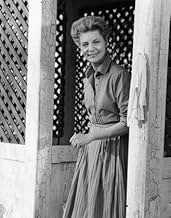
Also in the cast is Lauren Bacall as the recently widowed inn keeper. She helps keep Wayne's character fulfilled and feisty during his last days. Ironicly, this job was something she was familiar with, as she did this in real life with her late husband Humphrey Bogart.
There are many good performances by the rest of the cast. But it is the circumstances under which they were filmed for Wayne, that make his a truly unbelievable performance. There are two of his scenes that stand out for me: 1) Listening to John Wayne and Scatman Crothers haggle over the selling price of Wayne's horse. Yeah, it might not sound like much here in print, but that's just a testimony of how well these two actors pull that scene off. Just great. 2) Seeing John Wayne enter the saloon with a purpose for the last time. Truly one of the most bone chilling cinematic moments of all time.
If you love John Wayne then I'm certain that you love this film already. If you can take or leave John Wayne, you might at least like this film. But if you don't care for Wayne or for that matter, if you don't like westerns, you'll probably still like this film. At least I hope so. 9/10.
Clark Richards
One of the all-time great swan songs
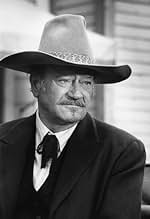
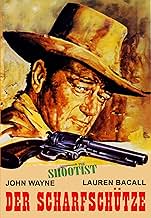
After a brief prologue made up of film clips of Wayne in his career prime, we meet his cinematic alter ego, John Bernard Books, an aging gunfighter who rides into Carson City, Nevada in the early 1900's looking for Doc Hostetler (James Stewart), the old sawbones who once saved his life and apparently the only man he trusts. It seems the old guy has prostate cancer and only a few weeks to live, and as Hostetler tells him, it will not be a pleasant death. Books, with no where else to go, checks into Bond Rogers' (Lauren Bacall) boarding house to live out his final days in peace under the alias "William Hickok." When Bond's delinquent son Gillom (Ron Howard, in a nice change-of-pace performance and his last major film appearance before becoming a director) informs her of his true identity, she tries to throw him out but relents when she finds out his condition and agrees to help him die in peace.
Unfortunately, things don't go as planned as everyone from the town mortician (John Carradine) to an old girlfriend (Sheree North) to a newspaper editor (Richard Lenz) try to take advantage of his situation and turn a fast buck. And then there are several lowlifes (Richard Boone, Hugh O'Brien, Bill McKinney, etc.) who want to seal their reputations by taking him out. Since it's obvious that no one will leave him alone in his final days, and since he grows fond (to put it mildly) of both Bond and Gillom and wishes them no harm, Books decides to go out in style and on his own terms, and to take a few scumbags along with him.
"The Shootist" is one of those rare films that seems to have gotten better with age. It wasn't particularly successful with critics or audiences at the time, as they were apparently put off by its leisurely pace and relative lack of action. Typical of the reaction was a TV guide critic (who shall remain nameless), who once derided it and its stars as coming across as "relics of the old West." (Wasn't that the point?) However, it is now pretty much considered a classic, and rightfully so, especially when viewed next to some of the lesser films of Wayne's 1970's period ("Cahill," "Rooster Cogburn," "The Cowboys"). In fact, it is now hard to believe that Wayne was not nominated for an Oscar here, as Books is clearly one of the best performances of his career and definitely eclipses his extravagantly praised, Oscar-winning mugging in "True Grit." Indeed, "The Shootist" deserves to stand alongside Clint Eastwood's "The Outlaw Josey Wales" and Oscar-winning "Unforgiven" as the last three great Westerns in cinema history. Everything about it is immaculate--the sets, the costumes, the supporting cast (including Harry Morgan in a terrific cameo as an unsympathetic sheriff who tells Books, "What I put on your grave won't pass for roses."), the script, and the chemistry between Wayne and Bacall, teaming up for the first time since "Blood Alley." And everything is held together by old pro director Donald Siegel who, aside from the late Hal Ashby, may very well be the most underappreciated director in cinema history.
But "The Shootist" is John Wayne's film all the way. He is simply sensational, and BRAVE, since he apparently knew at the time his cancer was back and that this would probably be his last film. It's not every film legend who gets to end his/her career on a high note, but Wayne did just that. I just hope he knew it before his death barely three years later. ****1/2 (out of *****)
You Really Should See This Film
A Sad and Thoughtful Farewell
But even when viewed without that knowledge, The Shootist is a thoughtful, sad and very well acted film. Although I've seen only a handful of Wayne's 200-plus movies, it's hard for me to believe that he ever turned in a better performance than he did here. His portrayal of a terminally ill man wanting to end his life on his own terms is moving and totally convincing. The supporting cast is also outstanding, and Wayne has several great scenes with actors like Jimmy Stewart, Lauren Bacall, Ron Howard and even Scatman Crothers. I found Harry Morgan, whom I usually like, to be a bit cartoonish as the marshall who was anxious to see Wayne's character die as quickly as possible, but that's a minor quibble.
Since the movie takes place in 1901, there are naturally references to the end of the old west and the coming of a new age, and how the time of gunfighters like Wayne's character have come to an end. Again, it is difficult to view these scenes without thinking of the twilight of Wayne's career and the declining popularity of western films, just as you can't help but connect the plight of his character in this film with his own death from cancer a few years later.
It's hard to imagine that any other significant actor ever made a more appropriate and moving farewell film. You don't need to be a fan of westerns, or even a fan of John Wayne, to appreciate The Shootist.


Le saviez-vous
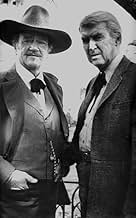
- AnecdotesJames Stewart agreed to play a cameo role in the film only because John Wayne had specifically requested him. His brief screen time proved to be rather difficult. The bad acoustics of the huge, hollow sound stages worsened his hearing difficulties, and he stayed by himself most of the time. He and Wayne muffed their lines so often in the main scene between them that director Don Siegel accused them of not trying hard enough. Wayne's reply was a variation on an old John Ford line, advising the director, "If you'd like the scene done better, you'd better get a couple of better actors." Later on, the star told friends that Stewart had known his lines, but hadn't been able to hear his cues, and that in turn had caused his own fumbling.
- GaffesBooks' hair (John Wayne's toupee) goes from being parted on his left to his right then back to his left after he tells Marshal Thibido he's a dying man when they first talk in Books' room.
- Citations
Gillom Rogers: [first lines, voiceover] His name was J.B. Books, and he had a matching pair of 45's with antique ivory grips that were something to behold. He wasn't an outlaw. The fact is for a while he was a lawman. Long before I met Mr. Books, he was a famous man. I guess his fame was why somebody or other was always after him. The wild country had taught him to survive. He lived his life and herded by himself. He had a credo that went:
John Bernard Books: I won't be wronged, I won't be insulted, and I won't be laid a hand on. I don't do these things to other people, and I require the same from them.
- ConnexionsFeatured in Sneak Previews: The Top Ten Films of 1976 (1977)
- Bandes originalesWillow, Tit Willow
Music by Arthur Sullivan
Lyrics by W.S. Gilbert
Performed by John Wayne & Lauren Bacall
Meilleurs choix
- How long is The Shootist?Propulsé par Alexa
Détails
Box-office
- Brut – États-Unis et Canada
- 8 091 910 $ US
- Brut – à l'échelle mondiale
- 8 091 910 $ US
- Durée
- 1h 40m(100 min)
- Couleur
- Mixage
- Rapport de forme
- 1.85 : 1