

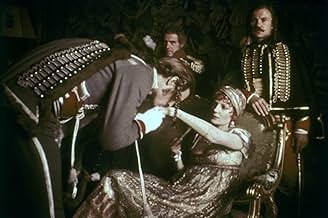
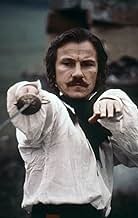
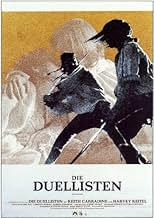
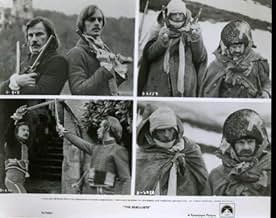
France, 1801. Suite à un léger affront, le Lieutenant d'Hubert est forcé à se battre en duel contre l'irrationnel et impulsif Lieutenant Féraud. Le désaccord finit par entraîner une série de... Tout lireFrance, 1801. Suite à un léger affront, le Lieutenant d'Hubert est forcé à se battre en duel contre l'irrationnel et impulsif Lieutenant Féraud. Le désaccord finit par entraîner une série de duels pendant plusieurs années.France, 1801. Suite à un léger affront, le Lieutenant d'Hubert est forcé à se battre en duel contre l'irrationnel et impulsif Lieutenant Féraud. Le désaccord finit par entraîner une série de duels pendant plusieurs années.
- Réalisation
- Scénaristes
- Vedettes
- Nominé pour le prix 2 BAFTA Awards
- 2 victoires et 4 nominations au total





Avis en vedette
the best understanding of Napoleon's age ever (thanks to Conrad)
Brilliant, understated, and thoroughly human.
What sets this film apart (beyond its sheer visual gorgeousness) is its unremitting humanity and realism. Carradine as the protagonist is a decent enough, reasonable enough chap trying to live by an unreasonable and inflexible code. Keitel as Feraud is a cipher: charged with a wholly unreasonable hate the sources of which we never see. The movie steps through the ups and downs of war, fashion, politics. Though the film's structured around a series of violent combats, the struggle is finally a moral one. One man finally transcends the ideal of honor that's kept him a prisoner for fifteen years. The other is unable to.
This is a movie to watch, and to recommend to one's friends. It's lamentably not available yet in DVD, but can be found occasionally as a rental. Watch it for the costumes, the lighting, and the gorgeous camerawork. Watch it again for a movie that takes on The Big Issues. Brilliant.
One of the few great, timeless movies.
It deals with the mores and prejudices of the time it was made. The costumes are done without attention to detail or the hair-styles of the leading actors don't belong to the time when the movie is supposed to be taking place.
Not this movie.
It deals with timeless themes: courage, fate, inevitability,
honor. The costumes are impeccable, and even the hair-styles change as time progresses, exactly as the fashions changed during the times of the Napoleon. Without knowing the actors (though the cast is composed of excellent, justifiably famous artists), there is no way to tell it was made in 1977. It might have been made yesterday, or it might have been filmed on the spot.
If you enjoy a movie where attention was paid to every detail to make it a true piece of art, if you enjoy dramatic photography thoughtful themes, and just the barest suggestion of dry humor, this is the movie for you.
DVD Release
Eight years ago, I began collecting laserdiscs which were the first format to include directors' commentaries. I was mesmerized by this feature. Once the DVD format caught hold, it seemed as if these bonus audio tracks came attached to almost every film and suddenly everyone including the costume designer was yakking away.
The best commentary tracks I've heard are provided by the director speaking to his audience, not to his DP or to his producer, and they are scene-specific. Rodriguez' amazing "how to make a low-budget film" commentary on "El Mariachi", for instance, or Scorsese's fast-paced insights that he recorded for "Raging Bull". Now I can add to this short list Ridley Scott's commentary on "Duellists". It's the opposite of coy. It's chock-full of lessons for young directors. It's lightly humorous. It's fascinating.
The slippery pair of boots
And the immersive world. Scott usually aims for this, and this is from a time he did it well. He takes from Kubrick the idea of natural light that, once the camera locks in, will look and move (and slightly breathe) like a Romantic painting. The era is Napoleon's, and at least the wintry march back from Russian defeat provides opportunity for some astonishing images.
Some words exhaust their meaning, when thrown without care; so it's not enough to call this existentialist. The story is that an army officer bears an inexplicable grudge that spans 20 years and half of Europe.
Everything you need to know is in the last scene, expertly executed. The idea is that something deeply not-logical gnaws and eats at man's soul and sniffs for blood. And that men, this is strictly male, have lived with this aspect of self for so long, we have developed separate not-logical tools that allow us to not only instinctively respond to the call, however reluctantly, and in spite of recognition of how insane it is, but to silently respect and defend it as its own kind of logic (in our case, the concept of honor).
In the last scene, we have two men seeking each the other to eliminate him from existence, as simple as that. It's the oldest game men have played, and the same thrill resurfaces across poker tables and football. It's got to have something of death in it, if it is to matter at all.
And I have a book called Bushido: The Soul of Japan here with me, retrieved from a shelf because the film sparked an interest, that explains how the blade is the samurai's extension of soul and imbued with the same discipline.
The two rivals have fenced for the entire film, but settle on pistols for the deciding duel, and wander about in a forest, two shots each, meaning they will be able to instantly discharge what is in their soul.
Each man in the shot he takes reveals who they are, one of them rash and impertinent, and fires first, they other level-headed and reserved. The subtle context of the scene is that politics do decide war from afar, in our case the slippery (faulty) pair of boots of the aristocratic boot-maker.
Which is, in a third level, a beautiful way of putting the subtle discord strummed by the universe that creates a slippery world and illogical selves of us, dumb chance as fate.
And suffice to say, the film is British, so you will not learn it here, but in spite of the probably British-started legend, the French are historically the best tactical warriors in Europe. There is a reason why nearly every word in the modern lexicon of war is originally French, and that includes honour.


Le saviez-vous
- AnecdotesSir Ridley Scott said that after having directed anywhere from 1,500 to 2,000 television commercials, he realized no one was going to approach him about directing a film, so he'd have to take the lead. Since his funds were limited, he used a public domain source for the story, and commissioned the script for this movie on his own.
- Gaffes(at around 1h 23 mins) Faraud, loading his pistol, drops a ball into the barrel and then rams it into place. When the ball drops,a metallic sound is heard, indicating that there is no powder in the barrel.
- Citations
Armand D'Hubert: General Feraud has made occasional attempts to kill me. That does not give him the right to claim my acquaintance.
- Générique farfeluOpening credits prologue: STRASBOURG 1800
- ConnexionsFeatured in Moviedrome: Double Bill - The Duellists/Cape Fear (1991)
- Bandes originalesBist du bei mir
(uncredited)
Music by Gottfried Heinrich Stölzel
from "Notenbüchlein für Anna Magdalena Bach No. 25. BWV 508"
Written by Johann Sebastian Bach (uncredited)
Meilleurs choix
Détails
- Date de sortie
- Pays d’origine
- Langues
- Aussi connu sous le nom de
- The Duellists
- Lieux de tournage
- Château de Commarques, Dordogne, France(final pistol duel)
- sociétés de production
- Consultez plus de crédits d'entreprise sur IMDbPro
Box-office
- Budget
- 900 000 $ US (estimation)
- Brut – à l'échelle mondiale
- 568 $ US