ÉVALUATION IMDb
6,4/10
1,4 k
MA NOTE


Ajouter une intrigue dans votre langueA social worker tries to get a pimp to change his ways.A social worker tries to get a pimp to change his ways.A social worker tries to get a pimp to change his ways.
- Réalisation
- Scénaristes
- Vedettes
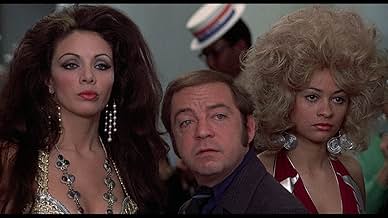
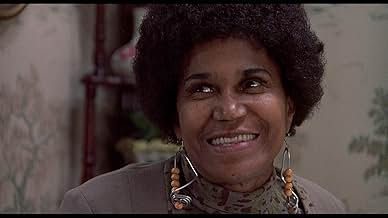


Judith Brown
- Gorgia
- (as Judy Brown)


6,41.4K
1
2
3
4
5
6
7
8
9
10
Avis en vedette
Can you tell me how to get to Easy Street?
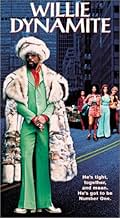
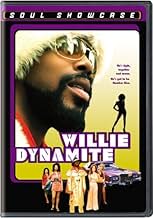
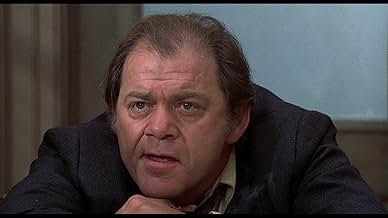
This Blaxploitation classic merits a viewing on at least two bases: one, you've got none other than Gordon of 'Sesame Street', a.k.a. actor Roscoe Orman, playing a pimp, and two, you have to love these COSTUMES! "Willie Dynamite" (Orman) is a capitalism-oriented flesh peddler with a wardrobe to die for. But he'll have a few thorns in his side: a pair of detectives (George Murdock, Albert Hall) out to righteously bust him, a mysterious enemy determined to screw him over, and a crusading social worker named Cora (Diana Sands), who acts as a patron saint to hookers.
Directed with style by Gilbert Moses, "Willie Dynamite" is generally engaging entertainment. Some viewers may be pleased to note that, although the rating is R, there's no excessive violence, and very little in the way of bare female skin. That doesn't mean, however, that it's not worth other peoples' time. It spins a decent yarn (screenplay by Ron Cutler, based on a story by Cutler and Joe Keyes Jr.) that unfolds at a respectable pace, gives us some agreeable action set pieces, and makes fine use of locations. There's a wonderful score provided by J.J. Johnson, and a rousing title theme song that gets you in the proper mood immediately.
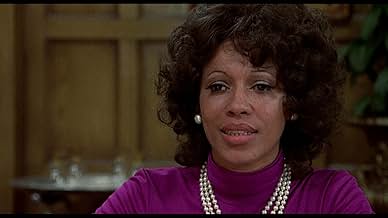
Orman is great fun playing a charismatic antihero. The scenario lets you wait until the end to let you know whether or not Willie D. can be redeemed, leading to some poignant moments. Sands, sadly dying of cancer during this time, gives the best performance in the movie. Thalmus Rasulala is saddled with little to do as her attorney boyfriend. Similarly, there are other familiar faces here that are rather wasted. Judith Brown, Juanita Brown, Marcia McBroom, and Mary Charlotte Wilcox as some of Willie D.'s hookers mostly just take up space. The pretty Joyce Walker gets the lions' share of attention as novice ho Pashen. Roger Robinson, as an antagonistic pimp named Bell, is most amusing, but there may be viewers who will take offense to his stereotypical portrayal of a gay character.
"Willie Dynamite" is lively, funny, and sometimes touching. Blaxploitation completists will want to check it out, for sure.
Seven out of 10.
Directed with style by Gilbert Moses, "Willie Dynamite" is generally engaging entertainment. Some viewers may be pleased to note that, although the rating is R, there's no excessive violence, and very little in the way of bare female skin. That doesn't mean, however, that it's not worth other peoples' time. It spins a decent yarn (screenplay by Ron Cutler, based on a story by Cutler and Joe Keyes Jr.) that unfolds at a respectable pace, gives us some agreeable action set pieces, and makes fine use of locations. There's a wonderful score provided by J.J. Johnson, and a rousing title theme song that gets you in the proper mood immediately.
Orman is great fun playing a charismatic antihero. The scenario lets you wait until the end to let you know whether or not Willie D. can be redeemed, leading to some poignant moments. Sands, sadly dying of cancer during this time, gives the best performance in the movie. Thalmus Rasulala is saddled with little to do as her attorney boyfriend. Similarly, there are other familiar faces here that are rather wasted. Judith Brown, Juanita Brown, Marcia McBroom, and Mary Charlotte Wilcox as some of Willie D.'s hookers mostly just take up space. The pretty Joyce Walker gets the lions' share of attention as novice ho Pashen. Roger Robinson, as an antagonistic pimp named Bell, is most amusing, but there may be viewers who will take offense to his stereotypical portrayal of a gay character.
"Willie Dynamite" is lively, funny, and sometimes touching. Blaxploitation completists will want to check it out, for sure.
Seven out of 10.
This Guy Is Having One Bad Week!
In the course of one week, poor Willie the pimp is getting the heat from rival pimps, from the cops (including the wonderful Albert Hall), and from a reformed prostitute who is trying to get Willie's girls' to unionize (`You can call me the Ralph Nadar for prostitutes', she snaps in one of the film's funniest lines). He even gets the IRS on his ass, although that scene isn't terribly realistic since no pimp and/or drug dealer with even half a brain would put his earnings in a bank!. What else? His purple Caddy gets towed about twice a day, his girls get busted (or worse!) and ultimately, his poor mom strokes out. Pimping just doesn't pay! This film isn't like most of the other blaxploitation films. It downplays the guns and drugs angle, and the lead character is not so baaad that he's good or vice versa. He's a nut, really. You can even see people in the background who were unaware they were in a film, pointing at him and laughing. You can almost feel sorry for him because he's more stupid than evil, and that's where the film wins the viewer over. The film breaks away from formula a number of times, and despite the OUTRAGEOUS costumes and decor (even the telephones are fur-lined!), we care about the people in this film. There are good cops and bad cops, and there is a nice balance of giving us women with brains and brawn, but who are still capable of a pretty nasty catfight when the need arises. Something for everyone! My only beef is that despite a pretty bad' theme song, the score doesn't rock at all. In fact, there are even a number of scenes that are scored with folky harmonica music. How uncool is that? It's also a shame that this film wasn't nominated for Best Costume design, but we all know how unlikely it was that most of the Academy members ever even saw this film. Just isn't fair! Overall, I think this is one of the best films of the blaxploitation genre, and along with `Unholy Rollers' and `Switchblade Sisters', one of the best exploitation films of the seventies.
Look, Derek, I commented!
It is impossible to deny that this film has some hilarious parts. You can't help enjoying the absolutely ridiculous outfits and mannerisms of the pimps.
Everything from Willie's beyond gaudy car to even the characters' names (i.e. the white pimp named Milky Way) is pretty entertaining.
But it does have some serious (well okay, maybe not serious) implications as well. It is basically set up like most classic tragedies; a man in a position of great power falls due to a tragic flaw. Willie is likable enough not to deserve our hatred, but ruthless enough that we accept that he deserved his fate. Okay, so it's a bad idea to overthink this movie, but it is important to at least recognize that format.
Furthermore, its social implications are pretty relevant. It portrayed Black and White characters in both positive and negative stereotypes, as well as providing more well rounded characters to serve as positive rolemodels. It started out glorifying the pimp lifestyle and slowly de-glamorized it as a life of dishonesty, drug addiction, violence, and eventual ruin. It may have really given young kids growing up in ghettoes in that era as made something to think about by slowly exposing the harsh realities of a life outside the law. Especially since it also presented positive Black role models who came from similar situations, like Cora, a prostitute-turned-social worker on a quest to help rescue other young girls from a life on the streets.
Everything from Willie's beyond gaudy car to even the characters' names (i.e. the white pimp named Milky Way) is pretty entertaining.
But it does have some serious (well okay, maybe not serious) implications as well. It is basically set up like most classic tragedies; a man in a position of great power falls due to a tragic flaw. Willie is likable enough not to deserve our hatred, but ruthless enough that we accept that he deserved his fate. Okay, so it's a bad idea to overthink this movie, but it is important to at least recognize that format.
Furthermore, its social implications are pretty relevant. It portrayed Black and White characters in both positive and negative stereotypes, as well as providing more well rounded characters to serve as positive rolemodels. It started out glorifying the pimp lifestyle and slowly de-glamorized it as a life of dishonesty, drug addiction, violence, and eventual ruin. It may have really given young kids growing up in ghettoes in that era as made something to think about by slowly exposing the harsh realities of a life outside the law. Especially since it also presented positive Black role models who came from similar situations, like Cora, a prostitute-turned-social worker on a quest to help rescue other young girls from a life on the streets.
Bring me some scratch
A classic 70's Blaxploitation film. Pimps as colorful as peacocks with land cruisers dressed in chrome.
Roscoe Orman (Gordon from Sesame Street) plays Willie, a pimp who has the patter down pat and the clothing that rivals anything that your imagination can come up with. He runs afoul of a determined social worker and the police, both determined to bring him down. They use every trick in the book to make his life hell and bring on him the wrath of his fellow pimps.
Diana Sands, who was one of the top black actresses of the 50s and 60s, shined as the social worker. This was one of her last films as she died of cancer before its release. She was 39.
Like Al Capone, Willie's downfall was the IRS.
Roscoe Orman (Gordon from Sesame Street) plays Willie, a pimp who has the patter down pat and the clothing that rivals anything that your imagination can come up with. He runs afoul of a determined social worker and the police, both determined to bring him down. They use every trick in the book to make his life hell and bring on him the wrath of his fellow pimps.
Diana Sands, who was one of the top black actresses of the 50s and 60s, shined as the social worker. This was one of her last films as she died of cancer before its release. She was 39.
Like Al Capone, Willie's downfall was the IRS.
One of the blaxploitation genre's most impressive works
As all fans of exploitation cinema will know, there were many, many blaxploitation movies released during the 1970s after Melvin van Peebles left an incredibly impression on black audiences with Sweet Sweetback's Baadasssss Song in 1971. While many are rather enjoyable in a comical way, few works of blaxploitation were actually any good. Tony Award-nominated Broadway director Gilbert Moses' Willie Dynamite is incredibly under-seen, but is one of the genre's most impressive works, shunning the usual hyper-stylised, lightly comic beats in favour of something more serious and dramatic, while also touching on themes such as black identity, racism and police corruption.
New York pimp Willie Dynamite (Roscoe Orman) has built himself a mini-empire, training his girls to work like a production line to maximise profits and keep his many customers happy. While his clothes are utterly outlandish (there are some of most ridiculous outfits ever seen in the genre here), Willie ain't no lovable scamp like Super Fly (1972), but a real piece of s**t; he regularly threatens his girls with violence, underpays them, and fails to offer any help when they get themselves arrested. When he's late to turn up to court for his most recent arrival Pashen (Joyce Walker), prostitute-turned-social worker Cora (Diana Sands) takes a particular interest, and becomes intent on rescuing Willie's girls and ending his reign of terror.
For a genre normally so rich in exploitative traits, Willie Dynamite contains no nudity and little violence, earning its adult rating instead for language and drug use. The lack of sex and action scenes leaves plenty of room for drama and character building, and Willie's journey to discovering his place in society and ultimately redeeming himself is all the more engrossing for it. Anyone familiar with Sesame Street will be left shocked at the sight of Orman wearing some of the most garish costumes ever committed to celluloid and trying to keep his bitches in check, and it's a very convincing performance. But it is in fact Diana Sands, who sadly died shortly after filming, who steals the film as the force of nature with a gentle side. Ripe for re- discovery, there's much more to Willie Dynamite than I would have ever expected. Now, bring me some scratch.
New York pimp Willie Dynamite (Roscoe Orman) has built himself a mini-empire, training his girls to work like a production line to maximise profits and keep his many customers happy. While his clothes are utterly outlandish (there are some of most ridiculous outfits ever seen in the genre here), Willie ain't no lovable scamp like Super Fly (1972), but a real piece of s**t; he regularly threatens his girls with violence, underpays them, and fails to offer any help when they get themselves arrested. When he's late to turn up to court for his most recent arrival Pashen (Joyce Walker), prostitute-turned-social worker Cora (Diana Sands) takes a particular interest, and becomes intent on rescuing Willie's girls and ending his reign of terror.
For a genre normally so rich in exploitative traits, Willie Dynamite contains no nudity and little violence, earning its adult rating instead for language and drug use. The lack of sex and action scenes leaves plenty of room for drama and character building, and Willie's journey to discovering his place in society and ultimately redeeming himself is all the more engrossing for it. Anyone familiar with Sesame Street will be left shocked at the sight of Orman wearing some of the most garish costumes ever committed to celluloid and trying to keep his bitches in check, and it's a very convincing performance. But it is in fact Diana Sands, who sadly died shortly after filming, who steals the film as the force of nature with a gentle side. Ripe for re- discovery, there's much more to Willie Dynamite than I would have ever expected. Now, bring me some scratch.


Le saviez-vous
- AnecdotesRoscoe Orman ('Willie D.') is perhaps best known to audiences as Gordon of Sesame Street.
- GaffesAt the 16:30 mark of the movie, when Honey calls Willie to say Pashen's been busted, Willie tells her he'll be right down, to sit tight, and keep doing business. The only thing, the pay phone she's calling Willie from has a small sign by the coin slot that says "You can dial any number in the Los Angeles area", when they are supposed to be in New York City.
- Générique farfeluDuring the ending credits, Richard Lawson is credited as playing the role of Sugar, when in fact it is Nathaniel Taylor who plays the role.
- ConnexionsFeatured in American Pimp (1999)
Meilleurs choix
Connectez-vous pour évaluer et surveiller les recommandations personnalisées
- How long is Willie Dynamite?Propulsé par Alexa
Détails
Box-office
- Brut – États-Unis et Canada
- 479 731 $ US
- Durée
- 1h 42m(102 min)
- Rapport de forme
- 1.85 : 1
Contribuer à cette page
Suggérer une modification ou ajouter du contenu manquant