ÉVALUATION IMDb
6,5/10
2,3 k
MA NOTE
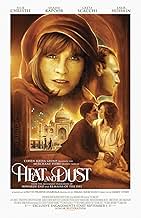
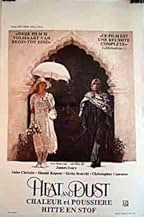
Anne enquête sur la vie de sa grand-tante Olivia.Anne enquête sur la vie de sa grand-tante Olivia.Anne enquête sur la vie de sa grand-tante Olivia.
- Réalisation
- Scénariste
- Vedettes
- A remporté le prix 1 BAFTA Award
- 2 victoires et 8 nominations au total
Ratna Pathak Shah
- Ritu, Inder Lal's wife (1982 in Satipur Town)
- (as Ratna Pathak)
Praveen Paul
- Maji
- (as Parveen Paul)
6,52.3K
1
2
3
4
5
6
7
8
9
10
Avis en vedette
Greta Scacchi looks lovely in her first major film
Very disappointing and drawn out effort that neither gives a realistic or particularly romantic pictures of those seemingly despicable days in India. One or two pretty scenes but low key and seeming dispassionate direction leaves one wondering where the enthusiasm came from to even set this up. Greta Scacchi looks lovely in her first major film but most is overdressed soap opera and Julie Christie seems so lost she must still be wondering why she ever did this.
A tale of two women
Unusually structured and travelling at about the speed of India's Metupalayam Ooty Nilgiri Passenger Train, this film still delivers an intriguing story.
Set in India it has the bonus of authentic locations, and features two beautiful actresses at different stages of their careers in the same movie, although they don't share a single scene together.
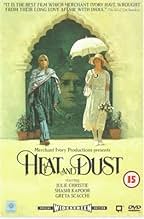
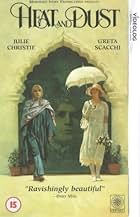
The story takes a little getting into. It's actually two intertwined stories and starts with Anne (Julie Christie) travelling to India to find out about the life of her great aunt Olivia (Greta Scacchi) - a forerunner of "Who Do You Think You Are?" Flashbacks reveal Olivia's story and the film cuts back and forth from one story to the other as we see that Anne's journey follows Olivia's path, and also begins to parallel her story.
A fascinating aspect of the movie is how it reveals two Indias: one under the British Raj during the 1920's, which Olivia inhabited, and the modern one of the 1980's that Anne experiences.
Over the years there have been many films about British rule in India - Hollywood loved an earlier period especially along the Northwest Frontier, but of late, British films and television have concentrated on the decades just before India's independence - the twilight of the Raj.
Another critical element in the drama is the relationship between a semi-independent prince, the Nawab of Khatm (Shashi Kapoor), and the British rulers. The film shows the attitudes of the British and Indians towards each other, and also the attitudes of the British towards their fellow Britons. It highlights the class system that existed between the races and how crossing that line was linked to the balance of power.
Despite being married to Douglas Rivers (Christopher Cazenove), a British colonial official, Olivia crosses the line, has an affair with the Nawab, and is virtually banished from both societies. Although Anne also has an affair with an Indian, it is 60-years later and no longer has the significance of her great aunt's fall from grace.
This film looks good and composer Richard Robbins created an evocative score blending electronics with Indian instruments.
Although the script and direction understates just about everything, even using narration to glide over what could have been emotion charged scenes, the combination of stars, locations and the lovingly recreated depiction of an era ensures that "Heat and Dust" still leaves an impression.
Set in India it has the bonus of authentic locations, and features two beautiful actresses at different stages of their careers in the same movie, although they don't share a single scene together.
The story takes a little getting into. It's actually two intertwined stories and starts with Anne (Julie Christie) travelling to India to find out about the life of her great aunt Olivia (Greta Scacchi) - a forerunner of "Who Do You Think You Are?" Flashbacks reveal Olivia's story and the film cuts back and forth from one story to the other as we see that Anne's journey follows Olivia's path, and also begins to parallel her story.
A fascinating aspect of the movie is how it reveals two Indias: one under the British Raj during the 1920's, which Olivia inhabited, and the modern one of the 1980's that Anne experiences.
Over the years there have been many films about British rule in India - Hollywood loved an earlier period especially along the Northwest Frontier, but of late, British films and television have concentrated on the decades just before India's independence - the twilight of the Raj.
Another critical element in the drama is the relationship between a semi-independent prince, the Nawab of Khatm (Shashi Kapoor), and the British rulers. The film shows the attitudes of the British and Indians towards each other, and also the attitudes of the British towards their fellow Britons. It highlights the class system that existed between the races and how crossing that line was linked to the balance of power.
Despite being married to Douglas Rivers (Christopher Cazenove), a British colonial official, Olivia crosses the line, has an affair with the Nawab, and is virtually banished from both societies. Although Anne also has an affair with an Indian, it is 60-years later and no longer has the significance of her great aunt's fall from grace.
This film looks good and composer Richard Robbins created an evocative score blending electronics with Indian instruments.
Although the script and direction understates just about everything, even using narration to glide over what could have been emotion charged scenes, the combination of stars, locations and the lovingly recreated depiction of an era ensures that "Heat and Dust" still leaves an impression.
Not up to David Lean's standard
I'm seeing this for the first time. Although I have enjoyed Merchant-Ivory films in the past (really want to see The Bostonians again, and A Room With a View), I can't say I was affected very much by this one. Shashi Kapoor gets off some funny lines, but is otherwise pretty bland. Nickolas Grace is the only memorable character--as he was in Brideshead Revisited. Passion just isn't present in this movie. Watch A Passage to India instead.
6sol-
My brief review of the film
As per usual, James Ivory captures a good feel for the period and setting, helped by, as usual, a fitting Richard Robbins score. As a cultural study, it has some things to say, with an insight into the culture of the indigenous Indian population, but it conveys little in the way of messages, as the screenplay is awfully convoluted, not helped by switching between different narrators and time periods. Some of the supporting characters are not defined well either, and there are a few lethargic gaps between events in the tale. The filming on-location is great, and generally it is all rather well made, but it pales against the work that Merchant-Ivory would produce later on, as this simply is not near a perfect film.
flavors
In essence, a ball of nostalgia, clash of two experiences, some drops of Madame Bovary, beautiful acting and fascination about India of a cinema decade and, not last, James Ivory. I saw it as seductive portrait of lost words, beautiful work of Greta Scacchi and Julie Christie and flavors of The Jewel in the Crown.
Le saviez-vous
- AnecdotesProducer Ismail Merchant has said of the film's financing problems: "Halfway through the shooting, some of the finance committed to the project failed to materialize, and we found we were suddenly penniless. The cast and crew continued to work despite the fact that they weren't being paid, but that couldn't go on indefinitely. There was the strongest possibility that we would go under. We would lose not just the film but our whole company [Merchant Ivory Productions]". Renowned European banker Sir Jacob Rothschild viewed a rough cut of the unfinished film and in a rescue package acted as a completion guarantor so the picture could be completed.
- GaffesWhen Douglas gets on his horse near the 39 min mark, it appears to have the saddle on backwards.
- Citations
Olivia, his wife (The Nineteen Twenties in the Civil Lines at Satipur): You have these set notions about what English women are supposed to stand. Why should anybody tell me what I can stand and what I can't stand? Well, if you want to know, the only thing I can't stand is English women. Memsahibs.
Meilleurs choix
Connectez-vous pour évaluer et surveiller les recommandations personnalisées
- How long is Heat and Dust?Propulsé par Alexa
Détails
- Date de sortie
- Pays d’origine
- Sites officiels
- Langue
- Aussi connu sous le nom de
- Heat and Dust
- Lieux de tournage
- société de production
- Consultez plus de crédits d'entreprise sur IMDbPro
Box-office
- Brut – États-Unis et Canada
- 1 761 291 $ US
- Fin de semaine d'ouverture – États-Unis et Canada
- 10 289 $ US
- 3 sept. 2017
- Brut – à l'échelle mondiale
- 1 772 889 $ US
- Durée
- 2h 10m(130 min)
- Couleur
- Mixage
- Rapport de forme
- 1.66 : 1
Contribuer à cette page
Suggérer une modification ou ajouter du contenu manquant