ÉVALUATION IMDb
7,1/10
1,4 k
MA NOTE
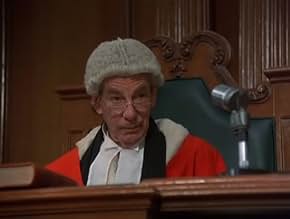
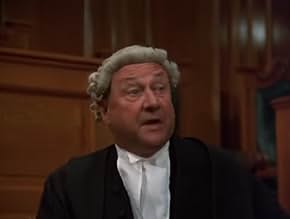
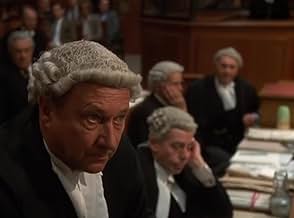
Ajouter une intrigue dans votre langueLeonard Vole is accused of murdering an elderly rich woman, and the only alibi to him depends on his wife Christine.Leonard Vole is accused of murdering an elderly rich woman, and the only alibi to him depends on his wife Christine.Leonard Vole is accused of murdering an elderly rich woman, and the only alibi to him depends on his wife Christine.
- Réalisation
- Scénaristes
- Vedettes
- Nommé pour 1 prix Primetime Emmy
- 1 nomination au total
Ken Kitson
- Policeman
- (as Kit Kitson)
7,11.3K
1
2
3
4
5
6
7
8
9
10
Avis en vedette
Why remakes sometimes fail
In 1958 Billy Wilder made one of the best film adaptations of an Agatha Christie story when he directed WITNESS FOR THE PROSECUTION, with Charles Laughton, Marlene Dietrich, Tyrone Power, Elsa Lanchester, and Una O'Connor. It is one of those mystery films that, even when you understand the trick, does not fail to remain entertaining. But it has to be done in a certain way, with a sense of decorum and tradition (personified by Laughton as Sir Wilfred Robarts - brilliant defense barrister but guardian of England's precious laws and sense of justice). It is infectious. Even Power as the seemingly helpless Leonard Vole is desperately hoping that the system of justice will save him.
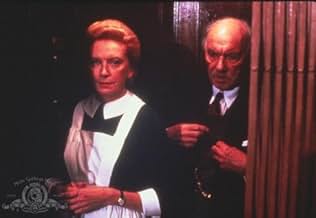
But along comes this version of 1982. One would have thought it could not fail with a star like Sir Ralph Richardson as Robarts and Diana Rigg as Christine Vole. But it does fail. Even with Dame Deborah Kerr as Nurse Plimsoll and Dame Wendy Hiller as Janet Mackenzie (the Una O'Connor role)it fails. Richardson is too laid back for Sir Wilfrid. When Rigg testifies against her husband, after having previously given him an alibi for the murder, Richardson almost seems to tease her about her behavior. In the same situation in the Wilder film, Laughton's justifiable anger at this turnabout leads to a peroration point where he shouts out that she is a perpetual liar. It was far more affective with Laughton, although Richardson was (traditionally) a greater actor.
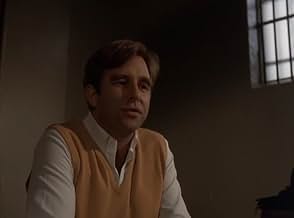
Similarly, Tyrone Power's Leonard Vole was (as I said when reviewing the 1958 film version)playing Leonard for all the part is worth, and created the most sinister part he played after his best performance in NIGHTMARE ALLEY as Stanton Carlyle. The last ten minutes of the film show what a totally amoral and vicious louse Power's Vole really is. Beau Bridges was as laid back as Richardson, making the mistake of making Vole seem a nice guy. Vole can be helpless in the arms of the British judicial system or he can be a louse. He can't be a guy you want to take out for a fishing expedition.
I give this film a "6" - barely because the cast tried. Their ideas were wrong in Richardson and Bridges' interpretations.
But along comes this version of 1982. One would have thought it could not fail with a star like Sir Ralph Richardson as Robarts and Diana Rigg as Christine Vole. But it does fail. Even with Dame Deborah Kerr as Nurse Plimsoll and Dame Wendy Hiller as Janet Mackenzie (the Una O'Connor role)it fails. Richardson is too laid back for Sir Wilfrid. When Rigg testifies against her husband, after having previously given him an alibi for the murder, Richardson almost seems to tease her about her behavior. In the same situation in the Wilder film, Laughton's justifiable anger at this turnabout leads to a peroration point where he shouts out that she is a perpetual liar. It was far more affective with Laughton, although Richardson was (traditionally) a greater actor.
Similarly, Tyrone Power's Leonard Vole was (as I said when reviewing the 1958 film version)playing Leonard for all the part is worth, and created the most sinister part he played after his best performance in NIGHTMARE ALLEY as Stanton Carlyle. The last ten minutes of the film show what a totally amoral and vicious louse Power's Vole really is. Beau Bridges was as laid back as Richardson, making the mistake of making Vole seem a nice guy. Vole can be helpless in the arms of the British judicial system or he can be a louse. He can't be a guy you want to take out for a fishing expedition.
I give this film a "6" - barely because the cast tried. Their ideas were wrong in Richardson and Bridges' interpretations.
God Bless Sir Ralph Richardson
This remake of the Laughton/Power/Dietrich film is quite enjoyable, owing to skillful casting, top production values, and, of course, Dame Christie's cracking good story. Sadly, the only liability is the performance of Sir Ralph Richardson (It's almost unspeakable to say this; I feel like Brutus plunging the knife into his Caesar). This was one of his last performances, and his immense skill simply cannot overcome his advanced age. (Granted, his character is supposed to be aged and ill, but Sir Ralph is unable to act intrigued and energized by his last case the way Laughton was in the original.) Still, his presence alone delivers barrels full of audience goodwill, and the piece is anchored by fine performances from Diana Rigg in the Dietrich role, Deborah Kerr in Elsa Lanchester's part (a fun bit of off-casting!) and by Beau Bridges, who stretches himself beyond his normal nice-guy blandness and convinces in the Ty Power role. A nice movie for a rainy afternoon or a boring holiday!
Fine version of a good story
Excellent TV version of the Agatha Christie classic with an amazing array of talent for this type of enterprise. This is the sort of high quality fare that was standard on American television in the 70s & 80s and is sadly missing today.
Bridges is okay but miscast. Leonard Vole needs to be played by someone with a slick charm as it was by Tyrone Power in the original, a persona like George Clooney projects now and Bridges while a capable actor doesn't have that quality.
Therefore he is easily put in the shade by the powerhouse team of Sir Ralph Richardson and Diana Rigg. Both give exceptional performances, Richardson sly, knowing and wise while Diana Rigg is perfect as the determined if misguided Christine. Deborah Kerr provides a nice light touch as Richardson nurse. Good fun all around.
Bridges is okay but miscast. Leonard Vole needs to be played by someone with a slick charm as it was by Tyrone Power in the original, a persona like George Clooney projects now and Bridges while a capable actor doesn't have that quality.
Therefore he is easily put in the shade by the powerhouse team of Sir Ralph Richardson and Diana Rigg. Both give exceptional performances, Richardson sly, knowing and wise while Diana Rigg is perfect as the determined if misguided Christine. Deborah Kerr provides a nice light touch as Richardson nurse. Good fun all around.
A fine adaptation.
This is a fine adaptation of one of Christie's best known works. When people rate and compare this I wonewoif they're comparing the Dietrich film, or the text. Let's face it the text is so short that the play lends itself so well to development and interpretation. It is one of her most ingenious plots, and relies on convincing characters.
This features, for the most part excellent performances, Ralph Richardson steals the show, closely followed by Diana Right, who manages to make Christine as cold as ice. Pleasance and Hiller are also fine.
The problem for me comes from Beau Bridges, whom was wildly miscast, lacking the emotional depth required to make Leonard convincing. I would have loved to see Simon MacKorkindale in the role, he had so much charm.
Some great scenes, some wonderfully dramatic moments, particularly the theatrical finale. I'd rank it third after, firstly 1957's classic, and secondly the BBC's deliciously dark adaptation from 2016.
A very enjoyable watch, 8/10
This features, for the most part excellent performances, Ralph Richardson steals the show, closely followed by Diana Right, who manages to make Christine as cold as ice. Pleasance and Hiller are also fine.
The problem for me comes from Beau Bridges, whom was wildly miscast, lacking the emotional depth required to make Leonard convincing. I would have loved to see Simon MacKorkindale in the role, he had so much charm.
Some great scenes, some wonderfully dramatic moments, particularly the theatrical finale. I'd rank it third after, firstly 1957's classic, and secondly the BBC's deliciously dark adaptation from 2016.
A very enjoyable watch, 8/10
Comparing is unavoidable
Everyone who has seen both versions will compare. Well, Charles Laughton and Tyrone Power in my opinion are better than Ralph Richardson and Beau Bridges. Charles Laughton simply is very funny. Tyrone Power performs a more shady character. But Diana Riggs is excellent, while Marlene Dietrich, much to my surprise and disappointment, is quite woody. The story in both versions are very alike. Though I haven't read the book, I assume they remain both quite close to it. So preference depends on the acting. I don't have one. I quite enjoyed both. The strength of the story is proved by the fact, that one can enjoy it even with knowing the real meaning of all the twists and turns.
Le saviez-vous
- AnecdotesThe 1957 version of this same material, starring Charles Laughton, Tyrone Power, Elsa Lanchester and Marlene Dietrich, directed and co-written by Billy Wilder, is widely considered a classic of the courtroom drama genre. This TV movie is far more a version of Wilder's film than of Christie's play, which Wilder had adapted very freely (although it was one of the very few films based on her work of which Dame Agatha approved),
- GaffesIn the witness box, the maid Janet McKenzie states that September 14th 1954 was a Friday, which was her day off. That date was, in fact, a Tuesday.
- ConnexionsEdited into Hallmark Hall of Fame (1951)
Meilleurs choix
Connectez-vous pour évaluer et surveiller les recommandations personnalisées
Détails
- Date de sortie
- Pays d’origine
- Langue
- Aussi connu sous le nom de
- Agatha Christie's Witness for the Prosecution
- Lieux de tournage
- sociétés de production
- Consultez plus de crédits d'entreprise sur IMDbPro
Contribuer à cette page
Suggérer une modification ou ajouter du contenu manquant