
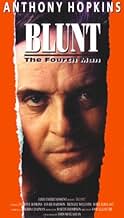
Ajouter une intrigue dans votre langueThe story of Anthony Blunt, the "fourth man" in a notorious 1951 spy scandal.The story of Anthony Blunt, the "fourth man" in a notorious 1951 spy scandal.The story of Anthony Blunt, the "fourth man" in a notorious 1951 spy scandal.
- Réalisation
- Scénariste
- Vedettes



6,0254
1
2
3
4
5
6
7
8
9
10
Avis en vedette
Excellently made film of a very difficult subject.
Made in 1985, and set in 1951 with roots 20 years further back. For me the cars and their exhaust note, the floors, sounds of the door latches, and the river, all exude the essences of the times. Anthony Hopkins attention to the detail of language, phrases and words, place his character spot-on in the period. A tremendous success. The capture of social context within the story works as well. Admittedly the plot is torturous and I had to keep backtracking to understand, but to the director's and writer's credit they did not stoop to making things boring by overly long explanations; they kept it fast paced, just like real people would talk, and it is up to me to get up to speed. The second screening was much more enjoyable! A film that is rich in sets and costumes, as well as dialog, period language and plot! A drawing room drama, not an action film; a study of sociological entanglements.
A So, So Movie
A so, so movie. Somewhat two dimensional. This movie would have benefited from being made 10 years later from two perspectives: better production values and also by that time there was more information/biographies out about this era e.g. Blunt's Russian handler's biography which came out after this was made. Those with an interest in British dramas and an interest in the Cambridge spies (Blunt, Burgess, Maclean, Philby and Cairncross) might find this interesting, but this movie doesn't excel in either of these respects.
Too Much Ink in his Veins
"Blunt" is one of a number of plays inspired by the notorious "Cambridge Five" who acted as spies for the Soviet Union during the Cold War. Others include Julian Mitchell's stage play "Another Country", later made into a film, Alan Bennett's "An Englishman Abroad" and "A Question of Attribution", and Dennis Potter's "Traitor". What shocked British society most about the spy ring was not so much the treachery of its members as the fact that most of them were from well-off Establishment families and educated at the country's most prestigious schools. (Working-class spies such as John Vassall, Melita Norwood and the members of the Portland spy ring never achieved the same notoriety. John Cairncross, the "fifth man" in the Cambridge spy ring, has never attracted quite the same attention as his colleagues, partly because he was not exposed until the Cold War was virtually over, but also because he, unlike them, came from a working-class background and was educated at a grammar school).
The title character, Anthony Blunt, was the "fourth man" in the ring. He confessed his treachery to MI5 in 1964 in exchange for immunity from prosecution, but was not publicly exposed as a spy until 1979. Despite his Communist sympathies, which he never disavowed, he remained an Establishment figure all his life. He was a prominent art historian and in 1945 was made Surveyor of the King's Pictures, which allowed him to become a friend and confidant of members of the Royal family. He was made a Knight Commander of the Royal Victorian Order, but was stripped of this honour after his role as a spy was exposed.
This play, broadcast as part of the BBC's "Screen Two" series, does not deal with the whole of Blunt's career. It concentrates on the events of 1951 and the part played by Blunt in the defection of two other members of the ring, Guy Burgess and Donald Maclean, to the Soviet Union. The original plan, in fact, was that only Maclean should defect; his Soviet handlers knew that he was under suspicion and feared that, as a notoriously indiscreet alcoholic, he would not be able to withstand interrogation. In the event, however, Burgess decided to follow him, worried that he too might come under investigation.
Besides Blunt, the major characters are Burgess and Goronwy Rees, an academic who had been a close associate of the "Five" during their Cambridge days. Maclean plays a lesser role and Kim Philby, the "third man", is referred to but never appears. As for Cairncross, he is never mentioned; his role in the spy ring did not become public knowledge until 1990, three years after the play was broadcast.
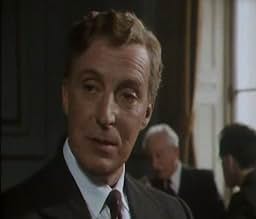
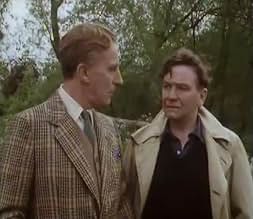
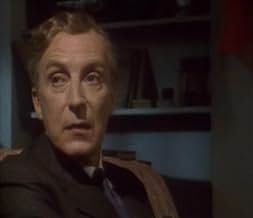
Blunt is played by Ian Richardson (who bore a certain physical resemblance to the real Blunt) and Burgess by Anthony Hopkins. The two are sharply contrasting characters. Hopkins portrays Burgess as flamboyant and outgoing, but as indiscreet and hard-drinking as Maclean, idealistically drawn to Communism but temperamentally totally unsuited to the life of a spy. Richardson's Blunt, by contrast, is the ideal spy- cold, discreet, reserved, and icily self-controlled.
Michael Williams's Rees finds himself caught in a difficult position. A Communist sympathiser in his youth, he has since moved politically to the right and has become known as an anti-Communist intellectual. He insists that he was never involved in espionage himself, but is well aware of the activities of his associates. He knows that he should denounce them to the authorities, but his continuing friendship with Blunt and Burgess makes him unwilling to take such a step.
All three leading actors play their roles well, yet overall I found that the film was too talky and static. I felt that the concentration on one episode was too limiting, and would have preferred it if writer Robin Chapman had dealt with other parts of Blunt's life, especially his youth at Cambridge and his eventual exposure as a spy in 1979. Richardson's potrayal of Blunt as an emotionless cold fish was, apparently, historically accurate- a school contemporary described him as having "too much ink in his veins" and belonging to "a world of rather prissy, cold-blooded, academic puritanism". (It is revealing that the artist he revered more than any other was the cold, reserved and intellectual Nicolas Poussin). Even so, this does not make for a very interesting film. It is easy to see how the emotional, impulsive Burgess could have committed himself to Communism out of youthful idealism. Blunt, however, remains an enigma, one that this film does little to solve. 6/10.
The title character, Anthony Blunt, was the "fourth man" in the ring. He confessed his treachery to MI5 in 1964 in exchange for immunity from prosecution, but was not publicly exposed as a spy until 1979. Despite his Communist sympathies, which he never disavowed, he remained an Establishment figure all his life. He was a prominent art historian and in 1945 was made Surveyor of the King's Pictures, which allowed him to become a friend and confidant of members of the Royal family. He was made a Knight Commander of the Royal Victorian Order, but was stripped of this honour after his role as a spy was exposed.
This play, broadcast as part of the BBC's "Screen Two" series, does not deal with the whole of Blunt's career. It concentrates on the events of 1951 and the part played by Blunt in the defection of two other members of the ring, Guy Burgess and Donald Maclean, to the Soviet Union. The original plan, in fact, was that only Maclean should defect; his Soviet handlers knew that he was under suspicion and feared that, as a notoriously indiscreet alcoholic, he would not be able to withstand interrogation. In the event, however, Burgess decided to follow him, worried that he too might come under investigation.
Besides Blunt, the major characters are Burgess and Goronwy Rees, an academic who had been a close associate of the "Five" during their Cambridge days. Maclean plays a lesser role and Kim Philby, the "third man", is referred to but never appears. As for Cairncross, he is never mentioned; his role in the spy ring did not become public knowledge until 1990, three years after the play was broadcast.
Blunt is played by Ian Richardson (who bore a certain physical resemblance to the real Blunt) and Burgess by Anthony Hopkins. The two are sharply contrasting characters. Hopkins portrays Burgess as flamboyant and outgoing, but as indiscreet and hard-drinking as Maclean, idealistically drawn to Communism but temperamentally totally unsuited to the life of a spy. Richardson's Blunt, by contrast, is the ideal spy- cold, discreet, reserved, and icily self-controlled.
Michael Williams's Rees finds himself caught in a difficult position. A Communist sympathiser in his youth, he has since moved politically to the right and has become known as an anti-Communist intellectual. He insists that he was never involved in espionage himself, but is well aware of the activities of his associates. He knows that he should denounce them to the authorities, but his continuing friendship with Blunt and Burgess makes him unwilling to take such a step.
All three leading actors play their roles well, yet overall I found that the film was too talky and static. I felt that the concentration on one episode was too limiting, and would have preferred it if writer Robin Chapman had dealt with other parts of Blunt's life, especially his youth at Cambridge and his eventual exposure as a spy in 1979. Richardson's potrayal of Blunt as an emotionless cold fish was, apparently, historically accurate- a school contemporary described him as having "too much ink in his veins" and belonging to "a world of rather prissy, cold-blooded, academic puritanism". (It is revealing that the artist he revered more than any other was the cold, reserved and intellectual Nicolas Poussin). Even so, this does not make for a very interesting film. It is easy to see how the emotional, impulsive Burgess could have committed himself to Communism out of youthful idealism. Blunt, however, remains an enigma, one that this film does little to solve. 6/10.

Le saviez-vous
- AnecdotesBased on the same real life events as Another Country (1984), Cambridge Spies (2003), History in Faces: Cambridge Five (2011), Philby, Burgess and Maclean (1977), A Question of Attribution (1991), An Englishman Abroad (1983), Tinker Tailor Soldier Spy (2011), Tinker Tailor Soldier Spy (1979), Traitor (1971), Blade on the Feather (1980), Double trahison (1983) and influenced the source novels of The Fourth Protocol (1987), The Innocent (1993) and others works such as Secrets d'état (2004) and Olding (2019), even in minor form like in Le jeu de l'imitation (2014).
- Citations
Guy Burgess: [to his Soviet controller, Vasily, as they walk in the park] MI-5 is rather like one's dear old nanny; you just have to tickle her in the right place.
Meilleurs choix
Connectez-vous pour évaluer et surveiller les recommandations personnalisées
Détails
Contribuer à cette page
Suggérer une modification ou ajouter du contenu manquant