
En 1968, un médecin tchèque dont la vie sexuelle est active rencontre une femme qui souhaite la monogamie. L'invasion soviétique va encore plus chambouler leur vie.En 1968, un médecin tchèque dont la vie sexuelle est active rencontre une femme qui souhaite la monogamie. L'invasion soviétique va encore plus chambouler leur vie.En 1968, un médecin tchèque dont la vie sexuelle est active rencontre une femme qui souhaite la monogamie. L'invasion soviétique va encore plus chambouler leur vie.
- Réalisation
- Scénaristes
- Vedettes
- Nommé pour 2 oscars
- 7 victoires et 14 nominations au total



Pavel Landovský
- Pavel
- (as Pavel Landovsky)


Stellan Skarsgård
- The Engineer
- (as Stellan Skarsgard)
Tomasz Borkowy
- Jiri
- (as Tomek Bork)
Pavel Slabý
- Pavel's Nephew
- (as Pavel Slaby)


László Szabó
- Russian Interrogator
- (as Laszlo Szabo)

7,240.3K
1
2
3
4
5
6
7
8
9
10
Avis en vedette
Memorable and beautifully done
I've not read the book this is based on, so have no way to comment on how this movie translates it. But the film itself has stayed in my mind like few others. Yes, it's very long, but the characters are so memorable that the length didn't bother me at all - I loved the time spent in their company. In particular, Juliette Binoche and Lena Olin are each astonishing in their own way. Olin is ferociously sensual and mesmerizing, while Binoche is superlatively sympathetic and sensitive. Two of the best female performances I can remember. By the end of the film I was totally wrapped up in these people's lives. This film is deeply erotic but in an intelligent and adult way that puts most other film's treatment of sex to shame. I thought it was beautifully handled by all concerned, and if I ever want to cry, I only need watch the scenes with the dog and the final scenes, both pulled off superbly.
Kubrickian Kundera from Kaufman
Milan Kundera's masterwork is one of the most profound, powerful and perspicacious work of literary fiction of all-time. However, as one either already knows or soon discovers: a novel and a film are completely different media.
Kaufman's vision is elegant, eloquent and enigmatic. This is necessary to translate the directness and deepness of Kundera's prose. The film unable to delve into the innermost feelings and proclivities of its characters tries to say more by saying less. The movie takes the essence and uses powerful, calculated imagery as its driving motor. This is how this strongly resembles the late Stanley Kubrick's work: meticulous, hard on the actors and often also demanding on the viewers.
Kundera is heard throughout by having some of its most essential prose and ideas integrated into the dialog now and then, but as you've probably guessed, the film cannot capture the sublime subtleties and evocative expansions of the novel. Franz's and Sabina's "dictionary of incomprehension" is only hinted at, while Tomas' son is nonexistent and Tereza's turning moment at the mountain foregone. The focus is highly on the sensuality and, primate, playful to intimate, infidelity. This was a good choice as this dichotomy requires little words to be heard. However, when the characters do speak, the dialog dashes across the screen and dances in your head to be sure. The political overtone is also present with the departure and return to Prague being treated as almost opposite end of a colour spectrum. Kundera hypothesizes on how politics and nudity are one and the same, but Kaufman shows it with vivid imagery on both sides and emblematic parallelism.
The acting and editing make it all work together although there are a few low points in both instances. The two female leads are pretty much incredible. The classic music is charming and appropriate. The writing and directing are on point and the philosophy and melancholy of Kundera finds an appropriate echo in this visceral art medium.
With a slow beginning, the movie quickly builds momentum and the viewer hardly realizes its long running time. The character interactions and tensions, the stunning cinematography and succession of memorable scenes and dialog inspired greatly by the original work, make the viewer actually wish the movie would go on a little longer, whisper something more to its ear. Tomas sums it up by stating his general happiness despite his unforeseen and unwanted condition. After all life is light, you cannot take it too seriously.
Kaufman's vision is elegant, eloquent and enigmatic. This is necessary to translate the directness and deepness of Kundera's prose. The film unable to delve into the innermost feelings and proclivities of its characters tries to say more by saying less. The movie takes the essence and uses powerful, calculated imagery as its driving motor. This is how this strongly resembles the late Stanley Kubrick's work: meticulous, hard on the actors and often also demanding on the viewers.
Kundera is heard throughout by having some of its most essential prose and ideas integrated into the dialog now and then, but as you've probably guessed, the film cannot capture the sublime subtleties and evocative expansions of the novel. Franz's and Sabina's "dictionary of incomprehension" is only hinted at, while Tomas' son is nonexistent and Tereza's turning moment at the mountain foregone. The focus is highly on the sensuality and, primate, playful to intimate, infidelity. This was a good choice as this dichotomy requires little words to be heard. However, when the characters do speak, the dialog dashes across the screen and dances in your head to be sure. The political overtone is also present with the departure and return to Prague being treated as almost opposite end of a colour spectrum. Kundera hypothesizes on how politics and nudity are one and the same, but Kaufman shows it with vivid imagery on both sides and emblematic parallelism.
The acting and editing make it all work together although there are a few low points in both instances. The two female leads are pretty much incredible. The classic music is charming and appropriate. The writing and directing are on point and the philosophy and melancholy of Kundera finds an appropriate echo in this visceral art medium.
With a slow beginning, the movie quickly builds momentum and the viewer hardly realizes its long running time. The character interactions and tensions, the stunning cinematography and succession of memorable scenes and dialog inspired greatly by the original work, make the viewer actually wish the movie would go on a little longer, whisper something more to its ear. Tomas sums it up by stating his general happiness despite his unforeseen and unwanted condition. After all life is light, you cannot take it too seriously.
Too uneven and too long - but with great performances
Although the screenplay is based on the great and world-famous book by Milan Kundera, it was written by others (Jean-Claude Carrière and the director Philip Kaufman) and thus lost its original touch and approach - as was pointed out by Kundera himself who withdrew from the outcome. On the other hand, fragile feelings, ponderings and internal doubts are very difficult to express on the screen - without losing the pace and uniformity of the plot. It is also pity that Prague was not / could not been used, as it is a beautiful city and gives more realism than the French places used. Depicion of the socialist/communist oppression is, however, rather perfunctory, seeming not so serious as it really was in the 1970ies within the Warsaw block when hopes of intellectuals for the so-called human-faced socialism vanished as liberal steps were diminished or repealed.
The cast is, of course, brilliant, in particular the bohemian ménage à trois members: Daniel Day-Lewis as Tomas, Juliette Binoche as Tereza and Lena Olin as Sabina - all later multiple Academy Award winners and/or nominees, and from different European countries (the movie itself is still the US one). They and some other fine European actors have provided the movie a real European atmosphere, without a Hollywood studio feeling as sometimes perceived in "older" movies.
Nevertheless, The Unbearable Lightness of Being is still a movie high above average, enhancing historical facts as well. But it is hard to say whether is is recommendable to read the book before or after...
The cast is, of course, brilliant, in particular the bohemian ménage à trois members: Daniel Day-Lewis as Tomas, Juliette Binoche as Tereza and Lena Olin as Sabina - all later multiple Academy Award winners and/or nominees, and from different European countries (the movie itself is still the US one). They and some other fine European actors have provided the movie a real European atmosphere, without a Hollywood studio feeling as sometimes perceived in "older" movies.
Nevertheless, The Unbearable Lightness of Being is still a movie high above average, enhancing historical facts as well. But it is hard to say whether is is recommendable to read the book before or after...
A lack of philosophy
The best thing about the novel was that the events were more meaningful because along with each event came a piece of the author's philosophy which made not only the plot seem whole but the author's main philosophical argument materialize more and more as we read on.
The movie was only a documentation of the plot and because it was a movie I guess it could only "lightly" touch upon the author's philosophy. Maybe a narrator in the background could have filled us in? I watched the movie not because I enjoyed the plot but because I enjoyed reading the author's ideas about life. They weren't as evident in the movie, but I gave a 6 because the acting and cinematography were good.
The movie was only a documentation of the plot and because it was a movie I guess it could only "lightly" touch upon the author's philosophy. Maybe a narrator in the background could have filled us in? I watched the movie not because I enjoyed the plot but because I enjoyed reading the author's ideas about life. They weren't as evident in the movie, but I gave a 6 because the acting and cinematography were good.
Only what is heavy has value
Imagine you're at the theater attending a live performance, a truly living performance in which both axioms and mythological truths are entered into and shared by actors and audience alike. Now suppose that the backdrop for all the action is dark, oppressive, and heavy, while all that transpires before it is light, glib, and ineffectual. Now consider that, through the course of the play, all that is bouncy and trivial becomes overwhelmed and absorbed by the gravity of the background, like light being sucked into the gravity of a black hole, so that what was once meaningless and unimportant and even silly becomes increasingly momentous and important and valuable as the play progresses. If you can see this outline in your mind's eye, you have a good idea about The Unbearable Lightness of Being, Milan Kundera's novel by the same name brought to life as a movie. The film, like the novel, declares one thing: `only necessity is heavy, and only what is heavy has value.' I so love this idea, this earth shattering insight: it effortlessly capsizes our Postmodern zeitgeist in one innocuous little phrase. And the film expresses it beautifully.
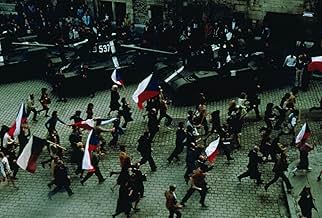
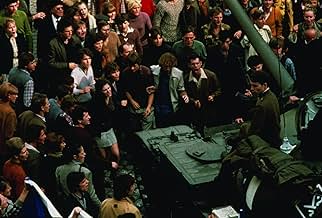
Set in the Prague Spring of 1968, when the Soviets put down Dubcek's `Socialism with a Human Face,' the weight of these events draws the lives of a Czech doctor, his wife, and his lovers, into its orbit. And instead of crushing them, as one might assume, it becomes the fire that purifies gold. Tomas (Daniel Day-Lewis), for example, had previously written a treatise on Oedipus, a witty exercise in sophistry aimed at the Communist regime as a provocative analogy, nothing more. But as the essay becomes an object of obsession to the Communists, we see Kundera's definition of vertigo come into play. It is not the fear of falling, but the soul's defense against the desire to fall. Tomas wanted to fall. Why? Watch the movie, and find out for yourself.
Set in the Prague Spring of 1968, when the Soviets put down Dubcek's `Socialism with a Human Face,' the weight of these events draws the lives of a Czech doctor, his wife, and his lovers, into its orbit. And instead of crushing them, as one might assume, it becomes the fire that purifies gold. Tomas (Daniel Day-Lewis), for example, had previously written a treatise on Oedipus, a witty exercise in sophistry aimed at the Communist regime as a provocative analogy, nothing more. But as the essay becomes an object of obsession to the Communists, we see Kundera's definition of vertigo come into play. It is not the fear of falling, but the soul's defense against the desire to fall. Tomas wanted to fall. Why? Watch the movie, and find out for yourself.


Le saviez-vous
- AnecdotesThe first cut shown to the studio was under two hours in length and the story was confusing. Philip Kaufman was asked to add in scenes he cut. The next day they were shown the theatrically released version. It's believed Kaufman showed them a shorter and confusing version in order to get his almost three-hour final cut approved with no questions of cutting it.
- GaffesMephisto the Pig, consistently referred to as "he", is a sow, as can be seen frequently, but particularly when the group enters the inn for dancing.
Meilleurs choix
Connectez-vous pour évaluer et surveiller les recommandations personnalisées
- How long is The Unbearable Lightness of Being?Propulsé par Alexa
Détails
- Date de sortie
- Pays d’origine
- Sites officiels
- Langues
- Aussi connu sous le nom de
- The Unbearable Lightness of Being
- Lieux de tournage
- Prague, République tchèque(archive footage)
- société de production
- Consultez plus de crédits d'entreprise sur IMDbPro
Box-office
- Budget
- 17 000 000 $ US (estimation)
- Brut – États-Unis et Canada
- 10 006 806 $ US
- Fin de semaine d'ouverture – États-Unis et Canada
- 202 189 $ US
- 7 févr. 1988
- Brut – à l'échelle mondiale
- 10 006 806 $ US
- Durée
- 2h 51m(171 min)
- Couleur
- Mixage
- Rapport de forme
- 1.85 : 1
Contribuer à cette page
Suggérer une modification ou ajouter du contenu manquant