

Un jeune soldat au Vietnam traverse une crise morale lorsqu'il est confronté aux horreurs de la guerre et à la dualité de l'homme.Un jeune soldat au Vietnam traverse une crise morale lorsqu'il est confronté aux horreurs de la guerre et à la dualité de l'homme.Un jeune soldat au Vietnam traverse une crise morale lorsqu'il est confronté aux horreurs de la guerre et à la dualité de l'homme.
- Réalisation
- Scénariste
- Vedettes
- A remporté 4 oscars
- 24 victoires et 16 nominations au total


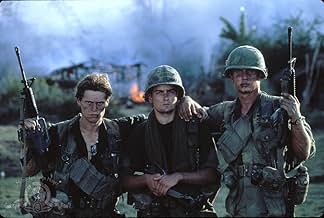
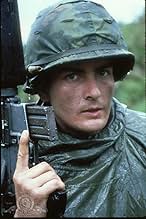
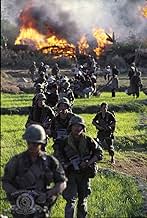



8,1464.7K
1
2
3
4
5
6
7
8
9
10
Sommaire
Reviewers say 'Platoon' is acclaimed for its realistic Vietnam War portrayal, highlighting soldiers' moral and psychological struggles. Oliver Stone's veteran experience enhances authenticity. The film is lauded for its gritty style and strong performances by Willem Dafoe and Tom Berenger. However, some critics argue it oversimplifies moral issues and lacks historical accuracy. Its anti-war message is both praised and criticized for being simplistic and propagandistic. Despite mixed views on artistic merit, 'Platoon' is recognized for its emotional impact and resonance.
Avis en vedette
Uncomfortable but very worthy view of war's impact on the young
At the height of the Vietnam War, America's teens are drafted into the war effort to find themselves in the middle of hell. One such young man is Chris Taylor. He is placed in a squadron where two sergeants have different approaches to the war Elias is more about surviving without being brutal or cruel, whereas Barnes is crueller, more ruthless and more violent. During the course of his term, Taylor's very soul is torn between the two men as he deals with what he must do.
The first film in Oliver Stone's unofficial trilogy is arguably the best of the three. The basic story not only shows us what the war was like for those serving but also how the different personalities come out of those involved in it. As we follow Taylor we see him change as he is influenced by those around him and by his situation. It makes for an uncomfortable film but one that's worth watching. It's certainly a better war movie than things like Wild Geese or The Dirty Dozen, simply because it's a little more real to what happens than those ones.
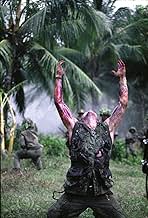
Charlie Sheen has never been better than when he's acting for Stone. Here he gives one of his best ever performances as the innocent who is changed. Willem Dafoe is a great actor and here is no different he also gives us one of the film's most enduring images so I'm a little biased. Berenger is another one for whom it's hard to think of a higher point reached than when he did this film. He is brutal and ruthless but he makes us support him in a strange way. The support cast are all good and contains a few famous faces (John C McGinley, Whitaker, Depp) however this is really a three man show.
Overall this is brutal and violent with no happy ending. At the end of the day isn't that what a war film should be?
The first film in Oliver Stone's unofficial trilogy is arguably the best of the three. The basic story not only shows us what the war was like for those serving but also how the different personalities come out of those involved in it. As we follow Taylor we see him change as he is influenced by those around him and by his situation. It makes for an uncomfortable film but one that's worth watching. It's certainly a better war movie than things like Wild Geese or The Dirty Dozen, simply because it's a little more real to what happens than those ones.
Charlie Sheen has never been better than when he's acting for Stone. Here he gives one of his best ever performances as the innocent who is changed. Willem Dafoe is a great actor and here is no different he also gives us one of the film's most enduring images so I'm a little biased. Berenger is another one for whom it's hard to think of a higher point reached than when he did this film. He is brutal and ruthless but he makes us support him in a strange way. The support cast are all good and contains a few famous faces (John C McGinley, Whitaker, Depp) however this is really a three man show.
Overall this is brutal and violent with no happy ending. At the end of the day isn't that what a war film should be?
Platoon focuses on the moral decay of the soldiers in the most unpopular war in modern American history
Many great war films of the Vietnam conflict are centered around these themes of blurred morality and the uselessness of war, and Oliver Stone's Platoon is among the most well known. Stone, who wrote and directed the film and also served as an infantryman in Vietnam, first rose to fame for his war films that dramatized the infamous Cold War conflict. The main premise of his magnum opus are the inner conflicts within US forces deployed to southeast Asia, rather than the actual physical conflicts between them and the Communist-allied Vietnamese forces. More broadly, Platoon analyzes the "duality of man" concept that has been studied in numerous other works, from fellow Vietnam War films like Full Metal Jacket (1987) and Apocalypse Now (1979), all the way back to the latter's source material and inspiration in Joseph Conrad's Heart of Darkness.
Platoon focuses on the moral decay of soldiers in American units, and how this contributes to their inability to fight their Vietnamese enemies. Charlie Sheen sums up this theme with his on-the-nose voiceover, "We did not fight the enemy, we fought ourselves... and the enemy was in us."
Vietnam War-movies tend to be even harder to watch than most war flicks, as the lines between the "heroes" and "villains" are blurred more than in any other dramatized period of warfare in recent human history. In wars like World War II, which are widely known for being as black and white as military conflicts have become, the contrasting features between the heroic forces we are meant to root for and their opposing enemy platoons are well defined. That is almost never the case with the United States-North Vietnamese/Vietcong conflict in Vietnam during the overarching Cold War.
That is not to say that most wars throughout human history have not been many shades of grey, with the winners and losers not always corresponding with the righteous and evil. But because of the guerrilla nature and infamous legacy of the Vietnam War itself - namely, the immense public protest against American involvement - the Vietnam War remains by far the most unpopular war in modern American history. With that said, most of the film is fantastic, from the aforementioned narrative to the grim lightning of the southeast Asian jungles that emphasize the film's tone, to the poignant, melancholic score.
Platoon focuses on the moral decay of soldiers in American units, and how this contributes to their inability to fight their Vietnamese enemies. Charlie Sheen sums up this theme with his on-the-nose voiceover, "We did not fight the enemy, we fought ourselves... and the enemy was in us."
Vietnam War-movies tend to be even harder to watch than most war flicks, as the lines between the "heroes" and "villains" are blurred more than in any other dramatized period of warfare in recent human history. In wars like World War II, which are widely known for being as black and white as military conflicts have become, the contrasting features between the heroic forces we are meant to root for and their opposing enemy platoons are well defined. That is almost never the case with the United States-North Vietnamese/Vietcong conflict in Vietnam during the overarching Cold War.
That is not to say that most wars throughout human history have not been many shades of grey, with the winners and losers not always corresponding with the righteous and evil. But because of the guerrilla nature and infamous legacy of the Vietnam War itself - namely, the immense public protest against American involvement - the Vietnam War remains by far the most unpopular war in modern American history. With that said, most of the film is fantastic, from the aforementioned narrative to the grim lightning of the southeast Asian jungles that emphasize the film's tone, to the poignant, melancholic score.
Perfection... or as close to it as we're ever likely to see
Its hard to know where to start with such a breathtaking film. Oliver Stone's Platoon is quite simply the best Vietnam war film ever made in my opinion. Everything about it is as close to perfection as we are likely to see. Charlie Sheen plays the lead, and Willem Defoe and Tom Berenger play the two sergeants that form a key part of the plot.
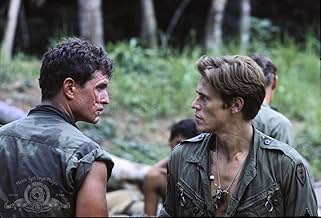
Chris Taylor (Sheen) is torn between the sergeants. Barnes (Berenger) is the battle hardened, brutal murderer, who uses the war as an excuse to tender to his sadistic pleasures. Elias (Defoe) is the other side of the spectrum. We get the sense that he has wrestled with his inner demons, but he has successfully come through to the other side. He has compassion for his fellow man, and he uses drugs as a form of escapism from this brutal war. The two symbolise the struggle that Taylor must face if he is to survive out in Vietnam.
Oliver Stone perfectly captures war. The shooting is frantic and impossible to follow. It perfectly disorientates us, just as the soldiers were. We have no idea who is being shot at, and neither do they. We follow the war at ground level, and see the brutalities first hand. Having served in Vietnam, the film is loosely based on Stone's time out there, and Taylor loosely based on himself.
Full Metal Jacket showcases how inhumane the war was, Apocalypse Now turns it into a story about life in general, and hopelessness, but Platoon has everything. Trying hard to avoid the old cliché, but if you only watch one war film, make sure it is this one. Nothing else can come close.
Chris Taylor (Sheen) is torn between the sergeants. Barnes (Berenger) is the battle hardened, brutal murderer, who uses the war as an excuse to tender to his sadistic pleasures. Elias (Defoe) is the other side of the spectrum. We get the sense that he has wrestled with his inner demons, but he has successfully come through to the other side. He has compassion for his fellow man, and he uses drugs as a form of escapism from this brutal war. The two symbolise the struggle that Taylor must face if he is to survive out in Vietnam.
Oliver Stone perfectly captures war. The shooting is frantic and impossible to follow. It perfectly disorientates us, just as the soldiers were. We have no idea who is being shot at, and neither do they. We follow the war at ground level, and see the brutalities first hand. Having served in Vietnam, the film is loosely based on Stone's time out there, and Taylor loosely based on himself.
Full Metal Jacket showcases how inhumane the war was, Apocalypse Now turns it into a story about life in general, and hopelessness, but Platoon has everything. Trying hard to avoid the old cliché, but if you only watch one war film, make sure it is this one. Nothing else can come close.
Still packs a punch 30 years on
Ever since Steven Spielberg wowed the cinematic world and changed the aesthetic of the war movie forever with the exceptional opening 25 minutes of 1998's Saving Private Ryan - the film went downhill from there - audiences have come to expect the same grainy camera-work and ultra-realism of Spielberg's breathtaking vision whenever a battle is depicted. Anything else would be 'unrealistic', and many movies dated horribly almost overnight as a result. While Oliver Stone's Platoon, which was once considered difficult to watch due to its unflinching depiction of the insanity of war, may not seem quite as brutal as it used to, it possesses one thing that no war other movie can boast - the guiding hand of a veteran.
Stone did a tour in Vietnam which ended in 1968, changing the future writer/director forever. Starting out life as a screenplay focusing on a soldier's experiences both before and during the war which had Jim Morrison touted for the lead, it evolved into a movie focused solely on a young volunteer's time spent in the sweaty, eternally damp jungle. Charlie Sheen's Chris Taylor is an obvious stand-in for Stone, and he arrives fresh-faced and eager to fight for his country. By the end, he is dazed and confused, and angry at the country who would send such "bottom of the barrel" men - invisible in society - into a world of such horror and meaningless bloodshed. It's an experience that moulded Stone into the one of the most outspoken voices in cinema.
The casting of the two sergeants vying for Chris' soul is a stroke of genius. The platoon is made up of two main groups - the 'juicers', a collection of beer-swilling meat-heads seemingly intent on violence at every opportunity, and the 'heads', a more laid-back and weary bunch who are happiest when getting high and having a singalong. At the head of the juicers is Sgt. Barnes, played by Tom Berenger, an actor known for his heart-throb leading-man roles but here cast as a dead-eyed, heavily scarred brute. While Willem Dafoe, who was and still is known for his crazy-eyed villainous roles, plays the wiser, gentler leader of the heads, an all-round good guy battling his own demons. By toying with expectations, Stone adds layers to their characters, and they both received Best Actor nominations for their efforts.
Yet what makes Platoon truly stand out 30 years after its release is the way Stone manages to transport the audience to that terrible place. It's teeming with dangers at every turn, be it the ants, the snakes or the Viet Cong better equipped for the harsh surroundings, the most frightening moment is when they fall asleep. And even when they awake, there's something moving in the shadows. The film never allows you to ever be at ease, despite the fun to be had with spotting the many famous faces dotted throughout the supporting cast. There are flaws, especially with some overacting from some of the supporting cast - in particular John C. McGinley - and Chris' unnecessary, rambling narration, but the movie packs such a punch that it's easy to forget these quibbles. It's a true insight into the mind of a grunt and how combat can have a lasting, eye-opening effect on those on the ground, and undoubtedly one of the most important war pictures ever to come out of the US.
Stone did a tour in Vietnam which ended in 1968, changing the future writer/director forever. Starting out life as a screenplay focusing on a soldier's experiences both before and during the war which had Jim Morrison touted for the lead, it evolved into a movie focused solely on a young volunteer's time spent in the sweaty, eternally damp jungle. Charlie Sheen's Chris Taylor is an obvious stand-in for Stone, and he arrives fresh-faced and eager to fight for his country. By the end, he is dazed and confused, and angry at the country who would send such "bottom of the barrel" men - invisible in society - into a world of such horror and meaningless bloodshed. It's an experience that moulded Stone into the one of the most outspoken voices in cinema.
The casting of the two sergeants vying for Chris' soul is a stroke of genius. The platoon is made up of two main groups - the 'juicers', a collection of beer-swilling meat-heads seemingly intent on violence at every opportunity, and the 'heads', a more laid-back and weary bunch who are happiest when getting high and having a singalong. At the head of the juicers is Sgt. Barnes, played by Tom Berenger, an actor known for his heart-throb leading-man roles but here cast as a dead-eyed, heavily scarred brute. While Willem Dafoe, who was and still is known for his crazy-eyed villainous roles, plays the wiser, gentler leader of the heads, an all-round good guy battling his own demons. By toying with expectations, Stone adds layers to their characters, and they both received Best Actor nominations for their efforts.
Yet what makes Platoon truly stand out 30 years after its release is the way Stone manages to transport the audience to that terrible place. It's teeming with dangers at every turn, be it the ants, the snakes or the Viet Cong better equipped for the harsh surroundings, the most frightening moment is when they fall asleep. And even when they awake, there's something moving in the shadows. The film never allows you to ever be at ease, despite the fun to be had with spotting the many famous faces dotted throughout the supporting cast. There are flaws, especially with some overacting from some of the supporting cast - in particular John C. McGinley - and Chris' unnecessary, rambling narration, but the movie packs such a punch that it's easy to forget these quibbles. It's a true insight into the mind of a grunt and how combat can have a lasting, eye-opening effect on those on the ground, and undoubtedly one of the most important war pictures ever to come out of the US.
A Realistic Vietnam film Oliver's Stone's masterpiece
Platoon is a 1986 American war film written and directed by Oliver Stone one of the most strongest realistic anti war films of all time. It is one of the best Vietnam war films I have ever seen that won the Academy Award for Best Picture of 1986 and best Director for Oliver Stone, as well as Best Sound Mixing and Best Film Editing. Stone's Vietnam film portrayed a real life human been on his point of view of the story telling that went on in his real life that he experienced after his tour of duty in Vietnam ended in 1968, Oliver Stone wrote a screenplay called Break: a semi-autobiographical account detailing his experiences and the life he was in Vietnam. The characters were portrayed more then a few soldiers they were portrayed more as a human been than been soldiers obeying an order.Platoon shows the Vietnam War was a big mistake, but being a fictional documentary on Vietnam is far from its purpose. It is one of my personal favorite war movies. I love this movie to death.
Those of us who did make it have an obligation to build again, to teach to others what we know, and to try with what's left of our lives to find a goodness and meaning in this life.
In Platoon, Chris Taylor (Charlie Sheen) is a young, naive U.S. soldier who, upon his arrival to Vietnam, quickly discovers that he must do battle not only with the Viet Cong, but also with the gnawing fear, physical exhaustion and intense anger growing within him. While his two commanding officers draw a fine line between the war they wage against the enemy and the one they fight with each other, the conflict, chaos and hatred permeate Taylor, suffocating his realities and numbing his feelings to man's highest value... life.
Chris sees his platoon fragmented into two halves, each aligned with one of two men -- Sgt. Elias (Willem Dafoe) and Sgt. Barnes (Tom Berenger). Those two soldiers are really two positive good things to see in the film because it sets the viewer on the seat of the edge. They both have nominally the same enemy (Viet Cong), but, really, it doesn't take long to realize that Elias is Good, and Barnes is Evil (the "enemy" does not enter into the moral equation of this film, at all it's an outside threat, same as malaria-carrying mosquitoes or even friendly fire). Elias feels the futility of the war and has respect for life; Barnes fights the war doggedly and has no compassion, period. Both are efficient soldiers fighting the same enemy, but really as is at one point aptly put by Chris Taylor himself,they are fighting for the souls of the platoon members, as the outcome of the war is never really in doubt.
The platoon reaches the village, where a food and weapons cache is discovered. While questioning the village chief, Barnes loses his patience and senselessly kills the man's wife despite his denials that they are aiding the Viet Cong. Barnes is about to murder the man's young daughter to force him to tell them to where the enemy is.
Elias doesn't take kindly to this kind of behavior. Elias and Barnes come closer and closer to open conflict, as Taylor becomes a veteran, obviously siding with Elias. Meanwhile, the fate of the platoon comes closer and closer to them, culminating in an explosively shot action conclusion. The end is dark, but morally satisfying.
Platoon is a legendary film. A film that I will always cherish, and a film that I will never get tired of. And the last Vietnam film worth a damn to watch. There isn't any War film today that was filmed as really human drama war today in 2015. It respectively represents the very essence of purposefully haunting powerful cinematography in the history.-- It is representing admirable cinematic craftsmanship and storytelling. A film that is sometimes impossible to watch for its frighteningly intense and emotionally draining account of the Vietnam War as it is waged both on the battlefields and within the very souls of men.
The best real human drama portrayed on screen anti-war film in Vietnam from the 80's, It is my favorite film that I will always love to death to see. I also don't watch this film for an action ; I actually see it for the war and how it everything was, what is more valuable and it is life: The film also have a message in it. The actors portraying the characters did make a believable performance as the real team of squad soldier fighting the Enemy the Viet Cong.
The battles with Viet-Cong are shown realistic mostly on the end of the final battle. 10/10
Those of us who did make it have an obligation to build again, to teach to others what we know, and to try with what's left of our lives to find a goodness and meaning in this life.
In Platoon, Chris Taylor (Charlie Sheen) is a young, naive U.S. soldier who, upon his arrival to Vietnam, quickly discovers that he must do battle not only with the Viet Cong, but also with the gnawing fear, physical exhaustion and intense anger growing within him. While his two commanding officers draw a fine line between the war they wage against the enemy and the one they fight with each other, the conflict, chaos and hatred permeate Taylor, suffocating his realities and numbing his feelings to man's highest value... life.
Chris sees his platoon fragmented into two halves, each aligned with one of two men -- Sgt. Elias (Willem Dafoe) and Sgt. Barnes (Tom Berenger). Those two soldiers are really two positive good things to see in the film because it sets the viewer on the seat of the edge. They both have nominally the same enemy (Viet Cong), but, really, it doesn't take long to realize that Elias is Good, and Barnes is Evil (the "enemy" does not enter into the moral equation of this film, at all it's an outside threat, same as malaria-carrying mosquitoes or even friendly fire). Elias feels the futility of the war and has respect for life; Barnes fights the war doggedly and has no compassion, period. Both are efficient soldiers fighting the same enemy, but really as is at one point aptly put by Chris Taylor himself,they are fighting for the souls of the platoon members, as the outcome of the war is never really in doubt.
The platoon reaches the village, where a food and weapons cache is discovered. While questioning the village chief, Barnes loses his patience and senselessly kills the man's wife despite his denials that they are aiding the Viet Cong. Barnes is about to murder the man's young daughter to force him to tell them to where the enemy is.
Elias doesn't take kindly to this kind of behavior. Elias and Barnes come closer and closer to open conflict, as Taylor becomes a veteran, obviously siding with Elias. Meanwhile, the fate of the platoon comes closer and closer to them, culminating in an explosively shot action conclusion. The end is dark, but morally satisfying.
Platoon is a legendary film. A film that I will always cherish, and a film that I will never get tired of. And the last Vietnam film worth a damn to watch. There isn't any War film today that was filmed as really human drama war today in 2015. It respectively represents the very essence of purposefully haunting powerful cinematography in the history.-- It is representing admirable cinematic craftsmanship and storytelling. A film that is sometimes impossible to watch for its frighteningly intense and emotionally draining account of the Vietnam War as it is waged both on the battlefields and within the very souls of men.
The best real human drama portrayed on screen anti-war film in Vietnam from the 80's, It is my favorite film that I will always love to death to see. I also don't watch this film for an action ; I actually see it for the war and how it everything was, what is more valuable and it is life: The film also have a message in it. The actors portraying the characters did make a believable performance as the real team of squad soldier fighting the Enemy the Viet Cong.
The battles with Viet-Cong are shown realistic mostly on the end of the final battle. 10/10
Oscars Best Picture Winners, Ranked
Oscars Best Picture Winners, Ranked
See the complete list of Oscars Best Picture winners, ranked by IMDb ratings.


Le saviez-vous
- AnecdotesAccording to Oliver Stone, he intentionally cast Tom Berenger and Willem Dafoe against type. Berenger was mostly famous for playing good guys, while Dafoe had primarily played villains up until then. Both men received Oscar nominations for their work.
- GaffesDuring the opening credits, when the men are first hiking through the jungle, Big Harold slips and rolls down a hillside towards the camera. The camera operator's hand can be seen in the bottom right corner of the screen trying to stop the actor's fall.
- Citations
[Refering to Vietnam]
Chris Taylor: Somebody once wrote, "Hell is the impossibility of reason." That's what this place feels like. Hell. I hate it already, and it's only been a week. Some goddamn week.
- Autres versionsTV version has much of its dialogue redubbed and shots refilmed, replacing such lines as "He thinks he's Jesus F---in' Christ!" with "He thinks he's George Freakin' Washington!"
- ConnexionsEdited into A Tour of the Inferno: Revisiting 'Platoon' (2001)
- Bandes originalesAdagio for Strings
Written by Samuel Barber
Arranged and Conducted by Georges Delerue
Used by arrangement with G. Schirmer, Inc.
Meilleurs choix
Connectez-vous pour évaluer et surveiller les recommandations personnalisées
Greatest Character Actors of All Time
Greatest Character Actors of All Time
The talented actors totally transform for their roles. How many do you recognize?

Détails
- Date de sortie
- Pays d’origine
- Site officiel
- Langues
- Aussi connu sous le nom de
- Pelotón
- Lieux de tournage
- sociétés de production
- Consultez plus de crédits d'entreprise sur IMDbPro
Box-office
- Budget
- 6 000 000 $ US (estimation)
- Brut – États-Unis et Canada
- 138 530 565 $ US
- Fin de semaine d'ouverture – États-Unis et Canada
- 241 080 $ US
- 21 déc. 1986
- Brut – à l'échelle mondiale
- 138 546 255 $ US
- Durée
- 2h(120 min)
- Couleur
- Mixage
- Rapport de forme
- 1.85 : 1
Contribuer à cette page
Suggérer une modification ou ajouter du contenu manquant