ÉVALUATION IMDb
6,8/10
16 k
MA NOTE


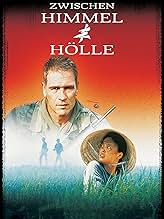
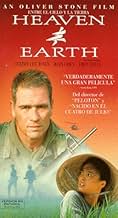
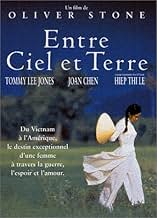
Pendant la guerre du Vietnam, une vietnamienne se bat pour survivre dans la rue, où elle se retrouve face à face avec les personnes impliquées dans le conflit qui l'entoure.Pendant la guerre du Vietnam, une vietnamienne se bat pour survivre dans la rue, où elle se retrouve face à face avec les personnes impliquées dans le conflit qui l'entoure.Pendant la guerre du Vietnam, une vietnamienne se bat pour survivre dans la rue, où elle se retrouve face à face avec les personnes impliquées dans le conflit qui l'entoure.
- Réalisation
- Scénaristes
- Vedettes
- Prix
- 1 victoire et 2 nominations au total


6,815.8K
1
2
3
4
5
6
7
8
9
10
Avis en vedette
An underrated film
Oliver Stone's "Heaven and Earth" is a fantastic film that shows what the effects of war are on the human spirt. Now, more than ever this film is very poignant. The movie is based upon two of Lelay Hayslip's memoirs which chronicle her growing up in Vietnam and the effects of war upon her, her family and her country. It was fascinating and at times very difficult to watch. I couldn't help but thank God that as Americans we have not had to experience what the Vietnamese went through. The view of war that Stone portrays is very humanistic. One line in the film was especially riveting.... "Rebuilding a country after war is like having a family thru rape". We see how the war throws apart Lelay's family. If you haven't seen this film.. I highly recommend it!
exploring the "other" and doing it with (imperfect) artistic integrity
As the third part of an unofficial trilogy of Vietnam films, Stone picked as the final point a good challenge for himself as making a film not only from a woman's point of view (1st time), but from the side of the "enemy" of the war he and Kovic fought in. Of course Vietnamese people were seen in Platoon and Born on the Fourth of July, but always as the "other", either in limited roles as the so-called enemy or as tragic figures of oppression. And yet despite opening during the Christmas season, it failed to connect with audiences.
Seeing it now, finally, I can see why in some part; people from the West, Americans especially, wouldn't necessarily be interested in the point of view of someone who was on the side of the 'other', whether it's oppressor or oppressed (despite the attempted selling of the film on Tommy Lee Jones, audiences probably knew better that he wasn't the full star, more on him in a moment). It's one thing to see the point of view from the side of Americans, but for the other it's a tougher pill to swallow (maybe the exception is Letters from Iwo Jima, maybe), despite years after things are over and the wounds are beginning to heal. Maybe there's another aspect that is difficult to pinpoint but I could see it as Stone's, shall one say, spiritual side coming through which is his Buddhism, which is the religion of the protagonist Le Ly. How does one fully forgive and go for the belief in karma and past lives and so on?
For me, this is a film that I could connect to simply on the grounds of it being a human portrait of a life lived through many, many beats. And in a way it makes sense from how the life story is told that it's the third part of a trilogy which began as a story of someone's life in the short term (the stint in combat), somewhat longer (from youth to awakening as a man full circle), and here it's from childhood to further as an adult. The life of Le Ly is at times dramatic... no, actually, it's brutal and unrelenting in its grimness. Le Ly's village is decimated and torn apart by war (not simply the Americans, though they certainly leave their mark, but the division between the two sides of the Vietnamese who bring equal hardship and misery and torture to Le Ly), and then when she has to leave with her mother to Saigon, as the story would say, "my troubles were about to begin".
I'm tempted to say the first half of this may be TOO dramatic, in a sense, that things keep being thrown at Le Ly's way one after another: torture, rape, becoming an unwed mother on the streets, a dying (soon after dead) father, as well as a brother who was sent off to war and died. When I say 'heavy' it's more like an anvil is dropped. This is not to say the tone is always so heavy as far as being over-bearing - the emotion that's poured out in scene after scene by Hiep Thi Le is incredible, showing so much through her eyes as many a great actor can do. I think part of is is simply through Oliver Stone being... Oliver Stone, this coming as the "cool-off" between JFK and Natural Born Killers, so you can expect sometimes unwieldy camera-work and black and white flashbacks and the sort of intense lighting and compositions from Robert Richardson that, in a way, feel a little more out of place this time than in other Stone films of the period. The attempts to amplify the tension and horror (with the exception of one image, a big shock of fire going across the screen) are too much this time and clash with the otherwise strong, pretty straightforward direction of the dramatic scenes.
Then we get into the second half when Tommy Lee Jones comes in, and it becomes a stronger picture. But his part in the film as well as everything that comes after does only work with that first half, if that makes sense; everything that Le Ly has endured and experienced, every moment that's forced her to be less foolish or ignorant or slow to understand something or naive makes her stronger so that when a strong, seemingly kind and generous man like Jones' Steve comes in, we get it. We know why she puts her guard up and why it goes down. And for Jones' part, as he has an arc as well as a man with a slowly-but-surely deteriorating veneer of strength through years of being a f***ed up "Psy-Ops" guy, he gives the performance that I'll just pretend he won the Oscar for in 94 instead of the Fugitive. It's really among his major performances, certainly one of the ones he should be remembered for, creating this man Steve as an engaging, fun, terrifying, wounded, tragic figure in Le Ly's life.
I think that if Stone had reeled in some of his crazier stylistic tendencies of the period - he does, mostly, but not enough - and perhaps cut a little out (at 140 minutes it feels too long, mostly near the end, however necessarily in general it may be to complete Le Ly's arc), it would've been a film to stand with the rest of his work for the time. But as far as underrated films from a major director, this is one that is deeply felt and reveals someone who can deliver an experience outside of his usual worldview. At the same time it works as a feminist picture, a story of a woman making her own life on her own terms, while the spiritual side of things is always there. Though I wanted to like it more, I'd say if you want to finish Stone's oeuvre you won't be disappointed.
Seeing it now, finally, I can see why in some part; people from the West, Americans especially, wouldn't necessarily be interested in the point of view of someone who was on the side of the 'other', whether it's oppressor or oppressed (despite the attempted selling of the film on Tommy Lee Jones, audiences probably knew better that he wasn't the full star, more on him in a moment). It's one thing to see the point of view from the side of Americans, but for the other it's a tougher pill to swallow (maybe the exception is Letters from Iwo Jima, maybe), despite years after things are over and the wounds are beginning to heal. Maybe there's another aspect that is difficult to pinpoint but I could see it as Stone's, shall one say, spiritual side coming through which is his Buddhism, which is the religion of the protagonist Le Ly. How does one fully forgive and go for the belief in karma and past lives and so on?
For me, this is a film that I could connect to simply on the grounds of it being a human portrait of a life lived through many, many beats. And in a way it makes sense from how the life story is told that it's the third part of a trilogy which began as a story of someone's life in the short term (the stint in combat), somewhat longer (from youth to awakening as a man full circle), and here it's from childhood to further as an adult. The life of Le Ly is at times dramatic... no, actually, it's brutal and unrelenting in its grimness. Le Ly's village is decimated and torn apart by war (not simply the Americans, though they certainly leave their mark, but the division between the two sides of the Vietnamese who bring equal hardship and misery and torture to Le Ly), and then when she has to leave with her mother to Saigon, as the story would say, "my troubles were about to begin".
I'm tempted to say the first half of this may be TOO dramatic, in a sense, that things keep being thrown at Le Ly's way one after another: torture, rape, becoming an unwed mother on the streets, a dying (soon after dead) father, as well as a brother who was sent off to war and died. When I say 'heavy' it's more like an anvil is dropped. This is not to say the tone is always so heavy as far as being over-bearing - the emotion that's poured out in scene after scene by Hiep Thi Le is incredible, showing so much through her eyes as many a great actor can do. I think part of is is simply through Oliver Stone being... Oliver Stone, this coming as the "cool-off" between JFK and Natural Born Killers, so you can expect sometimes unwieldy camera-work and black and white flashbacks and the sort of intense lighting and compositions from Robert Richardson that, in a way, feel a little more out of place this time than in other Stone films of the period. The attempts to amplify the tension and horror (with the exception of one image, a big shock of fire going across the screen) are too much this time and clash with the otherwise strong, pretty straightforward direction of the dramatic scenes.
Then we get into the second half when Tommy Lee Jones comes in, and it becomes a stronger picture. But his part in the film as well as everything that comes after does only work with that first half, if that makes sense; everything that Le Ly has endured and experienced, every moment that's forced her to be less foolish or ignorant or slow to understand something or naive makes her stronger so that when a strong, seemingly kind and generous man like Jones' Steve comes in, we get it. We know why she puts her guard up and why it goes down. And for Jones' part, as he has an arc as well as a man with a slowly-but-surely deteriorating veneer of strength through years of being a f***ed up "Psy-Ops" guy, he gives the performance that I'll just pretend he won the Oscar for in 94 instead of the Fugitive. It's really among his major performances, certainly one of the ones he should be remembered for, creating this man Steve as an engaging, fun, terrifying, wounded, tragic figure in Le Ly's life.
I think that if Stone had reeled in some of his crazier stylistic tendencies of the period - he does, mostly, but not enough - and perhaps cut a little out (at 140 minutes it feels too long, mostly near the end, however necessarily in general it may be to complete Le Ly's arc), it would've been a film to stand with the rest of his work for the time. But as far as underrated films from a major director, this is one that is deeply felt and reveals someone who can deliver an experience outside of his usual worldview. At the same time it works as a feminist picture, a story of a woman making her own life on her own terms, while the spiritual side of things is always there. Though I wanted to like it more, I'd say if you want to finish Stone's oeuvre you won't be disappointed.
7=G=
The war from the Vietnamese perspective
"Heaven and Earth" follows the life of a Buddhist Vietnamese peasant girl through the protracted and convulsive American-Vietnam war, the aftermath and reconstruction. A solid three star flick, "H&E" is important inasmuch as it casts in concrete for posterity the Vietnamese perspective of the epic American fiasco in an entertaining movie format. As a stand-alone piece of work, "H&E" may grow somewhat tiresome after 2+ hours under the heavy-handed Stone auteuresmanship. Nonetheless, the film should have value for those who only know about the war from the typically biased American film point of view. (B)
an unrecognised masterpiece
I don't understand why this film has been rated so poorly, it really deserves better. The breath-taking landscapes, subtle imagery, the overall excellent craftsmanship alone make this movie worth seeing.
The unique and very personal perspective of this movie makes it hard to keep your distance. Some scenes are rather brutal, but these scenes are necessary for telling a realistic story. Definitely no Disney family movie though.
I give it a 9 out of 10, because even with 140 minutes runtime the story feels rushed and crammed. Sometimes less is more, I shall read the books now.
The unique and very personal perspective of this movie makes it hard to keep your distance. Some scenes are rather brutal, but these scenes are necessary for telling a realistic story. Definitely no Disney family movie though.
I give it a 9 out of 10, because even with 140 minutes runtime the story feels rushed and crammed. Sometimes less is more, I shall read the books now.
10umiboozu
Forget Vietnam
I don't understand why most people don't appreciate this movie. I guess one reason is that it's not easy to look at your own people, US soldiers, as enemies, or at your country - in the final - as the land of fatty meaninglessnes. Or maybe they were expecting something different from Stone, something more than that history - not so unusual as someone observed - of a simple vietnamese country girl. The point, for me, is that this is not a film about the vietnam war, which is only the background. If you make the effort to forget the vietnam war, its historical and cultural legacy, to avoid being on the side of one of the armies (maybe is easier for me, being an italian), you'll discover one of the most intense movie about the family and the bonds with the earth where you belong. Stone through the story of this simple girl succeeded in telling the story of entire humankind, analizing those which are its roots, its ties, its hopes, its condemnations. Honestly, one of the best movies I've ever seen. Sincere, profound, touching. True.


Le saviez-vous
- AnecdotesIn the scene where Le Ly is in the jewelry store getting her jewelry appraised by the broker, the jewelry broker is the real Le Ly Hayslip.
- GaffesWhen Steve picks up Le Ly and her kids when the south is being overrun, he flies in on an Army helicopter, despite the fact that he and his friends are all in the Marines.
- Autres versionsThe UK cinema and video release has been cut by 55 seconds to obtain a '15' certificate. Numerous scenes were affected, particularly the rape and torture shots. In Ireland, the uncut version also initially earned an '18'. It was re-submitted in its cut British version which yet again earned an '18'. This decision was then taken to the Films Appeal Board, who downgraded the certificate to '15' on 16th February 1994. The UK DVD carries an Irish '18' while the British certificate is '15'.
- ConnexionsFeatured in Siskel & Ebert & the Movies: Tommy Lee Jones (1993)
Meilleurs choix
Connectez-vous pour évaluer et surveiller les recommandations personnalisées
- How long is Heaven & Earth?Propulsé par Alexa
Détails
Box-office
- Budget
- 33 000 000 $ US (estimation)
- Brut – États-Unis et Canada
- 5 864 949 $ US
- Fin de semaine d'ouverture – États-Unis et Canada
- 379 807 $ US
- 26 déc. 1993
- Brut – à l'échelle mondiale
- 5 864 949 $ US
- Durée
- 2h 20m(140 min)
- Mixage
- Rapport de forme
- 2.39 : 1
Contribuer à cette page
Suggérer une modification ou ajouter du contenu manquant