

Lorsqu'un homme séropositif est licencié par son cabinet d'avocats en raison de son état, il décide d'engager un petit avocat homophobe, seul défenseur volontaire de son action en justice po... Tout lireLorsqu'un homme séropositif est licencié par son cabinet d'avocats en raison de son état, il décide d'engager un petit avocat homophobe, seul défenseur volontaire de son action en justice pour licenciement abusif.Lorsqu'un homme séropositif est licencié par son cabinet d'avocats en raison de son état, il décide d'engager un petit avocat homophobe, seul défenseur volontaire de son action en justice pour licenciement abusif.
- Réalisation
- Scénariste
- Vedettes
- A remporté 2 oscars
- 20 victoires et 23 nominations au total




- Rachel Smilow
- (as Stephanie Roth)


Avis en vedette
Unfortunately Misguided Criticism Should Not Stop Anyone From Seeing This Film
Hey, Mr. Hanks, when you are through with that family can I borrow them?
This film was made almost a quarter of a century ago, and I guess to make Beckett sympathetic in those times there had to be nothing negative in his background. Thus the great family, his great intellect and passion for the law, and the solid long term partner in Miguel. His only failing - unprotected sex once in a gay porn theatre while in a relationship with Miguel. Thus the AIDS.
There really is no leading lady in this film. Instead, there are two leading men. Andrew Beckett as the plaintiff who cannot find a lawyer to take his case, and Denzel Washington as the attorney who ultimately takes his case, although he is initially scared of Andy, scared of AIDS, repulsed by the idea of gay people. Washington as attorney Joe Miller is portrayed as a devoted family man and flamboyant personal injury lawyer who thinks no plaintiff is too stupid to defend - numerous warning signs, plaintiff ignores them, plaintiff falls into manhole, for example. Yet he will not take Andy's case, initially. It's only after he sees a connection as to how he is treated at the public library for being African American and how Andy is treated there for being obviously ill of AIDS does he change his mind.
Where the great acting lies is in the growing friendship between Andy and Joe as they work on the case together. It is a subtle gradual shift in Joe's outlook until at the end, he buys a bottle of Dom Perignon to give to Andy in the hospital when, due to the price, he would not buy a bottle of that same champagne to celebrate the birth of his own child at the beginning of the film.
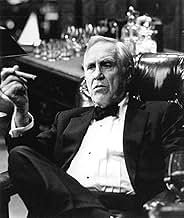
Honorable mention to Jason Robards as the chief partner of the law firm being sued who is more upset about the indignity of being hauled before the Philadelphia legal establishment as a civil defendant than he is about any possible loss of money, and to Joanne Woodward as Andy's mom who keeps a stiff upper lip in front of her son, yet the fact that he is dying in front of her is tearing her up. Sorry Mary Steenburgen, you are a great actress, but you just don't have me believing that you "hate gays", but you do have me believing you are a great attorney.
Today, lots of the characterizations may leave you feeling like you were hit over the head with a sledge hammer by Captain Obvious, but remember the time frame. People still had preconceived notions about homosexuals as in they must be deviant or have had something in their past that made them "that way", and they were definitely scared of AIDS and still not sure it was that hard to contract. Stick around for the great acting by Washington and Hanks and a host of supporting players. And also stick around for the final scene. It will jerk at your heartstrings.
Hanks is amazing...I can see why he got an Oscar for this one.
Tom Hanks stars as Andrew Beckett, a hot-shot lawyer at one of the top law firms in Philadelphia. Despite having just been made an associate (a reward for excellent service), he suddenly finds himself fired. The firm uses an excuse--blaming a mistake he supposedly made on one recent case. But this would not account for the firing and he appears to have been fired because he's ill...suffering from AIDS. Beckett has a hard time finding a lawyer to take a wrongful termination case for him and he's too sick to do this alone. Eventually, he finds a rather homophobic lawyer (Denzel Washington) to take the case...and the second half of the film is the courtroom battle to bring justice to Andrew.
Unlike many films, this one was filmed sequentially. This was important to do because Tom Hanks starved himself and as the movie progresses, his weight loss and excellent make up made it appear as if he was suffering the progressive effects of the disease. Hanks truly put himself out for this role...and it's among the best things he's ever done. Apart from that, it's a well made film...worth seeing and very touching. It's also fascinating to watch to see how far thinking has come regarding gay people and HIV/AIDS.
Gay Men Are Macho Too
Philadelphia is about life, and making it matter.
This movie is probably the best drama regarding gay issues ever made. Remember, it was made in 1993, when AIDS was still a terminal disease, and it recalls the early days of an epidemic that may not square with the vision afforded today, but at the time, this was the reality of AIDS.
The entire crew is A-List. Tak Fujimoto, who would also film Silence of the Lambs and Sixth Sense, directed cinematography. Jonathan Demme, also of Silence of the Lambs fame, directs with typical honesty and grit. Bruce Springsteen and Neil Young contributed hauntingly touching original songs. Even Antonio Banderas, whom I never miss an opportunity to vilify, is moving as Hanks' devoted and supportive partner. Denzel Washington was well cast as the homophobic lawyer who ultimately takes Hanks' case, and Mary Steenburgen is surprising in an uncharacteristic villain role.
Ron Vawter, who played one of the lawyers in the firm from which Hanks was fired, and also appeared in Silence of the Lambs, was himself suffering from AIDS at the time of filming, and he eventually succumbed to it a few years later. His appearance in the film encapsulates the reality of the AIDS epidemic, in that it often touched our lives in unexpected places.
Although I have literally thousands of movies in my collection, I don't own this one. Not because I don't love it. I do. It's because I can't watch it without being overcome by emotion. Anyone who can watch Hanks' in the Opera scene, or hear Springsteen's or Young's eerie and melancholy ballads and not weep is dead inside. But in the end, Philadelphia is about life, and making it matter.


Le saviez-vous
- AnecdotesThe moment when Mary Steenburgen's character says that she hates the case was improvised in the moment, when the actress expressed her hate towards her role after shooting the mirror scene and Jonathan Demme encouraged her to incorporate it into the role, so the woman would seem more human.
- GaffesThe court stenographer doesn't seem to be actually typing, and the paper tape recording her keystrokes doesn't ever advance.
- Citations
Joe Miller: Have you ever felt discriminated against at Wyatt Wheeler?
Anthea Burton: Well, yes.
Joe Miller: In what way?
Anthea Burton: Well, Mr. Wheeler's secretary, Lydia, said that Mr. Wheeler had a problem with my earrings.
Joe Miller: Really?
Anthea Burton: Apparently Mr. Wheeler felt that they were too..."Ethnic" is the word she used. And she told me that he said that he would like it if I wore something a little less garish, a little smaller, and more "American."
Joe Miller: What'd you say?
Anthea Burton: I said my earrings are American. They're African-American.
- Générique farfelu"This motion picture was inspired in part by Geoffrey Bowers' AIDS discrimination lawsuit, the courage and love of the Angius family and the struggles of the many others who, along with their loved ones, have experienced discrimination because of AIDS."
- Autres versionsThe cable and network television versions of Philadelphia edit out portions of the pharmacy scene where a gay University of Pennsylvania law student attempts to pick up Joe Miller. These two versions end this scene with the law student responding "Do I?" to Joe Miller's question concerning whether Miller looked gay. In the theatrical, home video and premium channel versions, Joe Miller continues to berate the law student with bigot remarks regarding homosexuals.
- ConnexionsEdited into Die Geschichte des erotischen Films (2004)
- Bandes originalesStreets Of Philadelphia
Produced by Bruce Springsteen and Chuck Plotkin
Written and Performed by Bruce Springsteen
Courtesy of Columbia Records
Meilleurs choix
Détails
Box-office
- Budget
- 26 000 000 $ US (estimation)
- Brut – États-Unis et Canada
- 77 446 440 $ US
- Fin de semaine d'ouverture – États-Unis et Canada
- 143 433 $ US
- 26 déc. 1993
- Brut – à l'échelle mondiale
- 206 678 440 $ US
- Durée
- 2h 5m(125 min)
- Couleur
- Mixage
- Rapport de forme
- 1.85 : 1