ÉVALUATION IMDb
7,1/10
4,7 k
MA NOTE
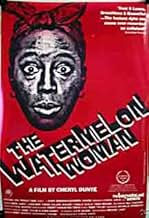
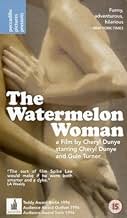
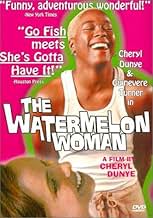
Ajouter une intrigue dans votre langueA young black lesbian filmmaker probes into the life of The Watermelon Woman, a 1930s black actress who played 'mammy' archetypes.A young black lesbian filmmaker probes into the life of The Watermelon Woman, a 1930s black actress who played 'mammy' archetypes.A young black lesbian filmmaker probes into the life of The Watermelon Woman, a 1930s black actress who played 'mammy' archetypes.
- Réalisation
- Scénaristes
- Vedettes
- Prix
- 4 victoires au total
Cheryl Clarke
- June Walker
- (as Cheryl Clark)
Kat L Robertson
- Yvette
- (as a different name)
7,14.6K
1
2
3
4
5
6
7
8
9
10
Avis en vedette
Time does fly, and people do change.
This is a very lighthearted film about a black video store clerk (Cheryl Dunye) who wants to make a documentary about an early black actress, known only as The Watermelon Woman." The fact that both Cheryl (Dunye) and the actress are lesbians keeps her going. In fact, in life imitating art, Cheryl finds that The Watermelon Woman was having a lesbian relationship with a white director, and then, she begins a relationship with a white video store customer (Guinevere Turner - American Psycho, Itty Bitty Titty Committee).
The film explored black language, early black actresses, black lesbians, mammies, and watermelon. It even featured an interview with Camille Paglia discussing mammies and watermelon in the context of blacks and Italians, It's nice to see Italians spoken of in something other than the Mob.
Her BFF Tamera (Valarie Walker) is a party girl, but she draws the line at interracial relationships, and that causes a problem for Cheryl.
There are a lot of good scenes throughout the movie, and it made it worthwhile even if the acting wasn't particularly good.
The end credits will surprise you.
The film explored black language, early black actresses, black lesbians, mammies, and watermelon. It even featured an interview with Camille Paglia discussing mammies and watermelon in the context of blacks and Italians, It's nice to see Italians spoken of in something other than the Mob.
Her BFF Tamera (Valarie Walker) is a party girl, but she draws the line at interracial relationships, and that causes a problem for Cheryl.
There are a lot of good scenes throughout the movie, and it made it worthwhile even if the acting wasn't particularly good.
The end credits will surprise you.
05/02/21
Really great movie loved the documentary style seaming with the actual film fun characters great transitions inbetween shots and enjoyed how random some of the cuts or scene transitions are
Not On Any Syrup Bottle
There are hundreds upon thousands of lesbian movies, and the majority are labelled "Adult". Name one lesbian movie about black women that isn't pornographic? Watching this one was something I could relate to. Finally, a movie touching on black history, interracial attraction, stereotypes, and the fictional day-in-the-life of an aspiring film-maker. More original than most, speaking as a black woman. Excuse the bad technology, and you've got a story about a woman researching her black history and getting laid in the process! Maybe she couldn't get the rights to do "The Aunt Jemima Story". You know, that black maid who's face stared back at you from the pancake box, having gone through a few make-overs through the years? There's even a scene where Cheryl holds up movie stills of black actresses playing the usual slave/maid who become unknowns in the process. Well, this is one important movie for me, and I hope more people appreciate this as they listen to Cheryl's closing monologue. Now this movie deserves a remake!
6/10
6/10
An interesting movie, but difficult to review
The Watermelon Woman (1996) was written and directed by Cheryl Dunye. Dunye also stars. The film introduction included the information that this was the first movie to be directed by an openly lesbian Black director.
We learned that Dunye was a film student who wanted to make a documentary about Black women in 1930's movies. Except for movies made for Black audiences, Black women were invariably cast as servants or slaves. Very often their names didn't appear in the movie credits.
Rather than actually doing the documentary, Dunye made a narrative film about a woman (herself) trying to make the documentary. It sounds strange, but it makes sense when you're watching it.
We saw the movie at Rochester's wonderful Dryden Theatre at the George Eastman Museum. It will work well enough on the small screen. It's not a movie for everyone, but it's an important film, and worth seeing.
We learned that Dunye was a film student who wanted to make a documentary about Black women in 1930's movies. Except for movies made for Black audiences, Black women were invariably cast as servants or slaves. Very often their names didn't appear in the movie credits.
Rather than actually doing the documentary, Dunye made a narrative film about a woman (herself) trying to make the documentary. It sounds strange, but it makes sense when you're watching it.
We saw the movie at Rochester's wonderful Dryden Theatre at the George Eastman Museum. It will work well enough on the small screen. It's not a movie for everyone, but it's an important film, and worth seeing.
Interesting stuff
I liked how The Watermelon Woman blends a fictional narrative with real historical questions. Cheryl Dunye's storytelling is both creative and personal, making for a film that feels intimate and reflective. The indie production value is noticeable, and it's not a movie that will wow you with visuals, but its heart and purpose shine through. A solid film that's definitely worth checking out if you're into indie or queer cinema. The film's style is a bit unconventional, and it's not always the smoothest ride, but it's an important piece of cinema that sheds light on stories we don't often hear. It may not be for everyone, but I found it thought-provoking and original.
Le saviez-vous
- AnecdotesAccording to writer/director Cheryl Dunye, much about the character she plays in the film is autobiographical, but the historical references to the Watermelon Woman are fictional: "The Watermelon Woman came from the real lack of any information about the lesbian and film history of African-American women. Since it wasn't happening, I invented it."
- GaffesCheryl (Cheryl Dunye) appears to make a slight fluff of her lines during a dinner scene with Diana, Tamara and Stacey, saying: "Anyway, Diana, if you came to Philadelphia to shape... escape the cold Chicago winters..."
However, as the dinner conversation is deliberately uncomfortable, this is possibly intended.
- Générique farfeluThe film, which seems to be a documentary about Cheryl's search for the obscure actress who inspired her, ends with these printed words: "Sometimes you have to create your own history. The Watermelon Woman is fiction. Cheryl Dunye, 1996"
- Autres versionsIn 2016, director Cheryl Dunye's landmark Black Queer Film THE WATERMELON WOMAN was re-released in select theaters and festivals with a pristine 2K HD restoration overseen by the production company 13th Gen, in partnership with Modern Videofilm. The restoration and re-release was sponsored by First Run Features, the Outfest UCLA Legacy Project, and the Toronto International Film Festival. This theatrical tour will be followed by a DVD re-release in early 2017.
- ConnexionsFeatured in Fabulous! The Story of Queer Cinema (2006)
Meilleurs choix
Connectez-vous pour évaluer et surveiller les recommandations personnalisées
- How long is The Watermelon Woman?Propulsé par Alexa
Détails
Box-office
- Budget
- 300 000 $ US (estimation)
- Brut – États-Unis et Canada
- 1 989 $ US
- Fin de semaine d'ouverture – États-Unis et Canada
- 774 $ US
- 13 nov. 2016
- Brut – à l'échelle mondiale
- 1 989 $ US
- Durée
- 1h 25m(85 min)
- Couleur
Contribuer à cette page
Suggérer une modification ou ajouter du contenu manquant