ÉVALUATION IMDb
7,0/10
6,7 k
MA NOTE


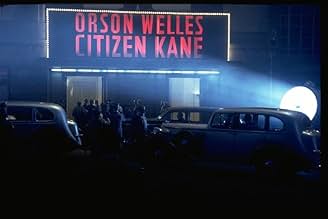
Ajouter une intrigue dans votre langueOrson Welles produces his greatest film, Citizen Kane (1941), despite the opposition of the film's de facto subject, William Randolph Hearst.Orson Welles produces his greatest film, Citizen Kane (1941), despite the opposition of the film's de facto subject, William Randolph Hearst.Orson Welles produces his greatest film, Citizen Kane (1941), despite the opposition of the film's de facto subject, William Randolph Hearst.
- Réalisation
- Scénaristes
- Vedettes
- A remporté 3 prix Primetime Emmy
- 15 victoires et 28 nominations au total



7,06.6K
1
2
3
4
5
6
7
8
9
10
Avis en vedette
more than good
I saw it as an introduction in the universe of "Citizen Kane". Its birth, its battles, its price, secrets and victory premises. A powerful film and a great portrait of Orson Welles. And, sure, admirable performances, first - James Cromwell. A film about clashes and power and cynical fights. Maybe, about victories. Sure, it has many sins and, after its end, it is real easy to say than the idea deserves to be better used. But it represents more than a decent film and the work of Liev Schreiber is enough for remind the energy , force and ways of Orson Welles.
I want more from this film!
The key to enjoying this film is in being able to divorce yourself from the idea that this is an accurate representation of the making of Citizen Kane. RKO 281 as a stand-alone film is not bad, though the short running time left me feeling like I'd only seen the primary colors of what could've been a rich piece of fiction.
And it does feel more like fiction than truth.
Watching RKO 281 as a Welles enthusiast was a struggle. Welles himself was such a unique *presence*, a magician in more ways than one, and Liev Schreiber just doesn't evoke the god-like charisma and fury that were manifestations of Welles' particular genius. I would've preferred Vincent D'Onofrio (who pulled off an excellent Welles in Ed Wood after only two weeks of preparation) or even Oliver Platt. It is important to get the "character" of Welles RIGHT in a movie about his masterpiece. If RKO 281 failed egregiously on any level, it's this one.
Though this film is about the MAKING of Citizen Kane, it doesn't address why Citizen Kane had such an impact later in its life. We know that Welles had to fight very hard to save his picture against a variety of political agendas. However, a hard-won battle does not a classic film make...on its own. The only clues we get from RKO character Welles are his passionate and other-worldly exclamations along the lines of, "I just KNOW this is the MOMENT for this story!--Everything I AM is in this film!", etc. It's too mystical for me, and I think it does an injustice to the efforts of Welles and his collaborators to suggest that it was simply the luck (and maliciousness towards Hearst) of a spoiled boy wonder that made what is widely considered to be the best movie of all time.
Welles was in a unique position during that era. He had carte blanche in the movie studios--a status unprecedented before or since--and had the means to create his vision fully to his specifications. Getting the picture *released* was nothing short of a miracle, however, and I think it would've been interesting to dive into yet another layer of what Citizen Kane represents: Art for Art's sake. It's heartbreaking to note that Welles' subsequent film The Magnificent Ambersons was butchered beyond recognition by the studio--those who were fortunate enough to view Welles original (and now lost) cut thought that Ambersons was his true masterpiece, that Citizen Kane was merely a warm-up (!!!). Can you just imagine what this man could've accomplished if only...?
Which brings me to William Randolph Hearst. RKO 281 barely scratches the surface of how powerful Hearst was at the time. The residual effects of his attempt to stop Citizen Kane's release were felt by the film industry (and by Welles in particular) for many years after, and I would've liked to see the nature of this confrontation more clearly.
I've often said that Citizen Kane was Orson Welles' bane and salvation, for we see in hindsight that he sacrificed himself (and ultimately his future)
to earn a beautiful and tragic place in cinematic history. Overall, I wanted an edgier, darker, and more complex account of RKO 281. If I remove all pre-conceived notions and expectations, I find that this docudrama is interesting and fun to watch, but ultimately, I cannot help being drawn back to what made this 1999 film possible: the tumultuous triumph of a long-shot movie as envisioned by a temperamental, inexperienced genius. There are many shadowy folds to the real story of Citizen Kane, and RKO 281 feels like a bowl of plastic fruit in comparison.
And it does feel more like fiction than truth.
Watching RKO 281 as a Welles enthusiast was a struggle. Welles himself was such a unique *presence*, a magician in more ways than one, and Liev Schreiber just doesn't evoke the god-like charisma and fury that were manifestations of Welles' particular genius. I would've preferred Vincent D'Onofrio (who pulled off an excellent Welles in Ed Wood after only two weeks of preparation) or even Oliver Platt. It is important to get the "character" of Welles RIGHT in a movie about his masterpiece. If RKO 281 failed egregiously on any level, it's this one.
Though this film is about the MAKING of Citizen Kane, it doesn't address why Citizen Kane had such an impact later in its life. We know that Welles had to fight very hard to save his picture against a variety of political agendas. However, a hard-won battle does not a classic film make...on its own. The only clues we get from RKO character Welles are his passionate and other-worldly exclamations along the lines of, "I just KNOW this is the MOMENT for this story!--Everything I AM is in this film!", etc. It's too mystical for me, and I think it does an injustice to the efforts of Welles and his collaborators to suggest that it was simply the luck (and maliciousness towards Hearst) of a spoiled boy wonder that made what is widely considered to be the best movie of all time.
Welles was in a unique position during that era. He had carte blanche in the movie studios--a status unprecedented before or since--and had the means to create his vision fully to his specifications. Getting the picture *released* was nothing short of a miracle, however, and I think it would've been interesting to dive into yet another layer of what Citizen Kane represents: Art for Art's sake. It's heartbreaking to note that Welles' subsequent film The Magnificent Ambersons was butchered beyond recognition by the studio--those who were fortunate enough to view Welles original (and now lost) cut thought that Ambersons was his true masterpiece, that Citizen Kane was merely a warm-up (!!!). Can you just imagine what this man could've accomplished if only...?
Which brings me to William Randolph Hearst. RKO 281 barely scratches the surface of how powerful Hearst was at the time. The residual effects of his attempt to stop Citizen Kane's release were felt by the film industry (and by Welles in particular) for many years after, and I would've liked to see the nature of this confrontation more clearly.
I've often said that Citizen Kane was Orson Welles' bane and salvation, for we see in hindsight that he sacrificed himself (and ultimately his future)
to earn a beautiful and tragic place in cinematic history. Overall, I wanted an edgier, darker, and more complex account of RKO 281. If I remove all pre-conceived notions and expectations, I find that this docudrama is interesting and fun to watch, but ultimately, I cannot help being drawn back to what made this 1999 film possible: the tumultuous triumph of a long-shot movie as envisioned by a temperamental, inexperienced genius. There are many shadowy folds to the real story of Citizen Kane, and RKO 281 feels like a bowl of plastic fruit in comparison.
good, but read up on the true story
Intended as a feature film with an entirely different cast, RKO 281 is an HBo movie purporting to telling the story of Orson Welles making Citizen Kane.
Obviously because it's a film in a limited time frame, many events had to be simplified and scenes made up. I won't go through everything that is incorrect. Suffice to say the film depended on a lot of urban legend and rumors rather than real facts.
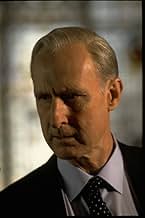
Citizen Kane was supposedly the story of the newspaper publisher William Randolph Hearst. Welles (Liev Schreiber) vehemently denied this at the time. No one knows what was in his mind because he had absolutely no choice but to deny it, whether or not it was true. Hearst, here played by James Cromwell, wants the film suppressed. By having Louella Parsons make inflammatory comments about the moguls in his paper, they were soon ready to buy the film from RKO and destroy it. Free speech won, but Hearst refused to have any of his papers publicize Kane, advertise it, or review it.
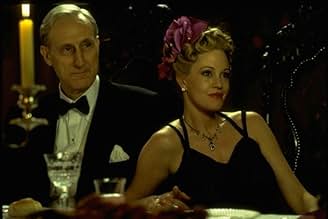
What hurt Hearst most of all was that the role of Susan Alexander, supposedly based on Marion Davies (Melanie Griffith), was an alcoholic. He told someone (this wasn't in this movie) that what crushed him was "the drinking." The film did hurt the image of Marion Davies - for years many believed she was a no-talent drunk whose career was totally because she was the mistress of a powerful man.
In truth, something else not mentioned in this movie, is that there were two moguls who had done something similar as Kane did in the film. Samuel Insull built the Chicago Opera House, and a tycoon named Harold Fowler McCormick promoted the opera career of his second wife. This suggests that Kane was, in fact, a combination of men. Marion Davies was a talented comedienne. She truly loved Hearst and when he hit bottom, she was there with financial and emotional support. And rather than help her career, he hurt it due to the types of roles he wanted her to play, and she retired from films in 1937.
As far as the background squabbles, these were complicated. The actors, Richard Dreyfuss as George Schaefer, John Malkovich as Herman Mankiewicz, David Suchet as Louis B. Mayer, Liam Cunningham as Gregg Toland, were all marvelous.
Melanie Griffith I feel was miscast, coming off like a bimbo, which I don't think Davies was; and how anyone could cast Anastasia Hille as Carole Lombard is beyond me. Wrong.
And Rosebud? It seems odd, but not impossible, I suppose, that someone knew Hearst's pet name for part of Davies' anatomy. But since the early story of Kane is actually closer to the story of Herman Mankiewicz's childhood, and since Welles denied that the film was about Kane, why put something so obvious in the film? No one will ever know, but needless to say, that story spread like wildfire.
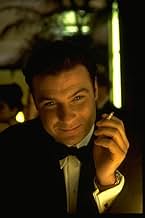
Liev Schreiber is excellent as Welles - no one was cast to look like the characters they played -- but I question the characterization of Welles in the script as a man afraid of being exposed as a fraud and not a boy wonder. He was coming off of huge success in New York and great notoriety with War of the Worlds. He was 25 years old. Twenty-five year-olds are invincible, immortal - the world hasn't had its way with them yet. Welles was a supremely confident young man and probably arrogant to boot, sleeping with the gorgeous Delores del Rio and having carte blanche at RKO. I don't buy any insecurity.
Nevertheless, I found this movie very entertaining and extremely well acted, and it gives some insight about how the powerful Hearst attempted to manipulate his world via the press.
Obviously because it's a film in a limited time frame, many events had to be simplified and scenes made up. I won't go through everything that is incorrect. Suffice to say the film depended on a lot of urban legend and rumors rather than real facts.
Citizen Kane was supposedly the story of the newspaper publisher William Randolph Hearst. Welles (Liev Schreiber) vehemently denied this at the time. No one knows what was in his mind because he had absolutely no choice but to deny it, whether or not it was true. Hearst, here played by James Cromwell, wants the film suppressed. By having Louella Parsons make inflammatory comments about the moguls in his paper, they were soon ready to buy the film from RKO and destroy it. Free speech won, but Hearst refused to have any of his papers publicize Kane, advertise it, or review it.
What hurt Hearst most of all was that the role of Susan Alexander, supposedly based on Marion Davies (Melanie Griffith), was an alcoholic. He told someone (this wasn't in this movie) that what crushed him was "the drinking." The film did hurt the image of Marion Davies - for years many believed she was a no-talent drunk whose career was totally because she was the mistress of a powerful man.
In truth, something else not mentioned in this movie, is that there were two moguls who had done something similar as Kane did in the film. Samuel Insull built the Chicago Opera House, and a tycoon named Harold Fowler McCormick promoted the opera career of his second wife. This suggests that Kane was, in fact, a combination of men. Marion Davies was a talented comedienne. She truly loved Hearst and when he hit bottom, she was there with financial and emotional support. And rather than help her career, he hurt it due to the types of roles he wanted her to play, and she retired from films in 1937.
As far as the background squabbles, these were complicated. The actors, Richard Dreyfuss as George Schaefer, John Malkovich as Herman Mankiewicz, David Suchet as Louis B. Mayer, Liam Cunningham as Gregg Toland, were all marvelous.
Melanie Griffith I feel was miscast, coming off like a bimbo, which I don't think Davies was; and how anyone could cast Anastasia Hille as Carole Lombard is beyond me. Wrong.
And Rosebud? It seems odd, but not impossible, I suppose, that someone knew Hearst's pet name for part of Davies' anatomy. But since the early story of Kane is actually closer to the story of Herman Mankiewicz's childhood, and since Welles denied that the film was about Kane, why put something so obvious in the film? No one will ever know, but needless to say, that story spread like wildfire.
Liev Schreiber is excellent as Welles - no one was cast to look like the characters they played -- but I question the characterization of Welles in the script as a man afraid of being exposed as a fraud and not a boy wonder. He was coming off of huge success in New York and great notoriety with War of the Worlds. He was 25 years old. Twenty-five year-olds are invincible, immortal - the world hasn't had its way with them yet. Welles was a supremely confident young man and probably arrogant to boot, sleeping with the gorgeous Delores del Rio and having carte blanche at RKO. I don't buy any insecurity.
Nevertheless, I found this movie very entertaining and extremely well acted, and it gives some insight about how the powerful Hearst attempted to manipulate his world via the press.
10majikstl
The Kane Mutiny ...
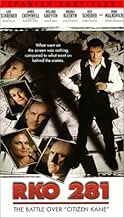
The most remarkable thing about RKO 281 (subtitled "The Battle Over Citizen Kane") is that not only is it sympathetic to William Randolph Hearst and his paramour Marian Davies, but it also paints a less then flattering picture of film icon Orson Welles.
Every film buff worth his popcorn knows, or at least should know, the legend of CITIZEN KANE: Welles, the brilliant, but naive Boy Wonder, takes Hollywood by storm with his amazing and groundbreaking first picture, but falls victim to the tyranny of the cruel, thin-skinned billionaire Hearst, who tries to destroy the brilliant work of art. It is the David and Goliath saga of Tinseltown, with an art triumphs over commerce subtext. But the makers of this made-for-cable drama have opted to pull a switcheroo. Just as Welles bravely (or foolishly) challenged the legendary tycoon Hearst, RKO 281 rather courageously takes on the Welles legacy of the misunderstood genius. The results are gratifying, though the facts end up blurred all the more.
If there is, indeed, a villain in the whole CITIZEN KANE affair it would be screenwriter Herman J. Mankiewicz (played here by John Malkovich), who acted as Judas to W.R. and Marian, while serving as Iago to Welles's Othello. It was, according to historians, Mankiewicz who took a catalogue of firsthand observations and casual gossip gathered as a favored houseguest of the Hearst household and fashioned it into an unauthorized biography/screenplay. And it was Mankiewicz who goaded Welles to flirt with professional suicide by pursuing the project in the first place and by changing a film about a generic millionaire into a tale rife with details specific to Hearst.
But RKO 281 ventures a different theory, suggesting that Welles devised KANE as an elaborate weapon of revenge against Hearst for having been insulted at a dinner party. One suspects that Welles' crime was more one of clueless indifference than vengeance, but the latter does make the film more dramatically provocative. Whatever the case, Welles clearly bit off a much bigger bite than he anticipated when he deemed Hearst's personal life fair game.
Ironically, Welles' folly may not have been his audacity to attack Hearst, who surely faced greater critics, so much as the director's unintended assault on innocent bystander Davies. What RKO 281 highlights is that much of Hearst's ire against KANE was based to his desire to protect Davies from an unflattering portrayal and public scandal; not an unfounded fear, it would appear. In KANE, Hearst is presented in a mostly sympathetic light, and it is Davies who comes off the worst. Indeed, her alter ego, Susan Alexander is the film's least likable and empathetic character, an exceedingly dumb blonde who evolves into a shrieking, untalented alcoholic has-been diva. No other character in the film is as cruelly one-dimensional. Ironically, it may have been Mankiewicz's gallant, albeit foolish, attempt to protect his friend Davies, that caused all the problems. By making Susan so extremely different from the much beloved Davies, Mankiewicz may have thought people would see Alexander as a pure fiction. But such is the power and fame of KANE that then and future generations were destined to accept the legend over the reality and assume that Susan and Marian are one in the same. (Further irony: RKO 281 finds Marian played by a very Susan Alexander-like Melanie Griffith.)
Though the film notes the irony of the muckraker publisher suddenly finding himself the victim of the type of tabloid journalism that made him famous, RKO 281 is mostly sympathetic to Marian and W.R., who are seen as the ones under attack. As played by Liev Schreiber, Welles is the film's villain, who, filled with arrogance and ambition, sweeps into town with an itch to make a reputation for himself and a willingness to exploit others to do so. His petty, pseudo-socialist rantings about the evils of the very rich seem hollow in light of his ambitious desire to exploit others fame and reputation to make a name for himself. It is a different, unflattering side of Welles, who is usually seen as the perpetually embattled artist.
Yet, the plot takes another twist. Welles discovers that Hearst in particular and Hollywood in general weren't willing to just kowtow to his genius and like George Amberson Minafer in his THE MAGNIFICENT AMBERSONS, The Boy Wonder gets his comeuppance. Welles becomes just as much the victim of his arrogance as RKO, Hearst, Davies and Mankiewicz.
RKO 281 is a slick and entertaining effort, but it does miss a golden opportunity. The film would have been so much better had it invented its own "Rosebud" to search for and imitated CITIZEN KANE's ambitious visual style and confessional mock-documentary narrative drive. RKO 281 is a very conventional movie about a very unconventional film.
Every film buff worth his popcorn knows, or at least should know, the legend of CITIZEN KANE: Welles, the brilliant, but naive Boy Wonder, takes Hollywood by storm with his amazing and groundbreaking first picture, but falls victim to the tyranny of the cruel, thin-skinned billionaire Hearst, who tries to destroy the brilliant work of art. It is the David and Goliath saga of Tinseltown, with an art triumphs over commerce subtext. But the makers of this made-for-cable drama have opted to pull a switcheroo. Just as Welles bravely (or foolishly) challenged the legendary tycoon Hearst, RKO 281 rather courageously takes on the Welles legacy of the misunderstood genius. The results are gratifying, though the facts end up blurred all the more.
If there is, indeed, a villain in the whole CITIZEN KANE affair it would be screenwriter Herman J. Mankiewicz (played here by John Malkovich), who acted as Judas to W.R. and Marian, while serving as Iago to Welles's Othello. It was, according to historians, Mankiewicz who took a catalogue of firsthand observations and casual gossip gathered as a favored houseguest of the Hearst household and fashioned it into an unauthorized biography/screenplay. And it was Mankiewicz who goaded Welles to flirt with professional suicide by pursuing the project in the first place and by changing a film about a generic millionaire into a tale rife with details specific to Hearst.
But RKO 281 ventures a different theory, suggesting that Welles devised KANE as an elaborate weapon of revenge against Hearst for having been insulted at a dinner party. One suspects that Welles' crime was more one of clueless indifference than vengeance, but the latter does make the film more dramatically provocative. Whatever the case, Welles clearly bit off a much bigger bite than he anticipated when he deemed Hearst's personal life fair game.
Ironically, Welles' folly may not have been his audacity to attack Hearst, who surely faced greater critics, so much as the director's unintended assault on innocent bystander Davies. What RKO 281 highlights is that much of Hearst's ire against KANE was based to his desire to protect Davies from an unflattering portrayal and public scandal; not an unfounded fear, it would appear. In KANE, Hearst is presented in a mostly sympathetic light, and it is Davies who comes off the worst. Indeed, her alter ego, Susan Alexander is the film's least likable and empathetic character, an exceedingly dumb blonde who evolves into a shrieking, untalented alcoholic has-been diva. No other character in the film is as cruelly one-dimensional. Ironically, it may have been Mankiewicz's gallant, albeit foolish, attempt to protect his friend Davies, that caused all the problems. By making Susan so extremely different from the much beloved Davies, Mankiewicz may have thought people would see Alexander as a pure fiction. But such is the power and fame of KANE that then and future generations were destined to accept the legend over the reality and assume that Susan and Marian are one in the same. (Further irony: RKO 281 finds Marian played by a very Susan Alexander-like Melanie Griffith.)
Though the film notes the irony of the muckraker publisher suddenly finding himself the victim of the type of tabloid journalism that made him famous, RKO 281 is mostly sympathetic to Marian and W.R., who are seen as the ones under attack. As played by Liev Schreiber, Welles is the film's villain, who, filled with arrogance and ambition, sweeps into town with an itch to make a reputation for himself and a willingness to exploit others to do so. His petty, pseudo-socialist rantings about the evils of the very rich seem hollow in light of his ambitious desire to exploit others fame and reputation to make a name for himself. It is a different, unflattering side of Welles, who is usually seen as the perpetually embattled artist.
Yet, the plot takes another twist. Welles discovers that Hearst in particular and Hollywood in general weren't willing to just kowtow to his genius and like George Amberson Minafer in his THE MAGNIFICENT AMBERSONS, The Boy Wonder gets his comeuppance. Welles becomes just as much the victim of his arrogance as RKO, Hearst, Davies and Mankiewicz.
RKO 281 is a slick and entertaining effort, but it does miss a golden opportunity. The film would have been so much better had it invented its own "Rosebud" to search for and imitated CITIZEN KANE's ambitious visual style and confessional mock-documentary narrative drive. RKO 281 is a very conventional movie about a very unconventional film.
Glimpses of Greatness, Greed and Grandeur
If you are into vintage movies, vintage America and conspiracy theories, then this is an entertainment for you.
Many other reviews here have outlined the strengths and weaknesses of the film re the truth about the making of Kane, and the relative attributions of credit, blame and opprobrium. I'd like to inject a good word for Roy Scheider's portrayal of RKO boss George Schaefer: His character's struggle to find the right balance between keeping his east coast money men happy, his obvious liking for Welles and the desire to make good movies is very well portrayed.
Something I really enjoyed was the portrayal of Welles' and Mank's visit to the Hearst Castle at San Simeon, California. That is a fascinating place, which saw so many famous and talented people visit during Hearst's time there. There's a movie about the lifetime of that place to be made by someone, though I don't think anyone has ever attempted it? Apparently they didn't use the real location for RKO281 - a lot of it seems to have been done in London. Was that cost, or did the Hearst Castle trustees refuse....? Anyway, if you're up for a good tale woven around some known facts, but not sticking to them too tightly, take the RKO281 ride, you'll have fun. Just don't let it become your true picture of Mr Welles, Mr Hearst or (most of all) Mr Mankiewicz.
Many other reviews here have outlined the strengths and weaknesses of the film re the truth about the making of Kane, and the relative attributions of credit, blame and opprobrium. I'd like to inject a good word for Roy Scheider's portrayal of RKO boss George Schaefer: His character's struggle to find the right balance between keeping his east coast money men happy, his obvious liking for Welles and the desire to make good movies is very well portrayed.
Something I really enjoyed was the portrayal of Welles' and Mank's visit to the Hearst Castle at San Simeon, California. That is a fascinating place, which saw so many famous and talented people visit during Hearst's time there. There's a movie about the lifetime of that place to be made by someone, though I don't think anyone has ever attempted it? Apparently they didn't use the real location for RKO281 - a lot of it seems to have been done in London. Was that cost, or did the Hearst Castle trustees refuse....? Anyway, if you're up for a good tale woven around some known facts, but not sticking to them too tightly, take the RKO281 ride, you'll have fun. Just don't let it become your true picture of Mr Welles, Mr Hearst or (most of all) Mr Mankiewicz.


Le saviez-vous
- AnecdotesThe film shows RKO production chief George Schaefer announcing to Orson Welles and Herman J. Mankiewicz that he has lost his job on the very day of the opening of Citizen Kane (1941) in May 1941. In fact, Schaefer did not get fired until late in the following year, and this was less because he had promoted the film career of Orson Welles than because almost all the films RKO had made during his tenure had been flops.
- GaffesIn 1940, Disney was not the major studio it was today. It had few major releases by that date, all animated and all of which were released through other distributors. The meeting of studio chiefs depicted in the movie probably did not take place- certainly not in the form shown- but even if it had, Walt Disney would probably not have been invited. (Samuel Goldwyn, also shown as present, had sold his share in MGM to Louis Mayer years earlier, but was still a major producer.)
- Citations
Orson Welles: I expected better of you, Mank.
Herman Mankiewicz: Me too, but I got used to it.
- Générique farfeluEpilogue: "Citizen Kane was released in 1941 to critical acclaim and box office indifference. William Randolph Hearst gradually withdrew from public life. Marion Davies continued to live with him as his mistress. Until his death in 1951, Hearst never permitted a single advertisement or review of Citizen Kane in any of his newspapers. Orson Welles struggled yet succeeded in making films for the rest of his life, including The Magnificent Ambersons, Touch of Evil and Chimes at Midnight. He died in 1985. Citizen Kane is widely considered the greatest American film ever made."
- ConnexionsFeatured in The 57th Annual Golden Globe Awards (2000)
- Bandes originalesI Can't Get Started
Written by Ira Gershwin and Vernon Duke
Performed by Bunny Berigan
Courtesy of The RCA Records Label of BMG Entertainment
Meilleurs choix
Connectez-vous pour évaluer et surveiller les recommandations personnalisées
Détails
Box-office
- Budget
- 12 000 000 $ US (estimation)
- Durée
- 1h 26m(86 min)
- Couleur
- Mixage
- Rapport de forme
- 16:9
Contribuer à cette page
Suggérer une modification ou ajouter du contenu manquant