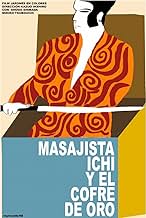
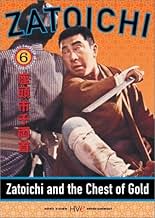
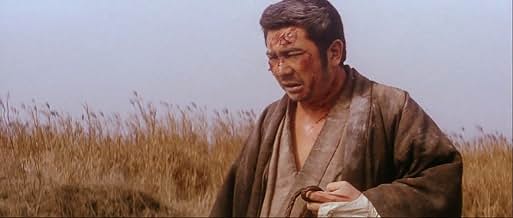
Ajouter une intrigue dans votre langueZatoichi is mistaken for a thief. To clear his name he must find and defeat the real villain.Zatoichi is mistaken for a thief. To clear his name he must find and defeat the real villain.Zatoichi is mistaken for a thief. To clear his name he must find and defeat the real villain.
- Réalisation
- Scénaristes
- Vedettes
Tomisaburô Wakayama
- Jûshirô
- (as Jo Kenzaburo)
Kenjirô Uemura
- Gundayu Matsui
- (uncredited)
7,31.9K
1
2
3
4
5
6
7
8
9
10
Avis en vedette
Flawed, but enjoyable
Zatoichi and the Chest of Gold is one of the most exciting - and exasperating - installments in the series.
The plot is rich in incident and characters. After rural farmers pay their taxes, a corrupt magistrate and his cronies steal the gold, and leave the farmers desperate for a solution. Zatoichi finds himself in the middle of the problem. On one hand, he's pressured by the farmers, who suspect Zatoichi might have participated in the heist...and on the other, the burglary is pinned onto a cadre of honorable yakuza in a secluded hideout.
The story has a few "firsts" for the Zatoichi series. Earlier installments were bloodless, but ZATCOG shows violence for the first time - mostly with a sprinkling of fake blood. It's also the first chance for Zatoichi to develop a truly comic incident - when a smelly, less-than-competent masseuse serves him - then overcharges him.
The most problematic "first" relates to the filmmaking style. Instead of the restrained style of the first few Zatoichi films, ZATCOG uses looser editing and sound than before. Visual edits use slapdash jump cuts that are closer in spirit to the LONE WOLF AND CUB series. Faked visual and sound effects marred less several extended sequences. The most embarrassing sequence has Zatoichi carrying a little boy - clearly a dummy - on his shoulders as he slides down a ridge.
At the least, ZATCOG comes up a bunch of new situations and characters to invigorate the series - even if the director, Kazuo Ikehiro, is less than proficient at this job.
The plot is rich in incident and characters. After rural farmers pay their taxes, a corrupt magistrate and his cronies steal the gold, and leave the farmers desperate for a solution. Zatoichi finds himself in the middle of the problem. On one hand, he's pressured by the farmers, who suspect Zatoichi might have participated in the heist...and on the other, the burglary is pinned onto a cadre of honorable yakuza in a secluded hideout.
The story has a few "firsts" for the Zatoichi series. Earlier installments were bloodless, but ZATCOG shows violence for the first time - mostly with a sprinkling of fake blood. It's also the first chance for Zatoichi to develop a truly comic incident - when a smelly, less-than-competent masseuse serves him - then overcharges him.
The most problematic "first" relates to the filmmaking style. Instead of the restrained style of the first few Zatoichi films, ZATCOG uses looser editing and sound than before. Visual edits use slapdash jump cuts that are closer in spirit to the LONE WOLF AND CUB series. Faked visual and sound effects marred less several extended sequences. The most embarrassing sequence has Zatoichi carrying a little boy - clearly a dummy - on his shoulders as he slides down a ridge.
At the least, ZATCOG comes up a bunch of new situations and characters to invigorate the series - even if the director, Kazuo Ikehiro, is less than proficient at this job.
This entry has a lot to offer—to Zatoichi veterans and newbies alike
The Zatoichi series take a huge jump upward with this entry. Everything also falls into line -- you can tell people in front of and behind the camera had really hit their stride.
This film offers more action that the previous entries, as well as stunning cinematography and gorgeous production values. Another bonus -- the appearance of Katsu Shintaro's real-life older brother, Wakayama Tomisaburo. It's as if the box office performance of the previous films justified bringing out the big guns this time.
If you're new to Zatoichi and wondering with which film to take the plunge, then "Chest of Gold" is definitely worth your time.
This film offers more action that the previous entries, as well as stunning cinematography and gorgeous production values. Another bonus -- the appearance of Katsu Shintaro's real-life older brother, Wakayama Tomisaburo. It's as if the box office performance of the previous films justified bringing out the big guns this time.
If you're new to Zatoichi and wondering with which film to take the plunge, then "Chest of Gold" is definitely worth your time.
Brother vs. brother (Katsu vs. Wakayama)
The following review is an extract from the book "Shintaro Katsu´s Zatoichi: Complete guide to all movies", which is now available on Amazon.
"This is the sixth part of a saga of films shot in the 1960s about the adventures of the blind swordsman Zatoichi. Always motivated by deep convictions and a strong sense of honour, on this occasion Ichi must shed light on the robbery committed against humble peasants in order to prove that he had nothing to do with the crime. Two intriguing women, the clever Ogin and the young Chiyo (sister of the warrior who killed Zatoichi the previous year) will try to prevent the blind masseur from fulfilling his laudable purpose.
(...) In "The chest of gold" we have the rare privilege of seeing in the same film the two masters of the chanbara genre: On the one hand Shintaro Katsu as the heroic Zatoichi and on the other his brother Tomisaburo Wakayama (Ogami Itto en Kozure Okami / "Lone Wolf and Cub") as his antagonist the evil ronin Joshiro. Just as in "Zatoichi's Pilgrimage" (also directed by Kazuo Ikehiro) his opponent Tohachi (Isao Yamagata) has as particularity his skill with kyudo (archery), here Joshiro stands out in the use of another weapon or combative technique: the whip."
"This is the sixth part of a saga of films shot in the 1960s about the adventures of the blind swordsman Zatoichi. Always motivated by deep convictions and a strong sense of honour, on this occasion Ichi must shed light on the robbery committed against humble peasants in order to prove that he had nothing to do with the crime. Two intriguing women, the clever Ogin and the young Chiyo (sister of the warrior who killed Zatoichi the previous year) will try to prevent the blind masseur from fulfilling his laudable purpose.
(...) In "The chest of gold" we have the rare privilege of seeing in the same film the two masters of the chanbara genre: On the one hand Shintaro Katsu as the heroic Zatoichi and on the other his brother Tomisaburo Wakayama (Ogami Itto en Kozure Okami / "Lone Wolf and Cub") as his antagonist the evil ronin Joshiro. Just as in "Zatoichi's Pilgrimage" (also directed by Kazuo Ikehiro) his opponent Tohachi (Isao Yamagata) has as particularity his skill with kyudo (archery), here Joshiro stands out in the use of another weapon or combative technique: the whip."
Good entertainment
In this classic samurai tale, we follow the deadly trail of Zatoichi-a blind swordsman who has sworn to prove his innocence with regards to his unknowing involvement with the robbery of a chest of gold containing the local farmers tax payment while bringing the real culprits to justice. Here we have the classic hero, the defender and champion of the poor albeit here a most unlikely since the farm villagers think he was responsible for the robbery and he is as he might say "a simple blind man". A bit of suspension of disbelief is required but boy is this ever great stuff! Any fan of sword-fighting films should find much to enjoy here.
"The fool sees the glint of money and throws all caution to the wind. That's the problem with men who can see."
This one has my favourite intro of the Zatoichi series. It's incredibly stylish with Ichi slaying numerous groups of hostile samurai in the darkness. The way this chapter of Ichi's saga is told was indeed a welcome change to the visuals and storyboarding, which I felt had stagnated in the previous two films. The plot resonates deeply too. Corruption is the theme of this tale, and of course our hero has to sort this mess out by unleashing some calculated chaos upon the twisted fiends in authority. It would be great if things worked like that in the real world. Maybe if each of us were a little more like Ichi, then one day... who knows.
Le saviez-vous
- AnecdotesJushiro is played by Shintarô Katsu's real-life brother, Tomisaburô Wakayama, who would later star in the Lone Wolf and Cub series of films (produced by Katsu).
- ConnexionsFeatured in Best in Action: 1964 (2020)
Meilleurs choix
Connectez-vous pour évaluer et surveiller les recommandations personnalisées
- How long is Zatoichi and the Chest of Gold?Propulsé par Alexa
Détails
- Date de sortie
- Pays d’origine
- Langue
- Aussi connu sous le nom de
- Zatoichi and the Chest of Gold
- société de production
- Consultez plus de crédits d'entreprise sur IMDbPro
- Durée
- 1h 23m(83 min)
- Rapport de forme
- 2.35 : 1
Contribuer à cette page
Suggérer une modification ou ajouter du contenu manquant