Daniel Deronda
- Mini-série télévisée
- 2002
- 53m
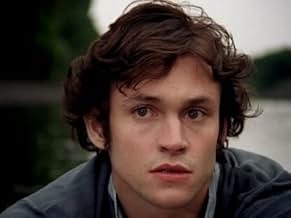
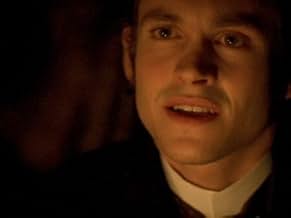
Gwendolen Harleth est attirée par Daniel Deronda, un gentleman altruiste et intelligent de parents inconnus, mais son propre besoin désespéré de sécurité financière pourrait détruire ses cha... Tout lireGwendolen Harleth est attirée par Daniel Deronda, un gentleman altruiste et intelligent de parents inconnus, mais son propre besoin désespéré de sécurité financière pourrait détruire ses chances de bonheur.Gwendolen Harleth est attirée par Daniel Deronda, un gentleman altruiste et intelligent de parents inconnus, mais son propre besoin désespéré de sécurité financière pourrait détruire ses chances de bonheur.
- A remporté le prix 3 BAFTA Awards
- 5 victoires et 4 nominations au total
Parcourir les épisodes
7,25.4K
1
2
3
4
5
6
7
8
9
10
Avis en vedette
Excellent adaptation despite the slight departure from the book
If you're familiar with George Eliot and have read her books, you'll most likely enjoy this adaptation.
But if you're a George Eliot purist, you may be dismayed by the film's romanticization of Daniel & Gwendolyn's relationship. I personally was okay with it and found it a forgivable artistic liberty, as it was handled delicately and tastefully and did not detract from the heart of the story. In fact, I liked the adapted screenplay for its restraint.
If you're a Jane Austen fan but not familiar with Eliot's work, you might find this story lacking in wit compared to Austen's stories, or just too glum. But George Eliot herself was a very different woman from Austen. The Jewish subplot--something that is also present in Eliot's more famous 'Middlemarch'--is enough to make the two authors different, but the sociopolitical depth and soberness of Eliot's work also sets them apart.
The casting was terrific all around (including the magnificently aging Greta Scacchi), and the costumes & scenery were perfect.
~NN
But if you're a George Eliot purist, you may be dismayed by the film's romanticization of Daniel & Gwendolyn's relationship. I personally was okay with it and found it a forgivable artistic liberty, as it was handled delicately and tastefully and did not detract from the heart of the story. In fact, I liked the adapted screenplay for its restraint.
If you're a Jane Austen fan but not familiar with Eliot's work, you might find this story lacking in wit compared to Austen's stories, or just too glum. But George Eliot herself was a very different woman from Austen. The Jewish subplot--something that is also present in Eliot's more famous 'Middlemarch'--is enough to make the two authors different, but the sociopolitical depth and soberness of Eliot's work also sets them apart.
The casting was terrific all around (including the magnificently aging Greta Scacchi), and the costumes & scenery were perfect.
~NN
10hfk
Don't Judge "Deronda" Based on the First 15 Minutes
The first time 'round, when PBS initially offered up "Deronda", I watched the first 15 minutes or so and was so disgusted with Gwendolynn that I changed channels and didn't think twice. Second time 'round, based on reviews here at IMDB, I gave it a bit more time and I'm certainly glad that I did. "Deronda" is a powerfull, beautiful, bit of television. I'm a conservative by nature and, on a regular basis, I'm sickened by the politically correct preaching that's often pushed by PBS and Network television. Daniel Deronda like, say "Prime Suspect", is story-telling with a liberal slant that is both legitimate and thought-provoking. I thoroughly enjoyed the story, and the lush production. I'm surprised by the nit-picking about "wooden" acting: I found the acting excellent, particularly compared to the endless trash television that's pumped into the idiot box these days. perhaps this is trite, but "Deronda" actually inspired me, uplifted me and, at least as far as I'm concerned, that's one of the most significant hallmarks of great art. Don't miss it.
Villainy pays off
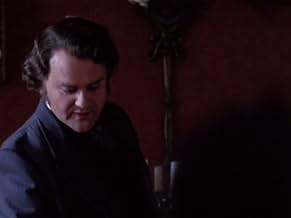
I'm watching the British series Daniel Deronda every week on Swedish tv, and I will recommned it to everyone who fancies quality literary adaptations. The production values are impeccable, and the acting list very impressive. The one to catch your attention, though, is without a doubt Hugh Bonneville as the supervillain Grandcourt. He's everything a good oldfashioned villain from the 19.th century ought to be: suave, cool, arrogant, manipulative, morally corrupt, and with a razor sharp wit. In fact, he totally overshadows the meek and handsome, but oh so noble and earnest hero, poor Daniel Deronda! Hugh Dancy does his best, but it's hard work to make Deronda as interesting as Grandcourt! Likewise with the heroine. Romola Garai is beautiful to look at, but it's difficult to really care about Gwendolyn. She's such a silly, whiny, and cold person who would rather marry a man she dislikes than stoop to be a governess! It made me long to give her a good whipping! All in all, I think she and Deronda deserve each other, for being so awfully colourless and boring. I'd much rather spend the time watching the villain smirk, or wonder about miss Lapidoth's strange fate, among the Jews. As usual, being the villain pays off! Hugh Bonneville and David Bamber as Lush are the characters you remember! They really are perfectly selfish and dastardly mean!
Exquisite Adaptation
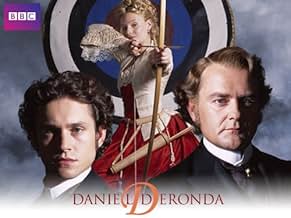
This was one of the more exquisite costume drama adaptations I have seen, with attention to detail absolutely striking in an archery scene that sets the bar for the entire series. Like the novel, it is polarizing in its two stories in one - people seem to either love/hate Daniel's plight or love/hate Gwendolyn's.
Personally, I found Gwendolyn equally annoying in both novel and film. Hugh Darcy, as the eponymous hero, was pretty to look at and delivers a fine, if unremarkable, performance.
But it is Hugh Bonneville as the dastardly Henleigh Grandcourt who took my breath away! He is flawlessly reprehensible, stealing every scene he was in and when he wasn't in a scene, I couldn't wait to see him again! It was terrific seeing Hugh Bonneville in such a role, as he's usually cast in the "very nice guy" roles (Bridget Jones Diary, Iris, Tipping the Velvet, etc). Although he's fine in such roles, as Grandcourt he made my skin crawl with his morally bankrupt, wealthy and pugnacious swagger. LOVED him!
What this series could have used more of was Jodhi May and Greta Scacchi. In difficult supporting roles, both women shine as, respectively, a searching, haunted Jewess and a scorned, bitter mistress. Barbara Hershey makes an appearance late in the series in a pivotal plot device that I won't reveal lest some unsuspecting viewer be bitter with me, and in a limited role gives a performance that reminds us why she became famous in the first place (and at least for this viewer, made me forgive her 'Beaches').
Overall, this adaptation is very enjoyable and recommended viewing for fans of the genre.
Personally, I found Gwendolyn equally annoying in both novel and film. Hugh Darcy, as the eponymous hero, was pretty to look at and delivers a fine, if unremarkable, performance.
But it is Hugh Bonneville as the dastardly Henleigh Grandcourt who took my breath away! He is flawlessly reprehensible, stealing every scene he was in and when he wasn't in a scene, I couldn't wait to see him again! It was terrific seeing Hugh Bonneville in such a role, as he's usually cast in the "very nice guy" roles (Bridget Jones Diary, Iris, Tipping the Velvet, etc). Although he's fine in such roles, as Grandcourt he made my skin crawl with his morally bankrupt, wealthy and pugnacious swagger. LOVED him!
What this series could have used more of was Jodhi May and Greta Scacchi. In difficult supporting roles, both women shine as, respectively, a searching, haunted Jewess and a scorned, bitter mistress. Barbara Hershey makes an appearance late in the series in a pivotal plot device that I won't reveal lest some unsuspecting viewer be bitter with me, and in a limited role gives a performance that reminds us why she became famous in the first place (and at least for this viewer, made me forgive her 'Beaches').
Overall, this adaptation is very enjoyable and recommended viewing for fans of the genre.
Lush adapation of a lesser Eliot novel
The usual lush mini-series adapation from that reliable team, Andrew Davies and the BBC, of a literary property, this time George Eliot's almost forgotten last novel.
Daniel (Hugh Dancy) is the gorgeous if slightly wet boy of mysterious parentage adopted by wealthy amiable old buffer Sir Hugo (Edward Fox). He falls in love with the wrong woman, the beautiful but self-absorbed Gwendolen (Romola Garai). She however is propelled into marriage with ace bounder (and Sir Hugo's heir) Henleigh Grandcourt (Hugh Bonneville). Daniel then becomes interested in Mirah (Johdi May), a promising singer of Jewish background, and through her ailing brother Mordecai (Daniel Evans) the Zionist cause (yes, hotting up as far back as the 1870s). Grandcourt meets a bounder's fate and Gwendolen is now free to marry Daniel, but guess what ?
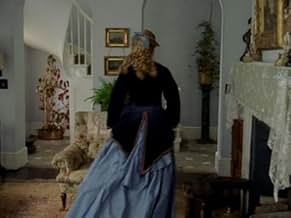
The costumes are great, the acting impeccable, the photography luminous but the story lacks punch. It is didactic rather than romantic, with metaphorical posters all over the place for women's rights and a homeland for the Jewish people. Hugh Dancy looks right for the part but Daniel is too much of a prig to be very likeable (though he has my sympathy when he discovers that Barbara Hershey, resplendent in a Venetian Palazzo is his mother Greta Scacchi would not have been so bad).
The most engaging characters are Grandcourt the bounder and his sidekick Lush (David Bamber Mr Collins in `Pride and Prejudice') and yet we are meant to despise them both. Gwendolen is sympathetic to the extent she marries Grandcourt to provide financial security for her mother and sisters, but she is a real dork otherwise. Generally the characters lack the panache of say, Trollope's characters in `The Way We Live Now', or Eliot's own in `Middlemarch'. Perhaps Ms Eliot should have quit while she was ahead.
The critics at the time (including Henry James) were baffled by the `Jewish' aspect of the story. It certainly was an outsider's view, yet it rings true today; here Ms Eliot was being prophetic, or was at least aware of the combination of repression, deprivation and myth that could give rise to a successful social movement. In 1876, the year the novel was published, it seemed most unlikely that Palestine would ever become a significant Jewish settlement. Daniel, desperate to find out about his background, finds a cause bigger than himself and eagerly throws himself into it. One has the feeling that Mirah, musically talented though she is, is going to be playing second fiddle.
Anyway, I enjoyed Hugh Bonneville's Grandcourt, a terrific bounder, and David Bamber's Lush (Mr Collins turns bad). And of course, this is Sunday evening stuff, so one mustn't be too picky about the crummy plot and the unsympathetic principals. I usually find myself at this point thinking `I must read the book' (if I haven't already), but this time I don't think I'll bother.
Daniel (Hugh Dancy) is the gorgeous if slightly wet boy of mysterious parentage adopted by wealthy amiable old buffer Sir Hugo (Edward Fox). He falls in love with the wrong woman, the beautiful but self-absorbed Gwendolen (Romola Garai). She however is propelled into marriage with ace bounder (and Sir Hugo's heir) Henleigh Grandcourt (Hugh Bonneville). Daniel then becomes interested in Mirah (Johdi May), a promising singer of Jewish background, and through her ailing brother Mordecai (Daniel Evans) the Zionist cause (yes, hotting up as far back as the 1870s). Grandcourt meets a bounder's fate and Gwendolen is now free to marry Daniel, but guess what ?
The costumes are great, the acting impeccable, the photography luminous but the story lacks punch. It is didactic rather than romantic, with metaphorical posters all over the place for women's rights and a homeland for the Jewish people. Hugh Dancy looks right for the part but Daniel is too much of a prig to be very likeable (though he has my sympathy when he discovers that Barbara Hershey, resplendent in a Venetian Palazzo is his mother Greta Scacchi would not have been so bad).
The most engaging characters are Grandcourt the bounder and his sidekick Lush (David Bamber Mr Collins in `Pride and Prejudice') and yet we are meant to despise them both. Gwendolen is sympathetic to the extent she marries Grandcourt to provide financial security for her mother and sisters, but she is a real dork otherwise. Generally the characters lack the panache of say, Trollope's characters in `The Way We Live Now', or Eliot's own in `Middlemarch'. Perhaps Ms Eliot should have quit while she was ahead.
The critics at the time (including Henry James) were baffled by the `Jewish' aspect of the story. It certainly was an outsider's view, yet it rings true today; here Ms Eliot was being prophetic, or was at least aware of the combination of repression, deprivation and myth that could give rise to a successful social movement. In 1876, the year the novel was published, it seemed most unlikely that Palestine would ever become a significant Jewish settlement. Daniel, desperate to find out about his background, finds a cause bigger than himself and eagerly throws himself into it. One has the feeling that Mirah, musically talented though she is, is going to be playing second fiddle.
Anyway, I enjoyed Hugh Bonneville's Grandcourt, a terrific bounder, and David Bamber's Lush (Mr Collins turns bad). And of course, this is Sunday evening stuff, so one mustn't be too picky about the crummy plot and the unsympathetic principals. I usually find myself at this point thinking `I must read the book' (if I haven't already), but this time I don't think I'll bother.
Le saviez-vous
- AnecdotesThe novel is set in the early 1860s, whereas the adaptation moves the action ahead to 1874, the year that George Eliot began writing the novel.
- GaffesAt Ezra Cohen's store, the baby's left shoe and sock disappear then reappear.
- ConnexionsFeatured in George Eliot: A Scandalous Life (2002)
Meilleurs choix
Connectez-vous pour évaluer et surveiller les recommandations personnalisées
- How many seasons does Daniel Deronda have?Propulsé par Alexa
Détails
- Date de sortie
- Pays d’origine
- Sites officiels
- Langue
- Aussi connu sous le nom de
- 丹尼爾的半生緣
- Lieux de tournage
- Édimbourg, Écosse, Royaume-Uni(Jewish market scenes)
- sociétés de production
- Consultez plus de crédits d'entreprise sur IMDbPro
Contribuer à cette page
Suggérer une modification ou ajouter du contenu manquant