ÉVALUATION IMDb
7,6/10
13 k
MA NOTE


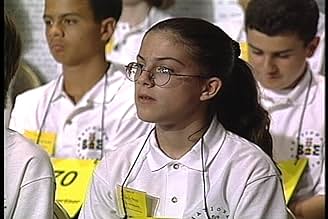
Ajouter une intrigue dans votre langueFollows eight teenagers on their quest to win the 1999 National Spelling Bee.Follows eight teenagers on their quest to win the 1999 National Spelling Bee.Follows eight teenagers on their quest to win the 1999 National Spelling Bee.
- Nommé pour 1 oscar
- 17 victoires et 19 nominations au total


Ubaldo Arenivar
- Self - Angela's Father
- (as Ubaldo)
Jorge Arenivar
- Self - Angela's Brother
- (as Jorge)
Scott McGarraugh
- Self - Ranch Owner
- (as Mr. McGarraugh)
Lindy McGarraugh
- Self - Ranch Owner
- (as Mrs. McGarraugh)
Concepción Arenivar
- Self - Angela's Mother
- (as Concepción)
Neelima Marupudi
- Self - Potter County Champion
- (as Neelima)
Parag Lala
- Self - Nupur's Father
- (as Parag)
Meena Lala
- Self - Nupur's Mother
- (as Meena)
Kuna Lala
- Self - Nupur's Brother
- (as Kuna)

Tim Brigham
- Self - Ted's Brother
- (as Tim)
Earl Brigham
- Self - Ted's Father
- (as Earl)
7,612.6K
1
2
3
4
5
6
7
8
9
10
Avis en vedette
Spelling counts
Doesn't it matter what the words mean more than the letters in them? Wouldn't it do a precocious kid more good to pour over Shakespeare or Jane Austen or Hemingway or even Harry Potter than to turn the pages of a dictionary or be drilled by a parent on how to spell obscure words like "lycanthrope" and "cephalalgia" (or the supremely ironic last word in the final shown here, "logorrhea") which the parents themselves can't even pronounce? When little showoff Harry Altman stumbles and comically grimaces over the word "banns," it seems to me he might be doing better not in the contest, perhaps, but in life to read more books, so he'd become familiar with the custom of "posting the banns," which isn't so obscure as the film and Harry make out, if you've gathered a wide acquaintance with marital customs through reading.
But there is after all a higher significance in all this. America is a self-made country and English in some queer sense is a self-made language, and these general points play into the significance of this surprisingly moving and thought-provoking little film. It's not only the suspense and emotion Spellbound evokes or its fairly tight documentary organization but such more general themes as social mobility and the accessibility of certain sports that make this otherwise conventional movie rise above the ordinary and explain why it's worthy of theatrical distribution and not just a slot on PBS. What would this be like in Italian? That's a language, like some others, whose spellings are so phonetic that a contest like this wouldn't make much sense. But English spellings really don't make much sense. English poses unique problems. The Italian columnist Beppe Severgnini is wrong to have written that it's because we're terrible spellers that spelling bees excite us. An Italian just can't understand. If you say an Italian word, ninety-eight percent of the time (if you're Italian) you know how to spell it. In English, we've got all those tiny vowel differences and remnants of Germanic gutturals and all those endless words from Arabic and Persian and Greek and a hundred other languages that we've transliterated by a hundred different unrelated systems. Why should `Darjeeling,' which so ironically almost stumps the Indian-American Neil Kadakia, be spelled that way and not darjiling or dardjeeling, or who knows what? It's because English spelling had no strict rules till the late nineteenth century; English went through so many growing pains from Chaucer to Shakespeare to Dryden to Jane Austen; because we still have no consistent phonetic system; and because our language has all those endless half-assimilated loan words from other cultures and tongues, that spelling in English is a nightmare and a kind of art, and a truly expert young speller is a real entity worth the chimerical task of seeking him or her out each year.
Spelling bees are a matter of rote knowledge, but success in them can sometimes involve some inspired guessing, and this is shown by the fine tuning contestants are allowed in the DC competition when they ask what language or culture the word comes from. Despite the strong element of memorization, the event attracts and finds ambitious, bright, even rather intellectual kids: lots of hard work maybe, but also some kind of raw brainy talent we don't by any means all have: inspiration and perspiration, the old combination.
The new immigrants in Spellbound are a major force. There are not one but two Indian-Americans in the eight the filmmaker has carefully singled out for special focus, and one of those wins. There's the Mexican girl whose father (so movingly) feels fulfilled, his whole life's journey made worthwhile, just because she has qualified; and he can't even speak English. And there's Ashley, the Black girl from the DC projects who didn't get a trophy or much recognition but dreams, nay prays, to be the winner. And even the boy from rural Tennessee who says there are hardly any other smart kids in his school qualifies as some kind of outsider who magically comes home, and gets put in his place in a complex way, like an Oklahoma valedictorian in the freshman class at Harvard, when he gets to compete in the national spelling bee. .Spellbound itself isn't a profound movie, but it has heart. Like the German WWII film Die Brucke (The Bridge) it shows a group of kids up close and personal and then follows them into battle where one by one they fall, till the last remains, and gets "logorrhea" right (I didn't -- I had to use Spell Check again even though I guessed it right the first time), and becomes champion. And in the emotion of trying so hard and then getting knocked out by one wrong letter, Spellbound illustrates sportsmanship and being all you can be and the joy of competiton and the agony of defeat. It's about poise and maturity and just being a kid. And it's a close, intense analysis of an event a phenomenon, really with more ramifications than we ever realized, till we see it. Spellbound is pretty universal in its appeal and by any accounts it's a wonderful little documentary.
But there is after all a higher significance in all this. America is a self-made country and English in some queer sense is a self-made language, and these general points play into the significance of this surprisingly moving and thought-provoking little film. It's not only the suspense and emotion Spellbound evokes or its fairly tight documentary organization but such more general themes as social mobility and the accessibility of certain sports that make this otherwise conventional movie rise above the ordinary and explain why it's worthy of theatrical distribution and not just a slot on PBS. What would this be like in Italian? That's a language, like some others, whose spellings are so phonetic that a contest like this wouldn't make much sense. But English spellings really don't make much sense. English poses unique problems. The Italian columnist Beppe Severgnini is wrong to have written that it's because we're terrible spellers that spelling bees excite us. An Italian just can't understand. If you say an Italian word, ninety-eight percent of the time (if you're Italian) you know how to spell it. In English, we've got all those tiny vowel differences and remnants of Germanic gutturals and all those endless words from Arabic and Persian and Greek and a hundred other languages that we've transliterated by a hundred different unrelated systems. Why should `Darjeeling,' which so ironically almost stumps the Indian-American Neil Kadakia, be spelled that way and not darjiling or dardjeeling, or who knows what? It's because English spelling had no strict rules till the late nineteenth century; English went through so many growing pains from Chaucer to Shakespeare to Dryden to Jane Austen; because we still have no consistent phonetic system; and because our language has all those endless half-assimilated loan words from other cultures and tongues, that spelling in English is a nightmare and a kind of art, and a truly expert young speller is a real entity worth the chimerical task of seeking him or her out each year.
Spelling bees are a matter of rote knowledge, but success in them can sometimes involve some inspired guessing, and this is shown by the fine tuning contestants are allowed in the DC competition when they ask what language or culture the word comes from. Despite the strong element of memorization, the event attracts and finds ambitious, bright, even rather intellectual kids: lots of hard work maybe, but also some kind of raw brainy talent we don't by any means all have: inspiration and perspiration, the old combination.
The new immigrants in Spellbound are a major force. There are not one but two Indian-Americans in the eight the filmmaker has carefully singled out for special focus, and one of those wins. There's the Mexican girl whose father (so movingly) feels fulfilled, his whole life's journey made worthwhile, just because she has qualified; and he can't even speak English. And there's Ashley, the Black girl from the DC projects who didn't get a trophy or much recognition but dreams, nay prays, to be the winner. And even the boy from rural Tennessee who says there are hardly any other smart kids in his school qualifies as some kind of outsider who magically comes home, and gets put in his place in a complex way, like an Oklahoma valedictorian in the freshman class at Harvard, when he gets to compete in the national spelling bee. .Spellbound itself isn't a profound movie, but it has heart. Like the German WWII film Die Brucke (The Bridge) it shows a group of kids up close and personal and then follows them into battle where one by one they fall, till the last remains, and gets "logorrhea" right (I didn't -- I had to use Spell Check again even though I guessed it right the first time), and becomes champion. And in the emotion of trying so hard and then getting knocked out by one wrong letter, Spellbound illustrates sportsmanship and being all you can be and the joy of competiton and the agony of defeat. It's about poise and maturity and just being a kid. And it's a close, intense analysis of an event a phenomenon, really with more ramifications than we ever realized, till we see it. Spellbound is pretty universal in its appeal and by any accounts it's a wonderful little documentary.
Wizard film, weird country
In one sense, the U.S. National Spelling Bee is a strange thing, a freakish competition for freaks to take part in, and designed to make them only more freakish. You don't have to understand the words to win, you merely have to spell them, and the winner would seem to have proved little else than their willingness to work hard for no social benefit, and their ability to withstand extreme pressure. Make no mistake, the kids featured in this documentary are bright and talented, but one can't help but wonder whether such ruthless competition, or the attitude that they are in some sense a "gifted" elite, is really good for society or for the individuals themselves.
But it's not the competition that makes 'Spellbound', a documentary about 1999's contest, so gripping (we follow eight of the 249 finalists, but the film is sympathetic to them all, and does not encourage us to set one against the rest). Rather, this comes from the way the 'Spellbound' reminds us what a diverse country America is: ethnically, socially, physically. These kids come from all over, and while on one hand we see a very unusual slice of American life in this film, it's nonetheless a surprisingly broad one. Some of the contrasts are obvious: a family of Indian descent say that in America, if you work hard, you will succeed; but we also meet a family of Mexican descent (who consider that they have worked hard and succeeded, but who have little compared with the Indians), and a black family in a grim district of Washington (arguably failing to thrive after several hundred years). Yet in spite of their differences, their children are all (give or take the final few words) as good as each other (at least when it comes to spelling). Today, social mobility in America is lower than in Europe; but the old American dream, it seems, lives on in the spelling bee. And although the extreme preparation of most competitors appears to place a ludicrously inflated value on the work ethic, and though some (though not all) of the parents are frighteningly pushy, there's also something quite sweet, in this age of guns and violence, in such a fierce competition fought only with words.
'Spellbound' is filmed without tricks, or any special artiness, but nonetheless offers an unexpected insight into contemporary American society. But please let us not copy them and bring the bee back here!
But it's not the competition that makes 'Spellbound', a documentary about 1999's contest, so gripping (we follow eight of the 249 finalists, but the film is sympathetic to them all, and does not encourage us to set one against the rest). Rather, this comes from the way the 'Spellbound' reminds us what a diverse country America is: ethnically, socially, physically. These kids come from all over, and while on one hand we see a very unusual slice of American life in this film, it's nonetheless a surprisingly broad one. Some of the contrasts are obvious: a family of Indian descent say that in America, if you work hard, you will succeed; but we also meet a family of Mexican descent (who consider that they have worked hard and succeeded, but who have little compared with the Indians), and a black family in a grim district of Washington (arguably failing to thrive after several hundred years). Yet in spite of their differences, their children are all (give or take the final few words) as good as each other (at least when it comes to spelling). Today, social mobility in America is lower than in Europe; but the old American dream, it seems, lives on in the spelling bee. And although the extreme preparation of most competitors appears to place a ludicrously inflated value on the work ethic, and though some (though not all) of the parents are frighteningly pushy, there's also something quite sweet, in this age of guns and violence, in such a fierce competition fought only with words.
'Spellbound' is filmed without tricks, or any special artiness, but nonetheless offers an unexpected insight into contemporary American society. But please let us not copy them and bring the bee back here!
The Thrill Of The Bee
NOTE TO SELF: No typos allowed in this review!
I was an excellent speller in school. I thought I was still pretty good now...until the pre-teen dynamos in 'Spellbound' left me in the dust. As 'Bowling For Columbine's chief competition for the 2002 Best Documentary Oscar, this modest gem about 8 contenders for the '99 National Spelling Bee is thrilling. Read that sentence again. A documentary about spelling is thrilling. Wow! How? Is it gripping to see a kid standing in front of a microphone, desperately trying to figure out how to spell words that most of us can't even pronounce? You bet it is. Who needs guns and explosions? THIS is tension.
When one of the girls crumbles and misspells a word, my heart sank. Really, how can you not root for all of these kids? Each entrant in the competition is a super-smart youngster, and it's not cheesy to say they're all winners for having gotten to the National Bee in the first place. Director Jeffrey Blitz can't focus on all of the spellers, so he chooses to highlight 5 girls and 3 boys. We see them at home as they & their families give us the low-down on what makes these brainiacs tick. Then it's off to the Bee, where it's high drama as errors are made and the field is whittled down, one by one.
I was cheering for all of Blitz's star spellers, but Harry Altman was my favourite. He's a hyperactive weirdo and I liked him immediately. Harry is the stand-out oddball in a group of diligent, nerdy types who share the stage. As engaging as he is, it's wonderful that this contest allows for quiet, shy, so-called geeks to be stars. This is the Super Bowl for scholars and it showcases kids from all backgrounds. Plus, there are about as many girls as there are boys. Truly, if you're a great speller, that's good enough.
'Spellbound' is the rare documentary that's more entertaining than it is informative. The kids reveal a great deal about themselves in the interviews, but the film is always building to the climactic moment when one of the last two children makes a mistake and the other wins the crown. You might be surprised by the result, although you shouldn't be. It's almost a 'Hoosiers' moment when the winning speller clinches the title. Every single kid in this movie is a better speller than anybody I know. If they want a job, I could use a proof-reader...even if that proof-reader is a lot smarter than me.
I was an excellent speller in school. I thought I was still pretty good now...until the pre-teen dynamos in 'Spellbound' left me in the dust. As 'Bowling For Columbine's chief competition for the 2002 Best Documentary Oscar, this modest gem about 8 contenders for the '99 National Spelling Bee is thrilling. Read that sentence again. A documentary about spelling is thrilling. Wow! How? Is it gripping to see a kid standing in front of a microphone, desperately trying to figure out how to spell words that most of us can't even pronounce? You bet it is. Who needs guns and explosions? THIS is tension.
When one of the girls crumbles and misspells a word, my heart sank. Really, how can you not root for all of these kids? Each entrant in the competition is a super-smart youngster, and it's not cheesy to say they're all winners for having gotten to the National Bee in the first place. Director Jeffrey Blitz can't focus on all of the spellers, so he chooses to highlight 5 girls and 3 boys. We see them at home as they & their families give us the low-down on what makes these brainiacs tick. Then it's off to the Bee, where it's high drama as errors are made and the field is whittled down, one by one.
I was cheering for all of Blitz's star spellers, but Harry Altman was my favourite. He's a hyperactive weirdo and I liked him immediately. Harry is the stand-out oddball in a group of diligent, nerdy types who share the stage. As engaging as he is, it's wonderful that this contest allows for quiet, shy, so-called geeks to be stars. This is the Super Bowl for scholars and it showcases kids from all backgrounds. Plus, there are about as many girls as there are boys. Truly, if you're a great speller, that's good enough.
'Spellbound' is the rare documentary that's more entertaining than it is informative. The kids reveal a great deal about themselves in the interviews, but the film is always building to the climactic moment when one of the last two children makes a mistake and the other wins the crown. You might be surprised by the result, although you shouldn't be. It's almost a 'Hoosiers' moment when the winning speller clinches the title. Every single kid in this movie is a better speller than anybody I know. If they want a job, I could use a proof-reader...even if that proof-reader is a lot smarter than me.
a great film
"Spellbound" is one of those documentaries that isn't soaked with politics or social dilemmas, but it is touches on them indirectly. It's the story of 8 kids from all over the United States, their study habits, lives, relationships with parents and personal beliefs, views and opinions. And how they make it to the National Spelling Bee Contest.
These stories are all incredibly touching - my favorite is about one of the girls' grandfathers who illegally crossed the border into the U.S., got held at a detention center, then, finally accepted into the US, worked really hard and finally now, in his old age is able to say that he is happy. That he saw his kids get great education and good opportunities; essentially that all his hard work didn't go to waste.
The film is also tense - it communicates the tension inherent in any contest quite effectively here. By acquainting the viewer with the children before the contest an empathy is established and you find yourself rooting for them. You may not even realize it until, towards the end of the film, the filmmakers throw in a brief interview with a young, Jesus-freak kid and I didn't care which one of the eight kids featured in the documentary won as long as he didn't. I got what some would call "passionate" about the outcome of the contest.
Needless to say, it's a great story. It explores the tensions of fitting in at school, parental pressure, competitiveness and hobby/interest becoming an obsession. Some have said that it is a film about America, but I wouldn't venture as far. The film says far too little about the origins and history behind the Spelling Bee contest to be about an "American phenomenon," much less about a "phenomenon" of any kind. It's a film about one Spelling Bee, but even more so about eight kids who compete in it. And their parents and siblings and teachers. It's easy as hell to get a rush of memories from childhood watching this film, and it's oftentimes easy to cringe at the intensity of the entire affair. But, all in all, "Spellbound" is a great documentary which doesn't belittle its subject, but gives it its fullest attention - the product is a tense, funny and dramatic film about kids bonding over a common obsession, while aggressively competing. Logorrhea.
These stories are all incredibly touching - my favorite is about one of the girls' grandfathers who illegally crossed the border into the U.S., got held at a detention center, then, finally accepted into the US, worked really hard and finally now, in his old age is able to say that he is happy. That he saw his kids get great education and good opportunities; essentially that all his hard work didn't go to waste.
The film is also tense - it communicates the tension inherent in any contest quite effectively here. By acquainting the viewer with the children before the contest an empathy is established and you find yourself rooting for them. You may not even realize it until, towards the end of the film, the filmmakers throw in a brief interview with a young, Jesus-freak kid and I didn't care which one of the eight kids featured in the documentary won as long as he didn't. I got what some would call "passionate" about the outcome of the contest.
Needless to say, it's a great story. It explores the tensions of fitting in at school, parental pressure, competitiveness and hobby/interest becoming an obsession. Some have said that it is a film about America, but I wouldn't venture as far. The film says far too little about the origins and history behind the Spelling Bee contest to be about an "American phenomenon," much less about a "phenomenon" of any kind. It's a film about one Spelling Bee, but even more so about eight kids who compete in it. And their parents and siblings and teachers. It's easy as hell to get a rush of memories from childhood watching this film, and it's oftentimes easy to cringe at the intensity of the entire affair. But, all in all, "Spellbound" is a great documentary which doesn't belittle its subject, but gives it its fullest attention - the product is a tense, funny and dramatic film about kids bonding over a common obsession, while aggressively competing. Logorrhea.
The Documentary With a Way With Words
"Spellbound" is the acclaimed documentary that follows four young contestants in the 72nd Annual National Spelling Bee. One might think a spelling bee wouldn't be an even interesting enough to warrant a documentary. But this is the grand championship of spelling bees, the equivalent of the Super Bowl, the Academy Awards or the Presidential Election. Out of nine million schoolkids, only 249 make it to the finals. The young contestants and their families struggle to make it to the top. It's an exciting and stressful experience for those involved. "Spellbound" covers what these people are going through. You will feel for the young contestants, and want them to win it all. It's thrilling to see these children tackle the most overwhelming words in the English language. One young standout is Harry, the eccentric young boy from New Jersey. He lightens up the doc, and steals the show! You won't understand the prestige and daunting psychology of spelling bees until you see "Spellbound."


Le saviez-vous
- AnecdotesIn 2007, it was added to "IDA's Top 25 Documentaries" of all-time by the International Documentary Association ranked #4.
- GaffesWhile interviewing Harry in his room the boom mic is deliberately shown after Harry asks "Is that thing edible?"
- Citations
Harry Altman - Spelling Bee Participant: Does this sound like a musical robot?
- Générique farfeluThere is no cast list; a cast member is considered credited if a subtitle or an item in the film prints the name (or partial name).
- ConnexionsFeatured in The 2003 IFP Independent Spirit Awards (2003)
Meilleurs choix
Connectez-vous pour évaluer et surveiller les recommandations personnalisées
Détails
- Date de sortie
- Pays d’origine
- Site officiel
- Langues
- Aussi connu sous le nom de
- Завороженный
- Lieux de tournage
- sociétés de production
- Consultez plus de crédits d'entreprise sur IMDbPro
Box-office
- Brut – États-Unis et Canada
- 5 728 581 $ US
- Fin de semaine d'ouverture – États-Unis et Canada
- 17 508 $ US
- 4 mai 2003
- Brut – à l'échelle mondiale
- 7 457 710 $ US
Contribuer à cette page
Suggérer une modification ou ajouter du contenu manquant