ÉVALUATION IMDb
7,4/10
6,5 k
MA NOTE
Ajouter une intrigue dans votre langueWhen a Mongolian nomadic family's newest camel colt is rejected by its mother, a musician is needed for a ritual to change her mind.When a Mongolian nomadic family's newest camel colt is rejected by its mother, a musician is needed for a ritual to change her mind.When a Mongolian nomadic family's newest camel colt is rejected by its mother, a musician is needed for a ritual to change her mind.
- Réalisation
- Scénaristes
- Vedettes
- Nommé pour 1 oscar
- 10 victoires et 9 nominations au total
7,46.5K
1
2
3
4
5
6
7
8
9
10
Avis en vedette
the weeping camel
this documentary did portray a Mongolian family living their life and performing their everyday duties, however, the film seemed to have been "polished" to a degree where the viewers were presented not exactly with the 'real' thing, but a carefully staged and choreographed lifestyle. it was an interesting take on the nomadic culture, but a bit overly commercialised, for my taste. as i am a Mongolian, i could testify that the subtitles did not include big parts from what was actually being said. instead, it concentrated more on the lines that support the general 'plotline', which was a major let down, i would assume. and you can really see the agenda behind the film, which is to make Mongolia a very attractive destination for travel. it does portray a "cute" family living happily, so remote from civilization, thus very much 'attractive'. i guess it must seem to people like a relief in times of "farenheit 9/11" and "the corporation", but i'm upset with this representation for its fakeness and blunt 'cuteness'. the ritual performed is a very old one, and i'm sure it's very much related to the ancient shamanistic religion of the Mongols. in overall, was OK to watch once. (at least we're finally making films that get distributed worldwide)
A Cinematic Tour De Force
If you are fed up with Hollywood glitz and special effects. If you are tired of hearing overpaid actors whining about how hard life is when having to film away from home, then you would be a fool not to watch this splendid film.
It would be too easy to say it is a documentary or a drama documentary. It is neither. It is, in the old term, 'cinema verite' at its best with good editing. Or even 'fly on the wall'. It is a truly wonderful story that has what many films should have: a beginning, a middle and an end.
I see no point in over analysing components of the film. To do so would destroy the theme. It is a story told in in the style of Aesop but it is far from a fable. The camera work (from a novice!) is stunning. There are no wild hand-held camera angles, just luscious close ups and exquisite panoramic views. Thankfully there are no blurred short depth of field shots - as is common in too many modern films.
It will leave you with a warm glow and hopefully raise many questions about the values that we as a human race share and are losing. If you have seen the Korean "The Way Home" you will love this contribution to the world of film. It is a truly excellent and heart warming experience.
It would be too easy to say it is a documentary or a drama documentary. It is neither. It is, in the old term, 'cinema verite' at its best with good editing. Or even 'fly on the wall'. It is a truly wonderful story that has what many films should have: a beginning, a middle and an end.
I see no point in over analysing components of the film. To do so would destroy the theme. It is a story told in in the style of Aesop but it is far from a fable. The camera work (from a novice!) is stunning. There are no wild hand-held camera angles, just luscious close ups and exquisite panoramic views. Thankfully there are no blurred short depth of field shots - as is common in too many modern films.
It will leave you with a warm glow and hopefully raise many questions about the values that we as a human race share and are losing. If you have seen the Korean "The Way Home" you will love this contribution to the world of film. It is a truly excellent and heart warming experience.
A captivating chapter from another civilization
We heard that National Geographic was involved with this film, so expected some first-class photography. We were not disappointed.
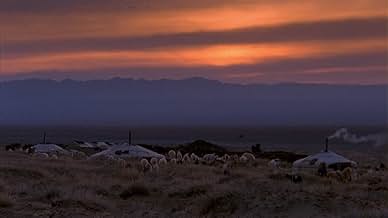
The setting is amongst an extended family group, eking out a simple, rural existence on the high desert plains of Mongolia. It is the end of the calving season, and the last camel in the herd remains to give birth. We are privileged to witness the event in an non-intrusive way. It is the mother's first delivery and she encounters difficulties, probably through inexperience, and the human attendants feel compelled to assist. Not easy, with such a large animal, but eventually a healthy while colt is born before our very eyes. One suspect possibly because of the human intervention, the mother rejects the little one, and brushes away its repeated attempts to feed. Before long, the offspring is isolated from the mother and herd. Its mournful wailing sounds permeate the still Mongolian atmosphere with a haunting melancholy which cannot fail to turn the viewer's heart. Repeated attempts are made to reconcile the colt and its mother. As they all fail, the family decides to embark on a traditional ceremony as a last resort. This involves engaging a violinist to play music to the pair - a solution not as easy as it sounds, for the nearest skilled musician is in a remote provincial town which is at least a decent camel ride away. He eventually arrives and the ceremony commences. The outcome is best left for the viewer, suffice to say that here we have a touching film, with the splendor of the Mongolian landscape and the soft gentle colours of its sunsets as a backdrop. Worthy of a rating of 8 out of 10.
What a surprise!
If anyone had ever told me that a movie about nomadic shepherds in Mongolia and a couple of camels could hold my interest and feelings the way this movie did I would have suggested they see a shrink.
It can only be described as a wonderful story that makes the most complex of Hollywood screen-plays look silly.
Great for all generations.
It can only be described as a wonderful story that makes the most complex of Hollywood screen-plays look silly.
Great for all generations.
It takes a village
This is a great opportunity for getting a first eye view about a civilization and a culture so completely different from ours, that it's worth the price of admission.
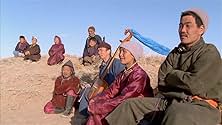
Living in the remote Gobi desert, we encounter a small family that live from the sheep they raise and their camels, that are used as a form of transportation. The living conditions are primitive, to put it mildly, yet the family in the film seem content with what they have to live with. Most of the activities are centered around the home.
As the film unfolds, we are witnesses to the amazing birth of the last colt of the season. It is an ordeal for the first time mother having this offspring, a labor that goes on forever, until the men of the village take matters into their hands and help with the birth. The white colt that is born in front of our eyes, has to be guided to the mother for his nourishment, only to be rejected by her. We watch as one of the women manages to milk the mother camel in order to feed the colt. When all fails, as the mother camel keeps rejecting the colt, they resort to a sort of a ritual that involves a violin player coming to the family's help to play music for the animal, and ultimately mother and son are miraculously reunited.
The views of the desert are beautiful in their remoteness and desolation. Somehow we are drawn into this family's life in a way that we never thought we could get to know anyone. The final irony is that after the young children go into the nearest town they finally see their first television broadcast and are fascinated by it.
The film is refreshing as it shows how the different members of this small family care for one another. They are fortunate indeed, because being away from all the consumerism and material things, they manage to stay focused in living under those conditions in that unfriendly environment.
Living in the remote Gobi desert, we encounter a small family that live from the sheep they raise and their camels, that are used as a form of transportation. The living conditions are primitive, to put it mildly, yet the family in the film seem content with what they have to live with. Most of the activities are centered around the home.
As the film unfolds, we are witnesses to the amazing birth of the last colt of the season. It is an ordeal for the first time mother having this offspring, a labor that goes on forever, until the men of the village take matters into their hands and help with the birth. The white colt that is born in front of our eyes, has to be guided to the mother for his nourishment, only to be rejected by her. We watch as one of the women manages to milk the mother camel in order to feed the colt. When all fails, as the mother camel keeps rejecting the colt, they resort to a sort of a ritual that involves a violin player coming to the family's help to play music for the animal, and ultimately mother and son are miraculously reunited.
The views of the desert are beautiful in their remoteness and desolation. Somehow we are drawn into this family's life in a way that we never thought we could get to know anyone. The final irony is that after the young children go into the nearest town they finally see their first television broadcast and are fascinated by it.
The film is refreshing as it shows how the different members of this small family care for one another. They are fortunate indeed, because being away from all the consumerism and material things, they manage to stay focused in living under those conditions in that unfriendly environment.
Le saviez-vous
- AnecdotesOfficial submission of Mongolia for the 'Best Foreign Language Film' category of the 76th Academy Awards in 2004.
- ConnexionsFeatured in The 77th Annual Academy Awards (2005)
Meilleurs choix
Connectez-vous pour évaluer et surveiller les recommandations personnalisées
- How long is The Story of the Weeping Camel?Propulsé par Alexa
Détails
- Date de sortie
- Pays d’origine
- Sites officiels
- Langue
- Aussi connu sous le nom de
- The Story of the Weeping Camel
- Lieux de tournage
- sociétés de production
- Consultez plus de crédits d'entreprise sur IMDbPro
Box-office
- Brut – États-Unis et Canada
- 1 763 052 $ US
- Fin de semaine d'ouverture – États-Unis et Canada
- 21 767 $ US
- 6 juin 2004
- Brut – à l'échelle mondiale
- 9 328 652 $ US
- Durée
- 1h 33m(93 min)
- Couleur
- Mixage
- Rapport de forme
- 1.85 : 1
Contribuer à cette page
Suggérer une modification ou ajouter du contenu manquant