

Nitta Sayuri révèle comment elle a transcendé ses origines dans un village de pêche pour devenir l'une des geishas les plus célèbres du Japon.Nitta Sayuri révèle comment elle a transcendé ses origines dans un village de pêche pour devenir l'une des geishas les plus célèbres du Japon.Nitta Sayuri révèle comment elle a transcendé ses origines dans un village de pêche pour devenir l'une des geishas les plus célèbres du Japon.
- Réalisation
- Scénaristes
- Vedettes
- A remporté 3 oscars
- 32 victoires et 47 nominations au total


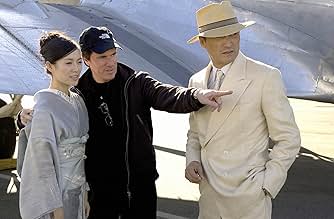

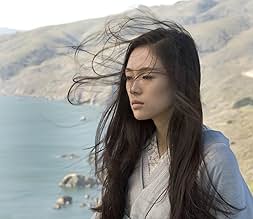
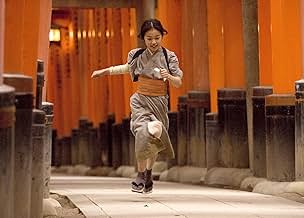
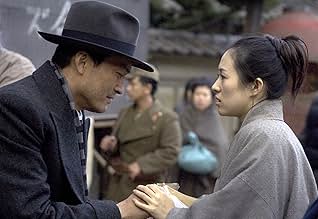


7,3170.1K
1
2
3
4
5
6
7
8
9
10
Avis en vedette
A Top-Notch Eye Candy
Can a group of American men and Chinese actresses render the world of a Japanese geisha? The answer is yes, with stunning beauty
and regrettable flaws.
Truth be told, this movie was not as bad as its trailer led me to expect it to be. It had a story to tell (although it crumbles in the end),images to show, and material to present. There were ample displays of exquisite beauty -- the trailing tails of silk kimonos, the subtle allure of hand gestures, and the captivating scene of kabuki dance theater ...
On the other hand, the American director was not able to pull the Japanese out of Chinese actresses. (This movie was so crowded by famous Chinese idols that I found myself inadvertently searching for Joan Chen among the cast.) To be fair, all three main actors (Gong Li in particular) show strong performances that made me sympathetic to Rob Marshall's choices. However, they remain utterly Chinese throughout this movie. The look and accent are not the only problems. They lacked the kind of extreme femininity and excessive felicity of the delicately mechanical gesture and movements of traditional Japanese ladies you see in custom dramas of Japanese production. (Michelle Yeoh seems to be the only one trying a little bit of those, but it did not quite work for some reason.)
So, let me re-address the question: Can a group of American men and Chinese actresses render the world of a geisha? The answer, I guess, really depends on what you are looking for. If you would like a little bit of delight from an aesthetically pleasing picture with a dubious authenticity and realism, this movie delivers it. I would not say Rob Marshall failed completely. Memoirs of a Geisha is not the first, nor the last, movie that subjects another culture to the crude lens of American exoticism. It definitely is not the worst one.
Truth be told, this movie was not as bad as its trailer led me to expect it to be. It had a story to tell (although it crumbles in the end),images to show, and material to present. There were ample displays of exquisite beauty -- the trailing tails of silk kimonos, the subtle allure of hand gestures, and the captivating scene of kabuki dance theater ...
On the other hand, the American director was not able to pull the Japanese out of Chinese actresses. (This movie was so crowded by famous Chinese idols that I found myself inadvertently searching for Joan Chen among the cast.) To be fair, all three main actors (Gong Li in particular) show strong performances that made me sympathetic to Rob Marshall's choices. However, they remain utterly Chinese throughout this movie. The look and accent are not the only problems. They lacked the kind of extreme femininity and excessive felicity of the delicately mechanical gesture and movements of traditional Japanese ladies you see in custom dramas of Japanese production. (Michelle Yeoh seems to be the only one trying a little bit of those, but it did not quite work for some reason.)
So, let me re-address the question: Can a group of American men and Chinese actresses render the world of a geisha? The answer, I guess, really depends on what you are looking for. If you would like a little bit of delight from an aesthetically pleasing picture with a dubious authenticity and realism, this movie delivers it. I would not say Rob Marshall failed completely. Memoirs of a Geisha is not the first, nor the last, movie that subjects another culture to the crude lens of American exoticism. It definitely is not the worst one.
A worthy big screen experience
Going into the film, I had worries with all the slamming critics have given, even though I didn't read all of them in details. However, I'm happy to say it turns out to be one of more satisfying movie experiences of the year.
First I echo the sentiment that the film is simply technically perfect. The retro-mood it created had me immensed in the world of geisha from beginning to the end. It's very 1930 Shanghai like. The music score isn't as haunting as the one in CTHD, but it is still masterfully composed and fits in the background very well. It's worth seeing for the big screen experience alone. The story also never dragged, as each of the three parts flowed nicely. I normally don't like voice-over, but here it really held the movie together and helped to move the story along.
As for the accents, the problem has definitely been exaggerated. I was expecting a lot of unpleasant broken English to be spoken, but they all sounded fine to good, not just from the most fluent Michelle Yeoh, but Ken Watanabe, Youki Kudoh (who plays Pumpkin) and other supporting casts. Gong Li had a few awkward lines at the beginning, and Ziyi had more and is the one who had to try the hardest, but both pulled off admirably and didn't hurt their performances in the process.
Talking about performances, I think almost all of them did well. It's much more of an ensemble piece, and I was especially impressed by the young Sayuri and Ken Watanabe.
The main problem I have is with character development. It is a Cinderella story at heart, but the good and evil are too clear-cut and lack dimension. I also want to see more ups and downs for the competition between Ziyi and Gong Li. Gong did all she could, but the script didn't allow her to be a worthy opponent. Except for some verbal back-and-forth between the two and a few dirty tricks from Gong, there was no reason to believe why she was the most famous geisha in Japan before Ziyi arrived.
In addition, the Mother character is over-the-top and didn't fit the emotional aspect the film quite well, although she did provide some comical moments. The big dance scene had excellent buildup, but the execution of the dance felt flat. It lasted only about 30 seconds, while doubling that and making it more mesmerizing would have made the whole middle act more effective.
These flaws didn't overshadow the fact that what was put on screen worked for me. Will I be willing to watch it again with friends? In a heartbeat. Will I recommend it to others? Definitely. With that in mind, I give the film an A-.
First I echo the sentiment that the film is simply technically perfect. The retro-mood it created had me immensed in the world of geisha from beginning to the end. It's very 1930 Shanghai like. The music score isn't as haunting as the one in CTHD, but it is still masterfully composed and fits in the background very well. It's worth seeing for the big screen experience alone. The story also never dragged, as each of the three parts flowed nicely. I normally don't like voice-over, but here it really held the movie together and helped to move the story along.
As for the accents, the problem has definitely been exaggerated. I was expecting a lot of unpleasant broken English to be spoken, but they all sounded fine to good, not just from the most fluent Michelle Yeoh, but Ken Watanabe, Youki Kudoh (who plays Pumpkin) and other supporting casts. Gong Li had a few awkward lines at the beginning, and Ziyi had more and is the one who had to try the hardest, but both pulled off admirably and didn't hurt their performances in the process.
Talking about performances, I think almost all of them did well. It's much more of an ensemble piece, and I was especially impressed by the young Sayuri and Ken Watanabe.
The main problem I have is with character development. It is a Cinderella story at heart, but the good and evil are too clear-cut and lack dimension. I also want to see more ups and downs for the competition between Ziyi and Gong Li. Gong did all she could, but the script didn't allow her to be a worthy opponent. Except for some verbal back-and-forth between the two and a few dirty tricks from Gong, there was no reason to believe why she was the most famous geisha in Japan before Ziyi arrived.
In addition, the Mother character is over-the-top and didn't fit the emotional aspect the film quite well, although she did provide some comical moments. The big dance scene had excellent buildup, but the execution of the dance felt flat. It lasted only about 30 seconds, while doubling that and making it more mesmerizing would have made the whole middle act more effective.
These flaws didn't overshadow the fact that what was put on screen worked for me. Will I be willing to watch it again with friends? In a heartbeat. Will I recommend it to others? Definitely. With that in mind, I give the film an A-.
I didn't want to spoil my great memories of the book.
As someone thet has treasured the book, I will be honest. At first I didn't want to watch it. This could have gone wrong in so many ways. But the movie has blown me away.
Many laugh's, moments of deep emotion and true heart must have been put in this movie. And the moments of joy, fun and above all pain and even some tearing happened to me.
It is absolutely beautiful. 10/10 in my life I have ranked over 1130 films and have given a 10 to less then twenty movies, but this must be amongst to top 5 best ones.
I mean wow, the film is so beautiful.
Many laugh's, moments of deep emotion and true heart must have been put in this movie. And the moments of joy, fun and above all pain and even some tearing happened to me.
It is absolutely beautiful. 10/10 in my life I have ranked over 1130 films and have given a 10 to less then twenty movies, but this must be amongst to top 5 best ones.
I mean wow, the film is so beautiful.
Quite enjoyed it!
Having read the book a few years ago and being a bit of a Ziyi fan I just had to see the film. And I wasn't disappointed. I think Rob Marshall did a wonderful job creating a visually beautiful fairytale with a very strong cast. The film was very faithful to the book and even kept the ending I didn't like. I thought the Chinese actresses were quite believable as Japanese and gorgeous, and although, as some reviewers have said, the actors' broken English could not be understood at times, their acting made up for it. It was certainly an entertaining film--a story of a determined young girl (played by a very convincing child actor!) blossoming into a beautiful geisha despite many difficulties.
I am actually quite surprised by the number of people (including a lot of Japanese) who criticise the film for its inaccuracy on the portrayal of Geisha culture. Okay, so the film is not accurate, but Geisha culture is as much a mystery to the Japanese as it is to the Western world. Very little is known about what happened inside the closed world of Gion where the story takes place. Only some of the privileged and respected men were allowed into the teahouses (where geisha entertained men) and it was forbidden for geishas to talk about what went on in the teahouses (Thank god someone broke the rules or we would have never known their story!!).
Actually some of my relatives used to run teahouses in Gion, however I know very little because sadly they went out of business after the War like other teahouses in the film or started what Mameha (played by the very gracious Michelle Yeoh) did 'renting rooms'. The fact is Gion has dwindled into such a sad state these days. Many teahouses, except for the very best, have become merely overpriced souvenir shops and hotels; and real geishas are outnumbered by tourist 'instant geishas' who have no elegance at all (who are comparable to some of the minor geishas in the film).
Anyway, it is unjust to point out what the film did wrong just because it is a Hollywood film. It would be very difficult for a Japanese film maker to recreate an accurate picture of Gion on film anyway. In that sense, I think it was a benefit to the film in not having a Japanese director or Japanese actresses. It liberated it from the burden of portraying Geishas accurately and created a more fairytale-like story.
Not to discredit the filmmakers--- they obviously made a lot of effort in making some of the details very believable. I was quite impressed with the quality of the set. I think it captured the darkness and light of Gion very well. The narrow backstreets and the gloomy okiya (where geishas lived) were believable--my relative's teahouse where they still live is indeed very dark and suffocating by day, but at night the district lights up prettily. Another detail not to be missed: the sumo scene. They actually have a very famous retired sumo wrestler performing!
Anyway, overall I think it's very much worth seeing so don't be put-off by the negative reviews!
I am actually quite surprised by the number of people (including a lot of Japanese) who criticise the film for its inaccuracy on the portrayal of Geisha culture. Okay, so the film is not accurate, but Geisha culture is as much a mystery to the Japanese as it is to the Western world. Very little is known about what happened inside the closed world of Gion where the story takes place. Only some of the privileged and respected men were allowed into the teahouses (where geisha entertained men) and it was forbidden for geishas to talk about what went on in the teahouses (Thank god someone broke the rules or we would have never known their story!!).
Actually some of my relatives used to run teahouses in Gion, however I know very little because sadly they went out of business after the War like other teahouses in the film or started what Mameha (played by the very gracious Michelle Yeoh) did 'renting rooms'. The fact is Gion has dwindled into such a sad state these days. Many teahouses, except for the very best, have become merely overpriced souvenir shops and hotels; and real geishas are outnumbered by tourist 'instant geishas' who have no elegance at all (who are comparable to some of the minor geishas in the film).
Anyway, it is unjust to point out what the film did wrong just because it is a Hollywood film. It would be very difficult for a Japanese film maker to recreate an accurate picture of Gion on film anyway. In that sense, I think it was a benefit to the film in not having a Japanese director or Japanese actresses. It liberated it from the burden of portraying Geishas accurately and created a more fairytale-like story.
Not to discredit the filmmakers--- they obviously made a lot of effort in making some of the details very believable. I was quite impressed with the quality of the set. I think it captured the darkness and light of Gion very well. The narrow backstreets and the gloomy okiya (where geishas lived) were believable--my relative's teahouse where they still live is indeed very dark and suffocating by day, but at night the district lights up prettily. Another detail not to be missed: the sumo scene. They actually have a very famous retired sumo wrestler performing!
Anyway, overall I think it's very much worth seeing so don't be put-off by the negative reviews!
A great film that is true to the book
As someone who read the book before watching the movie, I was pleased with the adaptation. The right parts were highlighted and felt the cuts made were necessary for length. The story is truly a tragically beautiful one, and the actors cast fit their characters. Great acting and some beautiful cinematography. Sayuri's dance scene was mesmerizing.


Le saviez-vous
- AnecdotesThe elements of nature are a running theme through this film and each of the four main Geisha have an elemental character. Sayuri is water, Mameha is wind, Pumpkin is wood (the equivalent of earth) and Hatsumomo is fire.
- GaffesWhen Hatsumomo and Pumpkin are leaving on the night of Pumpkin's debut, neither Mother nor Auntie spark flint on their backs. A Geisha would never leave her okiya without this act being performed as it was believed it brought good luck.
- Générique farfeluNo studio logos are shown at the beginning; they appear shortened after the end credits and are accompanied by the film's score.
- ConnexionsFeatured in The 63rd Annual Golden Globe Awards 2006 (2006)
- Bandes originalesAnata No Mono Yo
Written by Takao Saeki and Kôka Sassa
Performed by Noriko Awaya
Courtesy of Columbia Music Entertainment, Inc.
Meilleurs choix
Connectez-vous pour évaluer et surveiller les recommandations personnalisées
Détails
- Date de sortie
- Pays d’origine
- Site officiel
- Langues
- Aussi connu sous le nom de
- Memoirs of a Geisha
- Lieux de tournage
- California State Railroad Museum - 111 I Street, Sacramento, Californie, États-Unis(interiors: railroad station)
- sociétés de production
- Consultez plus de crédits d'entreprise sur IMDbPro
Box-office
- Budget
- 85 000 000 $ US (estimation)
- Brut – États-Unis et Canada
- 57 490 508 $ US
- Fin de semaine d'ouverture – États-Unis et Canada
- 682 504 $ US
- 11 déc. 2005
- Brut – à l'échelle mondiale
- 162 242 962 $ US
- Durée
- 2h 25m(145 min)
- Couleur
- Mixage
- Rapport de forme
- 2.39 : 1
Contribuer à cette page
Suggérer une modification ou ajouter du contenu manquant