Ajouter une intrigue dans votre langueThirteen card decks were created for thirteen Kamen Riders. They make Contracts with monsters from the mysterious Mirror World, a parallel world opposite to the real one in which only the Ka... Tout lireThirteen card decks were created for thirteen Kamen Riders. They make Contracts with monsters from the mysterious Mirror World, a parallel world opposite to the real one in which only the Kamen Riders can exist.Thirteen card decks were created for thirteen Kamen Riders. They make Contracts with monsters from the mysterious Mirror World, a parallel world opposite to the real one in which only the Kamen Riders can exist.
- Création originale
- Vedettes
Parcourir les épisodes
7,9999
1
2
3
4
5
6
7
8
9
10
Avis en vedette
Lot of Riders, for what?
First time watch this series I really Like the design of the main rider also with kamen rider knight, both makes the oeing great. but I really confuse with riders next to come, a lot of them shows up, and guess what? they fight each other. Shame lot of the riders design are gold, but makes no sense because the plot is no good.
just fight
Compared to Kuuga, its story structure is more complete, but it feels somewhat like a fairy tale-focusing only on the story itself and its characters, with almost no connection to society. The number of characters is also excessive and messy, which seems at least partly driven by merchandise sales. In a world where almost everyone can transform, if problems were solved without transformations, it would just turn into a gangster or delinquent school drama. Transformations exist only for fighting-for battles in the Mirror World, for fights hidden away from bystanders.
Each character puts on a cold façade:
I won't say why I'm fighting-guess.
I won't say why I must kill someone-guess.
I won't say why I'm making people fight each other-guess.
I won't even tell my sister the backstory-guess.
And behind every unanswered question lies a supposedly "heartwarming" reason: it's all for your own good, and he has his own hardships too.
Each character puts on a cold façade:
I won't say why I'm fighting-guess.
I won't say why I must kill someone-guess.
I won't say why I'm making people fight each other-guess.
I won't even tell my sister the backstory-guess.
And behind every unanswered question lies a supposedly "heartwarming" reason: it's all for your own good, and he has his own hardships too.
In the end, only one Rider can remain.
One of the more popular and highly regarded Kamen Rider shows, Ryuki, is an odd beast. Its fifty-episode length certainly feels unwarranted, but when combined with the show's complex depiction of justice and outstandingly choreographed action, it can make for immensely satisfying viewing. The humour doesn't always work and can even be detrimental to the tone the series is trying to maintain, especially given the high amount of emotional plot beats during the final stretch. Many episodes feel very meandering, focusing on a small cast of characters and emphasising the sillier elements; it all feels like a different show entirely, where the Rider Fight is merely an afterthought.
It's difficult to buy into Shinji's antics at the start, but thankfully, it seems the writers realised this and gave us a second Rider to follow right from the get-go with Ren. They make for an intriguing double act early on, with Shinji's carefree attitude contrasting heavily with Ren's more personal involvement in the big battle royale. The problem arises when nearly every character introduced, even the small one-offs, has their own arc and journey, which leaves many of the leads fighting for screentime; it makes the series feel cramped when it has a whole other dimension to explore.
As this show features a whopping ten Riders to keep track of, with some having a greater impact than others, it can be a challenging follow. Some turn up and leave just as quickly as they are introduced, while others stick around for a lot longer. Imperer and Scissors are examples of the former more than the latter. Their ultimate deaths are also a mixed bag, with Scissors' demise only there to serve as a warning to the fate that will befall the rest of the cast, while Raia's death is utterly soul-destroying, signalling a change in direction for the rest of the run.
Production-wise, it feels very much of its time; the reliance on CG ultimately dates the show quite severely, but the direction usually more than makes up for it with the musical score being generally delightful to listen to, even if it's somewhat repetitive. The cast all do a great job with the material, bringing a range of different levels of energy to their roles. It's hard to single out any standouts when they are all good.
Honestly, I think Ryuki is just alright in the end. The mystery regarding the Kanzaki siblings doesn't do a lot for me, especially when it's plainly evident that Shiro is the big bad from the moment he's first mentioned. Still, when the show is focused on each Rider and their individual goals, I was hooked. It's a show where I wish the core elements were just a bit more consistent because it had all the potential to be a winner, especially with its brutal gut-punch of an ending. Still, I did enjoy watching the show, and am looking forward to checking out Dragon Knight one of these days.
It's difficult to buy into Shinji's antics at the start, but thankfully, it seems the writers realised this and gave us a second Rider to follow right from the get-go with Ren. They make for an intriguing double act early on, with Shinji's carefree attitude contrasting heavily with Ren's more personal involvement in the big battle royale. The problem arises when nearly every character introduced, even the small one-offs, has their own arc and journey, which leaves many of the leads fighting for screentime; it makes the series feel cramped when it has a whole other dimension to explore.
As this show features a whopping ten Riders to keep track of, with some having a greater impact than others, it can be a challenging follow. Some turn up and leave just as quickly as they are introduced, while others stick around for a lot longer. Imperer and Scissors are examples of the former more than the latter. Their ultimate deaths are also a mixed bag, with Scissors' demise only there to serve as a warning to the fate that will befall the rest of the cast, while Raia's death is utterly soul-destroying, signalling a change in direction for the rest of the run.
Production-wise, it feels very much of its time; the reliance on CG ultimately dates the show quite severely, but the direction usually more than makes up for it with the musical score being generally delightful to listen to, even if it's somewhat repetitive. The cast all do a great job with the material, bringing a range of different levels of energy to their roles. It's hard to single out any standouts when they are all good.
Honestly, I think Ryuki is just alright in the end. The mystery regarding the Kanzaki siblings doesn't do a lot for me, especially when it's plainly evident that Shiro is the big bad from the moment he's first mentioned. Still, when the show is focused on each Rider and their individual goals, I was hooked. It's a show where I wish the core elements were just a bit more consistent because it had all the potential to be a winner, especially with its brutal gut-punch of an ending. Still, I did enjoy watching the show, and am looking forward to checking out Dragon Knight one of these days.
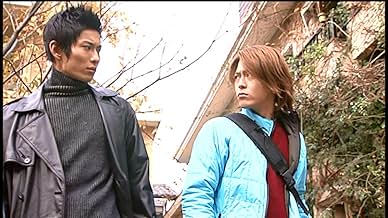
A Battle of Ideals and Survival
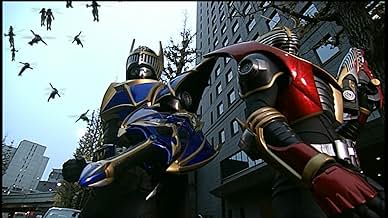
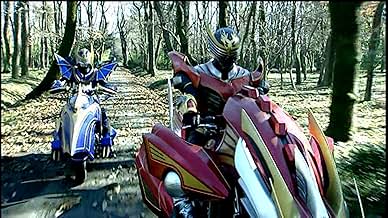
"What if heroes were not united by justice, but divided by survival?" This series delivers one of the most daring narratives in the tokusatsu genre, breaking away from the familiar "hero versus villain" formula and replacing it with a morally ambiguous Rider Battle, where thirteen combatants fight for their wishes inside the mysterious Mirror World.
From an analytical standpoint, it distinguishes itself through layered storytelling and philosophical undertones. The protagonist, driven by optimism and empathy, enters this deadly game not to win but to protect others-a striking contrast to the self-serving motives of many rivals. This clash of ideals becomes the heart of the narrative, as each participant represents a different moral compass, from selfish ambition to reluctant duty, making the conflict less about power and more about the human condition.
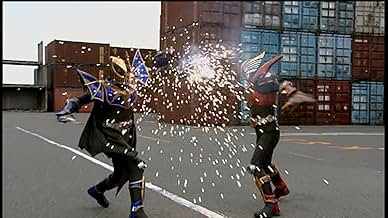
The Mirror World setting adds symbolic depth, reflecting distorted realities and hidden desires, while the action choreography maintains intensity with inventive monster designs and visually striking duels. Although the pacing can sometimes feel uneven, and the large cast leaves a few characters underdeveloped, the overall execution pushes the genre into uncharted thematic territory.
Ultimately, this series challenges the audience to reconsider what it truly means to be a "hero." It is not just about battles, but about choices, sacrifices, and the consequences of desire.
Rating: 8/10 - Ambitious, thought-provoking, and a milestone in redefining heroism.
From an analytical standpoint, it distinguishes itself through layered storytelling and philosophical undertones. The protagonist, driven by optimism and empathy, enters this deadly game not to win but to protect others-a striking contrast to the self-serving motives of many rivals. This clash of ideals becomes the heart of the narrative, as each participant represents a different moral compass, from selfish ambition to reluctant duty, making the conflict less about power and more about the human condition.
The Mirror World setting adds symbolic depth, reflecting distorted realities and hidden desires, while the action choreography maintains intensity with inventive monster designs and visually striking duels. Although the pacing can sometimes feel uneven, and the large cast leaves a few characters underdeveloped, the overall execution pushes the genre into uncharted thematic territory.
Ultimately, this series challenges the audience to reconsider what it truly means to be a "hero." It is not just about battles, but about choices, sacrifices, and the consequences of desire.
Rating: 8/10 - Ambitious, thought-provoking, and a milestone in redefining heroism.
Great show!
After watching Dragon Knight, I decided to watch Kamen Rider Ryuki and I had a good time. Characters are interesting, good story, good acting and good writting. My only complaint about the show is the ending was confusing as hell. I'm not going to spoil the show so it's best to see it since to me it's weird. Overall I like the show, pretty much my favorite Kamen Rider show.
I'm gonna give a quick review on the 13 rider special, I like the story, the acting is good and writing is alright but same problem with the show's ending, it's weird to understand. It's a good special but not as great as the show. 8/10
Le saviez-vous
- AnecdotesThis was the first series to feature outright evil people who became Kamen Riders.
Meilleurs choix
Connectez-vous pour évaluer et surveiller les recommandations personnalisées
- How many seasons does Kamen Rider Ryuki have?Propulsé par Alexa
Détails
Contribuer à cette page
Suggérer une modification ou ajouter du contenu manquant